
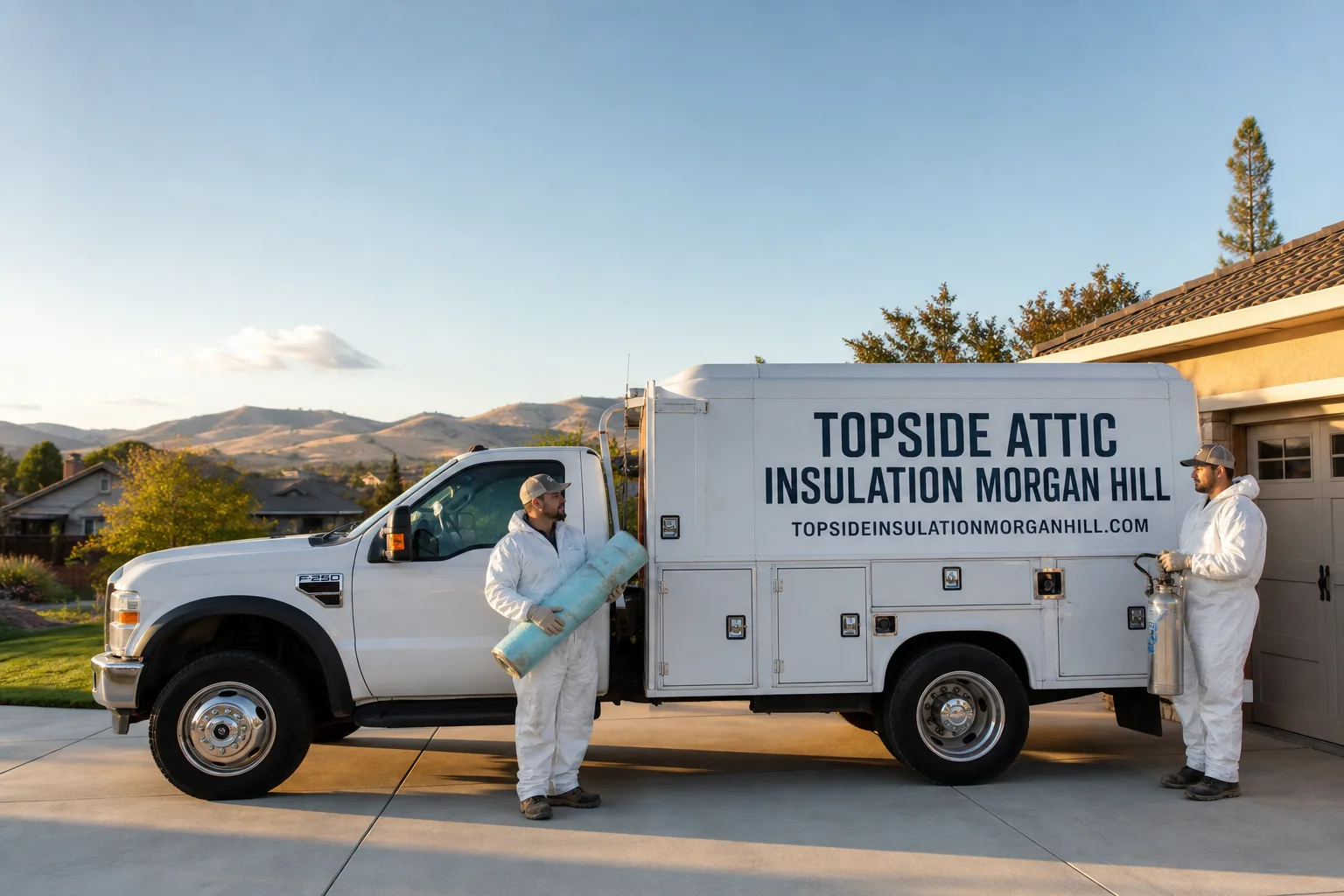
Fast, Reliable Blown-In Insulation Across Alum Rock
Blown-in insulation in Alum Rock typically runs $1.80-$3.20 per square foot for attic work and $2.50-$4.50 per square foot for dense-pack wall retrofits, with most complete jobs finished in one day. We dispatch crews to Alum Rock from our San Francisco Bay Area office, and because we know the neighborhood’s pre-1970 stucco stock and its specific thermal problems, we arrive with the right materials and the right approach already in mind. Call (669) 280-8103 for a written price before any work starts.
We’ve worked the flatlands near King Road and the slopes climbing toward Alum Rock Avenue enough times to know what we’ll find before we open the attic hatch. Empty 2×4 wall cavities. Shallow attics with degraded fiberglass or nothing at all. Vented crawl spaces pulling conditioned air straight out of the house. Alum Rock’s position against the Diablo Range foothills blocks the marine layer and delta breezes that cool central and western San Jose, so attic temperatures routinely soar past 140°F while the neighborhood’s pre-1970 stucco-over-wood-frame homes often have completely empty 2×4 wall cavities - making dense-pack blown-in cellulose the single highest-impact energy retrofit available. This combination of extreme thermal exposure and zero original wall insulation is far more pronounced here than in Bay-cooled neighborhoods just miles west, and widespread income-qualification for PG&E and BayREN weatherization rebates means many jobs are heavily subsidized or free.
Why Topside Attic Insulation Morgan Hill Is Alum Rock’s Preferred Blown-In Insulation Company
We’ve sealed and insulated over 9,000 homes since 2016, and a significant share of them sit in Alum Rock’s 95116 and 95127 ZIP codes. Our crews know the difference between a 1940s minimal-traditional near East Santa Clara Street and a 1960s ranch on the Alum Rock Avenue slope, and they know which ones have the shallow attics, the unsealed top plates, the vented crawl spaces that undermine attic-only insulation jobs.
Reviews from Alum Rock customers consistently mention two things: the blower-door numbers we leave behind, and the fact that we actually seal before we insulate. One homeowner on Flamingo Drive wrote that our before-and-after pressurization readings - 3,800 CFM50 down to 1,900 - were the first time anyone had shown them proof that the work did something measurable.
Response time to Alum Rock is typically same-day or next-day for estimates, and our scheduling team dispatches from the Bay Area office with knowledge of local traffic patterns and which crews are already working nearby. You won’t get a four-hour window and a voicemail loop. A live person answers calls 24/7, and you’ll get a text when your technician is en route.
Our local knowledge extends to rebate navigation. We know which Alum Rock households qualify for PG&E Energy Savings Assistance and BayREN whole-house weatherization, and we document every job with the photos and blower-door readings those programs require. The paperwork shouldn’t be your problem.
Our Blown-In Insulation Services in Alum Rock
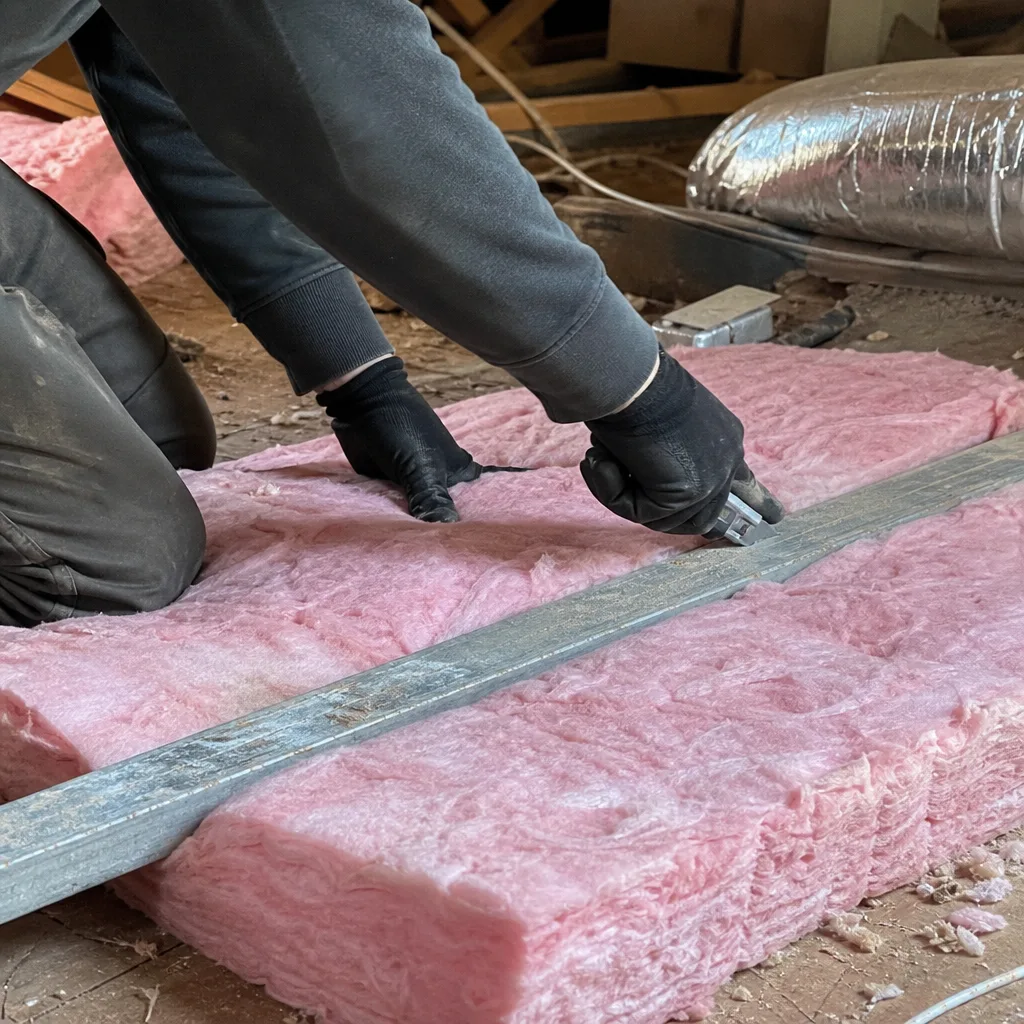
Blown-In Cellulose
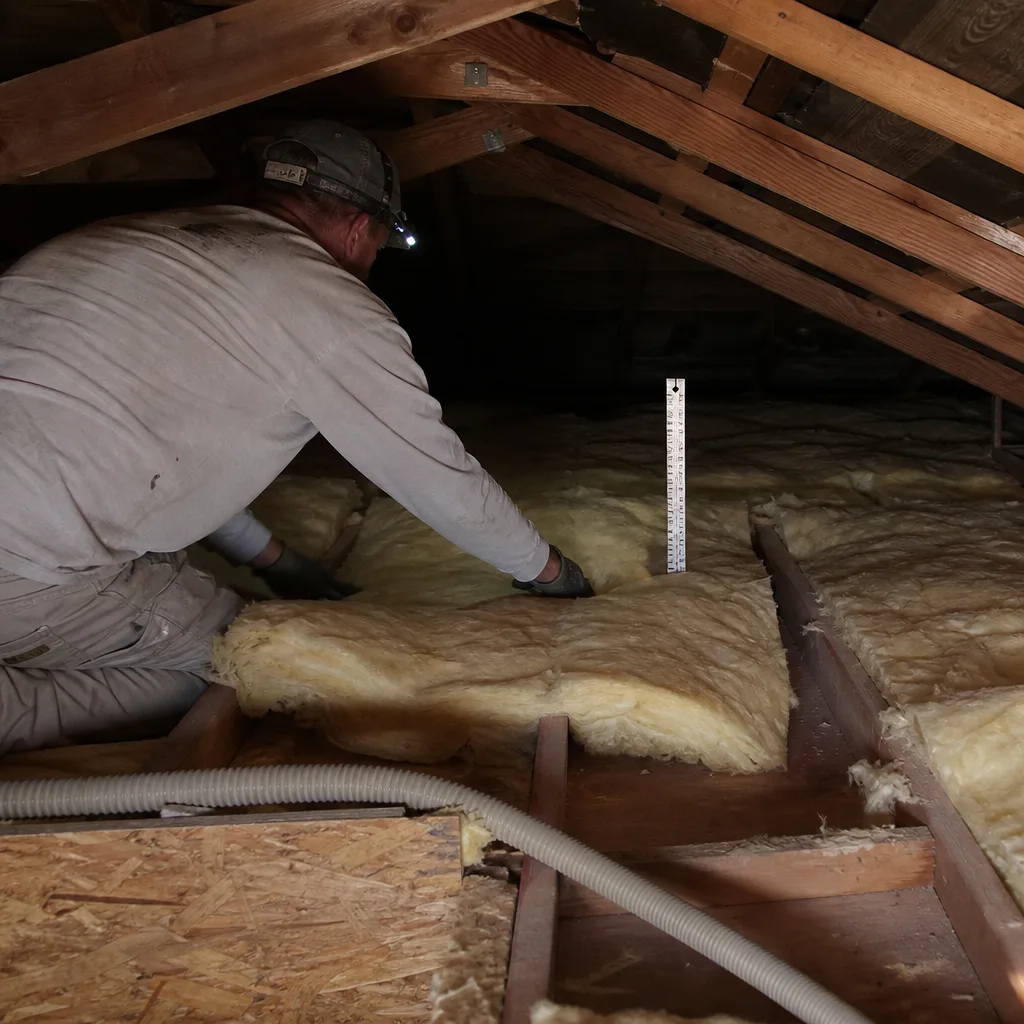
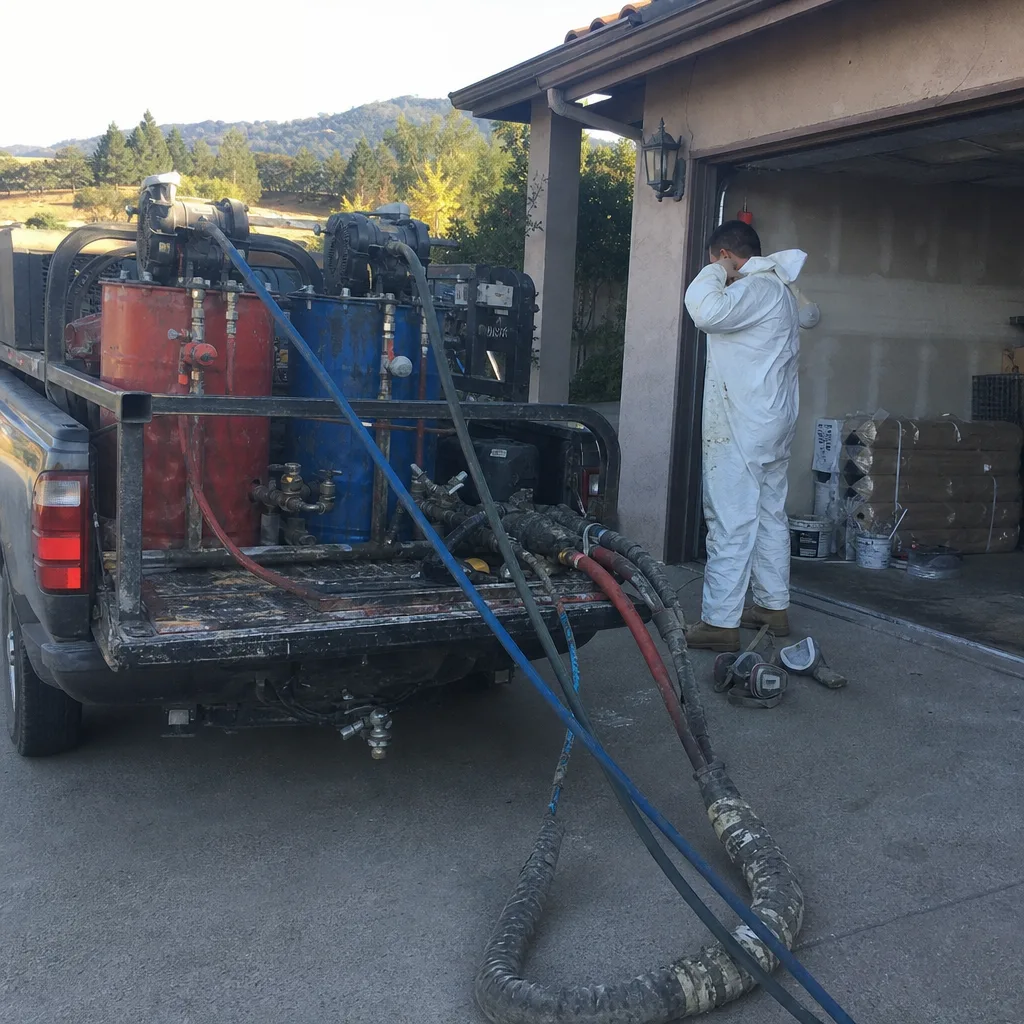
We dense-pack GreenFiber cellulose into Alum Rock’s empty wall cavities at 3.5 pounds per cubic foot, achieving an installed R-13 to R-15 in standard 2×4 framing. The material is treated with borate fire retardant and pest deterrent, which matters in older homes where rodents have had decades to find entry points. In attics, we blow cellulose loose-fill to R-38 or R-49 depending on joist depth and access, taking care not to bury can lights or block soffit ventilation. Cellulose handles Alum Rock’s 140°F attic peaks better than fiberglass in one respect: it doesn’t rely on trapped air between glass fibers, so binder degradation is less of a long-term concern.
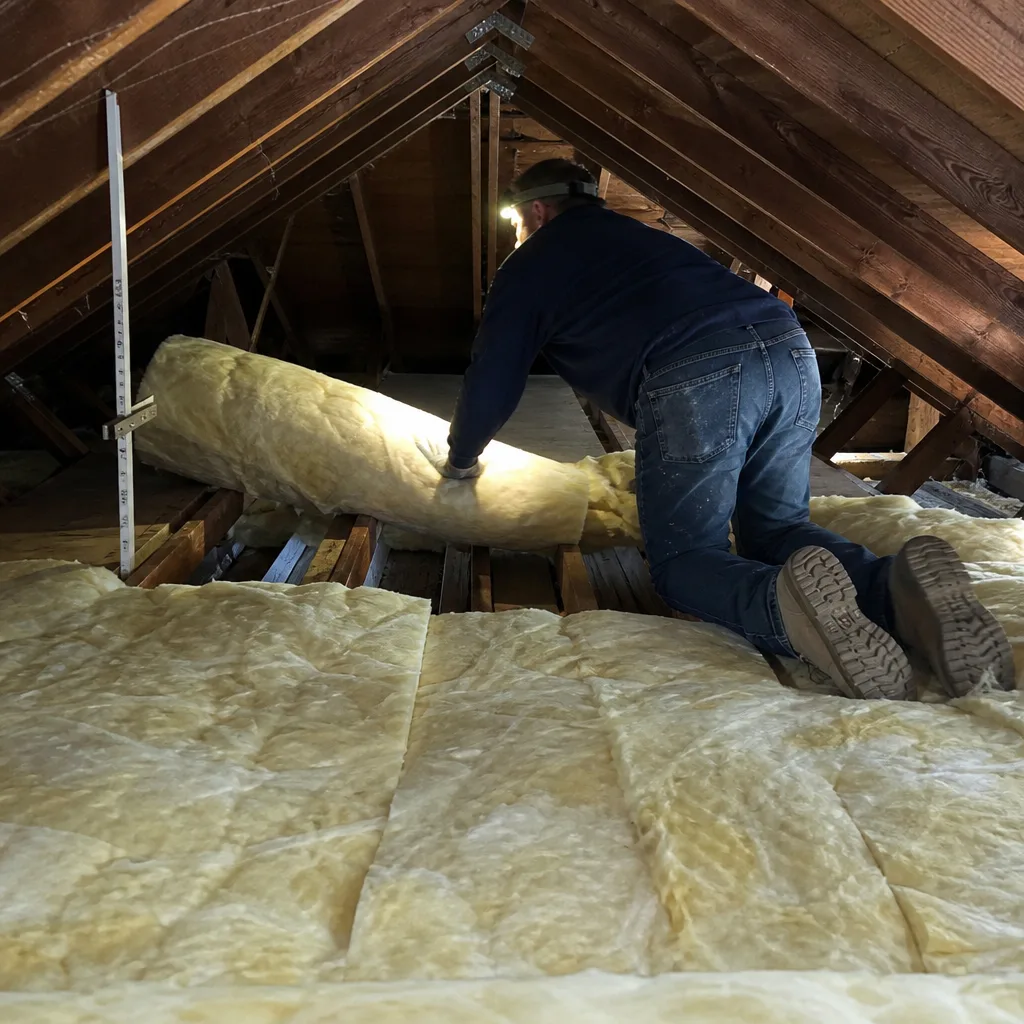
Blown-In Fiberglass
For attics with adequate air sealing already in place, we blow Owens Corning or Johns Manville fiberglass to specified depth markers. Fiberglass doesn’t absorb moisture, which is relevant in Alum Rock’s mild, damp winters when vented crawl spaces and poorly sealed attics allow humidity migration. We use Knauf’s blown-in system for jobs requiring higher R-value per inch in constrained spaces. Every fiberglass job includes verification: we measure depth at ten points minimum and photograph the attic floor before and after.
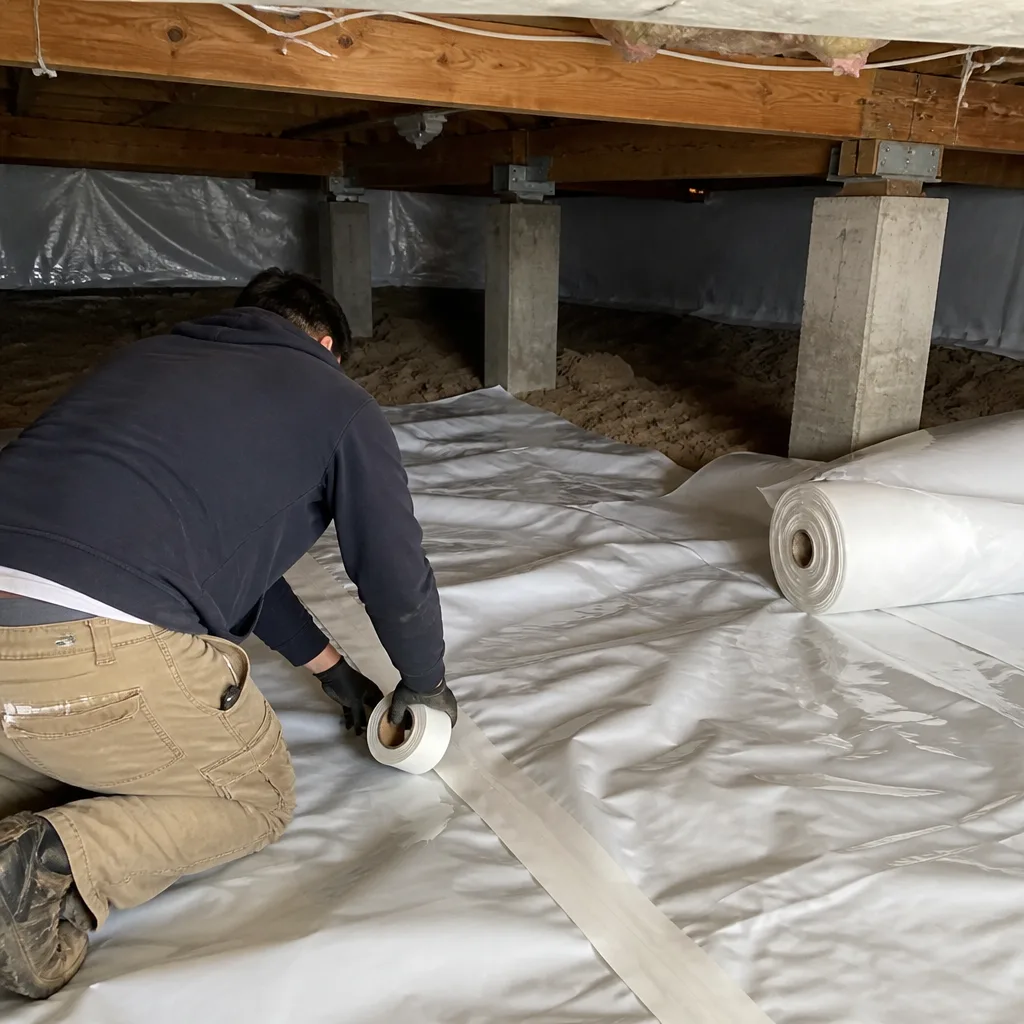
Dense-Pack Wall Insulation
This is where Alum Rock homes see the most dramatic change. We were called to a 1950s stucco ranch on the flatlands near King Road where the homeowner’s summer AC bills were double their neighbor’s and the house never cooled below 80°F until midnight. After drilling a test hole, we found the 2×4 wall cavities completely empty - no insulation at all. We dense-packed the walls with GreenFiber cellulose and blew Owens Corning fiberglass into the shallow attic to R-38, and the homeowner later reported the AC cycling dropped dramatically and the house held temperature through the afternoon peaks. Dense-pack requires drilling access holes - usually from the exterior on stucco homes, or from the interior if siding is being replaced - and we patch with matching texture. The key is achieving proper density so the material doesn’t settle and leave voids at the top of stud bays.
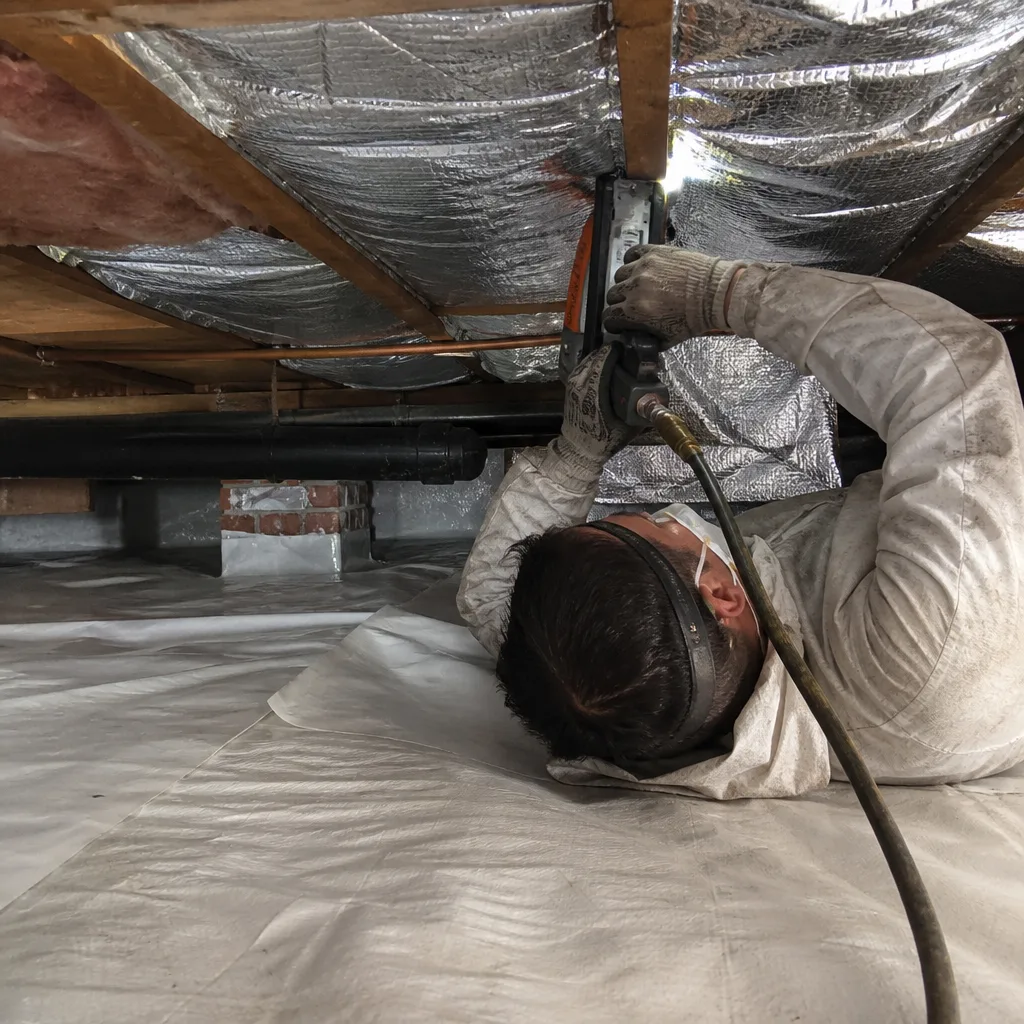
Blown-In Top-Up
Many Alum Rock attics have some existing insulation, but it’s compressed, degraded, or insufficient for current Title 24 standards. We measure what’s there, calculate the gap to target R-value, and blow additional material to achieve full depth. We never top up over unsealed air leaks - that’s Haven Standard Clause 1 violation. Our crew seals top plates, wire penetrations, bath fan housings, and chimney chases first, then blows. The homeowner gets photos of the sealed attic floor before the new insulation goes in, plus depth verification after.
What happens when you call
- 1
A real person answersNo phone trees - you reach a local pro.
- 2
You get an upfront price rangeHonest numbers before anyone is dispatched.
- 3
A background-checked tech heads outLicensed & insured, dispatched right away.
- 4
You approve before work beginsNothing starts until you say go.
Trusted Brands We Service in Alum Rock
We source blown-in materials from Owens Corning, Johns Manville, and Knauf - no proprietary lock-in, no house brand pushed for margin. Each manufacturer has different density specs and coverage charts, and we match the product to the application: Owens Corning ProCat for high-R attic fills, Johns Manville Climate Pro for moisture-tolerant sidewall work, Knauf Jet Stream for dense-pack in irregular cavities. We stock local inventory for Alum Rock jobs so we’re not waiting on delivery while your attic sits open. If a specific product is required for rebate compliance - BayREN, for instance, has approved material lists - we document the manufacturer and lot number in your job record.
Common Blown-In Insulation Problems We See in Alum Rock Homes
- Empty wall cavities in pre-1970 stucco homes near King Road and Alum Rock Avenue. Not degraded insulation. Nothing. These homes were built before California’s Title 24 energy code existed, and contractors of that era simply didn’t insulate walls in this price bracket. The thermal bypass drives oversized AC runtime and makes the house impossible to cool during afternoon peaks.
- Attic temperatures exceeding 140°F degrading blown-in fiberglass binders. The glass fibers don’t fail, but the adhesive that holds them in loft form does, causing settling and R-value loss within three to five seasons. We see this in Alum Rock more than in Bay-cooled neighborhoods because the foothill position blocks cooling breezes.
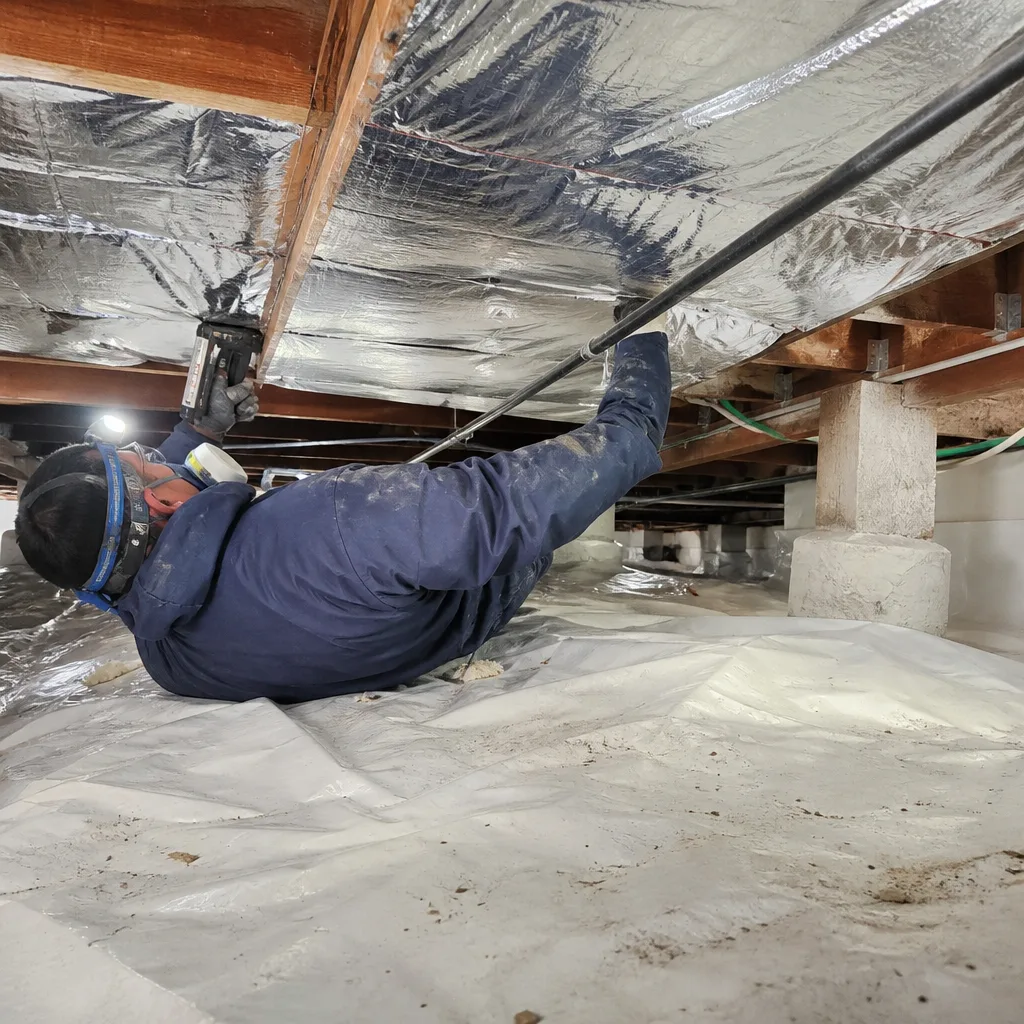
- Vented crawl spaces on raised foundations pulling conditioned air downward. Without a sealed and insulated crawl-space boundary, blown-in attic insulation alone fails to stop stack-effect heat loss in winter. Warm air rises out of the house, cold air gets drawn in through the crawl space, and the floor stays cold even with a thick attic blanket.
- Previous “insulation” jobs that skipped air sealing entirely. We regularly find attics in Alum Rock where a previous contractor blew material directly over unsealed can lights, open chase ways, and unblocked soffit vents. The insulation performs at a fraction of rated R-value because conditioned air escapes through gaps the new material simply buried.
Pricing for Blown-In Insulation in Alum Rock, CA
A typical attic top-up in an Alum Rock single-family home runs $1,800-$3,400. Full attic replacement with air sealing runs $3,200-$5,800. Dense-pack wall insulation for a 1,200-square-foot home with empty cavities runs $4,500-$7,200. Crawl space sealing and insulation, when combined with attic work, adds $2,800-$4,600.
| Service | Typical Range in Alum Rock |
|---|---|
| Attic blown-in top-up (to R-38) | $1,800 - $3,400 |
| Full attic replacement + air sealing | $3,200 - $5,800 |
| Dense-pack wall insulation (whole house) | $4,500 - $7,200 |
| Crawl space seal + insulate (with attic job) | $2,800 - $4,600 |
What moves the number: attic accessibility (shallow trusses require hand-work), existing insulation removal, extent of air sealing needed, and whether rebate program documentation is required. We provide a written price before any work starts - Haven Standard Clause 1 - and a free second opinion on any competing written estimate. Many Alum Rock households qualify for PG&E or BayREN rebates that can offset 50-100% of cost. Call (669) 280-8103 for exact pricing on your home.
We Also Serve Cities Near Alum Rock
Our crews work throughout the South Bay and East Bay foothills, including Blown-In Insulation in Alum Rock and surrounding communities. We regularly dispatch to Morgan Hill, San Jose, Los Gatos, and East Foothills, and our Blown-In Insulation team coordinates scheduling so you’re not waiting for a crew to drive up from the Peninsula. Same written-price standard, same documented photo record, same blower-door verification applies everywhere we work.
Serving Alum Rock, CA - Our Local Coverage Area
We’re based in the Alum Rock area and know this community well. Use the map below to see our service coverage - if you’re nearby, we can almost certainly help.
FAQs - Blown-In Insulation in Alum Rock
These homes were built between the 1940s and 1960s, before California’s Title 24 energy code mandated insulation in walls. Builders in that era prioritized stucco exterior mass for thermal lag, but the 2×4 cavities were left empty as a cost-saving measure standard for working-class housing of the period. Dense-pack blown-in cellulose is the retrofit solution, and it’s often fully covered by PG&E or BayREN rebates for income-qualified households. Call (669) 280-8103 and we can check your eligibility while we price the job.
Attic temperatures past 140°F accelerate binder degradation in fiberglass and can cause cellulose to lose loft if it wasn’t dense-packed properly. The bigger problem is that inadequate insulation in this climate forces AC systems to run continuously without ever catching up. We address this by specifying higher R-values than minimum code and verifying with blower-door testing that the thermal boundary is actually continuous, not just thick. Call (669) 280-8103 for a thermal assessment that shows where your home is leaking.
Yes, and qualification is widespread in Alum Rock’s 95116 and 95127 ZIP codes. PG&E Energy Savings Assistance provides free weatherization for income-qualified households, and BayREN offers rebates for whole-house efficiency improvements including air sealing, insulation, and HVAC upgrades. We document every job with the photos and test results these programs require, and we help navigate the application. Call (669) 280-8103 - we can verify your eligibility and factor any rebate into your written price.
Attic-only insulation fails in these houses because stack effect pulls conditioned air down through the vented crawl space. The correct approach is sealing the crawl space perimeter and floor - either with rigid foam or closed-cell spray foam on the rim joist - then insulating the attic. We often pair blown-in attic work with crawl space encapsulation, and we verify the result with blower-door testing that shows the whole-building air leakage reduction, not just the attic number. Call (669) 280-8103 for a scope that addresses both boundaries.
Shallow attics with 2×4 or 2×6 joists don’t have room for deep loose-fill without compressing it. We use high-density blown-in fiberglass or, where height is extremely constrained, dense-pack cellulose in netting to achieve target R-value in limited space. Every shallow-attic job includes air sealing of top plates and penetrations first - compressed insulation over an open leak performs like no insulation at all. We photograph the sealed deck before blowing, and we measure depth at multiple points after. Call (669) 280-8103 for a written scope on your specific attic geometry.
Ready to stop paying for AC that never catches up? Call (669) 280-8103 for a free estimate with a written price before any work starts. We’ll bring the blower door, the camera, and the specific knowledge of Alum Rock’s housing stock that comes from doing this work here for years. Under Haven Standard: flat price, written scope, documented result.
Written by Wes Okafor, Owner at Envelope Insulation Co., serving Alum Rock and the South Bay since 2016.