
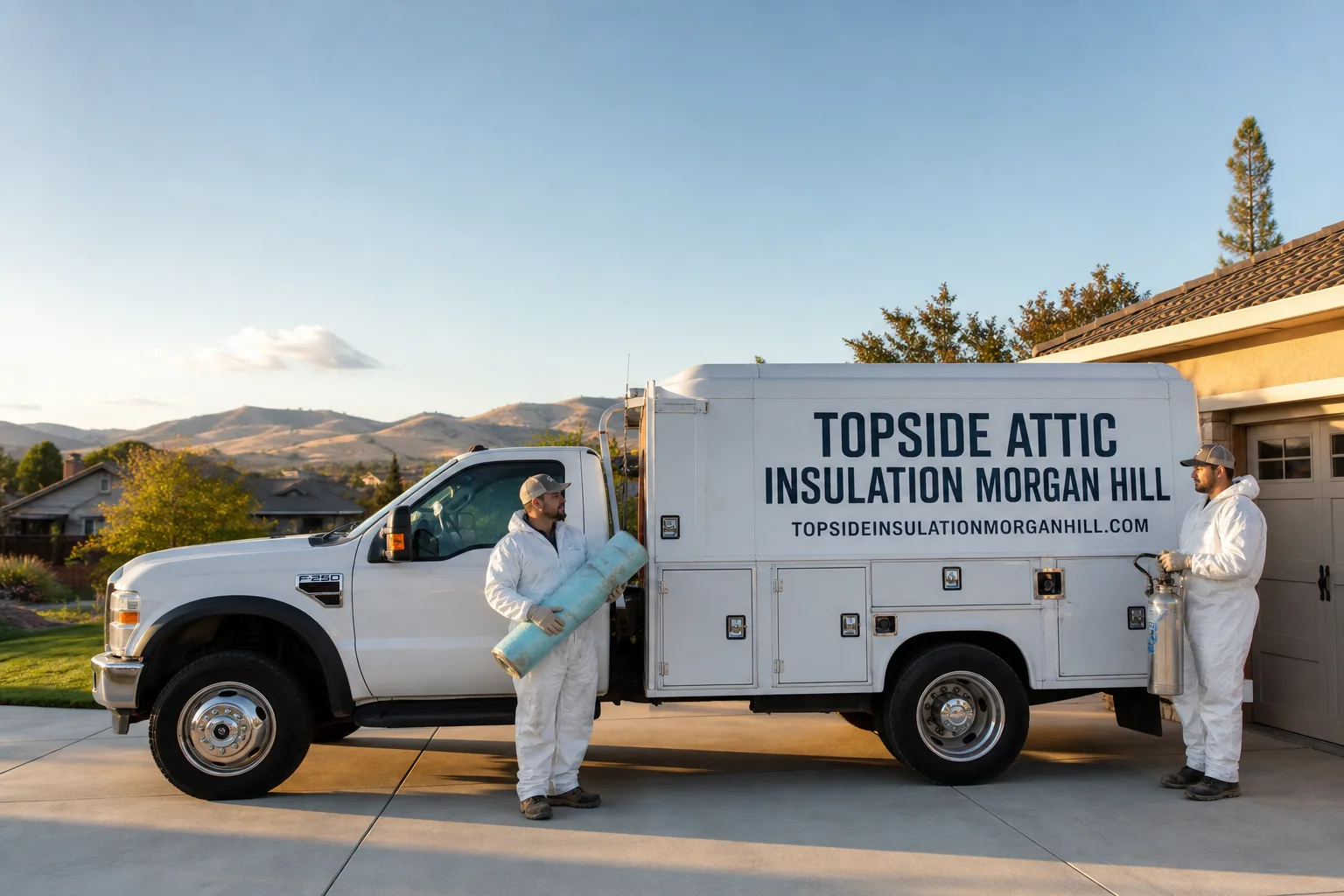
Fast, Reliable Spray Foam Insulation Across Scotts Valley
Spray foam insulation in Scotts Valley typically costs $2.80-$6.50 per board foot installed, with most whole-home projects running $4,200-$12,000 depending on cavity depth, accessibility, and whether closed-cell or open-cell product is specified. Most Scotts Valley jobs are scoped and started within a week, with our Spray Foam Insulation crews dispatching from the San Francisco Bay Area office to serve the Santa Cruz Mountains corridor directly.
We’ve worked the hillside roads off Mount Hermon Road and Bean Creek Road enough to know what waits behind the drywall in Scotts Valley’s older homes. The redwood-canopy humidity, the valley-floor cold air that pools on clear winter nights, the split-level foundations perched on steep slopes - these aren’t abstract climate conditions for us. They’re the variables we measure and seal against. When you call (669) 280-8103, a live person answers, and we’ll schedule a time to walk your property, run a blower-door test if the job warrants it, and leave you with a written price before any work starts. Haven Standard Clause 1: flat price, written scope, written warranty before anyone lifts a tool.
Why Topside Attic Insulation Morgan Hill Is Scotts Valley’s Preferred Spray Foam Insulation Company
Our reputation in Scotts Valley was built on documented results, not promises. Homeowners here - particularly in the Glenwood, Skypark, and Hidden Valley neighborhoods - tend to research thoroughly before calling, and they ask the right questions: What was the blower-door number before? What was it after? We answer with the actual CFM50 readings from their property, published in the job record they receive at completion.
Response time to Scotts Valley is typically same-day or next-day for estimates, with crews carrying Owens Corning and Johns Manville materials stocked for the Santa Cruz Mountains climate zone. We don’t route calls through a national queue; a live person answers 24/7, and our technicians are background-checked, uniformed, and named in the text you receive when they’re en route.
The local knowledge matters because Scotts Valley’s housing stock is genuinely unusual. A significant share was permitted between the late 1950s and early 1970s as summer-only cabins, then drywalled over and converted to year-round occupancy without energy-upgrade requirements. Our crews know how to read the permit history, spot the telltale framing, and specify spray foam assemblies that close gaps the original builders never anticipated.
Our Spray Foam Insulation Services in Scotts Valley
Closed-Cell Spray Foam
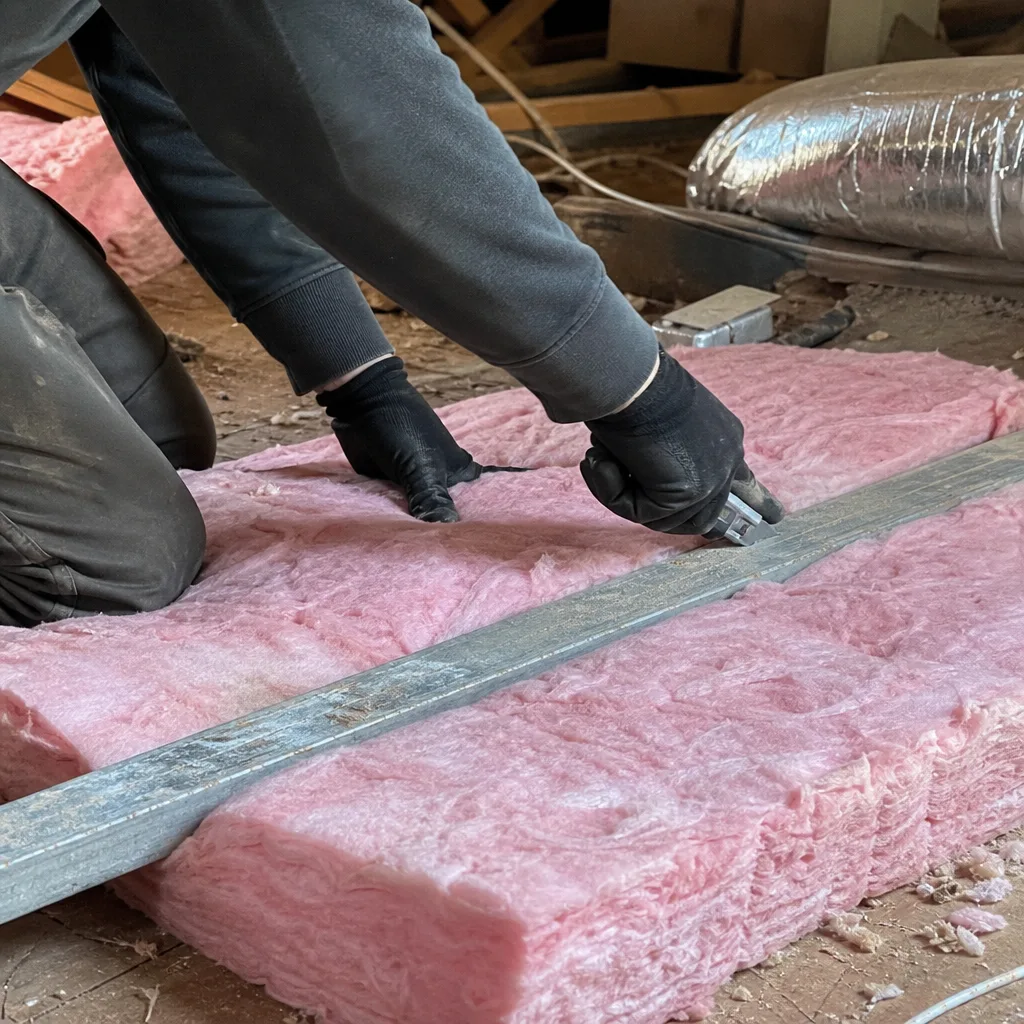
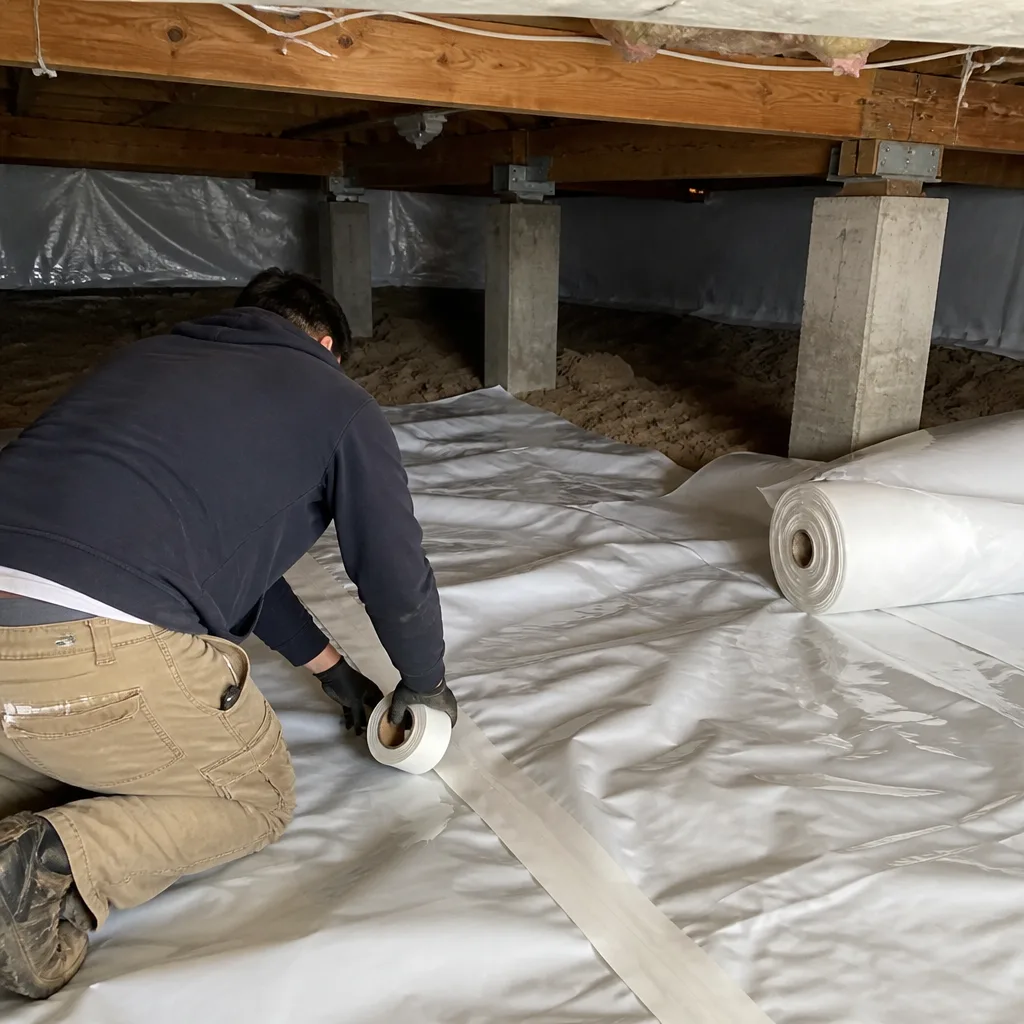
Closed-cell spray foam - a two-pound density product that cures rigid and delivers R-6.5 to R-7 per inch - is our primary specification for Scotts Valley crawl spaces, rim joists, and any assembly contacting the redwood-forest soil moisture. The valley’s persistent humidity, often 15-20 points higher than coastal Santa Cruz just five miles away, degrades fiberglass batts in unencapsulated crawl spaces within seasons. Closed-cell doesn’t absorb that moisture. It also adds structural rigidity to the rim joists and band boards that split-level hillside homes depend on. A typical closed-cell application in a Scotts Valley crawl space or garage ceiling runs $4.50-$6.50 per board foot.
Open-Cell Spray Foam
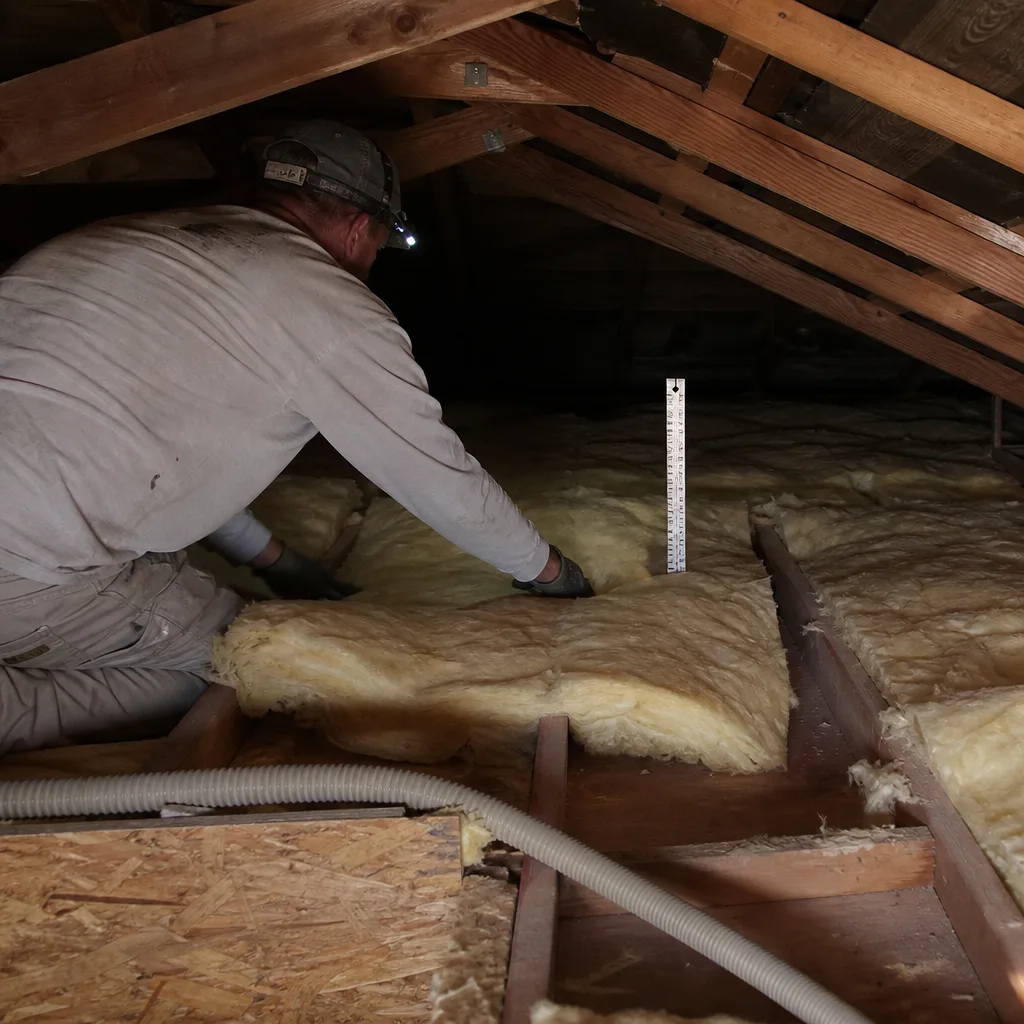
Open-cell spray foam - half-pound density, R-3.5 to R-3.7 per inch, vapor-permeable when cured - is what we pack into above-grade wall cavities and vaulted ceiling assemblies where moisture needs a path to dry. In Scotts Valley’s converted 1960s cabins, we routinely find 2×4 stud bays that were never insulated; open-cell fills these completely, eliminating convection loops without the weight or rigidity cost of closed-cell. The permeability matters in our climate: when the redwood canopy keeps exterior sheathing damp for weeks each winter, an impermeable cavity fill can trap moisture against the framing. Open-cell lets it breathe. Wall cavity work in Scotts Valley typically runs $2.80-$4.20 per board foot.
Rim Joist Spray Foam
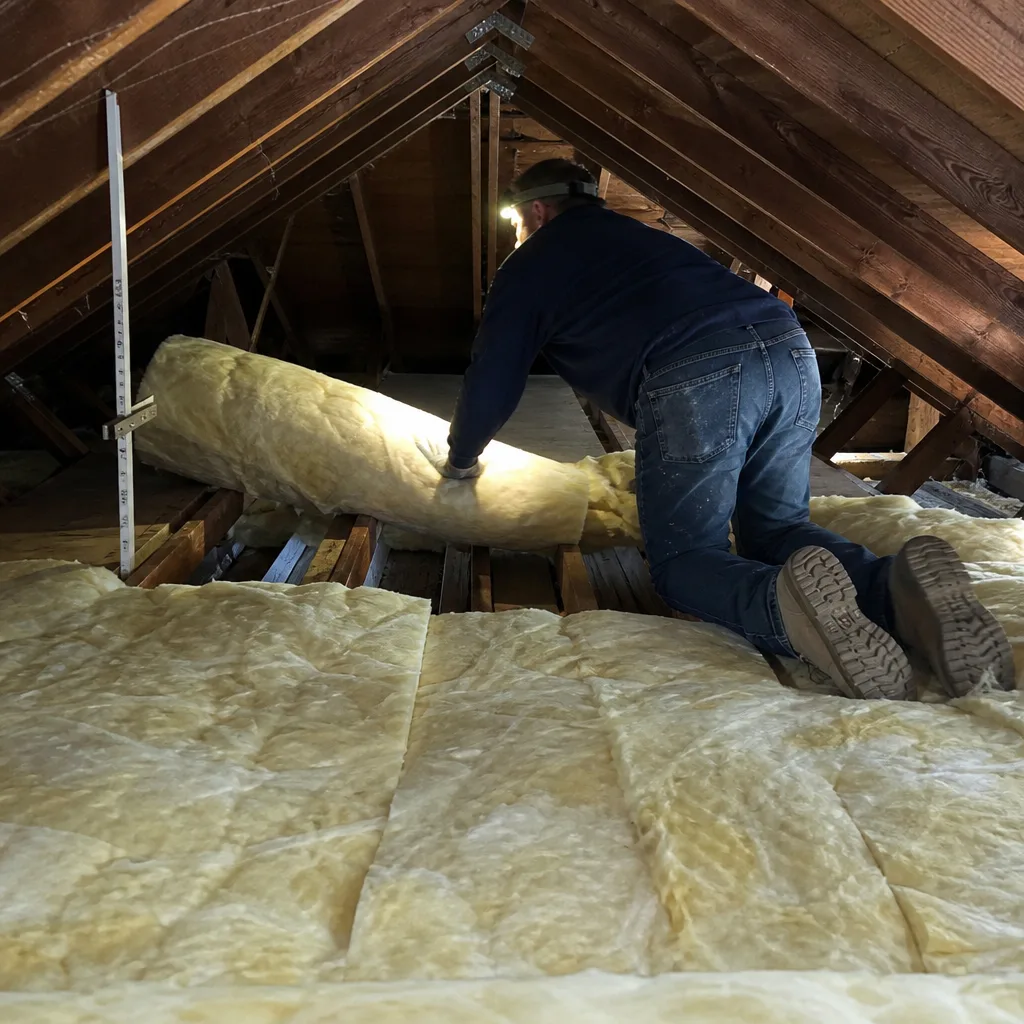
Rim joist and band-joist sealing is where spray foam earns its keep in Scotts Valley’s hillside-pad and split-level construction. The rim joist - the perimeter framing member where the floor system meets the foundation - is the single largest unsealed gap in most homes, and in steep-slope foundations it’s often exposed to wind-washed crawl space air on three sides. We flash-and-fill with two inches of closed-cell to create an air barrier and thermal break, then pack the remainder with open-cell where depth allows. This stops the cold-air drainage that Scotts Valley homeowners feel as persistent floor drafts on clear winter nights, when valley-bottom temperatures drop 8-12°F below the coast. Rim-joist-only jobs in Scotts Valley typically range $1,800-$3,400.
Garage Ceiling Spray Foam
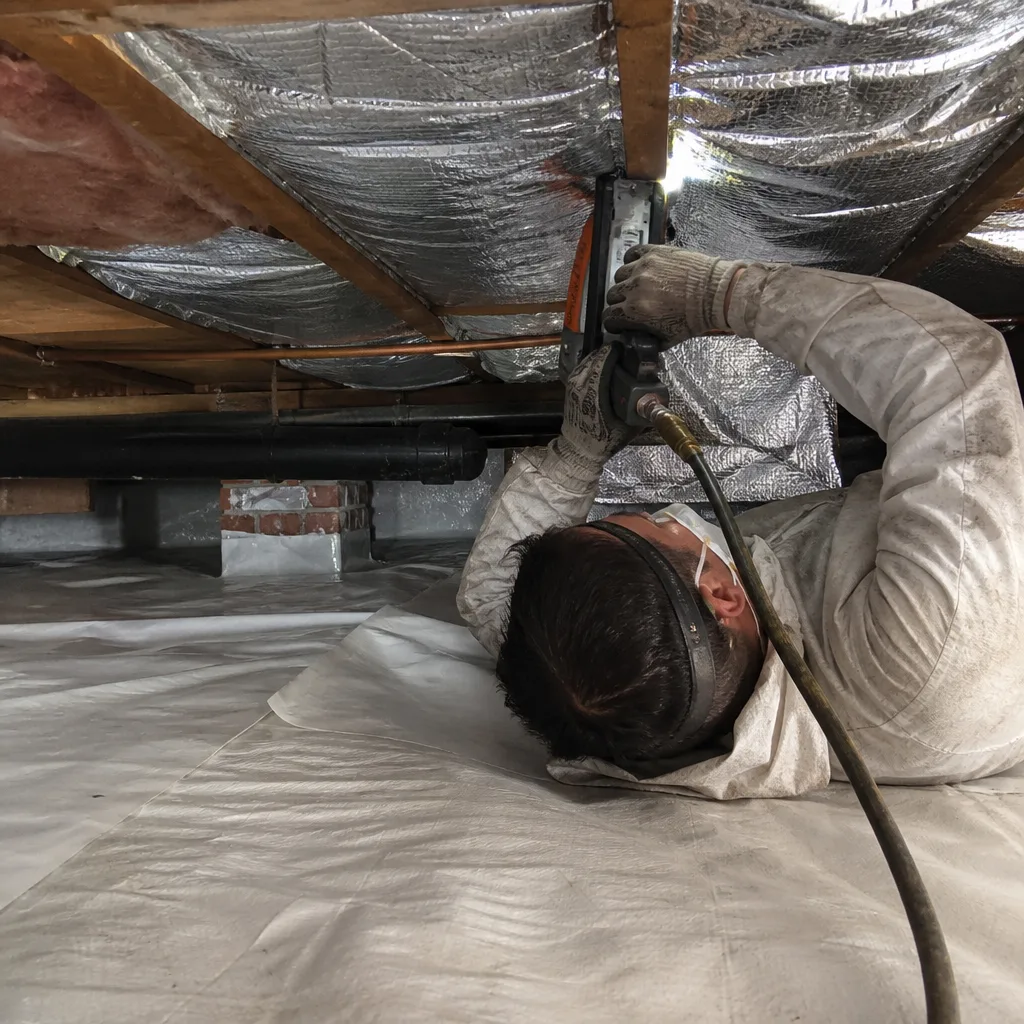
Garage ceiling spray foam in Scotts Valley serves two distinct housing types: the hillside homes with living space above a garage cut into the slope, and the valley-floor ranch homes where the garage shares a ceiling with conditioned bedrooms. In both cases, the code-minimum approach - fiberglass batts in a vented assembly - fails within years because of humidity cycling and air leakage from the garage below. We specify closed-cell foam directly against the garage ceiling deck, creating an unvented, conditioned assembly that doesn’t depend on batt integrity. Garage ceiling jobs in Scotts Valley run $3,200-$6,800 depending on square footage and whether the space includes ductwork or plumbing penetrations that need sealing.
What happens when you call
- 1
A real person answersNo phone trees - you reach a local pro.
- 2
You get an upfront price rangeHonest numbers before anyone is dispatched.
- 3
A background-checked tech heads outLicensed & insured, dispatched right away.
- 4
You approve before work beginsNothing starts until you say go.
Trusted Brands We Service in Scotts Valley
We source spray foam materials from Owens Corning, Johns Manville, and Knauf - plus Icynene and Demilec for specialized low-VOC and high-yield applications - and we don’t lock homeowners into proprietary product lines. For Scotts Valley’s redwood-forest humidity and temperature swings, we select resin and catalyst systems rated for the marine-influenced climate zone, with documented adhesion and shrinkage testing on the specific substrate we’re sealing. Our Bay Area warehouse stocks core products for the Santa Cruz Mountains corridor, so material lead times don’t delay your job. Every batch is date-coded and temperature-logged from manufacture to gun; we keep those records with your job file.
Common Spray Foam Insulation Problems We See in Scotts Valley Homes
- Empty stud bays behind finished drywall. On the forested streets off Mount Hermon Road and Bean Creek Road, we regularly open walls that appear fully finished from the interior and find zero cavity insulation - the legacy of a 1960s summer-only cabin permit later converted without energy-upgrade requirements. The heat loss is invisible until a blower-door test or invasive inspection reveals it.
- Fiberglass batt degradation in unencapsulated crawl spaces. Steep-slope foundations with open crawl spaces allow moist air to rise into subfloor assemblies year-round. Fiberglass traps that humidity, compresses, and supports mold growth. Closed-cell spray foam eliminates the air path and doesn’t absorb moisture.
- Wrong vapor retarder selection in redwood-canopy humidity. The wrong assembly - impermeable interior vapor barrier with permeable exterior sheathing - traps moisture against rim joists and knee walls in split-level construction. We specify foam products and facing materials matched to the actual drying direction of each assembly.
- Cold-air drainage through unsealed knee-wall transitions. Hillside-pad homes often have knee walls separating conditioned space from vented attic or crawl zones. Without continuous air sealing at the top and bottom plates, valley-floor cold air drains through on clear winter nights. Spray foam at the transitions stops this path.
Pricing for Spray Foam Insulation in Scotts Valley, CA
Most spray foam insulation jobs in Scotts Valley fall within these ranges based on 2024-2025 material and labor costs for the Santa Cruz Mountains market:
| Application | Price Range |
|---|---|
| Open-cell wall cavities (per board foot) | $2.80 - $4.20 |
| Closed-cell crawl space/rim joist (per board foot) | $4.50 - $6.50 |
| Rim joist sealing (typical job) | $1,800 - $3,400 |
| Garage ceiling (closed-cell, typical) | $3,200 - $6,800 |
| Whole-home retrofit (mixed open/closed cell) | $4,200 - $12,000 |
What moves the number: cavity depth and accessibility, whether existing insulation must be removed first, the proportion of closed-cell versus open-cell specified, and whether blower-door-directed air sealing is included before the foam goes in. We don’t blow foam over an unsealed attic floor or rim joist - that’s not how we work. Every job starts with a written price, flat scope, and written warranty before anyone lifts a tool. Call (669) 280-8103 for an exact quote on your property - estimates are free, and we offer a Free Second Opinion on any written estimate you’ve already received.
We Also Serve Cities Near Scotts Valley
Our crews work the full Santa Cruz Mountains corridor, including Scotts Valley and neighboring Ben Lomond, Boulder Creek, Los Gatos, and Saratoga. The same Haven Standard protocols apply: written price before work starts, documented photo record at completion, and before-and-after blower-door numbers on applicable jobs. Dispatch and scheduling are coordinated from our San Francisco Bay Area office.
Serving Scotts Valley, CA - Our Local Coverage Area
We’re based in the Scotts Valley area and know this community well. Use the map below to see our service coverage - if you’re nearby, we can almost certainly help.
FAQs - Spray Foam Insulation in Scotts Valley
A significant share of Scotts Valley’s housing stock was permitted in the late 1950s through early 1970s as summer-only cabins, then later drywalled over for year-round occupancy without any energy-upgrade requirement at the time of conversion. The interior finish looks standard, but the 2×4 stud bays behind it were never filled. We find this condition routinely on the hillside roads off Bean Creek Road and Mount Hermon Road. Call (669) 280-8103 and we’ll run a blower-door test or thermal scan to verify what your walls actually contain - estimates are free.
Closed-cell spray foam doesn’t absorb moisture, adds structural rigidity to rim joists, and creates an air barrier in one application - three things fiberglass batts cannot do. In Scotts Valley’s redwood-forest crawl spaces, where humidity stays elevated year-round and steep-slope foundations allow wind-washed air beneath the floor, fiberglass traps moisture, compresses, and supports mold within seasons. Closed-cell handles the conditions that destroy batt performance. We’ll inspect your crawl space and specify the right product for your foundation type - call for a written price.
Scotts Valley sits at 600-1,100 feet elevation in a redwood-ringed mountain valley, and on clear winter nights cold air drains to the valley floor, producing temperatures 8-12°F colder than coastal Santa Cruz. This makes unsealed rim joists, knee-wall transitions, and garage ceilings genuine heat-loss highways, not minor inefficiencies. Spray foam at these junctions - particularly closed-cell at the rim joist and band areas - stops the air movement that carries that cold into conditioned space. The blower-door test we run before and after work quantifies the reduction in CFM50.
Yes. Split-level and hillside-pad construction creates rim-joist, subfloor, and knee-wall assemblies that flat-lot homes rarely present, with multiple thermal and air boundaries at different elevations. The original cabin framing was often designed for seasonal occupancy with no intention of sealing against winter heat loss. We specify foam thicknesses, product densities, and vapor-retarder strategies specific to each assembly’s exposure and drying potential - not a one-spec-fits-all approach. Every Scotts Valley hillside job we scope includes a written plan for each distinct building plane.
We install Owens Corning, Johns Manville, and Knauf foam systems for standard applications, with Icynene and Demilec available for low-VOC or specialized yield requirements. Material selection depends on the assembly: closed-cell for moisture-exposed crawl spaces and rim joists, open-cell for above-grade walls and ceilings where vapor permeability supports drying. We don’t claim exclusive or preferred status with any manufacturer - we specify what performs for your specific Scotts Valley foundation, framing, and exposure. Call (669) 280-8103 and we’ll walk you through what your job actually needs, with a written price before any work starts.
On a hillside road off Bean Creek Road, our crew opened a knee-wall in a converted 1960s cabin that read as finished from inside - drywall over completely empty 2×4 stud bays, with an open, unencapsulated crawl space on the steep-slope foundation below. We flash-and-filled the rim joist and band areas with closed-cell spray foam, packed the previously empty wall cavities with open-cell, and sealed the knee-wall transitions to stop the valley-floor cold-air drainage the homeowner was feeling as a persistent draft on clear winter nights. The result was a measured reduction in heat loss and a stopped cold path the original cabin framing was never designed to close.
Ready to see what your walls and crawl spaces actually contain? Call (669) 280-8103 for a free estimate. We’ll run the diagnostics, publish the blower-door numbers, and leave you with a written price and scope before anyone starts - Haven Standard Clause 1, no exceptions. Our 365-Day Done Right Promise applies to every completed job, and a live person answers calls 24/7.
Written by Wes Okafor, Owner at Topside Attic Insulation Morgan Hill, serving Scotts Valley since 2016.