
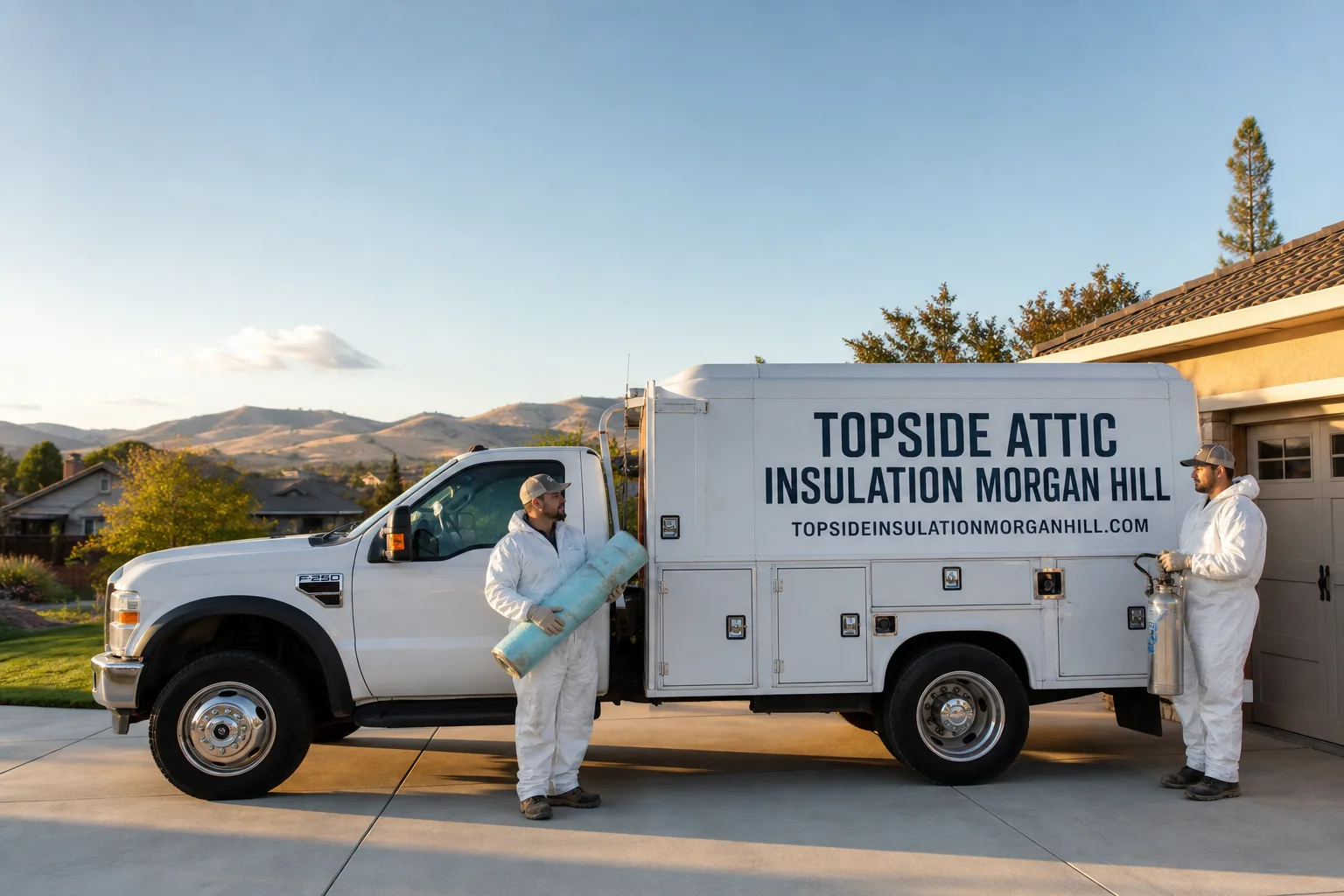
How Much Does Insulation Cost in San Jose?
Insulation in San Jose typically costs between $1,800 and $6,500 for a whole-home attic project, with most single-family homes in the 1,500-2,500 sq ft range landing between $2,200 and $4,400. Spray foam jobs run higher - often $3,500 to $9,000 depending on scope - while targeted air sealing and top-up projects can come in under $1,200. Every price we quote is written before any work starts, with a flat scope and a written warranty attached.
Insulation Cost Breakdown (2026)
The table below reflects what San Jose homeowners are actually paying in 2026, based on jobs completed across neighborhoods from Willow Glen to Berryessa to Almaden Valley. Prices include labor, materials, and the blower-door test where listed. They do not include removal of existing insulation, which is priced separately.
| Service | Typical Range (San Jose Market, 2026) | Notes |
|---|---|---|
| Attic blown-in insulation (fiberglass or cellulose) | $1,800 - $4,200 | 1,200-2,500 sq ft attic; R-38 to R-60 target |
| Attic air sealing + blown-in insulation (combined) | $2,400 - $5,500 | Air sealing of top plates, can lights, penetrations before any insulation is added |
| Spray foam insulation (open-cell, attic underside) | $3,500 - $7,500 | Conditioned attic configuration; higher per sq ft cost, lower long-term air leakage |
| Spray foam insulation (closed-cell, walls or crawl space) | $4,000 - $9,000 | Vapor barrier performance built in; often spec’d in Willow Glen older-stock homes |
| Wall insulation (blown-in retrofit) | $1,500 - $3,800 | Drill-and-fill method; no drywall removal in most cases |
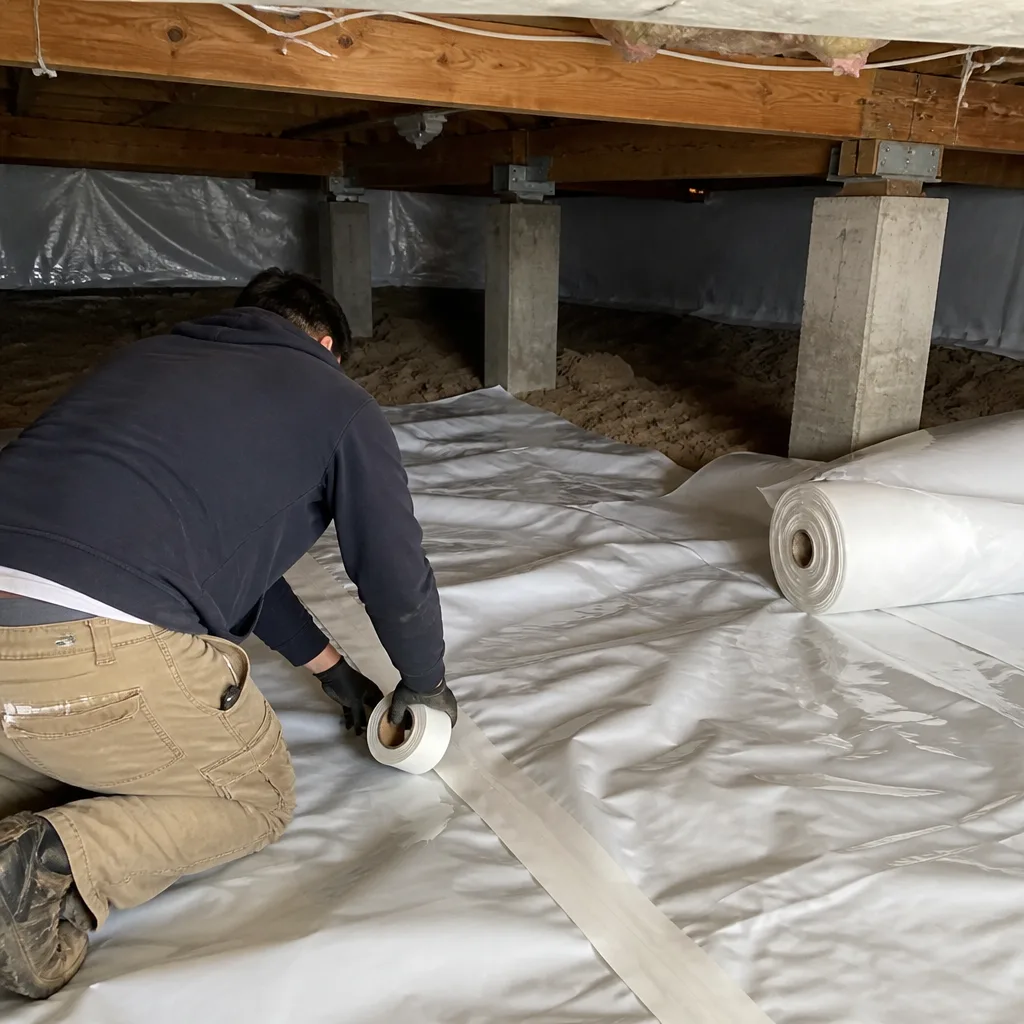
| Crawl space encapsulation + vapor barrier | $2,200 - $5,800 | Includes liner, sealing, and often rim joist insulation |
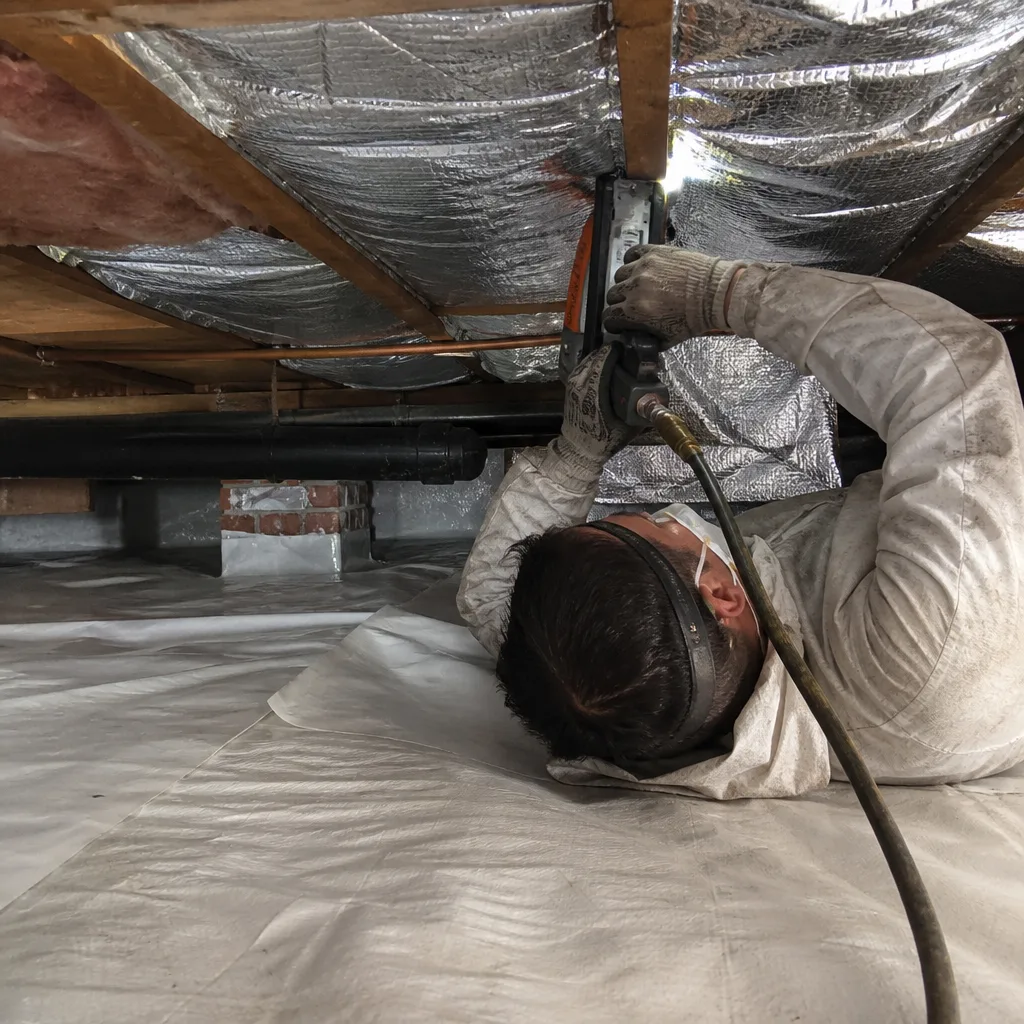
| Radiant barrier installation (attic) | $900 - $2,100 | Foil barrier stapled to rafters; works alongside blown-in, not instead of it |
| Insulation removal (old batt or blown-in) | $800 - $2,400 | Price scales with depth, square footage, and contamination level |
| Attic cleaning and rodent proofing | $600 - $2,000 | Common in older Cambrian Park and Rose Garden homes with roof rat history |
| Home energy audit (blower-door test) | $300 - $600 | Produces a CFM50 reading before and after any work; often credited toward project cost |
What Moves the Number Up or Down
Square footage is the most obvious driver, but it’s not the only one. San Jose homes built before 1980 - and there are a lot of them in Willow Glen, the Rosegarden district, and around Alum Rock - tend to have deeper, harder-to-access attic cavities and almost always need air sealing before any insulation makes sense. Adding proper air sealing to a project typically adds $400 to $1,200 to the total, but it’s the step that makes the insulation actually work. Installing R-49 blown-in cellulose over an attic floor riddled with open top plates and un-gasketed recessed lights is like patching a screen door with screen tape – the R-value on the label means very little.
Material choice matters too. Fiberglass blown-in (brands like Owens Corning and Johns Manville make reliable products in this category) runs cheaper per bag than cellulose from GreenFiber, but cellulose settles to a higher effective density and performs better in San Jose’s mild-but-variable climate where temperature swings between morning fog and afternoon heat are real. Rockwool batt is the choice when sound control matters as much as thermal performance – common in newer mixed-use neighborhoods near downtown San Jose or Santana Row.
Access difficulty is underpriced in most contractor bids and real in San Jose’s older housing stock. A tight, 18-inch attic hatch opening and a 4/12 roof pitch in a 1962 ranch in Cambrian adds time. A vaulted ceiling in an Almaden Valley remodel adds complexity. We scope these things in writing before quoting – not after the crew arrives.
What Affects Insulation Pricing in San Jose
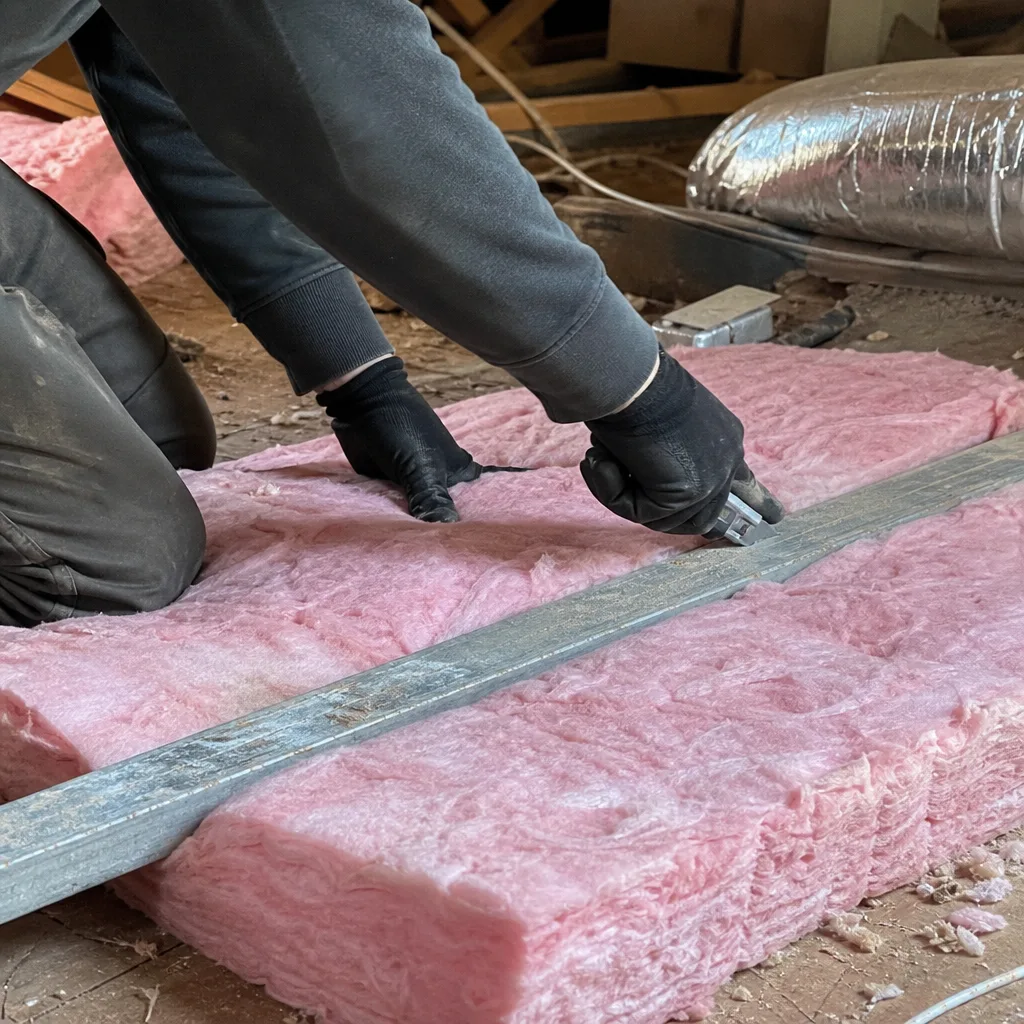
- Existing insulation depth and condition: Homes with less than R-19 of existing insulation – very common in San Jose pre-1980 stock – need more material to reach California Title 24’s R-38 minimum for attics (R-49 is the current new-construction target). The further you are from code minimum, the more material goes in, and the higher the cost. If existing insulation is contaminated by rodents or moisture, removal is required first.
- Air sealing scope: Under the way we operate at Envelope Insulation Co., insulation never goes in before air sealing is done – that’s not an upsell, it’s a hard prerequisite. But the amount of air sealing work varies significantly by home age and construction type. A 1990s Evergreen tract home with limited penetrations needs less sealing labor than a 1955 Willow Glen bungalow with original can lights, a dropped soffit, and an attic hatch that’s never been weatherstripped. The blower-door test – a pressurization reading that shows, in one number, how much conditioned air a building envelope is losing – tells us exactly how much work the envelope needs before we put a dollar amount on it.
- Attic access and geometry: San Jose’s housing mix spans everything from flat-ceiling ranch homes (easy access, uniform depth) to cathedral ceilings in newer Almaden Valley custom builds (complex, expensive). Knee walls, complex roof lines, and hatch size all affect labor time directly. This is one reason we document with photos before, during, and after – so the scope matches what we found, not what we assumed.
- Material type: Blown-in fiberglass runs roughly $0.50 to $0.90 per square foot installed; blown-in cellulose is comparable. Open-cell spray foam (Icynene and Demilec are among the brands we use depending on application) runs $1.00 to $2.00 per board foot; closed-cell runs $1.80 to $3.50 per board foot. Radiant barrier foil adds less cost but also adds less R-value – it’s a supplement in San Jose’s climate, not a standalone solution.
- Local permit requirements: Santa Clara County and the City of San Jose do not require a standalone permit for most blown-in attic insulation top-ups, but spray foam projects that change a home’s HVAC zoning or that involve a conditioned attic conversion typically do. We pull permits where required – and we tell you up front, in writing, whether the project needs one and what that adds to cost.
- PG&E rebates and state incentive programs: San Jose homeowners may qualify for PG&E rebates on insulation and air sealing through the Energy Upgrade California program. Rebate amounts vary by year and measure; as of 2026, attic insulation rebates through PG&E have run between $125 and $400 for qualifying homes. These don’t change the contract price we quote you, but they reduce your net cost after the fact. We note which projects are likely rebate-eligible in the written scope.
How to Save on Insulation in San Jose
The most expensive insulation mistake San Jose homeowners make is adding insulation without addressing air leakage first. It sounds counterintuitive, but adding R-49 blown-in over an unsealed attic floor – one with open top plates, bath fan penetrations, and attic hatch gaps – produces a fraction of the energy savings the label suggests. You pay for the material, you don’t get the performance. Getting a blower-door test done before any material goes in, and having those leaks sealed first, means the insulation you do install actually hits its rated R-value in practice, not just on the bag.
Second: combine work. A home that needs attic insulation, air sealing, and a radiant barrier done over three separate visits pays three mobilization costs. Done in one scope, the labor overlap saves real money – typically $300 to $700 compared to scheduling separately.
Third: check your PG&E rebate eligibility before signing any contract. Attic insulation and air sealing are rebate-eligible measures under PG&E’s current programs for San Jose residents. The rebate won’t cover everything, but $200 to $400 back on a $3,000 job is worth the paperwork, which we handle.
Fourth: ask for a written second opinion before committing to any large project. We offer a free second opinion on any written estimate – bring us a competing quote and we’ll go through it line by line. The goal isn’t to undercut a competitor; it’s to make sure you understand what you’re actually paying for and whether the scope is complete. A quote that omits air sealing from an attic insulation job isn’t cheaper – it’s incomplete.
For an exact written price on your San Jose home – no estimates over the phone, no ballpark ranges that shift when the crew arrives – call (669) 280-8103. Under the Haven Standard, a written price with a flat scope and written warranty is ready before anyone starts work.
San Jose Neighborhoods: What We See on the Ground
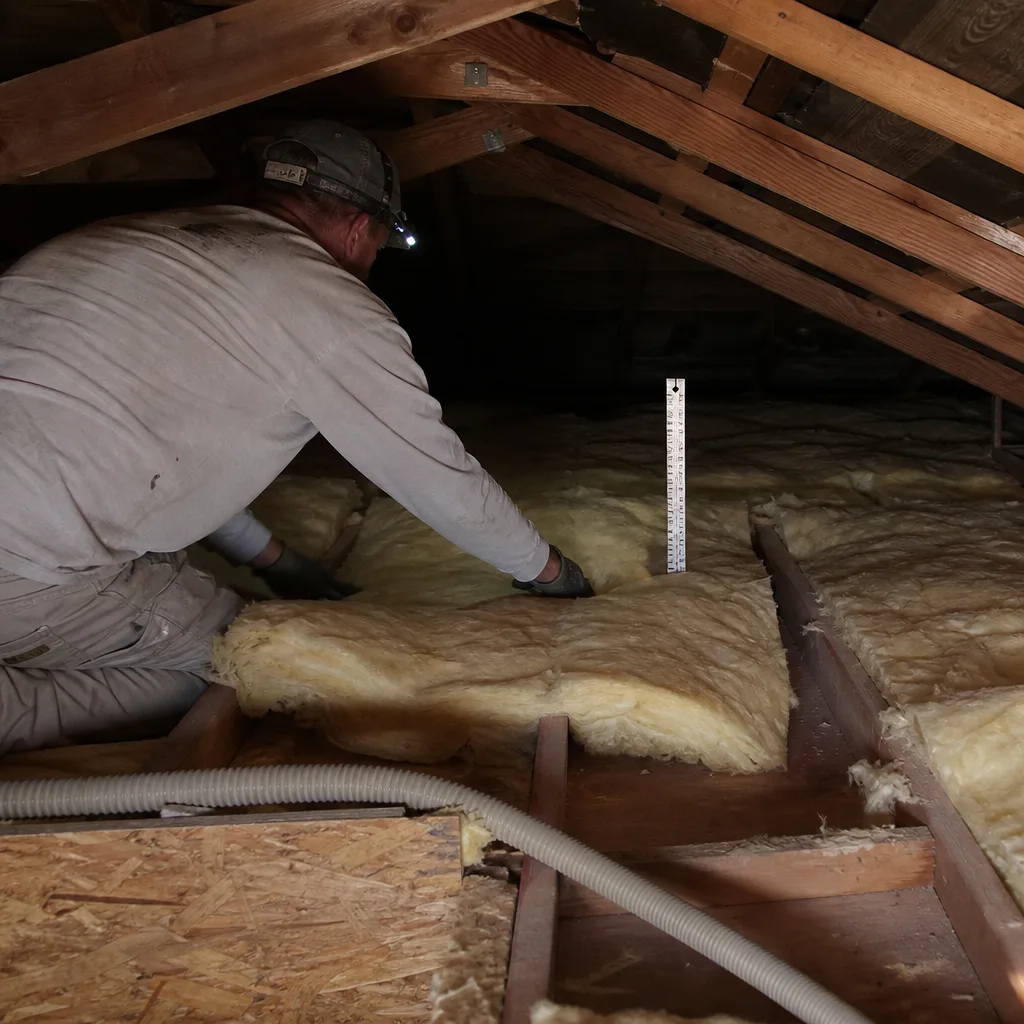
San Jose’s housing stock is not uniform, and insulation pricing reflects that. Here’s what actually comes up by area, based on jobs completed since 2016 across the city.
Willow Glen and Rose Garden
These neighborhoods run heavily 1930s to 1960s construction. Attic hatch sizes are often undersized – 20 by 24 inches is common – and the original insulation, where it exists, is usually degraded kraft-faced batt at R-11 or less. Air sealing needs here are significant: open top plates, unsealed chimney chases, and original recessed fixtures with no vapor barrier. Typical full projects (air seal plus blown-in cellulose to R-49) in a 1,400 sq ft Willow Glen home run $3,200 to $4,600.
Almaden Valley and Blossom Hill
Larger homes, more complex rooflines, higher proportion of vaulted ceilings. The 1980s and 1990s tract homes here often have existing fiberglass batt at R-19 to R-25 – better than Willow Glen, but still below current Title 24 targets. Top-up projects (adding blown-in over existing) are common and typically run $1,400 to $2,800 depending on attic geometry. Conditioned attic conversions, using open-cell spray foam on the roof deck underside, run $5,500 to $8,000 for the larger homes in this area.
Evergreen and Silver Creek
Newer construction, 1990s to 2010s, with better baseline insulation but more HVAC ductwork running through unconditioned attic space – a common source of energy loss that a blower-door test will identify. Wall insulation retrofits are less common here because the walls were insulated at construction, but attic air sealing around recessed LED trims and bath exhaust fans is still relevant. Typical attic projects run $1,800 to $3,200.
Berryessa and Alviso
Mix of 1960s to 1980s stock and some newer infill. Crawl space encapsulation is a common need in this area given proximity to the bay and associated moisture levels – we see vapor barrier failures and subfloor insulation degradation regularly in Alviso-adjacent homes. Crawl space encapsulation projects here run $2,800 to $5,500 depending on linear footage and liner specification.
Downtown San Jose and Midtown
Older attached homes, condos, and mixed-use buildings present access challenges that single-family homes don’t. HOA requirements, shared walls, and limited attic access points all affect scope and pricing. We scope these carefully – and in writing – before quoting, because the variables are wider here than in any other part of San Jose.
Insulation Materials: What’s Actually Going Into San Jose Homes
Material selection isn’t just a cost question. It’s a performance question, and the right answer depends on where in the home the insulation is going and what the home’s existing air leakage situation looks like.
Blown-In Fiberglass
Owens Corning and Johns Manville both make blown-in fiberglass products that perform well in San Jose’s climate. Fiberglass doesn’t settle as much as cellulose over time, holds up to moisture without degrading, and installs quickly in open attic cavities. Cost per square foot installed: roughly $0.55 to $0.90, depending on target R-value depth. Good for attic floor applications where air sealing is done first.
Blown-In Cellulose
GreenFiber is the brand we use most often for cellulose applications. It installs to a denser pack than fiberglass, which fills small gaps and irregularities in the attic floor more thoroughly. Cellulose is treated for fire and pest resistance. It costs slightly more per bag than fiberglass but covers the same R-value target at a lower installed depth, which matters in low-clearance attics. Cost per square foot installed: $0.60 to $0.95.
Open-Cell Spray Foam
Icynene and Demilec are two brands we use depending on application specifics. Open-cell foam expands dramatically on application and creates an air barrier as well as a thermal barrier – useful for conditioned attic configurations and rim joist applications. It’s vapor-permeable, which is actually a feature in mild climates like San Jose’s. Cost per board foot: $1.00 to $2.00 installed.
Closed-Cell Spray Foam
Higher density, higher R-value per inch (R-6 to R-7 per inch vs. R-3.5 for open-cell), and a built-in vapor barrier. Used for crawl space walls, below-grade rim joists, and applications where moisture management is the primary concern. Costs more – $1.80 to $3.50 per board foot – but is the right product for specific applications in San Jose homes with crawl space moisture issues or unvented roof assemblies. CertainTeed also supplies spray foam systems we use on appropriate projects.
Rockwool Batt
Used primarily in wall cavities and for sound control in interior walls. Fire-resistant, dimensionally stable, and performs at full rated R-value even when compressed slightly – which matters in retrofit wall applications. More expensive than fiberglass batt but worth the premium in applications where sound attenuation is part of the goal. Common in San Jose remodels near light rail corridors or mixed-use zones where external noise is a factor.
Radiant Barrier
Foil-faced barrier stapled to the underside of roof rafters, facing the attic space. Not a substitute for mass insulation – it doesn’t add R-value – but it does reduce radiant heat gain through the roof deck, which is relevant in San Jose’s summer afternoons. Best results when combined with proper attic ventilation. Installed cost: $900 to $2,100 for a typical San Jose attic. We include it as a recommendation where the roof geometry and ventilation setup support it, and explain in writing what it does and doesn’t do.
FAQs – Insulation Cost in San Jose
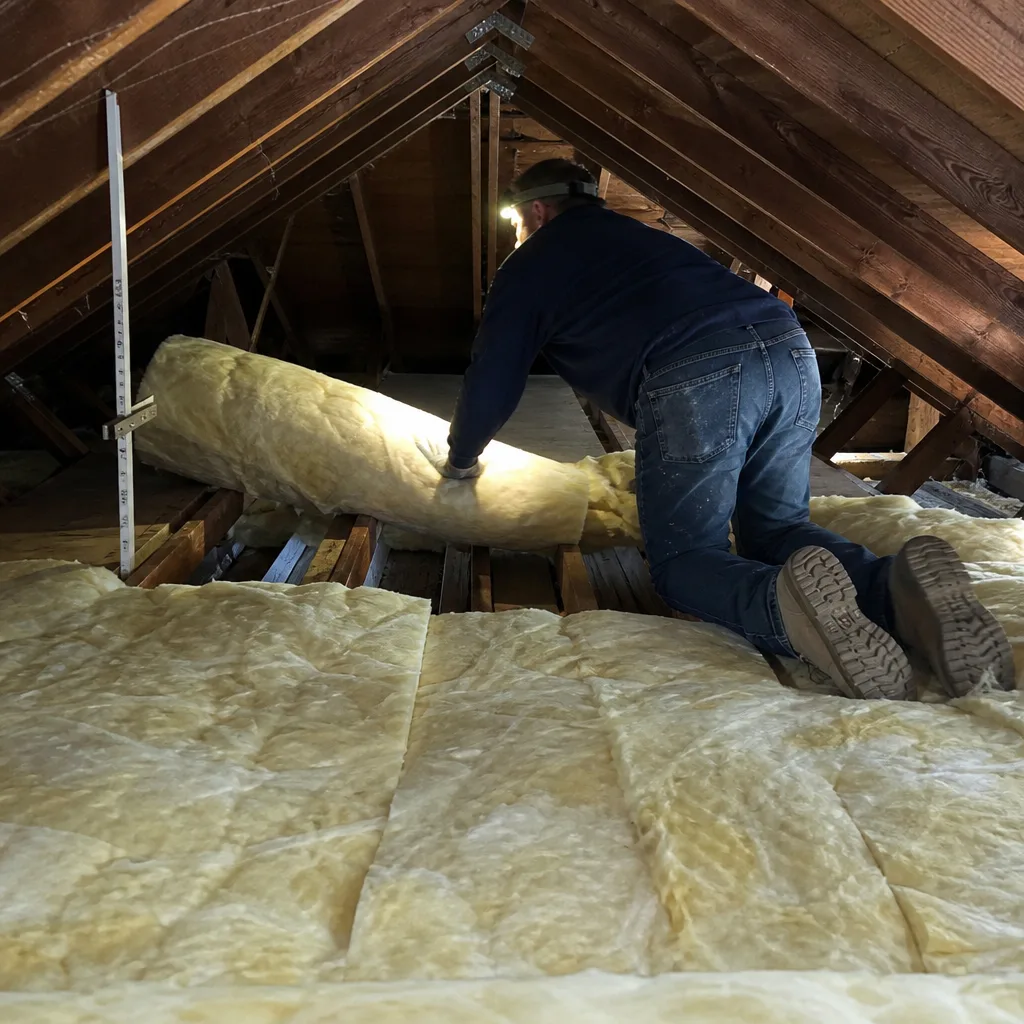
How much does attic insulation cost in San Jose?
Attic insulation in San Jose runs $1,800 to $5,500 for most single-family homes, with the wide range driven by square footage, existing insulation depth, and whether air sealing is included. A 1,600 sq ft attic in a pre-1980 home in Willow Glen or Cambrian Park – where air sealing needs are typically significant – lands in the $3,000 to $4,800 range when you include proper sealing of top plates, penetrations, and can lights before the blown-in goes in. A newer Evergreen home doing a top-up from R-25 to R-49 over an already-sealed floor can come in at $1,500 to $2,400. Call (669) 280-8103 for a written price specific to your home – no estimate over the phone, a flat scope in writing before work starts.
Is it cheaper to repair or replace old insulation in San Jose?
If the existing insulation is dry, not contaminated, and at least R-19 in depth, a top-up (adding blown-in over existing) is almost always cheaper than full replacement – typically $1,200 to $2,800 vs. $2,500 to $4,500 for full removal and replacement. But if the insulation has been compromised by rodents, moisture, or mold – common in older Berryessa and Alviso homes with crawl space moisture problems, and in Rose Garden homes with historical roof leaks – removal is not optional. Leaving contaminated material under new insulation traps the problem. We document what’s there with photos before quoting either path, so you’re deciding with the actual evidence in front of you.
Can I get a PG&E rebate for insulation in San Jose?
Yes. San Jose homeowners qualify for PG&E rebates through the Energy Upgrade California program for both attic insulation and air sealing measures. As of 2026, rebates for attic insulation have run between $125 and $400 for qualifying homes, depending on the measure and home type. The rebate process requires documentation of the before and after condition – which we provide as a standard part of every job through our blower-door test readings and Documented Photo Record. We note rebate eligibility in the written scope on applicable projects.
How long does insulation installation take in San Jose?
Most attic insulation projects in San Jose are completed in one day. A combined air sealing and blown-in project on a 1,500 to 2,000 sq ft attic typically takes 4 to 8 hours, depending on access and the extent of sealing work. Spray foam projects may require the space to be unoccupied for 24 hours after application for off-gassing. Crawl space encapsulation typically runs one full day for a standard San Jose single-family crawl space. The written scope we deliver before starting includes the expected timeline so you’re not guessing.
Does San Jose require a permit for attic insulation?
For most blown-in attic insulation top-up projects in San Jose, no permit is required. Santa Clara County and City of San Jose building codes generally exempt insulation-only additions from permit requirements. However, projects that include electrical work near recessed fixtures, change the home’s attic configuration (such as converting from vented to conditioned/unvented), or involve spray foam on the roof deck underside may require a permit. We tell you in writing – before the written scope is finalized – whether your specific project requires one and what that adds to timeline and cost.
Why Air Sealing Has to Come First
This is the point most insulation bids skip over, and it’s the most important sentence on this page: insulation and air sealing are not the same thing, and adding insulation without sealing the air leaks first is one of the more reliable ways to spend $3,000 and feel almost no difference in your energy bills.
A blower-door test – a pressurization test that places a calibrated fan in an exterior door, depressurizes the home, and reads the air infiltration rate in CFM50 (cubic feet per minute at 50 Pascals of pressure) – shows you exactly how leaky the building envelope is before any work starts. We run this test on applicable jobs and publish the before and after numbers so the homeowner can verify what changed. A home reading 4,200 CFM50 before sealing and 2,100 after is a home that’s half as leaky. That’s a number. Not a feeling.
In San Jose, the most common air leakage points in attics are top plates (the framing members where interior walls meet the attic floor), recessed can lights – especially the pre-IC-rated fixtures common in 1980s and 1990s construction – bath exhaust fan penetrations, and attic access hatches that have never been insulated or weatherstripped. None of these require heroic effort to seal. All of them make a measurable difference in the blower-door number and in the actual thermal performance of whatever insulation goes in after.
Under the way Envelope Insulation Co. operates, insulation never goes in before air sealing is complete. That’s not a policy we describe as a differentiator to make ourselves sound interesting – it’s a prerequisite because it’s correct, and because our name is on the blower-door numbers we publish when the job is done.
To learn more about how this fits into a full building-envelope service, start with our home page, which outlines the complete service line and the Haven Standard that applies to every job.
The Haven Standard: What to Expect on Every Job
Every insulation project in San Jose starts the same way: a written price, a flat scope, and a written warranty – before anyone lifts a tool. That’s Haven Standard Clause 1, and it’s not negotiable. No verbal estimates, no “we’ll know more when we get started,” no scope that expands once the crew is on the roof.
The written scope includes the materials being used (brand and product, not just “blown-in insulation”), the R-value target, the air sealing measures being performed, and whether the project is blower-door-tested before and after. The Documented Photo Record is included on every visit – not available on request. The 365-Day Done Right Promise applies to all completed work: if something isn’t right within a year of completion, we make it right. That’s in writing before we start.
Background-checked, uniformed technicians show up to every job. A live person answers the phone around the clock – not a voicemail loop, not a callback in two to three business days. A named technician and a text when they’re on the way.
Since 2016, Wes Okafor and the team at Envelope Insulation Co. have completed work on more than 9,000 homes – every one with a written price before work started and a documented record when the crew left. That’s not a marketing number. It’s a scope count, and it means the technician arriving at your San Jose home has seen your specific problem before, probably more than once.
The Free Second Opinion offer is genuine: bring a written competing estimate to us and we’ll read it with you, line by line. The goal is that you understand what you’re being asked to pay for and whether the scope is complete. An insulation bid that doesn’t include air sealing isn’t a bargain – it’s an incomplete job with a low number on it.
Key Takeaways
- Attic insulation in San Jose costs $1,800 to $5,500 for most homes, with air sealing included in the jobs that perform at the R-value you paid for.
- Spray foam runs higher – $3,500 to $9,000 – and is the right choice for specific applications, not every job.
- Homes built before 1980 in Willow Glen, Cambrian, Rosegarden, and Berryessa nearly always need meaningful air sealing before insulation makes sense.
- PG&E rebates of $125 to $400 are available for qualifying attic insulation and air sealing projects in San Jose.
- A written price before work starts is not an option at Envelope Insulation Co. – it’s the baseline, every time, no exceptions.
- The blower-door test before and after is included on applicable jobs – so you can see the CFM50 number change, not just take our word for it.
- The 365-Day Done Right Promise applies to every completed job – in writing.
Get a Written Price for Your San Jose Home
If your San Jose home is uncomfortable in summer afternoons, your energy bills have drifted up over the past few years, or you know the attic insulation hasn’t been touched since the house was built, the next step is a free estimate – with a written scope and a written price, not a ballpark range that shifts when the crew shows up.
Call (669) 280-8103 to schedule. Wes Okafor and the Envelope Insulation Co. team have been doing this work under the Haven Standard since 2016, with a Documented Photo Record on every job and blower-door numbers to show what actually changed. No voicemail loops – a live person answers around the clock.
Pricing reflects the San Jose market as of 2026. Topside Attic Insulation Morgan Hill offers free estimates – call (669) 280-8103.
Written by Wes Okafor, Owner at Envelope Insulation Co., serving San Jose, CA since 2016.
What Our Customers Say
"Two other companies quoted to blow more insulation on top of what was there. These were the only ones who said the existing material had to come out first, and explained why."
- Clifford E."Crawl space encapsulation done properly. Photographs of the vapour barrier at every seam, and the damp smell in the hallway is gone."
- Ainsley P."They air-sealed the attic floor before insulating and showed me the blower-door number before and after. The upstairs is finally the same temperature as downstairs."
- Marisol D.