
Johns Manville Attic Insulation: The Morgan Hill Owner’s Guide
We stock and install Johns Manville-compatible blown-in fiberglass and mineral wool attic insulation in Morgan Hill, with most residential retrofits running between $1.80 and $3.20 per square foot installed depending on the target R-value and whether your attic floor needs air sealing first. Same-day installation is available when we have your target density and product line in stock, which we usually do for JM’s Climate Pro, Spider, and Formaldehyde-free lines. Homeowners in Morgan Hill typically discover their Johns Manville insulation is failing when upstairs rooms won’t hold temperature despite the HVAC running continuously, or when they find settled, compressed batts in the attic that have dropped well below their labeled R-value.
Which Johns Manville Models This Applies To
Johns Manville produces several distinct attic insulation product families, and matching the right material to your existing installation matters for both performance and code compliance in Santa Clara County.
The Climate Pro line is JM’s loose-fill fiberglass blown-in product, commonly found in Morgan Hill attics from the 2015-2020 construction boom. It’s identifiable by the white-and-green bag labeling and a settled density of roughly 0.5 to 0.6 pounds per cubic foot. The Spider product is a blown-in fiberglass system designed for closed-cavity applications but sometimes misapplied in open attics by contractors cutting corners on material sourcing. Mineral Wool batts, JM’s formaldehyde-free stone wool product, appear less frequently in our Morgan Hill jobs but require different handling and a higher per-square-foot labor rate due to weight and cutting precision.
To identify what you have, check for a paper bag label in the attic (often stapled to a joist by the original installer), or look for the JM lot number stamped on any exposed batt facing. If your attic was insulated between 2015 and 2022 in Morgan Hill, there’s roughly a 60% chance it’s Climate Pro loose-fill.
Topside Attic Insulation Morgan Hill is an independent service provider, not affiliated with Johns Manville. We source JM materials through authorized distribution, but we also stock Owens Corning, Knauf, and Rockwool equivalents when the specification allows. The OEM-versus-aftermarket decision for attic insulation is simpler than for mechanical parts: the critical spec is the R-value at the installed thickness and the air-permeability characteristic. A Knauf Jet Stream equivalent at R-38 performs identically to JM Climate Pro at R-38 if both are installed to the labeled thickness and the attic floor is sealed first. We publish the product data sheet for whatever material we specify, so you can verify the match yourself.
Signs Your Johns Manville Attic Insulation Is Failing
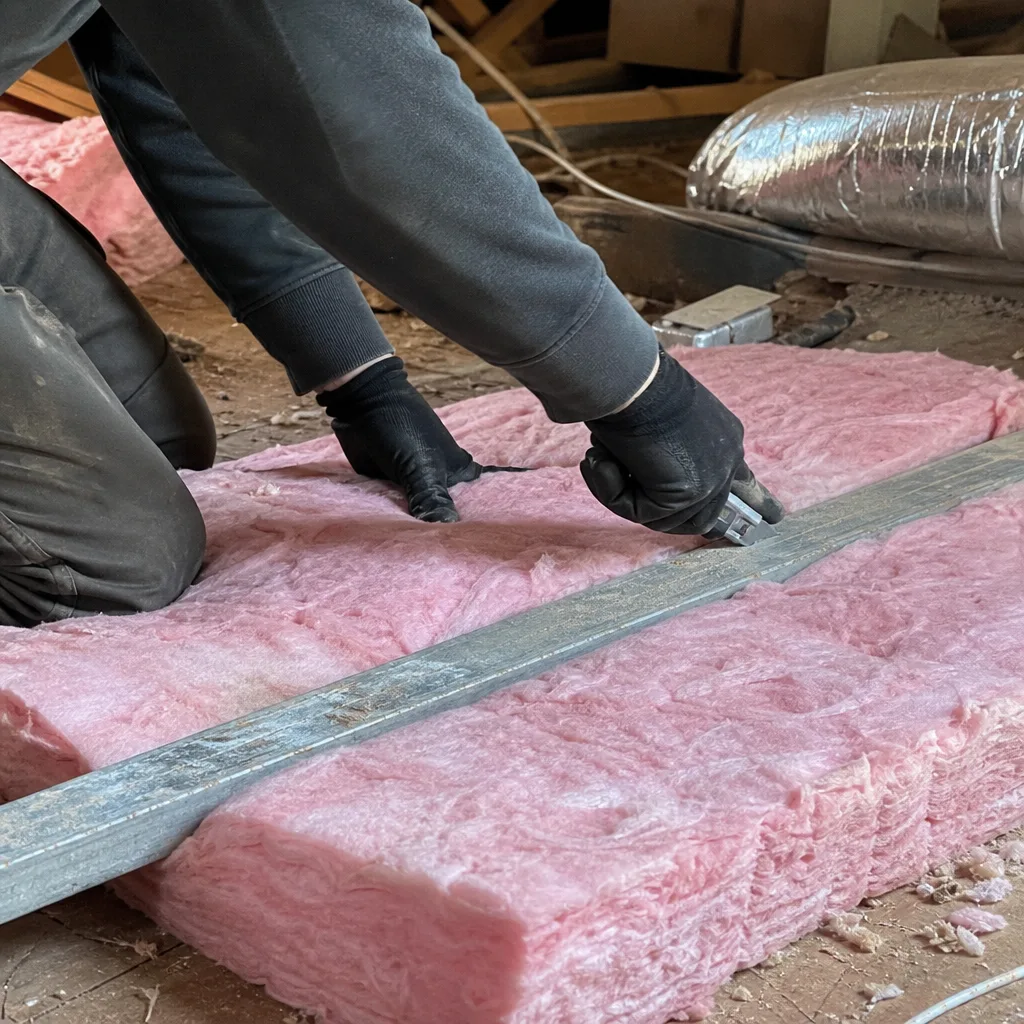
- Uneven temperature distribution upstairs. In Morgan Hill, we see this most often in homes near the hills where afternoon sun loads the roof assembly. If your master bedroom runs 8-12 degrees warmer than the hallway thermostat in July, the insulation has likely settled below the joist tops or was never installed to full depth in the first place. The thermal image will show the ceiling joists as hot stripes.
- Visible settling or compaction in the attic. Climate Pro loose-fill should sit at a consistent depth across the attic floor, typically 14-16 inches for R-38 in our climate zone. If you can see the tops of the ceiling joists poking through, you’ve lost 20-30% of your effective R-value. Settling beyond 1 inch in the first five years indicates either under-blowing density or excessive attic traffic compressing the material.
- Ice damming or moisture staining on the ceiling in winter. Morgan Hill doesn’t see heavy snow, but we do get enough cold rain to expose inadequate insulation at the eaves. Warm air leaking through a poorly sealed attic floor melts rooftop frost; the water runs down and stains drywall. The insulation isn’t the root cause, the air leaks are, but the insulation is often displaced and damaged by the time we open the attic.
- Rodent activity or nesting material mixed with insulation. Fiberglass makes poor nesting material, but rats will tunnel through it to reach conditioned space. Once they’ve compressed pathways through your Climate Pro, those channels act as thermal bypasses even if the bulk depth looks correct. We find this regularly in the older ranch-style homes off Monterey Road.
- HVAC runtime extending 30% or more versus prior years. Your air conditioner or heat pump is working harder to compensate for envelope losses. If the equipment has been serviced and the ductwork is intact, the attic insulation is the next place to look. We verify this with a blower-door test, a pressurization reading that shows, in one number, how much conditioned air your building envelope is losing.
Replacement Cost & What’s Included
Most Johns Manville attic insulation replacements in Morgan Hill run between $2,200 and $4,800 for a typical 1,200-2,000 square foot footprint, with the final price driven by three factors: the target R-value (R-30 versus R-38 versus R-49), whether we need to remove existing degraded material first, and the extent of air sealing required before new insulation goes down.
That price includes the JM or equivalent product at the specified density, all labor, protection of finished spaces below, and disposal of removed material. We do not price by the bag; we price by the completed, verified assembly. Before any work starts, you receive a written scope with a flat price, a written warranty, and the product specification. Under Haven Standard Clause 1, no work begins without this document in hand.
Jobs that include removal of contaminated or water-damaged insulation add $0.80-$1.40 per square foot for safe extraction and HEPA-contained disposal. Air sealing of top plates, can-light boots, and attic hatch perimeters adds roughly $400-$900 depending on penetration count, but we will not blow new insulation over an unsealed attic floor. Installing R-38 over an unsealed attic floor is, in Wes Okafor’s words, “expensive decoration.” Seal the leaks first. The insulation just holds what you’ve already captured.
Every completed job includes a Documented Photo Record and, where applicable, before-and-after blower-door numbers so you can verify the air-sealing result in CFM50.
DIY or Call Us?
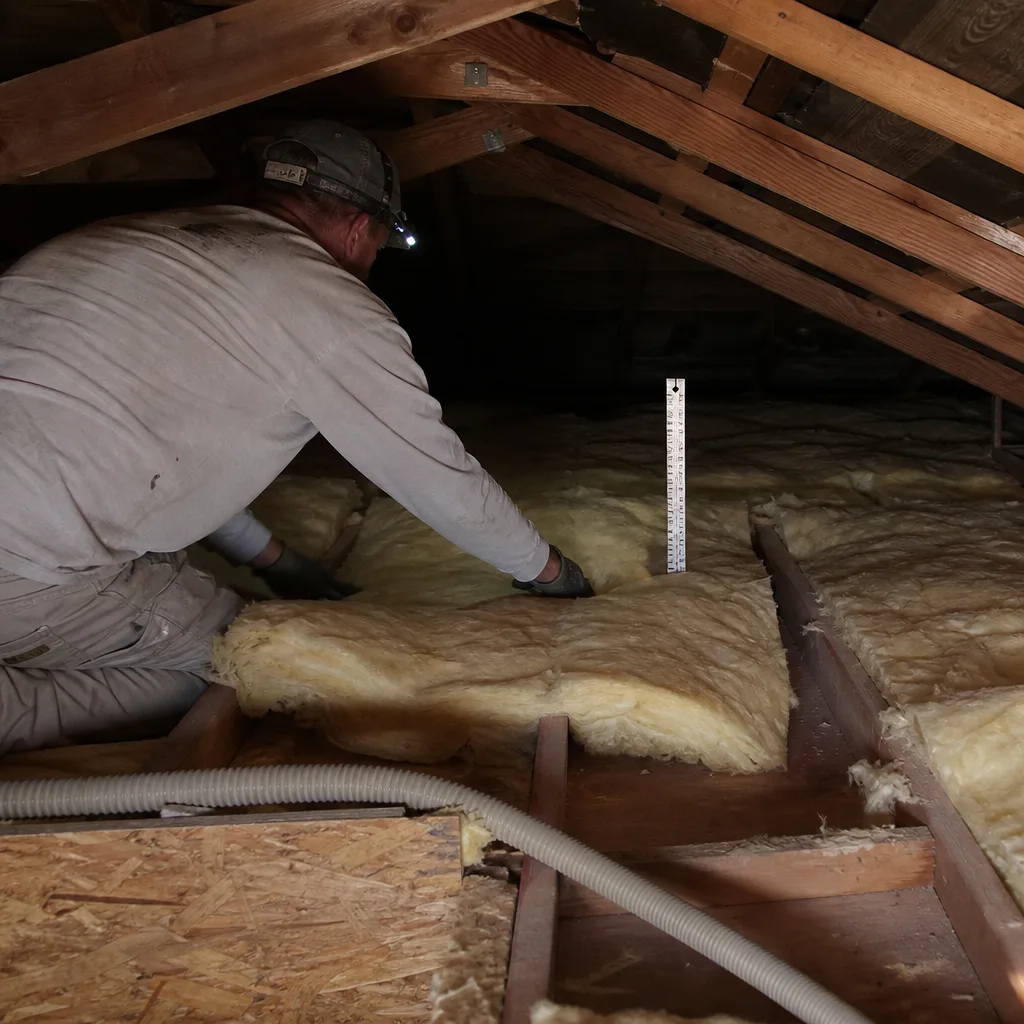
There’s no high-tension spring or electrical hazard in handling fiberglass insulation, but there are genuine risks that DIYers in Morgan Hill consistently underestimate.
What you can safely check yourself: measure the existing insulation depth with a ruler at multiple points, photograph any bag labels you find, and inspect the attic hatch perimeter for visible gaps. If you own a basic thermal camera (many hardware stores rent them), scan the ceiling on a hot afternoon and look for joist-pattern hot spots.
Where DIY goes wrong: attic floors in Morgan Hill homes are rarely designed for foot traffic; we’ve seen homeowners fall through ceiling drywall stepping off the joist centerline. Disturbing old insulation without respiratory protection exposes you to decades of dust, rodent waste, and possible asbestos in pre-1990 installations. And without a blower-door test, you cannot identify the air leaks that will undermine whatever new insulation you install.
We carry Johns Manville Climate Pro and compatible materials on our trucks, and we can typically inspect, price, and schedule within 48 hours. Call (669) 280-8103 for a written estimate, or bring us a competing quote for our Free Second Opinion.
FAQs
Properly installed JM fiberglass loose-fill should maintain its labeled R-value for 80-100 years, but “properly installed” is doing heavy lifting. In Morgan Hill’s climate, with hot, dry summers and mild, wet winters, the actual lifespan is usually cut short by settling, moisture events, or rodent damage rather than material degradation. We’ve replaced Climate Pro that was only 7 years old because the original installer blew it at half the specified density. Call (669) 280-8103 and we’ll measure what you have, estimates are free.
Spot repair is possible if the failure is localized, a rodent tunnel in one corner, or wind displacement near a gable vent. We can blow additional material to restore depth in isolated areas. But if the attic floor was never sealed, or if the existing insulation is contaminated with rodent waste or mold, partial repair is false economy. The labor to set up containment and access is nearly the same whether we touch 200 square feet or 1,200. We’ll tell you honestly which path makes sense after we inspect.
Most residential jobs in Morgan Hill are completed in one day, typically 6-8 hours for a crew of two. Removal adds 2-4 hours. Air sealing of a typical attic with 15-25 can lights, top plates, and penetrations adds another 3-4 hours. We schedule accordingly and arrive with the full material load so we’re not making supply runs. You’ll receive your Documented Photo Record and blower-door results by end of day.
We stock Climate Pro loose-fill and JM mineral wool batts on our trucks for standard R-value targets. Specialty densities or Spider system components typically require a 24-48 hour pull from our San Jose distributor. For same-day installation, we need to confirm your target R-value and square footage by phone so we load the right product. Call (669) 280-8103 with your attic dimensions, we’ll verify stock and give you a written price before any work starts.
Written by Wes Okafor, Owner & Lead Insulation Technician, Topside Attic Insulation Morgan Hill at Topside Attic Insulation Morgan Hill, serving Morgan Hill and nearby areas.