
Rockwool Blown-In Insulation in Morgan Hill: What to Know First
We provide independent Rockwool blown-in insulation service in Morgan Hill, typically completing attic top-ups and dense-pack wall jobs within one to two business days of your call. Most Rockwool blown-in jobs in Morgan Hill homes run between $1,800 and $4,200 depending on attic square footage and whether air sealing is needed first. We publish a written price before any work starts, and we do not blow insulation over an unsealed attic floor.
This page is for Rockwool product owners in Morgan Hill who need blown-in insulation installed, topped up, or replaced, and who want to understand what their specific product requires. Call (669) 280-8103 to schedule a free estimate with a written price delivered before we lift a tool.
How Rockwool Products Fail - and How We Fix Them
- Rockwool Comfortbatt settling in wall cavities. Comfortbatt, the batts most commonly found in Morgan Hill’s 2015-2020 builds, is dense and friction-fit, but when installers skip the proper compression ratio or the cavity is overfilled, the batt can sag and leave a gap at the top plate. We remove the compromised batts, seal the top plate with acoustic sealant, then dense-pack with Rockwool Comfortbatt at the correct density or switch to blown-in Rockwool AFB (Acoustical Fire Batt) for irregular cavities.
- Rockwool AFB moisture absorption in bathroom soffits. AFB is hydrophobic and won’t wick water, but in Morgan Hill’s winter fog cycles, poorly vented bath fan ducts dump moist air directly onto AFB clusters. The insulation doesn’t mold, but the surrounding framing does. We trace the duct leak, replace the wet AFB with fresh material, and reroute or damper the exhaust line so the moisture exits the envelope entirely.
- Rockwool Safe ‘n’ Sound compression from double-drywall retrofits. Homeowners adding soundproofing layers often crush Safe ‘n’ Sound in interior walls, reducing its STC rating from 52 to roughly 38. We gauge the actual remaining thickness with a depth probe, calculate the lost R-value and acoustical performance, then either reinstall to proper depth or recommend a blown-in Rockwool top-up if the wall is being opened anyway.
- Rockwool Toprock DD thermal bridging on flat roofs. Toprock DD, the rigid board used on low-slope applications in some Morgan Hill infill homes, leaves gaps at parapet walls and equipment curbs that become thermal bridges. We pull the compromised boards, install continuous insulation at the proper R-value for Santa Clara County’s Climate Zone 4, and seal all transitions with compatible tape before re-covering.
- Rockwool Granrock settling in vented attics over time. Granrock, the loose-fill product sometimes used in Morgan Hill’s older ranch-style homes, can migrate toward the eaves in homes with active whole-house fans or poorly baffled soffit vents. We rake the material back to uniform depth, install proper vent baffles to prevent future migration, and top up with fresh Rockwool blown-in to the current Title 24 requirement of R-38 for attics in this climate zone.
Our Rockwool Blown-In Insulation Process
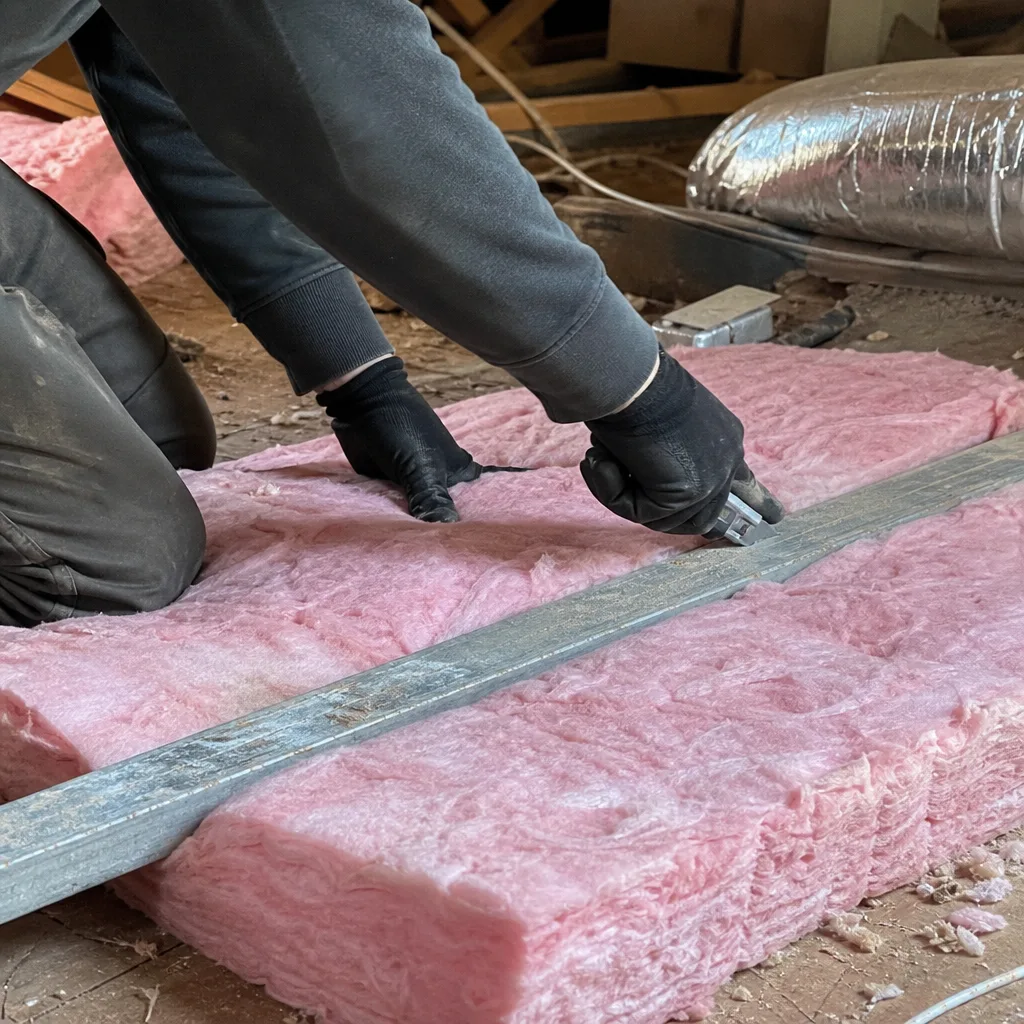
- 1
Call and schedule. A live person answers. We book a 90-minute window, text you when the technician is en route, and send Wes Okafor or one of our background-checked, uniformed crew.
- 2
Attic inspection and blower-door test. We pressurize the house to measure CFM50 - the cubic feet per minute of air leakage at 50 pascals of pressure. In Morgan Hill’s older stock near downtown, we typically see 3,500-5,500 CFM50 before any sealing work.
- 3
Written price and scope. We identify every penetration that needs sealing - top plates, can-light boots, attic hatch perimeters, plumbing and electrical penetrations - and deliver a flat price in writing. No work starts without it. Haven Standard Clause 1.
- 4
Air sealing first, then insulation. Seal the leaks first. The insulation just holds what you’ve already captured. We complete all sealing, then run a second blower-door test to document the reduction.
- 5
Rockwool blown-in installation. We set the blower to Rockwool’s specified density for the product line - typically 1.5-2.0 pounds per cubic foot for attic loose-fill - and install to marked depth gauges. Every bag is logged by lot number.
- 6
Documentation and cleanup. You receive a Documented Photo Record, the before-and-after blower-door numbers, and the written warranty. The 365-Day Done Right Promise begins at sign-off.
What Rockwool Blown-In Insulation Costs in Morgan Hill
| Job Type | Typical Range | What Moves the Price |
|---|---|---|
| Attic top-up (existing R-19 to R-38) | $1,800 - $2,800 | Attic square footage, access difficulty, whether old insulation needs removal first |
| Full attic replacement with air sealing | $3,200 - $4,800 | Extent of sealing required, number of can lights, chimney chase detail |
| Dense-pack wall insulation (Rockwool AFB) | $2,400 - $4,200 | Wall area, interior or exterior access, plaster vs. drywall |
| Crawl space floor (Rockwool Comfortbatt or blown-in) | $2,000 - $3,600 | Crawl height, vapor barrier condition, rodent damage to address first |
These are Morgan Hill-specific ranges based on jobs we’ve completed from the Oakwood Avenue area up to the newer builds off East Main. Your written price will be flat, with no open-ended allowances. Bring us any competing written estimate for a free second opinion. Call (669) 280-8103 for an exact quote - estimates are free.
Why Morgan Hill Homeowners Call Topside Attic Insulation Morgan Hill for Rockwool Work
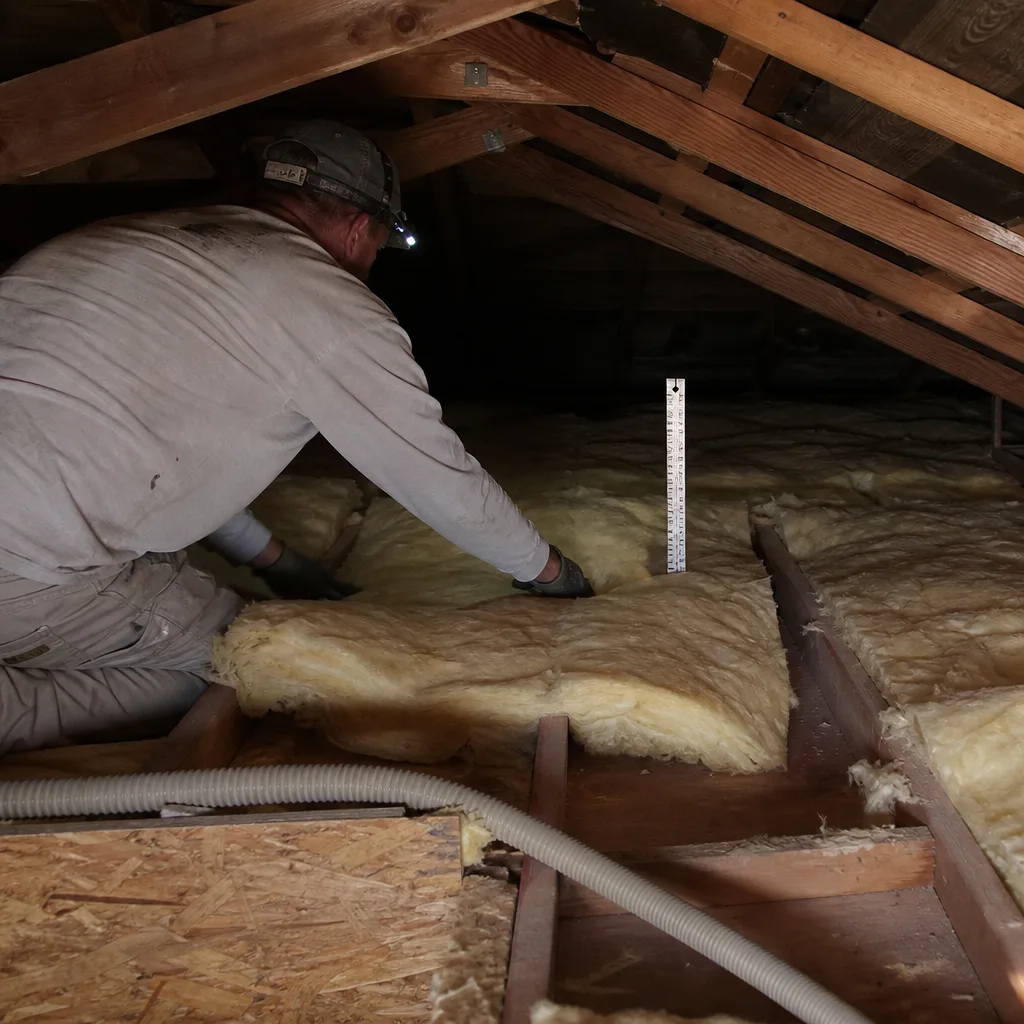
We’ve logged Rockwool jobs across Santa Clara County since 2016, and we source Rockwool alongside Owens Corning, Johns Manville, Knauf, and others - no proprietary lock-in means we specify what’s right for your assembly, not what moves our inventory. Every applicable job leaves with before-and-after blower-door numbers. The 365-Day Done Right Promise is in writing before we start. Calls are answered live, 24/7, by a person who can schedule your appointment or transfer you directly to Wes Okafor. We also service Reflectix radiant barrier systems when your project calls for combined heat-gain and insulation control.
FAQs
No. Rockwool’s product warranty covers manufacturing defects in the material itself, not the installation method, and it is not conditional on using Rockwool-certified installers. As an independent Rockwool service provider, we install to Rockwool’s published density and depth specifications, which preserves any valid material warranty. If you have a warranty claim question, we document the product lot numbers and installation conditions so you have what you need. Call (669) 280-8103 if you’d like us to review your specific product line.
Most Rockwool blown-in jobs are scheduled within two business days, and we carry common Rockwool loose-fill and batt products on our trucks. If your job requires a specific Rockwool density or a less common product like Toprock DD, we source it from our San Jose supplier with a one-day lead time. Same-day emergency service is available for homes with no insulation due to water damage or rodent remediation. Call (669) 280-8103 to check today’s availability.
Repair is cheaper when the Rockwool is dry, uncompressed, and simply settled or displaced - typically $800-$1,500 to rake, redistribute, and top up to proper depth. Full replacement is necessary when the product is water-stained, contaminated, or compressed below 70% of its original thickness, which runs $2,800-$4,800 including removal and new material. We tell you which category you’re in after inspection, not before. Call (669) 280-8103 for a free assessment with a written price.
We use genuine Rockwool products for all blown-in and batt installations - the material performance is tied to the manufacturing process, and there is no equivalent aftermarket loose-fill that matches Rockwool’s melt-spun mineral wool density. For accessories like vent baffles, insulation supports, and sealants, we use quality third-party products that are chemically compatible with mineral wool and meet California Title 24 requirements. We log all material sources in your job documentation.
Signs of poor installation include visible gaps at top plates or around penetrations, uneven depth distribution you can see by probing with a ruler, and comfort complaints in specific rooms despite adequate nominal R-value. We verify with a depth probe, thermal imaging to find bypass paths, and a blower-door test to quantify leakage. In Morgan Hill’s climate, a well-sealed and insulated attic should hold your conditioned air; if you’re running the AC all afternoon and the upstairs still climbs past 78°F, the envelope is talking. Call (669) 280-8103 and we’ll translate.
Written by Wes Okafor, Owner & Lead Insulation Technician, Topside Attic Insulation Morgan Hill at Topside Attic Insulation Morgan Hill, serving Morgan Hill and nearby areas.