
Demilec Crawl Space Encapsulation: The Morgan Hill Owner’s Guide
Demilec crawl space encapsulation systems in Morgan Hill typically run $3,800-$7,200 installed, depending on whether we’re covering a 1,200-square-foot perimeter or a full 2,500-square-foot footprint with conditioned-air integration. We stock Demilec-compatible vapor barriers, seam tape, and closed-cell spray foam on our Morgan Hill trucks, and most encapsulation repairs or full installs can start same-day once we’ve walked the space and written the scope. Most homeowners realize something’s wrong when the musty smell returns in February after a dry December, or when their dehumidifier runs continuously without pulling the relative humidity below 65%.
Which Demilec Models This Applies To
Demilec’s crawl space line centers on two systems: the Heatlok HFO High Lift series, commonly sprayed at 2-3 inches for rim-joist and band-joist sealing, and the Sealection 500 open-cell foam used in conditioned crawl spaces where vapor management is handled by the polyethylene barrier rather than the foam itself. The critical identification point is the application date tag, which Demilec requires distributors to affix to the cured foam surface. Pre-2020 installs in Morgan Hill may carry the legacy Heatlok XT formulation, which has a slightly different expansion profile and can delaminate from concrete block if the substrate wasn’t primed with a moisture-tolerant bonding agent.
We don’t source through Demilec directly for repair work, we pull compatible materials from our Owens Corning, Johns Manville, and Demilec supply chain. For vapor barriers, we stock 12-mil and 20-mil reinforced polyethylene in 12-foot and 16-foot widths, the 20-mil being necessary where the crawl space doubles as a plenum return. The OEM Demilec seam tape is a butyl-backed product at 4 inches wide; we also carry a commercial-grade equivalent at 6 inches that we prefer for Morgan Hill’s clay-heavy soils, where minor foundation shift can stress narrower seams. If your existing foam shows orange labeling, it’s Heatlok HFO. Gray labeling with a blue stripe indicates Sealection 500. Mixed systems exist, we see them in the split-levels off East Main where builders spec’d open-cell on the walls and closed-cell at the rim joist.
Signs Your Demilec Crawl Space Encapsulation Is Failing
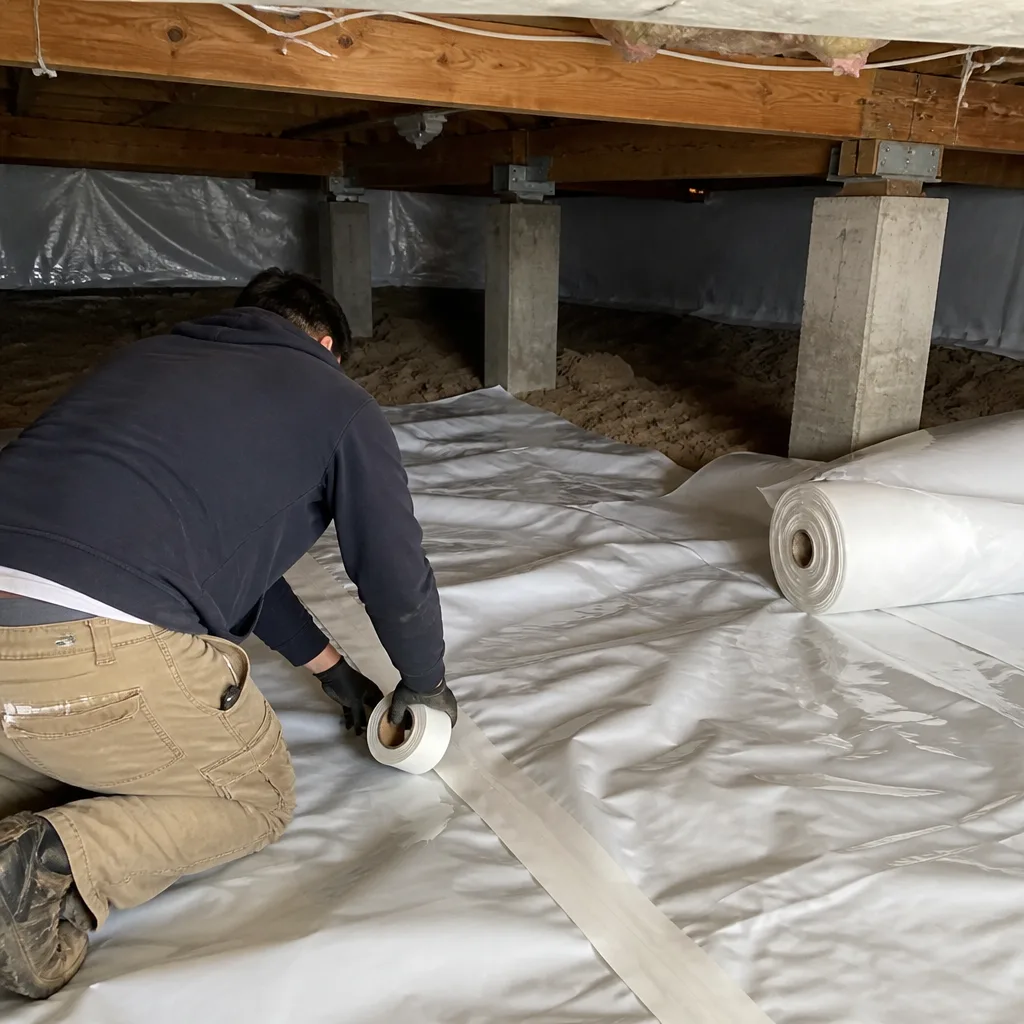
- Condensation on the vapor barrier’s underside. This means moisture is migrating through the soil, hitting the cool poly surface, and condensing because the barrier’s seal to the foundation wall has failed or the dehumidifier capacity is undersized for the cubic footage. In Morgan Hill’s winter, soil temperatures drop to the mid-50s while interior crawl spaces can hold in the 60s, that 10-degree delta is enough to sustain mold growth if the barrier isn’t fully adhered.
- Soft or crumbling foam at the rim joist. Heatlok HFO can degrade when chronically exposed to moisture from gutter overflow or negative grading. The foam doesn’t rot, it loses its closed-cell structure and turns to a gritty, coffee-ground texture that falls away from the wood. We find this most often on the north-facing walls of homes near Oakwood Avenue, where roof runoff pools against the foundation during El Niño winters.
- Musty odor returning despite the dehumidifier running. A properly sealed crawl space should hold below 60% relative humidity year-round. If your dehumidifier’s drain line is clear and the unit cycles normally but the smell persists, the encapsulation envelope has a breach, typically at the pier post wraps or where the barrier meets the HVAC trunk line.
- Increased energy bills with no change in thermostat setting. When rim-joist foam delaminates, conditioned air leaks into the crawl space and the HVAC system compensates. We’ve measured blower-door changes of 300-500 CFM50 from failed crawl space sealing alone, enough to raise heating costs measurably in a 2,000-square-foot Morgan Hill home.
- Visible gaps between the vapor barrier and foundation wall. The barrier should terminate 6-12 inches above exterior grade and be mechanically fastened with masonry screws and termination bars. Gaps appear when the original installer used adhesive-only attachment on painted or efflorescent block, or when seasonal clay expansion has pulled the fasteners. Morgan Hill’s adobe clay soils swell significantly in wet winters, this is a known wear pattern, not an installation error.
Replacement Cost & What’s Included
| Scope | Typical Range in Morgan Hill | What Drives the Price |
|---|---|---|
| Spot repair: vapor barrier patching, seam re-tape, localized foam touch-up | $1,200-$2,400 | Accessibility (crawl height), linear feet of seam, foam removal required |
| Partial encapsulation: walls + floor, no conditioning | $3,800-$5,400 | Square footage, pier count (each needs individual wrapping), dehumidifier spec |
| Full encapsulation with conditioned-air integration | $5,800-$7,200 | HVAC tie-in, supply/return routing, 20-mil vs. 12-mil barrier, sump pump if needed |
The range reflects real variables. A 36-inch crawl height lets our technicians work without specialized access equipment; 18-inch clearance adds labor hours. Pier-and-beam foundations with twelve piers take more barrier material and cutting time than slab perimeter walls. Every quote we write in Morgan Hill includes the full material list, labor hours, and the dehumidifier capacity calculation based on the crawl space volume and the ACH50 leakage rate from our blower-door test. Under Haven Standard Clause 1, you get that written price before anyone enters the space with tools. The 365-Day Done Right Promise covers all encapsulation work, including seam adhesion and dehumidifier performance.
DIY or Call Us?
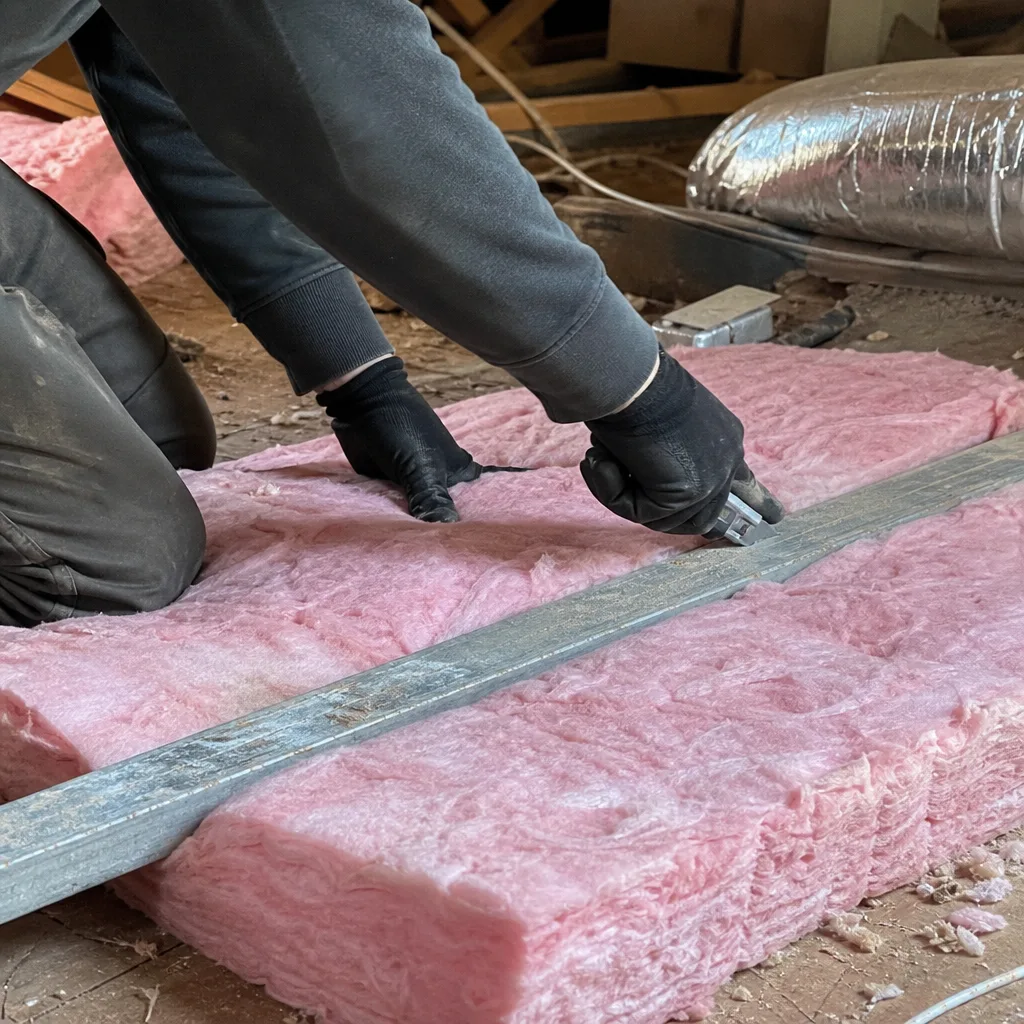
There’s honest work a homeowner can do: verify the dehumidifier is set to 55% relative humidity, check that the drain line isn’t kinked or clogged with algae, and look for obvious barrier tears near the access door where foot traffic concentrates. What’s not advisable is cutting and seaming new vapor barrier material, the 20-mil reinforced poly is stiff, unforgiving, and requires a heat-seaming tool for proper overlaps. Worse, spraying replacement foam at the rim joist means working in confined space with isocyanate chemicals and ignition sources from gas water heaters that are often located in the same crawl space. We’ve been called to Morgan Hill homes where a well-intentioned owner sprayed new foam over wet, degraded old foam, trapping moisture against the joist and accelerating rot. Seal the leaks first. The insulation just holds what you’ve already captured. If you’re unsure what’s failed or how far the damage extends, call (669) 280-8103 and we’ll walk the space with you, no charge for the assessment.
FAQs
Properly installed, a Demilec-compatible system lasts 15-25 years in Morgan Hill’s climate, with the vapor barrier being the first component to show wear. The 20-mil reinforced poly we use carries a 20-year material warranty; seam tape and dehumidifiers typically need attention at 8-12 years. Clay soil movement and gutter maintenance practices are the biggest variables we see locally. Call (669) 280-8103 for an exact assessment of your existing system.
Spot repairs are viable when the failure is isolated, a single torn barrier section, localized foam delamination, or a failed dehumidifier. We replace the component, test the envelope with a smoke pencil and thermal camera, and verify the repair. Full replacement becomes necessary when the original foam is pre-2015 low-density open-cell that has absorbed moisture, or when multiple seam failures indicate systemic adhesive degradation. We stock repair materials and full-system components on our Morgan Hill trucks.
A partial repair takes one day. A full encapsulation on a 1,800-square-foot crawl space with conditioned-air integration takes two to three days: Day one for foam removal, substrate prep, and any mold remediation; Day two for spray foam application and cure; Day three for vapor barrier installation, dehumidifier placement, and final blower-door verification. We don’t rush the foam cure, Heatlok HFO needs its full rise time before barrier installation.
We stock Demilec-compatible vapor barriers in 12-mil and 20-mil, closed-cell spray foam for rim-joist work, seam tape, termination bars, and dehumidifiers sized from 70-pint to 185-pint capacity on our Morgan Hill trucks. For specialized needs, Demilec-specific color-matched touch-up foam or exact OEM seam tape, we can source within 24-48 hours through our supplier network. Most Morgan Hill encapsulation jobs start same-day with what we carry. Call (669) 280-8103 to confirm availability for your specific repair.
Ready to fix your crawl space? Call (669) 280-8103 for a free written estimate. We’ll walk your Morgan Hill crawl space, identify what’s failed, and give you a flat price before any work starts. Every job closes with a Documented Photo Record and, on applicable work, before-and-after blower-door numbers so you can verify the seal.
We also stock parts for Reflectix radiant barrier systems if your home uses a hybrid insulation approach.
Written by Wes Okafor, Owner & Lead Insulation Technician, Topside Attic Insulation Morgan Hill at Topside Attic Insulation Morgan Hill, serving Morgan Hill and nearby areas.