
Crawl Space Vapor Barrier in Morgan Hill, CA
A crawl space vapor barrier is a heavy polyethylene sheeting – typically 12 to 20 mil thick – installed across the soil floor and up the foundation walls of your crawl space to block ground moisture before it enters the living space above. Most Morgan Hill homes with vented crawl spaces that show musty odors, elevated indoor humidity, or soft subflooring need one. At Topside Attic Insulation Morgan Hill, we install vapor barriers as part of a documented, written-scope process: you get a flat price before any work starts, and a photo record when we leave.
If you’re exploring the full scope of what’s involved under your home, our Crawl Space Encapsulation & Vapor Barrier in Morgan Hill page covers the broader service – including drainage matting, conditioning, and rim joist sealing – alongside the vapor barrier work described here. To get started with a free on-site estimate, call us at (669) 280-8103.
Why Crawl Space Moisture Is a Specific Problem in Morgan Hill
Morgan Hill sits at the south end of Santa Clara Valley, with soil that holds more clay content than most homeowners realize. Clay doesn’t drain – it holds moisture. After the wet season (November through April, typically), that retained ground moisture evaporates upward. In crawl spaces with bare soil, that vapor has nowhere to go except into the framing, insulation, and subfloor above.
The Coyote Creek floodplain runs through parts of east Morgan Hill, and homes in neighborhoods like East Main Avenue and Dunne Avenue corridors sit on soil that stays saturated longer into spring than higher lots in Tennant or Butterfield. We’ve pulled out fiberglass batt insulation from crawl spaces in those areas that was holding moisture at 30% – well above the 19% threshold where wood decay fungi become active.
Morgan Hill also gets temperature swings between cold nights and warm afternoons that create condensation on concrete block foundation walls. A properly installed vapor barrier – sealed to the walls, not just laid on the floor – addresses ground evaporation and reduces wall condensation at the same time.
When You Need a Crawl Space Vapor Barrier
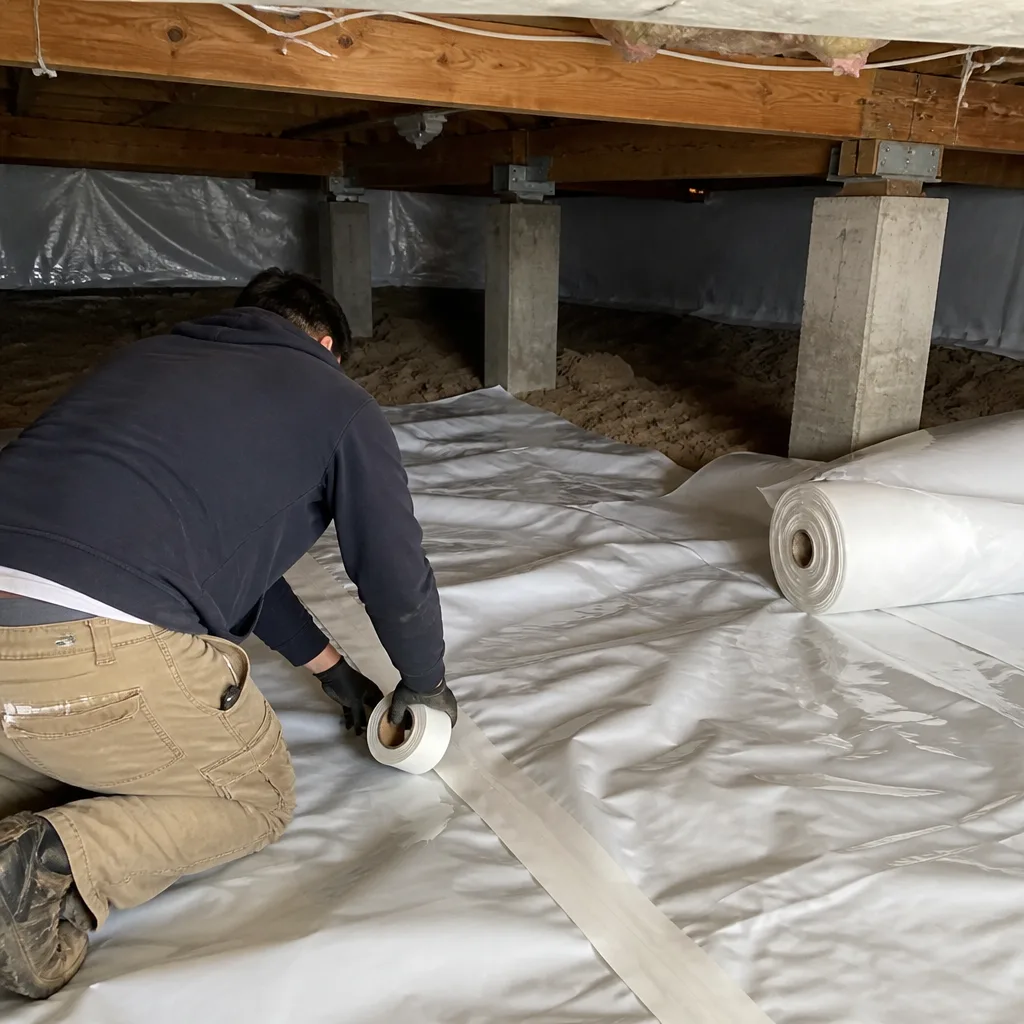
- Bare soil in the crawl space. If you can see exposed dirt under your home, ground moisture is moving directly into the air under your subfloor. This is the most common condition we find in Morgan Hill homes built before 1990.
- Musty or earthy odor inside the home. That smell is microbial – mold spores, mildew, soil bacteria – and it typically originates in the crawl space and enters through gaps in the subfloor. It doesn’t get better on its own once the source is wet soil.
- Hardwood or laminate floors that are cupping, buckling, or separating. Cupping – where the edges of floorboards rise higher than the center – is a moisture signal. The wood is absorbing vapor from below. We see this regularly in older craftsman-style homes near downtown Morgan Hill.
- Fiberglass batt insulation hanging down or showing dark staining. Kraft-faced batts stapled between joists absorb ground moisture over time and eventually lose contact with the subfloor. Dark staining on the facing indicates mold colonization. At that point, the insulation needs to come out before a barrier goes in.
- Higher-than-expected heating or cooling bills with no obvious explanation. Wet insulation has a significantly lower R-value than dry insulation. A crawl space batt rated R-19 when dry can perform closer to R-10 when it’s been holding moisture for a season.
- Evidence of pest activity in the crawl space. Termites and wood-boring beetles need moisture to establish colonies. A wet crawl space creates the conditions they need. Vapor barrier installation doesn’t replace pest treatment, but it removes the moisture environment that makes reinfestation likely.
Our Crawl Space Vapor Barrier Process
- Written scope and flat price before entry. Under Haven Standard Clause 1, a written price and documented scope are delivered before any work begins – no estimates that expand after we’re already under your house. You get a flat number and a description of every step we’re committing to.
- Pre-installation inspection and photo documentation. We photograph the existing conditions: bare soil, standing water evidence, existing vapor barrier condition (if any), insulation state, and any visible structural or pest damage. This creates your baseline record and informs the scope. If we find damaged insulation or active wood decay that needs to be addressed first, we say so in writing before we proceed.
- Existing material removal, if applicable. Old, failed vapor barriers – typically thin 6-mil poly that has torn, shifted, or been compromised by rodent traffic – are pulled out and bagged for disposal. Wet or mold-affected batt insulation is removed and documented before new barrier material goes in. We don’t install over compromised material.
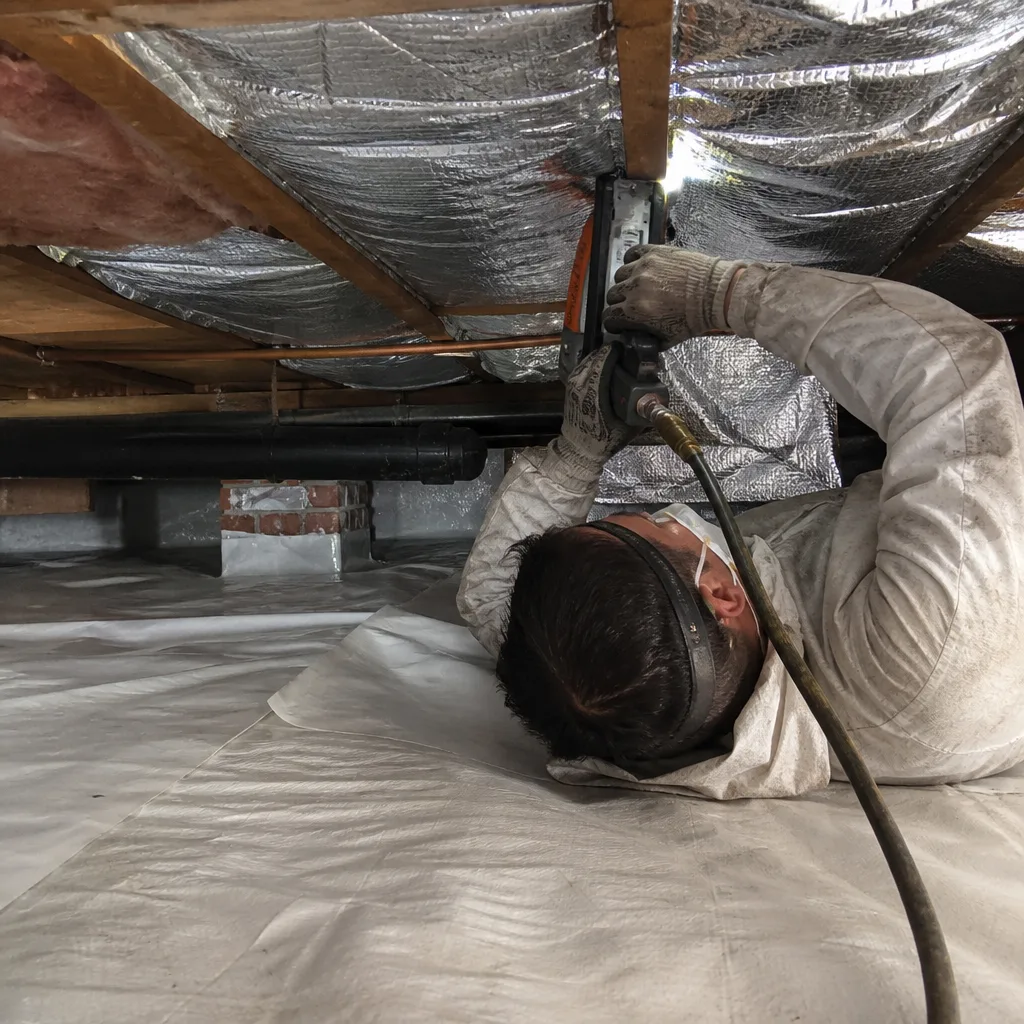
- Vapor barrier installation across the soil floor. We install a minimum 12-mil polyethylene sheeting across the full crawl space floor, overlapping seams by at least 12 inches and taping all seams with a moisture-resistant, pressure-sensitive tape. Barrier material is run up the interior face of the foundation wall a minimum of 6 inches and secured with fasteners – not just rested against the wall, where it separates and fails within a season or two. For homes requiring a more complete encapsulation, we use 20-mil reinforced sheeting that resists puncture from foot traffic during future crawl space access.
- Penetration sealing around posts, piers, and plumbing. Every pipe, column, and penetration through the vapor barrier gets individually sealed. This step is what separates a properly installed barrier from one that looks complete but leaves bypass paths for moisture. We use compatible sealant and barrier tape at each penetration – not just a loose wrap of sheeting.
- Post-installation photo documentation. After the barrier is in, we photograph the finished installation from multiple angles. You receive this photo record as part of your job close-out – under the Haven Standard, a Documented Photo Record is included on every visit, not available on request. If a question comes up six months from now, you have the record of what was installed and how.
Crawl Space Vapor Barrier Pricing in Morgan Hill
How Much Does Crawl Space Encapsulation & Vapor Barrier Cost? (2026 Price Guide) - Morgan Hill, CA shows that standalone vapor barrier installation in Morgan Hill typically runs between $1,200 and $3,800. Most single-story homes in the 1,400 to 2,200 square foot range – which covers a lot of the stock in Madrone, Oakridge, and the older streets off Monterey Road – fall between $1,500 and $2,600. Larger homes or those with irregular crawl space geometry (pier-and-beam layouts, partial basements, or multiple access points) are at the higher end.
The variables that move the price up or down:
- Crawl space square footage. Material and labor scale directly with area. A 600 sq ft crawl space costs meaningfully less than a 1,800 sq ft one.
- Access difficulty. Crawl spaces under 18 inches of clearance, or those with a single 18×24 inch access hatch, take longer to work in. That labor cost is built into the written price upfront.
- Existing material removal. If old sheeting, wet insulation, or debris needs to come out first, that’s additional labor. We document what we find and price it before we start pulling anything.
- Barrier thickness and spec. Standard installations use 12-mil sheeting. If you need a 20-mil reinforced product – common for crawl spaces that double as mechanical access areas – expect to add $200 to $600 depending on square footage.
- Condition of the existing crawl space. Standing water, significant mold remediation need, or pest damage typically requires remediation before barrier installation. We’ll tell you exactly what the sequencing and cost looks like in writing before any work starts.
We don’t publish a single-line price because the honest answer depends on what’s actually under your house. What we do commit to: a written flat price before anyone enters your crawl space, a free second opinion on any competing written estimate, and no additional charges that weren’t in the original scope. Call (669) 280-8103 to schedule your free on-site estimate.
How Vapor Barrier Thickness Is Measured – and Why It Matters
Polyethylene sheeting thickness is measured in mils – one mil equals one-thousandth of an inch. The minimum code requirement in most California jurisdictions, including Santa Clara County, is 6 mil. We don’t install 6-mil sheeting. The reason is simple: 6-mil poly tears easily, especially in crawl spaces where HVAC, plumbing, or pest control contractors need to access periodically. Once the barrier is torn or shifted, it stops working as a barrier.
Our standard install uses 12-mil sheeting. For homeowners who want closer to full encapsulation performance – particularly those who want Crawl Space Insulation at the wall rather than the floor, with the crawl space conditioned and sealed against both ground moisture and outside air – we use 20-mil reinforced material. Johns Manville and Owens Corning both produce crawl space barrier products at commercial thicknesses; we specify product based on what the job actually needs, not on what carries the highest margin.
California’s Title 24 energy code also has moisture control requirements that apply to new construction and some renovation work. If you’re in a permit-required project, we can walk you through what the documentation looks like – that’s part of the written scope you receive before work starts.
Vapor Barrier vs. Full Encapsulation: What’s the Difference
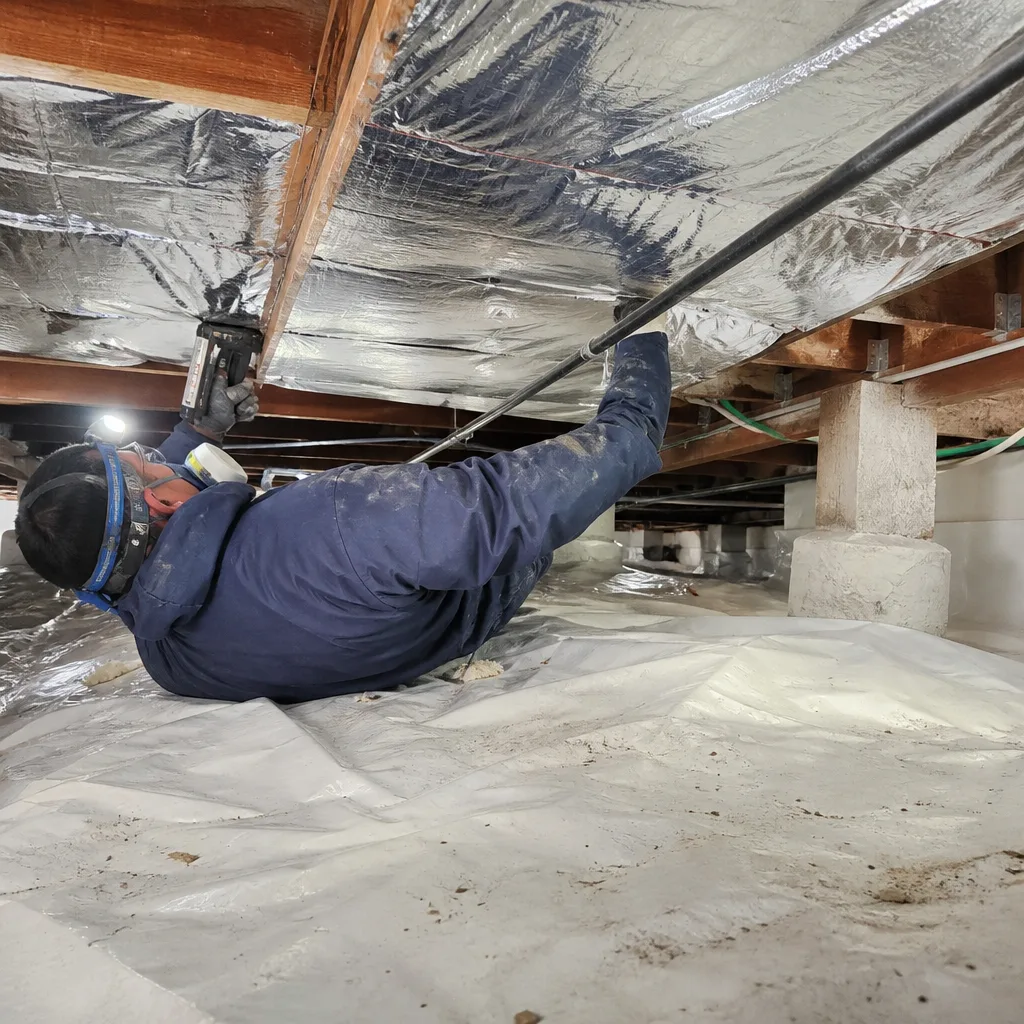
A vapor barrier covers the soil floor and seals to the walls. Full encapsulation goes further: the foundation walls are insulated (typically with rigid foam or closed-cell spray foam), the crawl space vents are sealed, and a conditioned air supply or exhaust is connected to make the space semi-conditioned. Crawl Space Encapsulation & Vapor Barrier services turn the crawl space into part of the building envelope rather than treating it as an exterior space.
For most Morgan Hill homes with vented crawl spaces and adequate existing structural insulation, a properly installed vapor barrier addresses the moisture problem at a fraction of the encapsulation cost. Full encapsulation makes the most sense when the home also has HVAC equipment or ducts in the crawl space, since conditioning that space reduces the load on the equipment and prevents duct condensation.
Our home page covers the full range of building envelope services we offer if you’re trying to understand where vapor barrier work fits into a larger energy performance project.
FAQs – Crawl Space Vapor Barrier
How much does a crawl space vapor barrier cost in Morgan Hill?
Most vapor barrier installations in Morgan Hill run between $1,200 and $3,800, with the majority of average-size single-family homes landing between $1,500 and $2,600. The main cost drivers are crawl space square footage, access difficulty, barrier thickness spec (12-mil vs. 20-mil), and whether existing material needs to be removed first. You get a flat written price before any work starts – no open-ended estimates. Call (669) 280-8103 for a free on-site measurement and written quote.
Can I install a crawl space vapor barrier myself?
Physically, yes – sheeting can be purchased at a home improvement store and unrolled across a crawl space floor. The problems tend to be in the details: seam overlaps that aren’t taped, sheeting that isn’t secured to foundation walls, and penetrations around piers and pipes that aren’t sealed. A barrier installed that way will reduce moisture but won’t perform close to a properly sealed installation. If you’ve already gotten a written estimate from another contractor, we’ll read it with you at no charge and tell you exactly what the spec includes or leaves out.
How long does a crawl space vapor barrier last?
A 12-mil or 20-mil polyethylene barrier that’s properly installed – seams taped, secured to walls, penetrations sealed – typically holds up for 15 to 25 years. The failure points are usually mechanical: pest intrusion that tears the sheeting, HVAC service work that displaces it, or original installation that used thin 6-mil material. The photo documentation we provide at job close-out gives you a reference point for any future inspection.
Do I need a permit for crawl space vapor barrier installation in Morgan Hill?
A standalone vapor barrier installation in an existing crawl space typically does not require a permit in Morgan Hill under current Santa Clara County building codes. Permit requirements do apply when the scope includes encapsulation, wall insulation, or vent sealing that affects the building envelope under Title 24. We’ll confirm the permit status for your specific project in the written scope before work starts – you won’t find out mid-job that something wasn’t accounted for.
What You Walk Away With
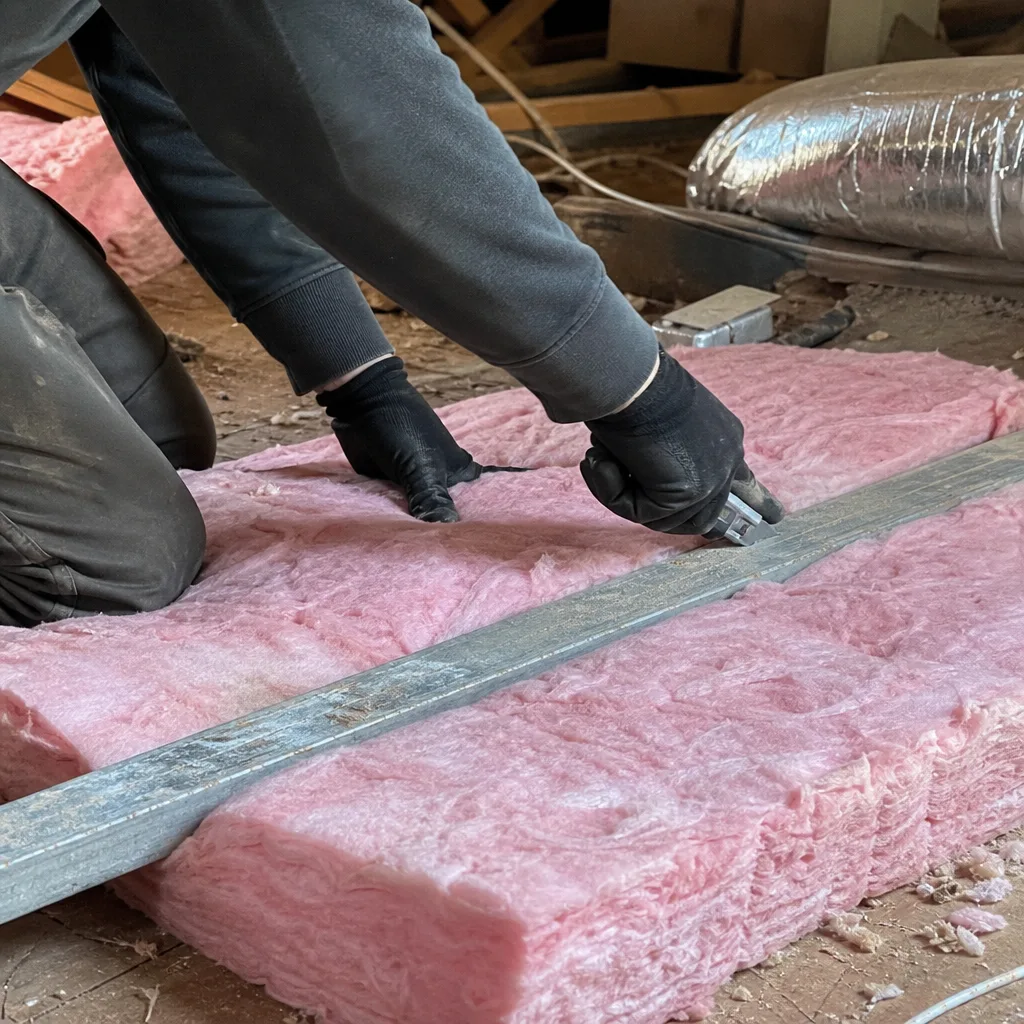
Every vapor barrier job we complete closes with the same documentation: a photo record of pre-installation conditions, in-progress photos of seaming and penetration sealing, and finished-condition photos of the completed barrier. The 365-Day Done Right Promise applies from the day the crew leaves – if something isn’t right within the first year, we come back and make it right. That commitment is in writing before work starts, under the Haven Standard.
Wes Okafor leads every job under that standard. If you have a competing written estimate, bring it – we’ll read it with you and tell you what it does and doesn’t include. To schedule a free on-site estimate for your Morgan Hill home, call (669) 280-8103.
Written by Wes Okafor, Owner at Topside Attic Insulation Morgan Hill, serving Morgan Hill.