
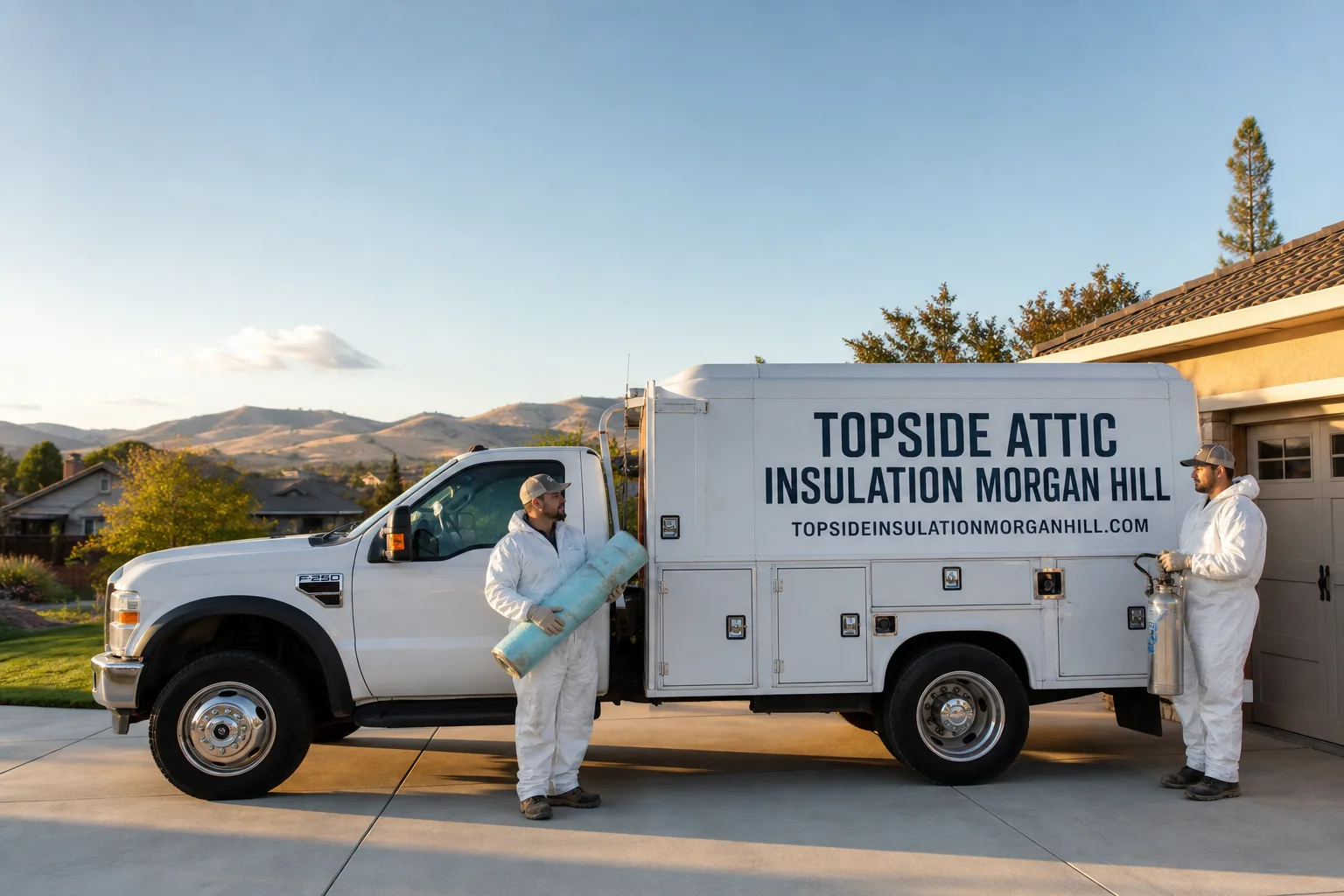
How Much Does Attic Insulation Cost in Morgan Hill?
Attic Insulation Near Me in Morgan Hill, CA typically costs between $1,800 and $4,200 for a standard single-story home, with most jobs landing around $2,400 to $3,100 when air sealing is included. The range moves based on attic square footage, current R-value, insulation type, and whether old material needs to come out first.
If you’re getting quotes right now, the number you need to know is your attic’s square footage and its current insulation depth. Those two figures determine more of the final price than anything else.
Attic Insulation Cost Breakdown (2026)
Below are typical installed price ranges for the Morgan Hill market in 2026. These are not national averages pulled from a cost database – they reflect what homeowners in south Santa Clara County are actually paying.
| Service | Typical Cost Range | Notes |
|---|---|---|
| Blown-in cellulose (new install, per sq ft) | $1.20 – $2.00 | Most common for existing Morgan Hill homes |
| Blown-in fiberglass (new install, per sq ft) | $1.40 – $2.20 | Lighter, good for shallow truss attics |
| Batts (fiberglass or mineral wool, new install) | $1.00 – $1.80 per sq ft | Typically used when access allows hand-placing |
| Spray foam (open-cell, attic floor) | $2.50 – $4.50 per sq ft | Used at rim joists and targeted penetrations |
| Attic air sealing only | $400 – $900 | Top plates, can lights, plumbing penetrations |
| Old insulation removal | $1.00 – $2.50 per sq ft | Higher end if rodent contamination is present |
| Attic air sealing + blown-in (combined) | $2,400 – $4,200 (typical home) | Most common full-service scope in Morgan Hill |
| Radiant barrier installation | $800 – $1,800 | Often added during insulation jobs; addresses summer heat gain |
| Full replacement (removal + seal + new insulation) | $3,500 – $6,500 | Typical for homes built before 1990 with contaminated material |
A 1,200-square-foot attic in a Morgan Hill home built in the 1990s – which describes a large share of the Cochrane Road and East Main Avenue neighborhoods – will generally land between $2,200 and $3,400 for a complete air seal plus blown-in job. Smaller homes in South Morgan Hill near the Tennant Avenue corridor, where 900 to 1,100 square foot attic footprints are common, often come in between $1,800 and $2,700.
What moves the number up: rodent damage requiring removal and attic cleaning, limited access that slows the crew, and attics that were never air-sealed in the first place (which almost every pre-2000 home in this market has). What moves it down: a clean attic with no old material, good hatch access, and a straightforward floor plan without complicated soffits.
Under the Haven Standard, Envelope Insulation Co. delivers a flat written price before any work starts – no hourly surprises, no “we’ll know more once we’re up there” pricing. The scope is written, the warranty is written, and the price does not change when the crew shows up.
What Affects Attic Insulation Pricing in Morgan Hill
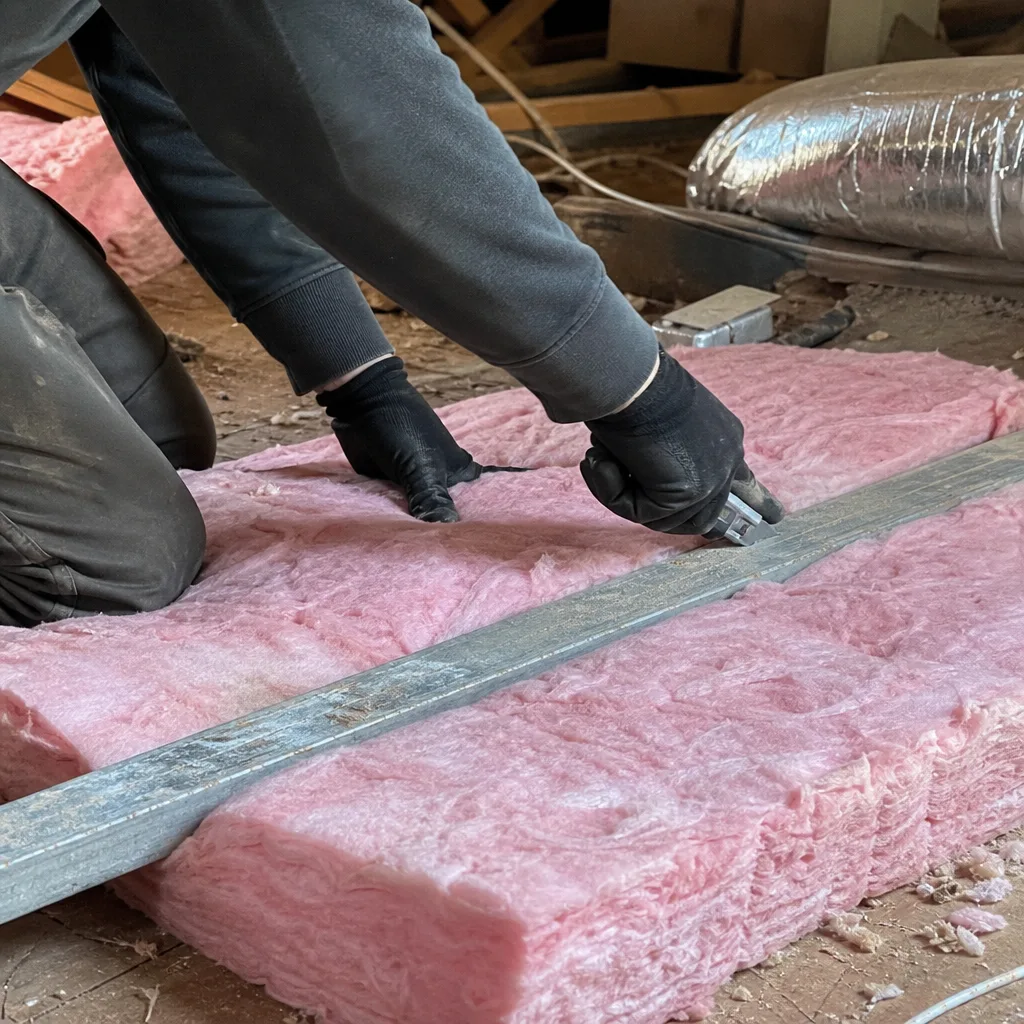
- Attic square footage: This is the primary cost driver. A 1,500-square-foot attic costs more to insulate than an 800-square-foot one – straightforward math. Most Morgan Hill single-family homes fall between 900 and 1,600 square feet of attic floor, so that range is where the bulk of local quotes land.
- Current insulation condition and depth: Many homes in Morgan Hill’s older subdivisions – particularly those built in the 1980s along Dunne Avenue and in the Oak Glen area – have 3 to 4 inches of original batts that have settled, been disturbed by HVAC work, or been contaminated. Removal adds cost, but leaving bad insulation in place underneath new material undermines the whole job.
- Air sealing status: An attic that was never air-sealed has open top plates, unblocked can lights, and gap-ridden plumbing and electrical penetrations. Sealing those before adding insulation is not optional if you want the insulation to perform. In Morgan Hill, we regularly see blower-door readings drop from 3,800 to 4,500 CFM50 down to 1,800 to 2,200 CFM50 after attic air sealing alone – a pressurization measurement that shows, in one number, how much conditioned air the building envelope was losing. Skipping air sealing and just blowing more insulation on top is a common mistake that adds cost later.
- Insulation type chosen: Blown-in cellulose (GreenFiber is a common product we use) is cost-effective and performs well in Morgan Hill’s climate. Mineral wool batts from Rockwool cost more per square foot but offer better fire resistance – a relevant consideration in a city that sits at the edge of the Diablo Range foothills where wildfire risk is not theoretical. Spray foam from Icynene or Demilec is typically reserved for targeted areas like rim joists and penetrations, not full attic floors, due to cost.
- Morgan Hill’s climate zone and required R-value: Morgan Hill sits in California Climate Zone 4, which means Title 24 requires a minimum R-38 for attic insulation in existing homes receiving permits. Most energy auditors recommend R-49 to R-60 for the temperature swings this area sees – summer attic temperatures regularly hit 140 to 160 degrees Fahrenheit, and overnight lows in December and January can drop into the mid-30s. Getting to R-49 from R-0 (an unsealed, empty attic) requires roughly 14 to 16 inches of blown-in cellulose. That depth costs more than hitting just R-30, but it’s the depth that actually moves your utility bill.
- Accessibility and attic configuration: A hatch that’s 22 inches by 30 inches in a central hallway is easy to work through. A hatch that’s 14 inches square in a closet corner with a tight knee-wall transition adds labor time. Homes with multiple roof pitches, finished attic sections, or low-clearance truss systems – common in some of the townhome clusters near Cochrane Road and Monterey Road – take longer and cost more to insulate properly.
Morgan Hill vs. Nearby Markets: How Local Pricing Compares
Homeowners sometimes wonder whether hiring from Gilroy, San Jose, or further up the 101 corridor would save money. In practice, labor rates across south Santa Clara County are relatively consistent – the difference between a Morgan Hill quote and a Gilroy quote for the same scope is usually under 5%. What varies more is how thoroughly contractors in this market air-seal before insulating. Many crews operating out of larger metro markets treat Morgan Hill as a volume stop: blow insulation fast, collect payment, move on. The air sealing step – which adds a few hundred dollars and an hour or two of skilled labor – is frequently skipped or done superficially.
The performance difference is not minor. A blower-door test on a Morgan Hill home in the Madrone neighborhood showed 4,100 CFM50 before a crew had blown in R-38 cellulose without air sealing. Two years later, that homeowner called us. We measured 3,900 CFM50 – the insulation had added almost nothing to the home’s air barrier because the leaks were still open. Air sealing dropped it to 2,050 CFM50. That’s the number that matters, and it’s the number we publish on every applicable job.
How to Save on Attic Insulation in Morgan Hill
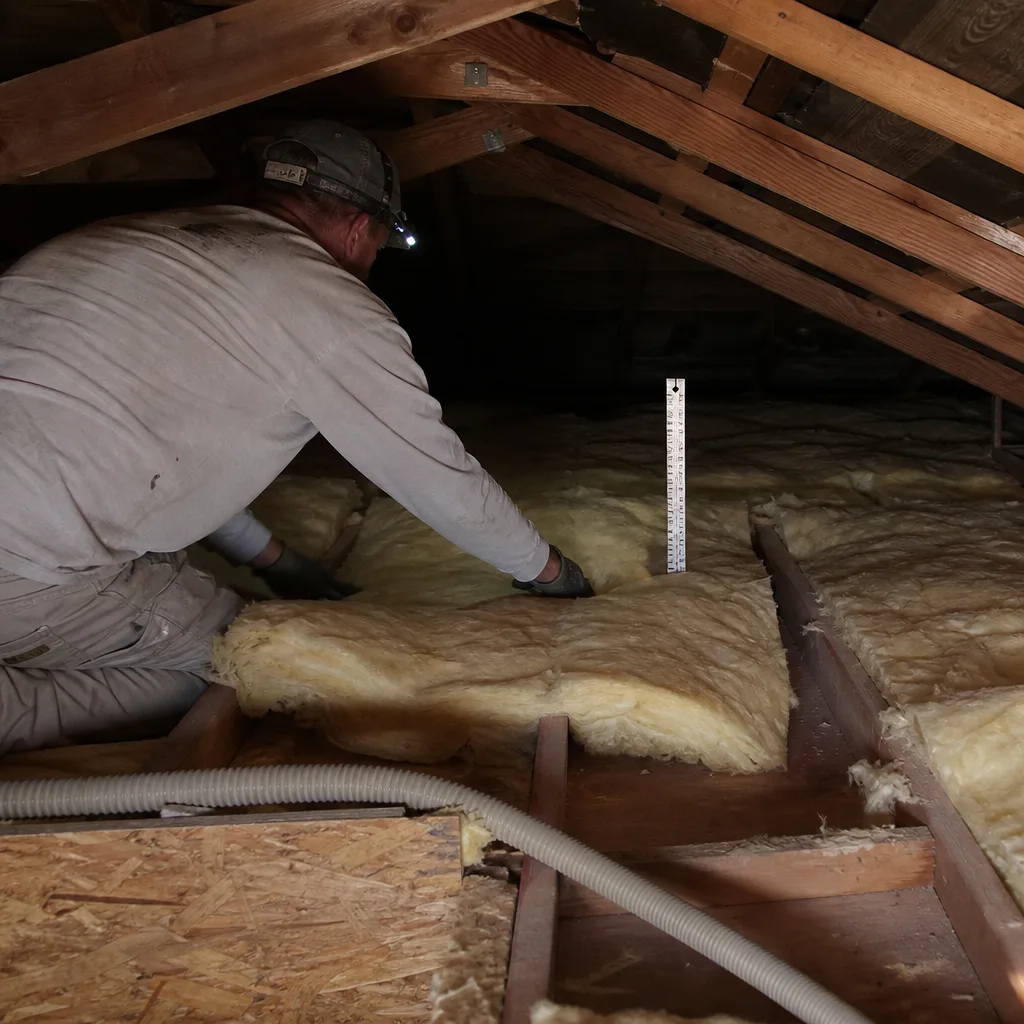
There are a few practical ways to reduce what you pay without reducing what you get.
Combine air sealing and insulation in one mobilization. Scheduling them separately costs more – two site visits, two setups, two crews. Most of the savings available in an attic project come from doing air sealing and insulation in one appointment. The incremental cost of adding blown-in insulation after the sealing crew is already in the attic is much lower than returning for a second trip.
Check for PG&E and TECH Clean California rebates before you commit. As of 2026, PG&E’s residential energy efficiency programs and the statewide TECH Clean California initiative offer rebates for attic insulation upgrades that meet R-38 or better in Climate Zone 4. These programs change, but a current rebate can reduce your net cost by $200 to $600 depending on your home’s size and existing R-value. Ask for the rebate paperwork to be factored into your written estimate before work starts.
Get a written second opinion if any quote looks low. A quote that’s $600 below the others usually means something was left out – typically air sealing, sometimes proper R-value depth. We offer a free second opinion on any written estimate: bring us a competitor’s quote and we’ll read it with you and explain what’s included, what isn’t, and what it means for performance. There’s no pressure and no obligation.
Address insulation during re-roofing or HVAC replacement. Both trades require attic access. Coordinating insulation with either of those projects means the attic is already disturbed and prepped, which reduces labor time and sometimes allows shared mobilization costs.
Don’t over-buy on insulation type if blown-in does the job. For most Morgan Hill attics, blown-in cellulose or fiberglass to R-49 is the right call. Spray foam at $3.50 to $4.50 per square foot across an entire 1,200-square-foot attic floor is rarely the best use of budget unless the attic is a conditioned space or has specific moisture challenges. We’ll tell you which material makes sense for your specific attic – not for our margin.
To get a written price specific to your home’s attic, call (669) 280-8103. Estimates are free, on-site, and delivered in writing before you decide anything.
The Air Sealing Step That Most Morgan Hill Quotes Leave Out
This deserves its own section because it’s the most common source of underperformance in Morgan Hill attic insulation jobs.
Most homes in Morgan Hill built before 2005 – which covers a large share of the housing stock in Enchanted Hills, Paradise Valley, and east of Monterey Road – have open top plates. A top plate is the framing member that sits at the ceiling line between your living space and the attic. In typical platform-frame construction, these plates have gaps at every interior wall intersection, every plumbing pipe, every electrical wire, and every recessed light fixture. Those gaps add up. In a 1,800-square-foot home, unsealed top plates can account for three to five square feet of open air passage between conditioned space and attic.
Blowing insulation over those open gaps does not seal them. It slows air a little, but insulation is not an air barrier – it’s a thermal barrier. The two are different things, and confusing them is the industry’s most expensive mistake for homeowners.
At Envelope Insulation Co., attic air sealing is completed before any insulation goes in. Always. That means every top plate gap, every can light boot, every pipe and wire penetration, and every soffit bypass is sealed with two-part spray foam or fire-rated caulk before the blower runs. We then verify the result with a blower-door test – a pressurization reading that shows, in one number, how much conditioned air the building envelope is losing – and publish the before-and-after numbers so you can see what the sealing actually did. Our Attic Insulation in Morgan Hill service page explains the full process in detail, including what the documentation looks like when the crew leaves.
Wes Okafor has led Envelope Insulation Co. on this approach since 2016 – seal first, insulate second, document both. In over 9,000 homes served, the jobs that perform the worst on follow-up are almost always the ones where insulation went in over an unsealed attic floor. The ones that show a 40 to 55 percent reduction in air leakage are almost always the ones where sealing came first.
Insulation Types Used in Morgan Hill Attics
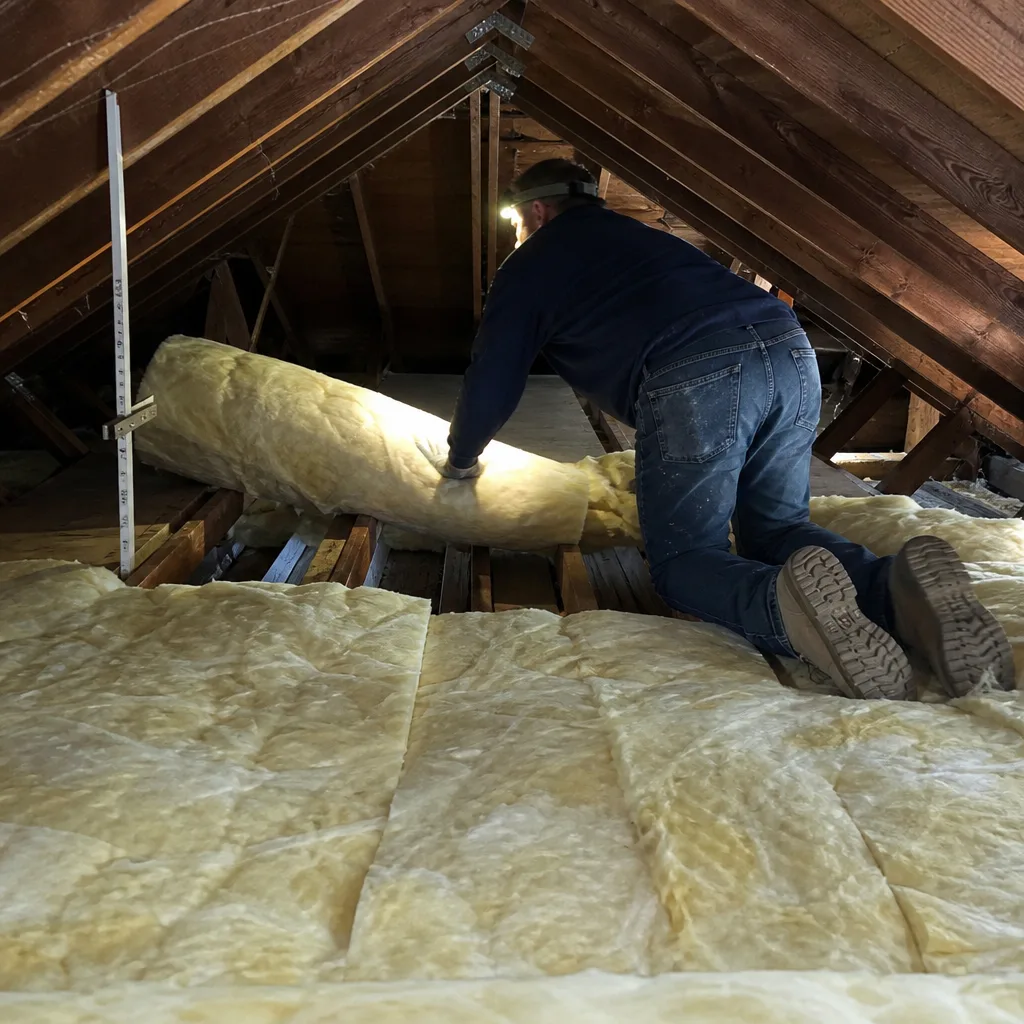
Blown-In Cellulose
Cellulose – GreenFiber is a brand we stock regularly – is the workhorse of Morgan Hill attic insulation. It’s made from recycled paper fiber treated with borate for fire and pest resistance, settles well into irregular spaces, and reaches R-3.2 to R-3.8 per inch. To hit R-49, you need roughly 13 to 15 inches of settled depth. It handles the climate zone’s temperature swings well and is cost-effective per R-value point. Most standard quotes in this market are based on blown-in cellulose.
Blown-In Fiberglass
Blown-in fiberglass from Owens Corning or Johns Manville runs about R-2.2 to R-2.7 per inch, so you need more depth to hit the same R-value as cellulose. It’s lighter, which matters in older truss systems with limited load capacity, and it doesn’t settle as much over time. Price per square foot is modestly higher than cellulose. For attics with very tight clearances or shallow truss profiles – common in some of the Coyote Valley-area homes – it’s often the better fit.
Fiberglass and Mineral Wool Batts
Batts from CertainTeed or Rockwool are used when the attic floor is accessible enough for hand-placing: open floor joists without crossing obstacles. They perform well but require more precise installation to avoid gaps and compression at edges. Mineral wool from Rockwool has a higher fire resistance rating, which is relevant for Morgan Hill homes near the urban-wildland interface along the east hills.
Spray Foam (Targeted Use)
Open-cell spray foam from Icynene or Demilec is used at specific points – rim joists, plumbing penetrations, attic hatch perimeters, and complex soffit bypasses – where a poured or sprayed material outperforms foam backer rod and caulk. Closed-cell spray foam is typically reserved for crawl spaces and specific wall applications rather than attic floors. The cost per square foot is the highest of any insulation type, so we use it where it’s the right tool, not as a default.
Radiant Barrier
A radiant barrier is a foil material stapled to the underside of attic roof sheathing or draped over existing insulation. It reflects radiant heat before it can warm the insulation below. In Morgan Hill’s climate, summer attic temperatures can reach 150 to 160 degrees Fahrenheit, and a radiant barrier can reduce that by 20 to 30 degrees. It doesn’t replace insulation but works alongside it. Cost typically runs $800 to $1,800 for a standard installation, and it’s often most cost-effective when added during an existing insulation job since the crew is already in the attic.
When Is Full Insulation Removal Worth It?
Attic Insulation Replacement adds $1.00 to $2.50 per square foot to the job and takes time. It’s not always necessary, but it is necessary in these situations:
- Rodent activity has contaminated the existing insulation with droppings, urine, or nesting material. In Morgan Hill’s semi-rural neighborhoods near Holiday Lake Estates and the Tennant Avenue corridor, roof rat and mouse activity in attics is not rare. Contaminated insulation should come out before new material goes in.
- The existing insulation is wet or shows moisture damage from a past roof leak. Wet insulation loses its R-value and can harbor mold.
- Old vermiculite insulation is present. Vermiculite from certain mines contains asbestos and requires professional abatement, not standard removal.
- Air sealing cannot be done properly through the existing material. In some attics, the insulation depth or type makes it impossible to find and seal all penetrations without clearing the floor first.
If removal isn’t necessary for any of the reasons above, we’ll tell you that plainly in the written scope. We’re not in the business of adding services that don’t improve the outcome.
FAQs: Attic Insulation Cost in Morgan Hill
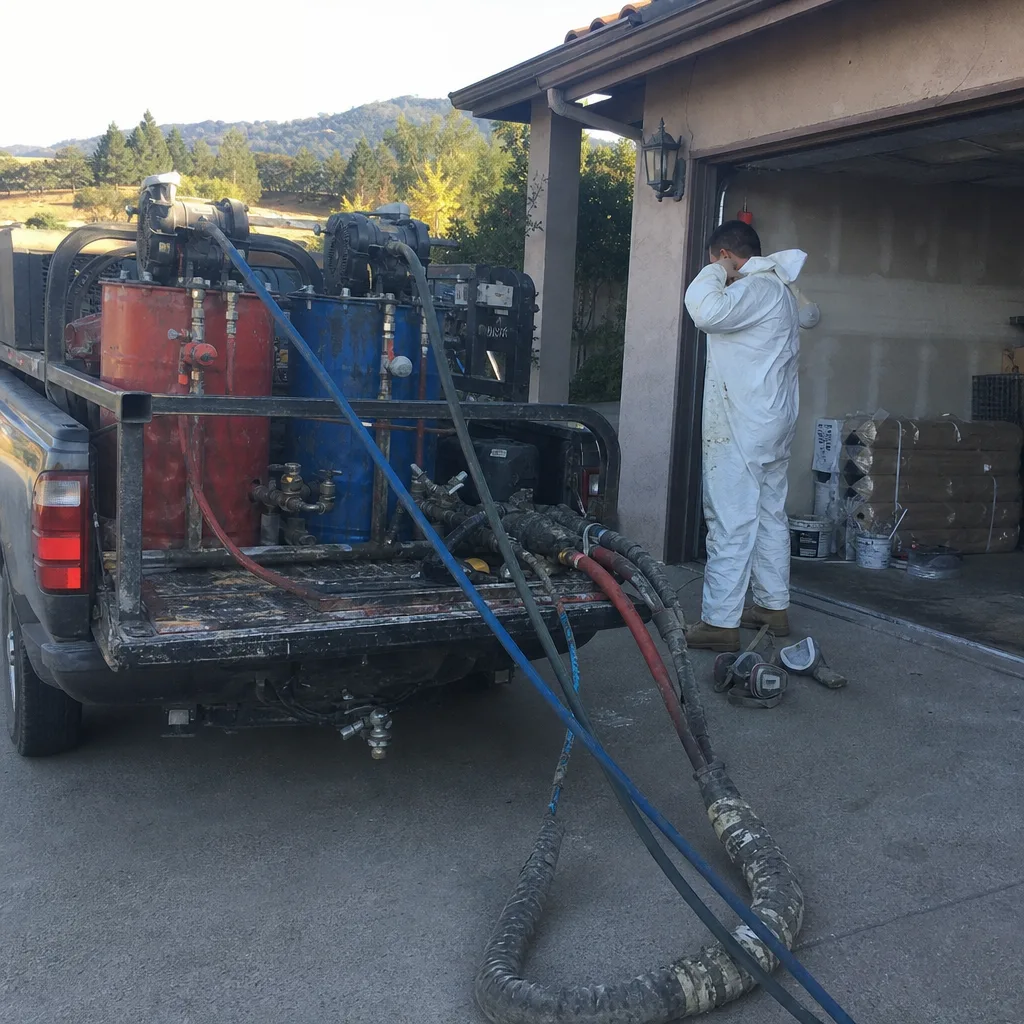
How much does attic insulation cost in Morgan Hill, CA in 2026?
Most our Attic Insulation services in Morgan Hill run between $1,800 and $4,200 for a standard single-story home, with the middle of the market around $2,400 to $3,100 when air sealing is included. A smaller home with a clean attic and no removal needed can come in under $2,000. A larger home with old contaminated insulation and a full air seal can reach $5,000 to $6,500. The square footage of your attic floor and the condition of what’s already up there are the two fastest ways to narrow that range. Call (669) 280-8103 and we’ll give you a written number after an on-site look – estimates are free.
Is it cheaper to add insulation on top of what’s already there, or start fresh?
Attic Insulation Top-Up costs less upfront – you skip removal at $1.00 to $2.50 per square foot. But if the existing insulation is contaminated, wet, or so thin that the attic floor can’t be air-sealed properly underneath it, topping it off is a false economy. In Morgan Hill homes we’ve assessed in the Oak Glen and Enchanted Hills areas, about one in three attics has at least some condition that warrants partial or full removal before adding new material. A site visit tells you which category your attic falls into. Call (669) 280-8103 to schedule a free estimate and we’ll be direct about what’s actually needed.
What R-value is required for attic insulation in Morgan Hill?
Title 24 requires a minimum of R-38 for attic insulation in Morgan Hill’s California Climate Zone 4. Most energy performance consultants recommend R-49 to R-60 given the temperature range this area sees. The difference in installed cost between R-38 and R-49 in blown-in cellulose is typically $200 to $400 for a standard attic – and the annual energy savings difference is meaningful enough that most homeowners opt for R-49 when they’re already doing the job. We’ll show you both options in writing before you decide. Call (669) 280-8103 for pricing on your specific attic dimensions.
How long does attic insulation installation take in Morgan Hill?
Most attic insulation jobs – including air sealing – are completed in one day. A straightforward blown-in install with no removal typically takes four to six hours for a crew of two. If removal is included, add two to four hours depending on volume. Attics with tight access, complex configurations, or extensive air sealing needs can run into a second day, but that’s not common for standard Morgan Hill residential attics. The written scope you receive before work starts will note the expected time on-site so you know what the day looks like. Call (669) 280-8103 with your attic square footage and we can give you a realistic time estimate alongside the price.
Are there rebates available for attic insulation in Morgan Hill?
Yes. As of 2026, PG&E offers residential energy efficiency incentives for insulation upgrades in Climate Zone 4 homes, and the TECH Clean California program has provided additional statewide rebates for qualifying projects. Rebate amounts and eligibility requirements change, and they depend on your current insulation level, your home’s age, and the R-value you’re upgrading to. The rebates we’ve seen most commonly in the Morgan Hill market run between $200 and $600 for a qualifying attic job. We factor available rebates into the written estimate so you see the net cost before committing. Call (669) 280-8103 for a free on-site estimate that includes current rebate eligibility for your home.
Key Takeaways
- Attic insulation in Morgan Hill costs $1,800 to $4,200 for most homes, with full-replacement jobs running $3,500 to $6,500.
- Air sealing is a prerequisite, not an add-on – insulation placed over unsealed top plates and penetrations will not perform as expected.
- Morgan Hill sits in California Climate Zone 4, which requires R-38 minimum; R-49 is what most energy consultants recommend for this market.
- Blown-in cellulose is the most cost-effective option for most Morgan Hill attics; radiant barriers add value in summer heat reduction.
- Before-and-after blower-door readings are documented on every applicable job so you can verify the air-sealing result in a single number.
- A written price before work starts is not optional here – it’s Haven Standard Clause 1, and it applies to every job without exception.
- PG&E and TECH Clean California rebates may reduce your net cost by $200 to $600 for qualifying upgrades.
Get a Written Price for Your Morgan Hill Attic
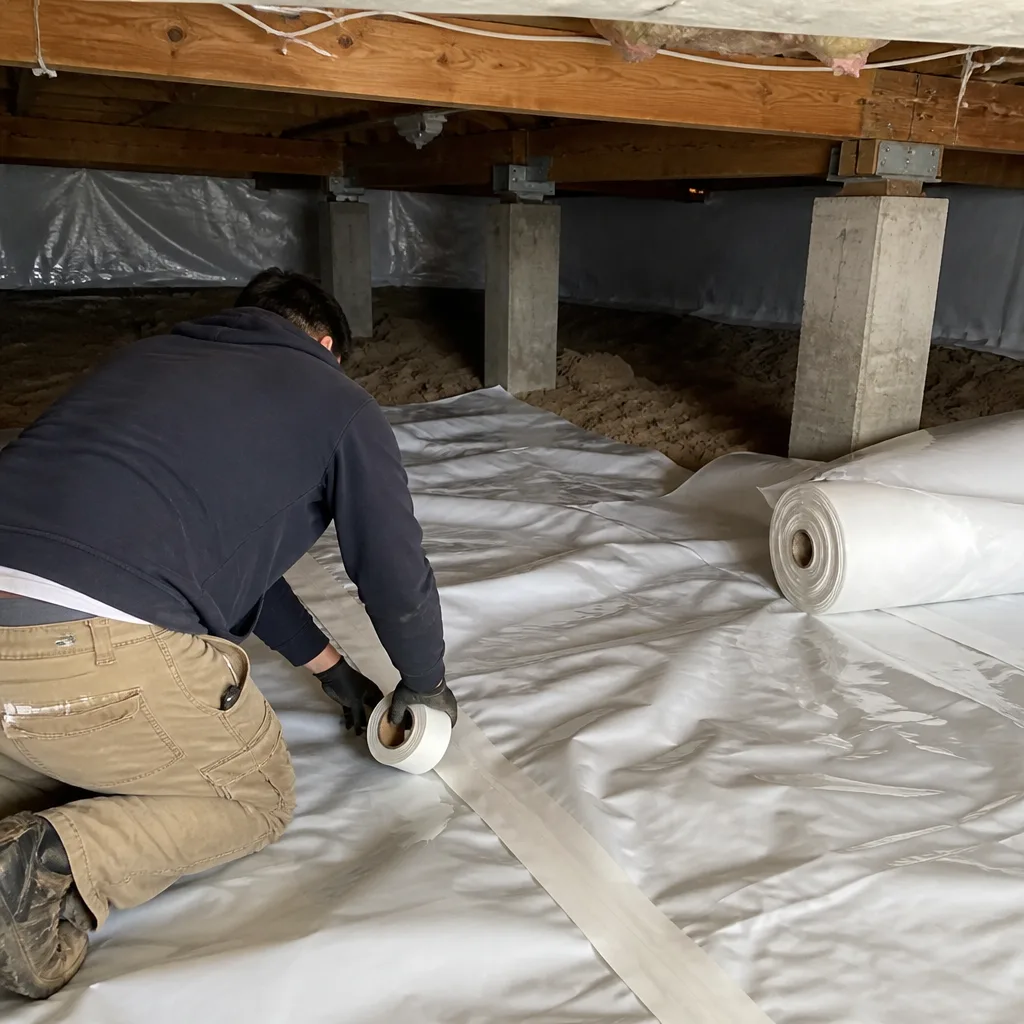
If you’ve read this far, you have a reasonable idea of what attic insulation costs in Morgan Hill and what separates a thorough job from one that looks complete but doesn’t perform. The next step is a number specific to your home’s attic – its square footage, current condition, and what it will take to get it to R-49 with a properly air-sealed floor.
Wes Okafor and the Envelope Insulation Co. crew have worked in Morgan Hill attics since 2016, and the process is the same every time: written price before any work starts, air sealing before any insulation goes in, blower-door measurements before and after on applicable jobs, and a documented photo record when the crew leaves. The 365-Day Done Right Promise applies to every completed job – if it’s not right, we make it right, in writing.
Learn more about what a full attic job includes by visiting our home page, or go directly to the Attic Insulation in Morgan Hill service page for a complete breakdown of what’s included on a standard job. When you’re ready for a number, call (669) 280-8103. Estimates are free, on-site, and delivered in writing before you make any decision.
Pricing reflects the Morgan Hill market as of 2026. Topside Attic Insulation Morgan Hill offers free estimates – call (669) 280-8103.
Written by Wes Okafor, Owner at Envelope Insulation Co., serving Morgan Hill since 2016.
What Our Customers Say
"Turned up on time, protected the hallway, and the written scope matched what was actually done."
- Bruno S."Two other companies quoted to blow more insulation on top of what was there. These were the only ones who said the existing material had to come out first, and explained why."
- Clifford E."Crawl space encapsulation done properly. Photographs of the vapour barrier at every seam, and the damp smell in the hallway is gone."
- Ainsley P.