
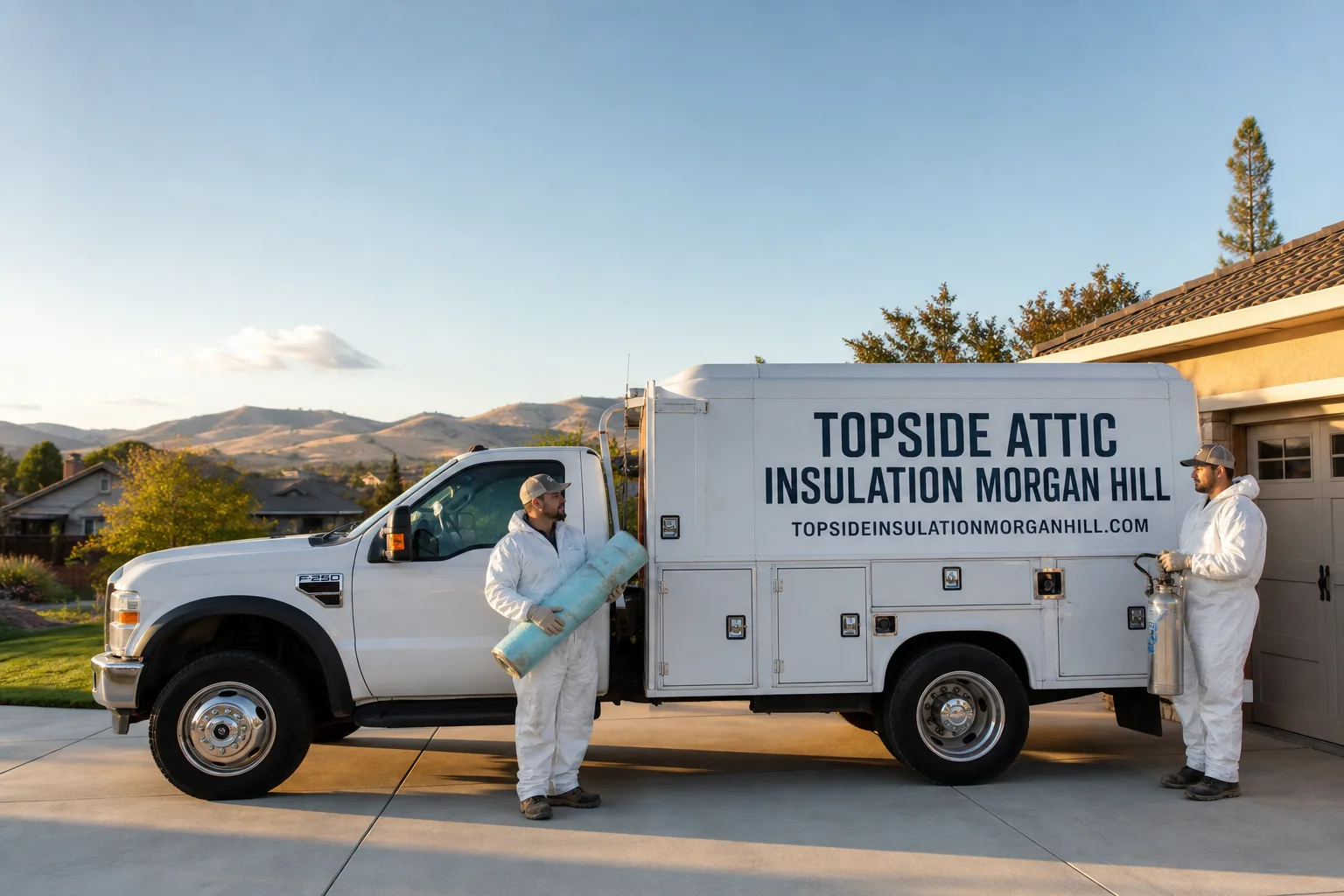
Fast, Reliable Attic Insulation Across Cupertino
Most attic insulation retrofits in Cupertino run $2,800-$6,500 for a full R-38 upgrade in a typical 1,200-2,000 square foot ranch home, and our crews can usually complete the job in a single day. We dispatch to Cupertino from our San Francisco Bay Area office, and because we’ve worked the Monta Vista, Garden Gate, and Rancho Rinconada neighborhoods extensively, we know the 1960s tract layouts before we arrive. Call (669) 280-8103 for a written price before any work starts - that’s Haven Standard Clause 1, no exceptions.
Why Topside Attic Insulation Morgan Hill Is Cupertino’s Preferred Attic Insulation Company
We’ve sealed and insulated over 9,000 homes since 2016, and a significant share of those have been in Cupertino’s post-1955 ranch tracts where the original fiberglass batts have compacted to effective R-8 to R-12 over five decades. Our Cupertino customers consistently mention the same thing in their reviews: we show up with a written scope, we don’t start until they’ve seen the price, and we leave behind blower-door numbers and a photo record they can hand to their solar inspector.
Response time to Cupertino is typically same-day or next-day for estimates, and we schedule the actual retrofit within a week once the scope is approved. That’s critical here, because Cupertino’s Title 24 whole-house compliance trigger means a solar or EV-panel permit can force an attic retrofit before the utility signs off - and homeowners can’t afford a contractor who measures in “callback windows measured in business days.” Our phones are answered by a live person 24/7.
We know the local conditions that matter: the diurnal temperature swings of 30-40°F at the base of the Santa Cruz Mountains, the compacted rock wool in Monta Vista attics, the inspector expectations at Cupertino’s Community Development Department. This isn’t generic Bay Area experience applied locally. It’s local experience, documented.
Our Attic Insulation Services in Cupertino
Blown-In Attic Insulation
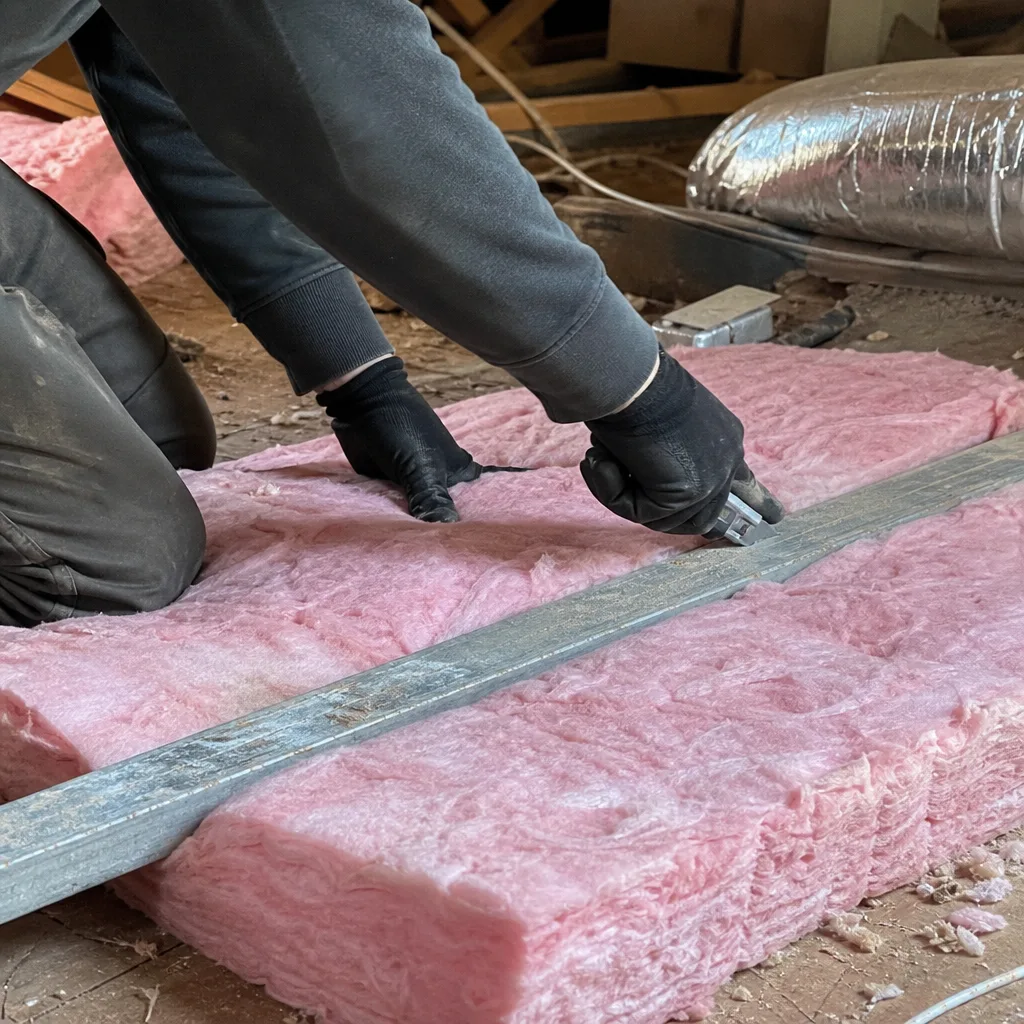
Blown-in fiberglass is our most common Cupertino retrofit, and for good reason. The 1960s ranch homes that dominate Garden Gate and Rancho Rinconada were built with 2×4 framing and vented attics designed for minimal insulation - originally R-11 or R-13 batts that have settled to a fraction of that. We blow Owens Corning or Johns Manville fiberglass to a uniform R-38 depth, but only after we’ve air-sealed the top plates, can lights, and plumbing penetrations. In Cupertino, skipping that sealing step is particularly costly because those 30-40°F daily swings force your HVAC to fight thermal bleed all night if the envelope isn’t tight. Every blown-in job gets a before-and-after blower-door test - a pressurization reading that shows, in one number, how much conditioned air your home was losing.
Attic Batt Insulation
Batt insulation still has a place in Cupertino, particularly in ADU additions where the framing is new and the cavities are regular. We use Knauf or Rockwool batts when the geometry suits them, but we’re direct with homeowners: in a 1965 ranch with irregular joist spacing, settled existing material, and dozens of penetrations to work around, blown-in almost always performs better. If your Cupertino home does suit batts, you’ll get the same written scope, the same air-sealing prerequisite, and the same documented photo record.
Attic Insulation Top-Up
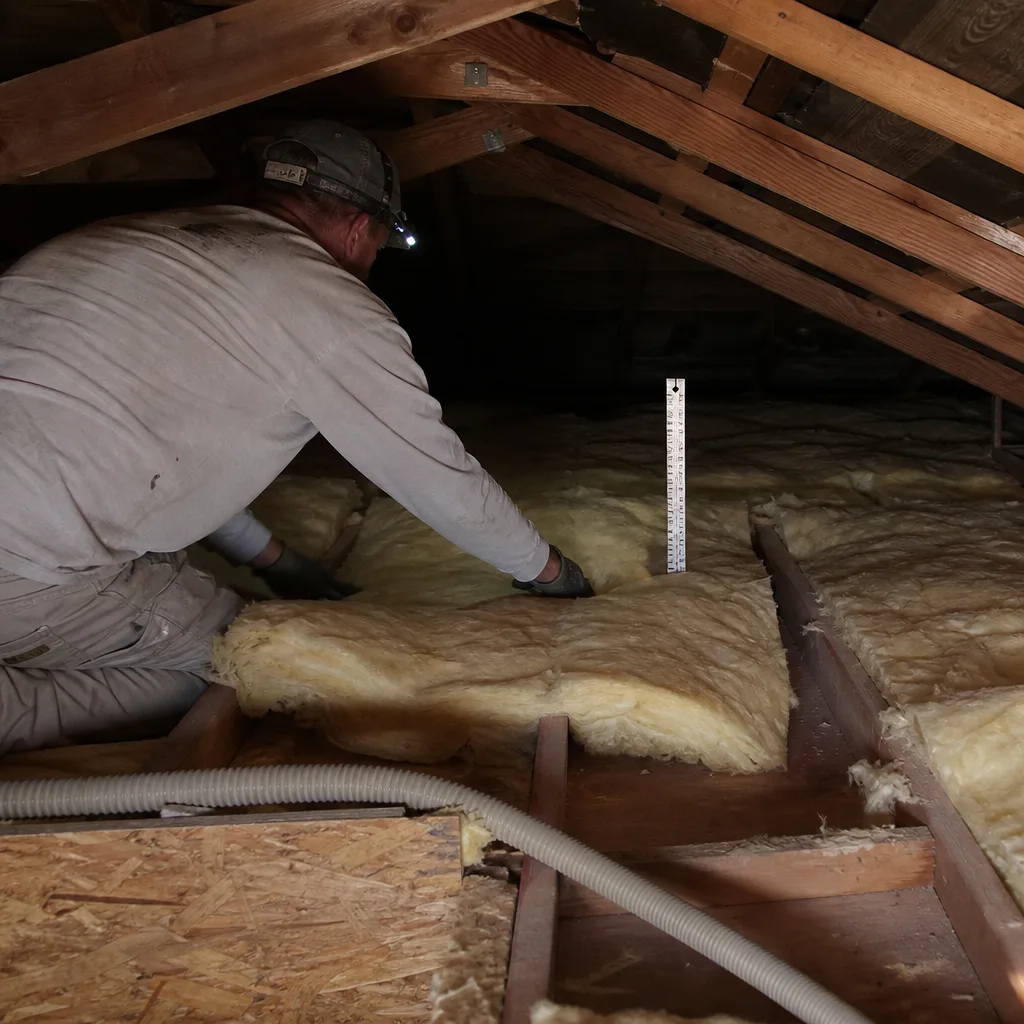
Top-ups are where Cupertino homeowners get into trouble. We’ll do them, but only after we’ve tested what’s there. The half-done top-up is a common failure mode in this market: a crew adds a few inches of new material over compacted R-9 rock wool, the homeowner gets a brief improvement in afternoon heat gain, but the 30-40°F nightly temperature drop still bleeds through because the envelope was never sealed. We don’t do cosmetic top-ups. If your Monta Vista attic has settled rock wool, we’ll tell you exactly what we found, show you the photo evidence, and give you a written price for a proper R-38 retrofit that includes air sealing. Under our 365-Day Done Right Promise, if it’s not done right, we make it right.
Attic Insulation Replacement
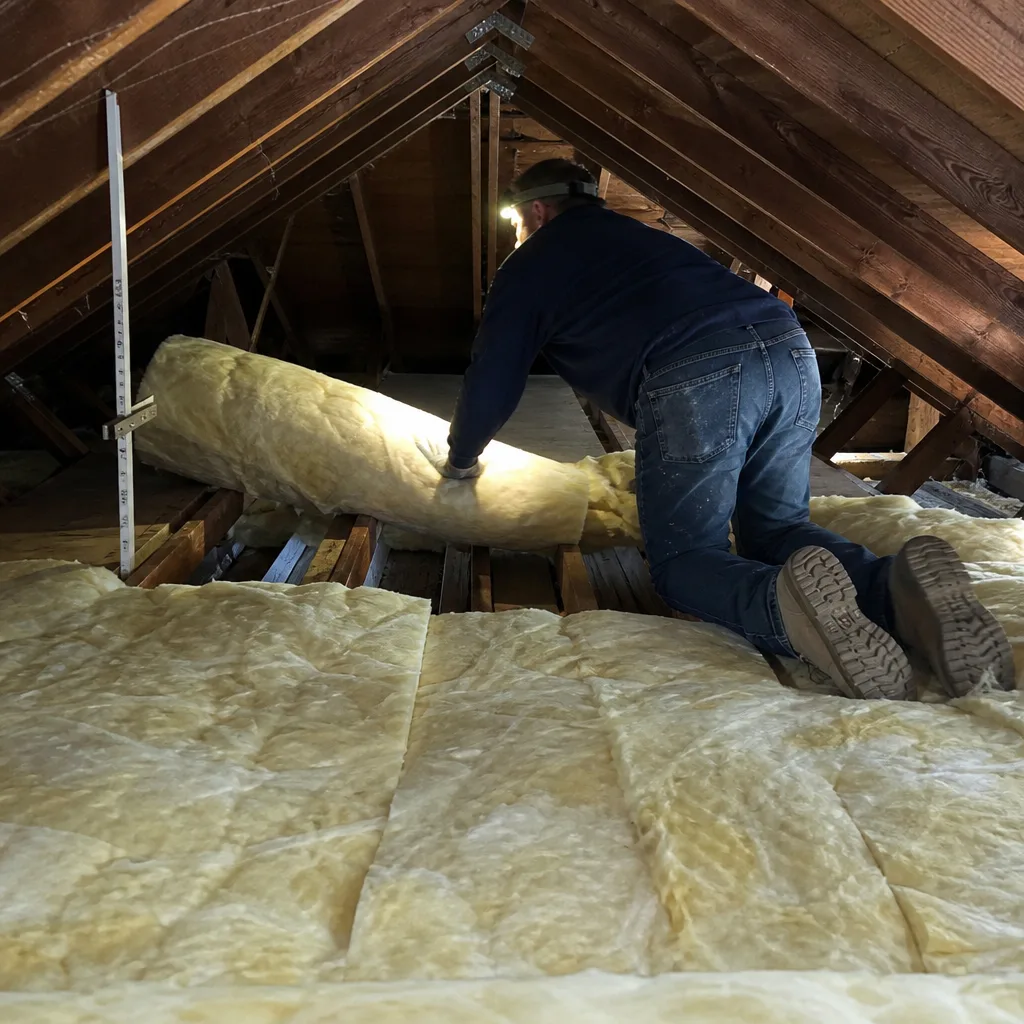
Full replacement is increasingly common in Cupertino, and it’s often triggered by permit requirements rather than homeowner choice. When a solar installation or EV-panel upgrade pulls a permit, the Title 24 whole-house compliance trigger can require the attic to meet current R-38 standards before the utility interconnection is approved. We’ve replaced insulation in dozens of Cupertino homes under exactly this pressure, and we structure the job for speed without cutting corners: one trip, air sealing first, blown-in to R-38, baffles at the soffits, photo documentation, and blower-door numbers ready for the inspector.
Attic Baffles & Ventilation Prep
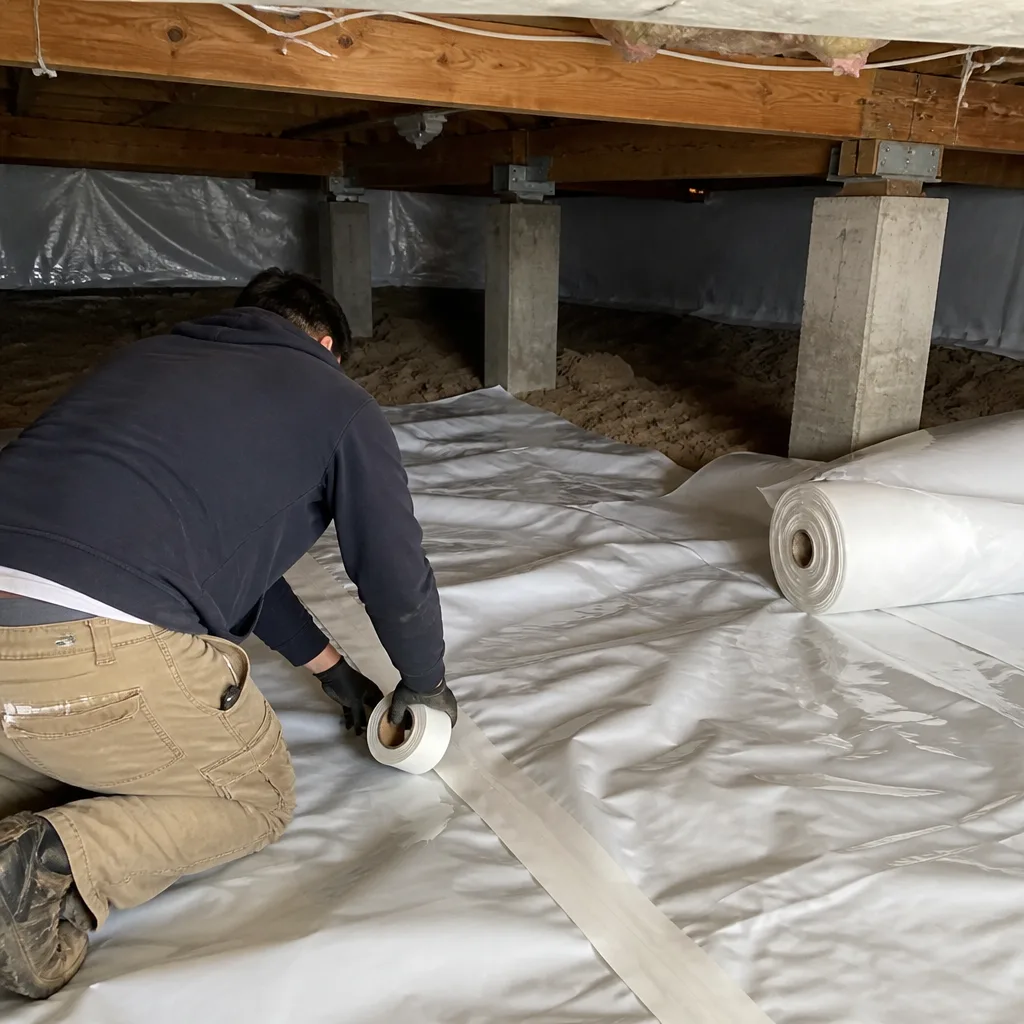
Cupertino’s vented attics need baffles - the cardboard or plastic channels that keep soffit vents open after insulation goes in - and they’re often missing or crushed in 1960s ranches. We install baffles as standard on every full retrofit, because blocking soffit ventilation creates moisture problems in winter and overheating in summer. In the older ranch tracts near Stevens Creek Boulevard, we’ve found attics where decades of homeowner-added insulation has completely buried the vents. We clear and re-establish that airflow before we blow.
What happens when you call
- 1
A real person answersNo phone trees - you reach a local pro.
- 2
You get an upfront price rangeHonest numbers before anyone is dispatched.
- 3
A background-checked tech heads outLicensed & insured, dispatched right away.
- 4
You approve before work beginsNothing starts until you say go.
Trusted Brands We Service in Cupertino
We source materials from Owens Corning, Johns Manville, Knauf, and Rockwool, among others - no proprietary lock-in, so we can match the right product to your specific Cupertino home and any Title 24 requirements your permit imposes. We keep common blown-in fiberglass and batt sizes stocked locally, which means once your written scope is approved, we’re not waiting on a distributor run. For Cupertino’s ADU and solar-triggered retrofits, that turnaround matters: inspectors don’t hold schedules, and neither do we.
Common Attic Insulation Problems We See in Cupertino Homes
- Compacted original batts testing at R-8 to R-12. The fiberglass or rock wool installed in Cupertino’s 1960s-1970s ranch tracts has settled and compressed over 50+ years. Homeowners in Monta Vista and Garden Gate often don’t discover the problem until a solar permit inspection flags it, turning a rooftop project into a mandatory attic retrofit.
- Half-done top-ups that leak heat at night. Cupertino’s 30-40°F diurnal temperature swing at the base of the Santa Cruz Mountains means a superficial insulation addition might blunt afternoon heat gain but still allows thermal bleed after dark. The envelope has to be sealed and filled to R-38 to handle both conditions.
- ADU additions creating two-tier envelopes. Cupertino’s high land values drive multi-generational ADU construction, and the new structure gets insulated to current Title 24 while the original 1960s ranch attic stays at R-12. Inspectors notice. Performance suffers. We address both as a single scope when homeowners plan ahead.
- Air leaks around top plates and can lights bypassing insulation entirely. Even where Cupertino attics have reasonable insulation depth, unsealed penetrations act as chimneys for conditioned air. Our blower-door test quantifies this before we start, and the after-test proves we fixed it.
Pricing for Attic Insulation in Cupertino, CA
Here’s what attic insulation costs in Cupertino’s current market:
| Service | Typical Range |
|---|---|
| Attic air sealing + blown-in to R-38 (typical 1,200-1,800 sq ft ranch) | $2,800-$4,800 |
| Full insulation removal + replacement to R-38 | $4,200-$6,500 |
| Attic top-up over existing (only where appropriate) | $1,800-$3,200 |
| Attic baffles and ventilation prep (as standalone) | $600-$1,400 |
| ADU-attached retrofit with Title 24 documentation | $3,500-$7,000 |
What moves you within these ranges: attic square footage, current insulation condition, accessibility, whether removal is required, and the extent of air sealing needed. Every Cupertino job gets a written price before any work starts - Haven Standard Clause 1 - and we offer a Free Second Opinion on any competing written estimate. Call (669) 280-8103 for your exact quote; estimates are free.
We Also Serve Cities Near Cupertino
Our crews work throughout the South Bay. If you’re in Cupertino or nearby Saratoga, Sunnyvale, Santa Clara, or Campbell, we dispatch with the same written-price-first protocol and documented completion record. For our full service line, see Attic Insulation.
Serving Cupertino, CA - Our Local Coverage Area
We’re based in the Cupertino area and know this community well. Use the map below to see our service coverage - if you’re nearby, we can almost certainly help.
FAQs - Attic Insulation in Cupertino
Yes, if your existing attic tests below current Title 24 standards, the whole-house compliance trigger can hold up your utility interconnection until it’s remediated. This happens regularly in Monta Vista and Garden Gate, where 1960s ranch attics with settled rock wool or fiberglass test at effective R-8 to R-12. We structure these retrofits for speed: one trip, air sealing, blown-in to R-38, documentation ready for your inspector. Call (669) 280-8103 for a written price and timeline.
Your attic is likely under-insulated and unsealed, and Cupertino’s specific microclimate makes the problem worse. At the base of the Santa Cruz Mountains, summer afternoons hit the low-to-mid 90s while nights drop to the mid-50s - a 30-40°F swing that an R-12 attic can’t buffer. The AC runs constantly against afternoon heat gain, then the envelope bleeds that conditioned air overnight. A proper R-38 retrofit with air sealing fixes both. We prove it with before-and-after blower-door numbers.
Yes, that’s our standard for Cupertino ranch homes. In Monta Vista, a homeowner pulling a solar permit discovered the original blown-in rock wool in their 1965 single-story ranch had settled to an effective R-9, triggering a Title 24 whole-house compliance requirement before the utility would sign off. Our crew did a full one-trip retrofit - air-sealing the top plates, installing Owens Corning blown-in fiberglass to R-38, adding baffles at the soffit vents, and re-inspecting before the solar inspector arrived. The homeowner got their permit cleared and their summer afternoon heat gain dropped noticeably. One trip, documented, done.
We recommend treating the original house and ADU as a single envelope scope, because insulating the ADU to Title 24 while the ranch attic stays at R-12 creates a two-tier system that underperforms and confuses inspectors. For the ADU itself, blown-in fiberglass to R-38 in the attic, with proper air sealing and baffles, matches Cupertino’s permit requirements and performs with the existing structure. We’ll give you a single written price for both.
We can, but we won’t recommend it without seeing what’s there first. Compacted rock wool in Cupertino’s 1960s ranches often tests at R-8 to R-12, and adding a few inches of new material over that gives you a cosmetic fix, not a performance fix. The 30-40°F diurnal swings here will still punish you. We’ll photograph what we find, run a blower-door test if the scope warrants it, and give you a written price for either a proper top-up (rarely the right call) or a full R-38 retrofit with removal and air sealing. You decide.
Written by Wes Okafor, Owner at Topside Attic Insulation Morgan Hill, serving Cupertino since 2016 under The Haven Standard.