
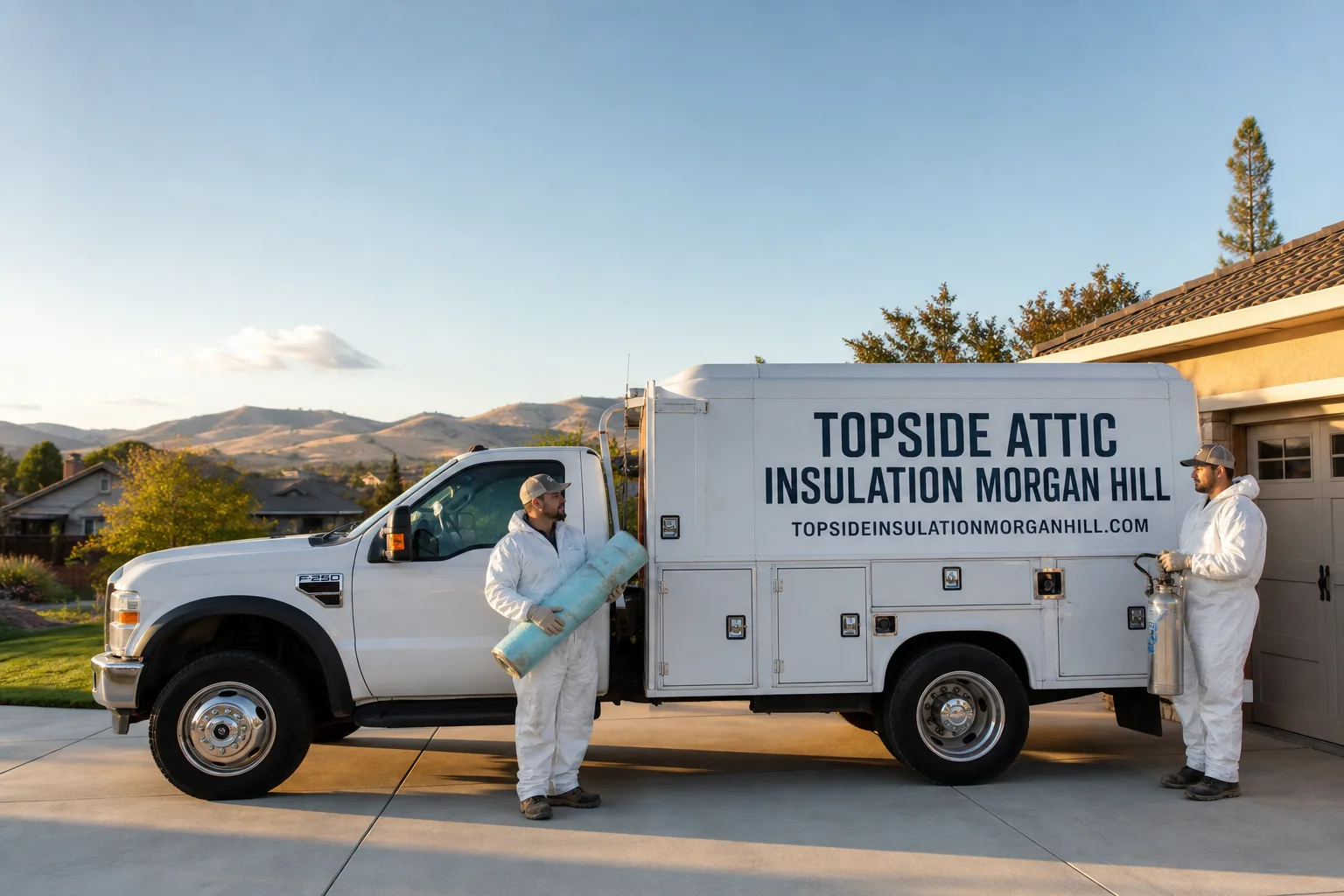
How Much Does Blown-In Insulation Cost in Morgan Hill?
Blown-In Insulation services in Morgan Hill, CA typically cost between $1,200 and $3,800 for a standard attic, with most single-story homes in the 1,500-2,200 sq ft range landing between $1,600 and $2,600 when the job includes proper air sealing first. The exact number depends on your current R-value, the insulation material, and whether penetrations and top plates need to be sealed before the blowing starts – and in Morgan Hill’s climate, they almost always do.
Blown-In Insulation Cost Breakdown (2026)
Most Morgan Hill homeowners want a number before they call anyone. Here it is, broken into the line items that actually make up a quote:
| Scope of Work | Typical Price Range (2026) |
|---|---|
| Attic air sealing only (top plates, can lights, penetrations) | $400 – $900 |
| Blown-in fiberglass insulation, attic (1,000-1,500 sq ft floor area) | $900 – $1,600 |
| Blown-in fiberglass insulation, attic (1,500-2,500 sq ft floor area) | $1,400 – $2,400 |
| Blown-in cellulose insulation, attic (1,500-2,500 sq ft floor area) | $1,200 – $2,200 |
| Air sealing + blown-in insulation combined (most common scope) | $1,600 – $3,400 |
| Insulation removal before re-blowing (per 1,000 sq ft) | $500 – $1,100 |
| Blown-in wall insulation (dense-pack, per 1,000 sq ft of wall area) | $1,800 – $3,400 |
| Blower-door test (pre- and post-seal measurement) | $150 – $350 (often bundled) |
| Large attic or complex roofline (2,500+ sq ft, multiple HVAC penetrations) | $2,800 – $4,800+ |
A few things drive those ranges. First, Morgan Hill sits in Santa Clara County’s hotter interior valley microclimate – summer attic temperatures regularly hit 140-160°F in neighborhoods like Paradise Valley Estates and along Butterfield Boulevard corridors. That heat load means most homes need to reach at least R-38, and older homes built before 1990 with R-11 or R-19 in the attic need significantly more material to get there. More material equals a higher quote, straightforwardly.
Second, whether your attic needs air sealing before insulation is added changes the math considerably. A home in the Madrone neighborhood or East Main Avenue area that was built in the 1970s or early 1980s almost certainly has unsealed top plates, unboxed recessed can lights, and open chases around plumbing and electrical penetrations. Adding blown-in over those gaps doesn’t fix the air loss – it just insulates the path conditioned air is already escaping through. That’s why the combined scope (air seal first, then blow in) tends to cost $300-$700 more than insulation alone, and why it almost always delivers a better result on a blower-door reading.
Third, fiberglass and cellulose are priced differently. Cellulose – made primarily from recycled paper fiber – costs less per bag and installs slightly faster in open attic cavities, which is why it’s the more budget-friendly choice in most Morgan Hill quotes. Fiberglass tends to have a longer track record in high-moisture zones and doesn’t settle quite as much over time, which matters in attics where ventilation isn’t perfect.
What Affects Blown-In Insulation Pricing in Morgan Hill
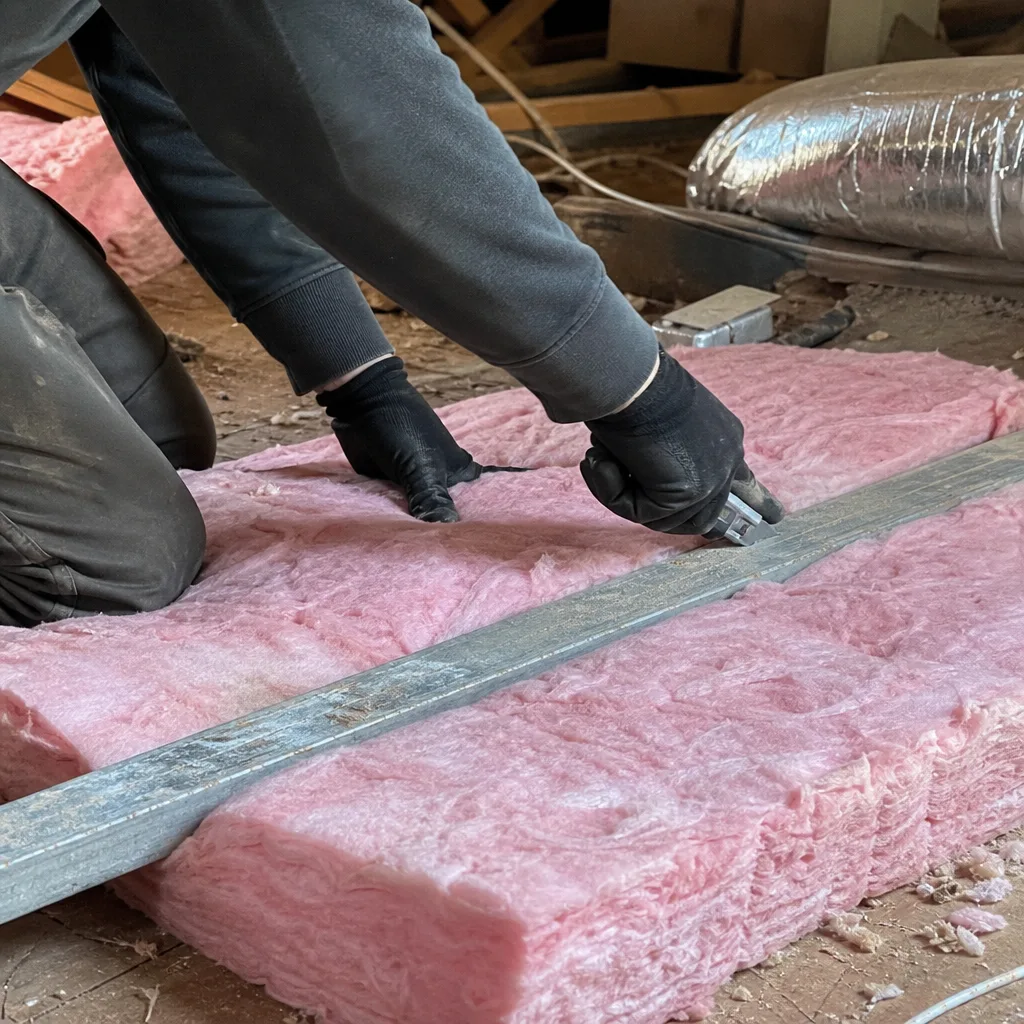
- Current insulation depth and R-value: An attic sitting at R-11 needs roughly three times the material to reach R-49 compared to one that’s already at R-30. In Morgan Hill, CalGreen code currently targets R-38 minimum for existing homes being upgraded, though many energy auditors recommend R-49 for attics with southern exposure given the South Bay heat load.
- Attic access and headroom: Tight hip-roof attics – common in the Coyote Valley Ranch and East Main subdivisions built in the 2000s – take more labor time than open gable-roof attics. Low clearance forces slower, more careful installation to hit consistent depth across the floor.
- Air sealing requirements before blowing: This is the line item most contractors skip or treat as optional. It isn’t. A home with 12 unsealed recessed can lights and open top plates can lose 30-40% of its HVAC output through those gaps. Sealing those penetrations adds cost upfront – typically $400-$800 – but it’s the step that makes the R-value number actually mean something in practice.
- Existing insulation condition: Rodent-damaged, moldy, or heavily compacted insulation needs to come out before anything new goes in. Removal adds $500-$1,100 per 1,000 sq ft in most Morgan Hill homes. Skipping removal when the existing material is compromised can trap moisture or contaminants under fresh insulation, creating a bigger problem later.
- Attic square footage and roofline complexity: A 2,000 sq ft single-story ranch on Monterey Road prices out differently than a 2,000 sq ft two-story with a complex hip-and-valley roofline. More corners, valleys, and soffit transitions mean more detail work on the air sealing side and more care to avoid blocking soffit ventilation with blown material.
- Material choice: Blown-in fiberglass (Owens Corning or Johns Manville are the common names in this market), cellulose (GreenFiber is widely used), and mineral wool (Rockwool for specific applications) all carry different cost-per-R-value ratios. The best material for your home depends on your attic’s moisture exposure, existing ventilation, and whether you’re trying to maximize budget or long-term performance.
Morgan Hill-Specific Context: Why This Market Has Its Own Pricing Logic
Morgan Hill isn’t quite Silicon Valley and it isn’t quite the Central Valley, but its climate borrows from both. Summer temperatures in the 95-105°F range are common in July and August, and the South Valley’s lower humidity compared to coastal Santa Clara County means attic air can get extremely hot and dry. That matters for insulation because cellulose performs well when installed correctly in dry climates but is more sensitive to moisture intrusion if the attic has any ventilation deficiencies.
We regularly see homes in the Paradise Valley and Anderson Lake areas where the original fiberglass batts in the attic have shifted, compressed, or been disturbed by pest activity over 20-30 years. In those cases, the effective R-value – what the insulation is actually delivering – is closer to R-10 or R-15 even if the paperwork says R-19. Blown-in insulation fills gaps that batts leave, which is one reason it tends to be the preferred upgrade path when existing insulation is in poor condition.
Santa Clara County also has permit requirements for some larger insulation projects that involve mechanical system modifications. A straightforward attic blow-in typically doesn’t require a permit under California’s existing building code provisions for energy efficiency improvements, but any work that involves spray foam on the underside of the roof deck (unvented attic conversion) does. If a contractor tells you a spray foam attic conversion doesn’t need a permit in Morgan Hill, get a second opinion.
On the labor side, Morgan Hill’s proximity to San Jose drives contractor pricing slightly above rural Santa Clara County rates but below the premium markets in Los Altos or Saratoga. Most experienced insulation crews working in Morgan Hill price their labor at $1.20-$1.90 per sq ft for a blown-in attic job, with air sealing billed separately or bundled at a fixed rate per penetration.
How to Save on Blown-In Insulation in Morgan Hill
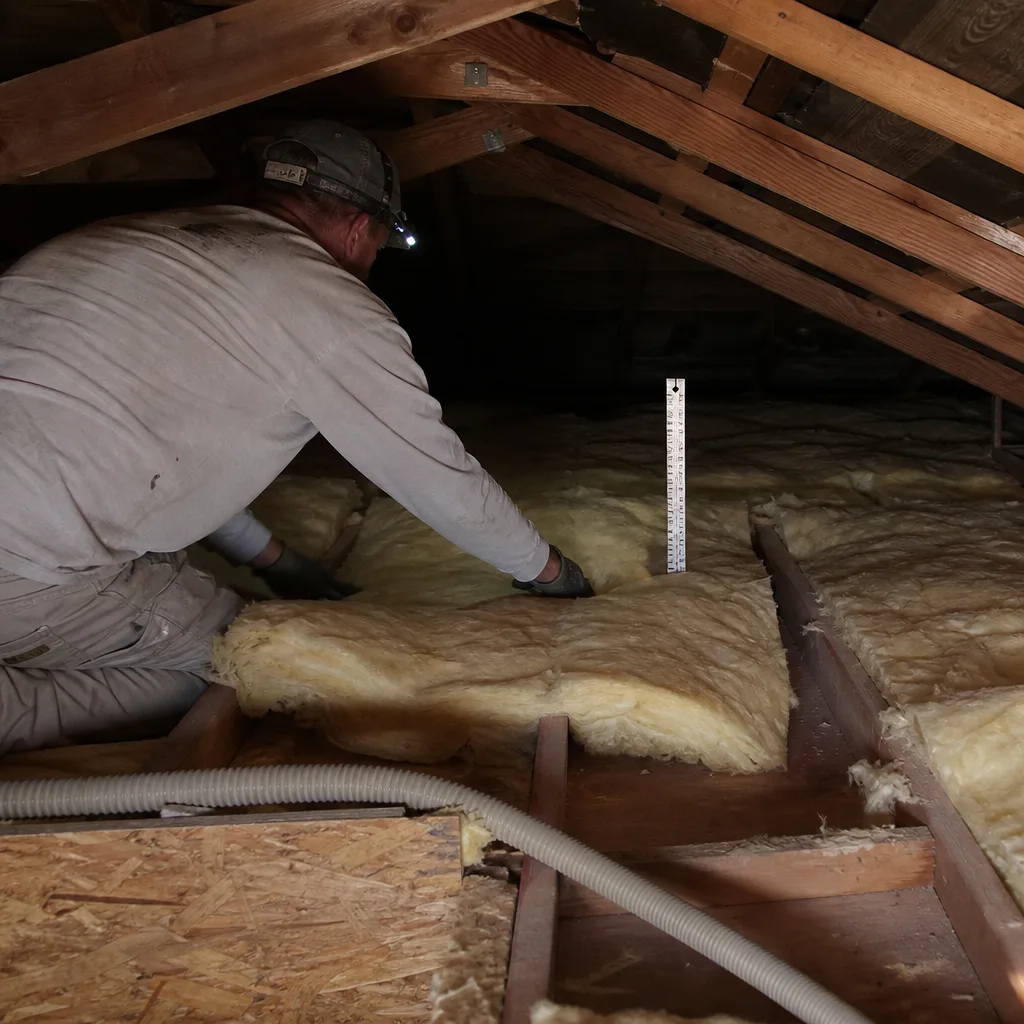
Get the scope right before you compare prices. The most common mistake Morgan Hill homeowners make is comparing a quote that includes air sealing to one that doesn’t. A $1,400 quote that skips the sealing step is not cheaper than a $1,900 quote that includes it – you’ll spend another $500-$800 adding the sealing later, or you’ll pay it in HVAC bills every summer. Make sure every quote you’re comparing covers the same actual scope.
Ask about combining services. If your attic needs insulation removal, air sealing, and new blown-in material, having the same crew do all three is almost always less expensive than scheduling three separate jobs. Mobilization costs – the time and equipment to set up – are real, and you pay them every time a new crew shows up.
Check PG&E rebate eligibility. Pacific Gas & Electric has offered rebates through its Energy Upgrade California program for attic insulation upgrades meeting certain R-value thresholds. The program’s structure changes from year to year, so verify current amounts at pge.com before you budget, but rebates of $200-$400 for qualifying attic insulation jobs in Morgan Hill have been available in recent years.
Time it right. Insulation contractors are busiest in late spring and early summer when homeowners start feeling the heat. Scheduling a late-fall or winter job sometimes opens up scheduling flexibility, and a contractor with availability can often sharpen a pencil on a quote when the calendar is lighter.
Get a second opinion on any written estimate you already have. Under Haven Standard Clause 1, Envelope Insulation Co. offers a free second opinion on any written estimate. Bring us a competing quote and we’ll read through the scope line by line with you – no pressure, no sales pitch. You’ll leave knowing whether the numbers are fair for the Morgan Hill market. Call (669) 280-8103 to schedule that conversation.
Don’t skip the blower-door test. A blower-door test – a pressurization reading that shows, in a single number, how much conditioned air your building envelope is losing – runs $150-$350 when ordered separately. When it’s bundled with a sealing job, the incremental cost is usually minor. That number, taken before and after sealing, is the only objective way to verify that the air sealing work actually performed. Without it, you’re taking the contractor’s word for the result.
What a Complete Blown-In Insulation Job Actually Looks Like
At Envelope Insulation Co., no blown-in insulation job starts until the air sealing is done. That’s not a policy we invented to upsell you – it’s the correct installation sequence. You cannot insulate your way out of an air-leakage problem. Blown-in insulation slows conductive heat transfer; it does almost nothing to stop the movement of air carrying heat through unsealed gaps. Both problems need to be solved, and they need to be solved in the right order.
When Wes Okafor’s team arrives at a Morgan Hill home for a blown-in insulation job, the sequence looks like this:
- A written scope and flat price are delivered before any work starts. This is Haven Standard Clause 1. No work begins without it.
- A pre-work blower-door test establishes the baseline: how much air the building envelope is currently losing, expressed in CFM50 (cubic feet per minute at 50 pascals of pressure difference). On a typical 1,800 sq ft Morgan Hill home in a neighborhood like Madrone Ranch, we’ve seen readings anywhere from 1,800 CFM50 to over 5,000 CFM50 before air sealing.
- Air sealing of top plates, can lights, plumbing and electrical penetrations, and attic hatches is completed using appropriate materials – two-part foam, fire-rated caulk, or rigid blocking depending on the penetration type.
- A post-sealing blower-door test documents the improvement. That number – the before and the after – goes into your written record.
- Blown-in material (fiberglass, cellulose, or mineral wool depending on the specified scope) is installed to the target R-value, verified by depth markers photographed during installation.
- A Documented Photo Record of the completed work is delivered when the crew leaves. You see what was done, where, and at what depth.
That’s the whole job. No verbal promises about what was sealed. No estimate of the improvement. A number before and a number after, and photographs of the work in between.
This is what our Blown-In Insulation in Morgan Hill service covers in full – the air sealing, the material installation, and the documentation that confirms what you actually paid for.
How Envelope Insulation Co. Prices Blown-In Jobs in Morgan Hill
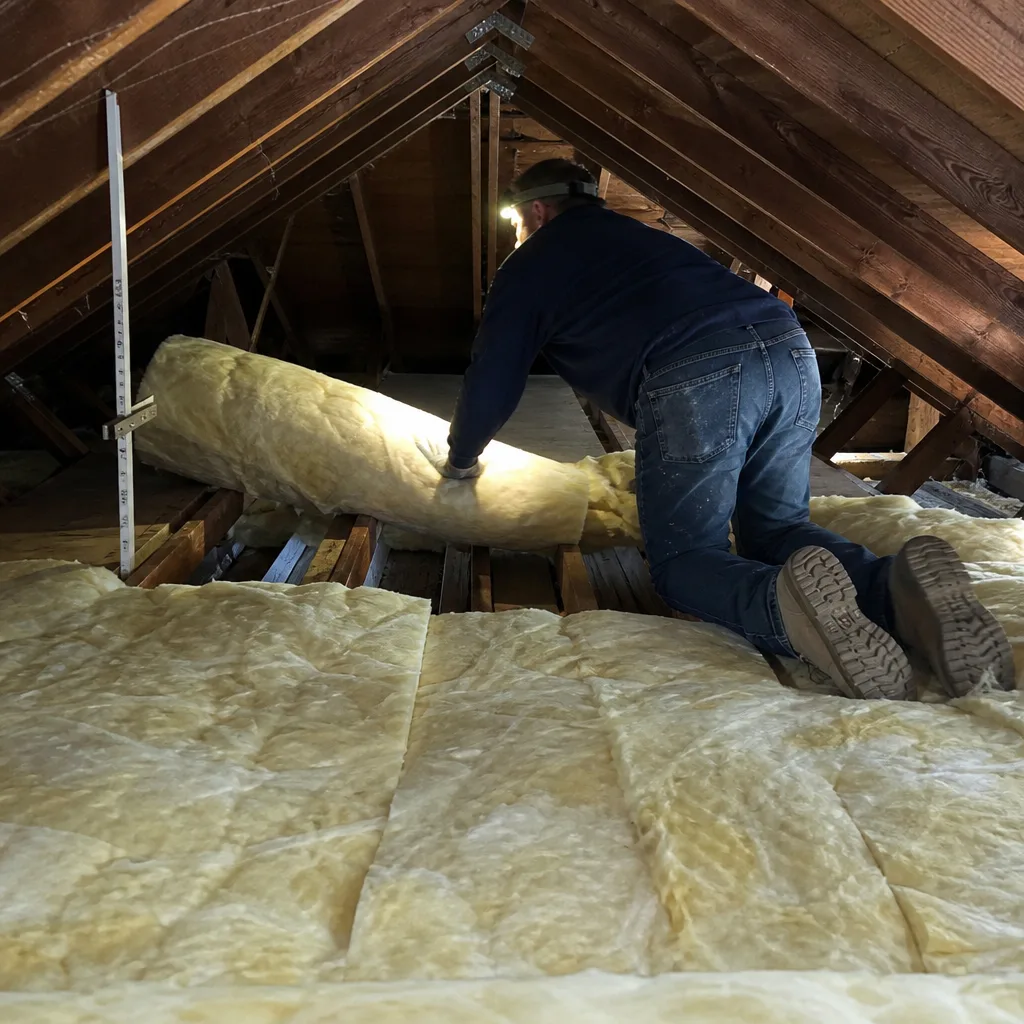
Every quote Wes Okafor’s team produces for a Morgan Hill home starts with a site visit, not a calculator. Two homes with the same square footage on the same street can have meaningfully different attic conditions – one with an open, accessible gable roof and minimal penetrations, the other with a low-clearance hip roof, 18 unsealed can lights, and a bathroom exhaust fan that vents into the attic instead of to the exterior (which we see more often than you’d think in homes built between 1978 and 1995 in this area).
After the site visit, you receive a written flat price with line items for air sealing and blown-in material separately listed, so you can see exactly what you’re paying for each phase. That price doesn’t move between the quote and the invoice. Haven Standard Clause 1 isn’t a marketing line – it’s what our 9,000+ completed jobs have been built on since 2016.
We also carry the materials you’d expect from an insulation contractor working at this level: Owens Corning and Johns Manville fiberglass, GreenFiber cellulose, Rockwool mineral wool, and Icynene and Demilec spray foam for specific air-sealing applications. We don’t have a proprietary product or a preferred vendor arrangement that pushes you toward a particular material – the spec goes in the written scope based on what your attic actually needs.
If you already have a written estimate from another contractor, bring it to us. We’ll go through it line by line and tell you whether the scope is complete, whether the price is in the normal range for Morgan Hill in 2026, and whether anything’s missing. That second-opinion conversation is free and carries no obligation. More information is always better than less when you’re making a decision that affects your home’s thermal performance for the next 20 years.
You can learn more about the full range of what we do from the home page, or call us directly at (669) 280-8103.
FAQs – Blown-In Insulation Cost in Morgan Hill
How much does blown-in insulation cost in Morgan Hill for a typical 2,000 sq ft home?
A 2,000 sq ft single-story home in Morgan Hill with a standard gable-roof attic runs $1,800-$2,800 for blown-in insulation plus air sealing, assuming the existing insulation is in acceptable condition and doesn’t need removal. If removal is needed, add $700-$1,000 to those numbers. Homes with complex rooflines, large numbers of recessed can lights, or attics that haven’t been touched since the 1980s tend to land in the upper half of that range. Call (669) 280-8103 for a site-specific written estimate – the visit is free and the price you receive is flat.
Is blown-in insulation cheaper than batt insulation in Morgan Hill?
For attic floor applications, blown-in insulation is typically 10-20% less expensive per square foot than batt insulation installed to the same R-value, primarily because installation is faster. Blown-in also tends to perform better in practice because it fills irregular gaps and voids that batts leave open – particularly around truss webbing, blocking, and the edges of the attic floor. For enclosed wall cavities, dense-pack blown-in is the right choice because batts can’t be retrofit into finished walls without opening them up. Call (669) 280-8103 to get a comparison in writing for your specific Morgan Hill home.
Does blown-in insulation require a permit in Morgan Hill?
A standard attic blown-in insulation job – adding material to an existing vented attic – does not typically require a building permit in Morgan Hill under California’s energy improvement provisions. However, converting a vented attic to an unvented system using spray foam on the underside of the roof deck does require a permit, and any work that touches your HVAC system may trigger additional requirements. If you’re unsure, ask your contractor to identify in writing whether a permit is needed for the specific scope. Envelope Insulation Co. includes this clarification in every written scope delivered before work starts. Call (669) 280-8103 with questions about your specific project.
How much does air sealing add to a blown-in insulation quote in Morgan Hill?
Air sealing adds $400-$900 to a blown-in insulation job in most Morgan Hill homes, depending on the number of penetrations, can lights, and top-plate gaps that need to be addressed. Homes built before 1995 in areas like the historic downtown core or the Madrone neighborhood typically have more penetrations than newer construction in East Main or Coyote Valley Ranch subdivisions. That $400-$900 is almost always cost-effective: in a home with significant air leakage, fixing the envelope before adding insulation can cut HVAC runtime meaningfully and improve the actual delivered performance of the insulation you’re paying for. Call (669) 280-8103 to find out what the air sealing scope looks like for your home before any numbers are committed.
What R-value should blown-in insulation reach in a Morgan Hill home?
California’s Title 24 energy standards recommend a minimum of R-38 for existing attics being upgraded in climate zone 4, which covers Morgan Hill. Most energy auditors working in this area – and Wes Okafor’s team – recommend R-49 for attics with significant southern exposure or HVAC equipment located in the attic, given Morgan Hill’s summer heat load. Reaching R-49 with blown-in fiberglass requires approximately 16-17 inches of settled material depth; cellulose requires slightly more. Your written scope will specify the target depth and the material weight per square foot to confirm the R-value claim is grounded in actual quantities, not just an installer’s estimate. Call (669) 280-8103 and we’ll put that in writing before anyone touches your attic.
Can blown-in insulation be added over existing insulation in Morgan Hill?
Yes, in most cases – existing insulation in acceptable condition can be left in place and new blown-in material added on top to bring the total to the target R-value. The key qualifier is “acceptable condition.” Rodent-damaged, wet, or heavily compacted insulation should come out first. We photograph existing conditions during the site visit and note whether removal is necessary in the written scope before any work starts. In Morgan Hill homes that have experienced roof leaks near the Cochrane Road corridor or pest intrusion common in neighborhoods backing up to open space along the Diablo Range foothills, removal is more often the right call than homeowners expect. Call (669) 280-8103 to get an honest assessment before committing to either path.
Key Takeaways
- Blown-in insulation in Morgan Hill costs $1,200-$3,800 for most residential attic jobs, with the $1,600-$2,600 range covering the most common scope: air sealing plus blown-in material for a 1,500-2,200 sq ft home.
- Air sealing before blowing is not optional – it’s what makes the R-value number mean something. Expect to add $400-$900 for proper air sealing of top plates, can lights, and penetrations.
- Older Morgan Hill homes (pre-1995) in neighborhoods like Madrone, downtown core areas, and Paradise Valley almost always have more unsealed penetrations than newer construction.
- California Title 24 targets R-38 minimum for attic upgrades in Morgan Hill’s climate zone; R-49 is more appropriate for homes with southern exposure or attic-mounted HVAC equipment.
- Blown-in cellulose and fiberglass both perform well in Morgan Hill’s dry summer climate – material choice depends on your attic’s specific ventilation and moisture conditions.
- PG&E rebates through Energy Upgrade California may reduce your net cost by $200-$400 for qualifying projects – verify current amounts at pge.com before finalizing a budget.
- A written flat price before any work starts is the only way to avoid scope creep. Ask for it in writing before you sign anything, regardless of which contractor you choose.
- Before-and-after blower-door readings are the only objective way to verify that air sealing actually worked. Request them as part of your documented record.
Get a Written Price for Your Morgan Hill Home
If you’re ready to find out what blown-in insulation will actually cost for your specific home in Morgan Hill, call Wes Okafor’s team at Envelope Insulation Co. at (669) 280-8103. The site visit is free. The estimate you receive is a flat written price with line items for air sealing and insulation separately – no vague ranges, no “call for pricing,” no number that changes between the quote and the invoice. Under Haven Standard Clause 1, work doesn’t start until you have that price in hand.
If you already have a written estimate from another contractor, bring it. We’ll read through it with you, line by line, and give you an honest read on whether the scope is complete and whether the price is fair for the Morgan Hill market in 2026. That conversation is free and carries no obligation.
Call (669) 280-8103 to schedule your free estimate. A live person answers – no voicemail, no callback window.
Written by Wes Okafor, Owner at Envelope Insulation Co. (operating as Topside Attic Insulation Morgan Hill), serving Morgan Hill since 2016.
Pricing reflects the Morgan Hill market as of 2026. Topside Attic Insulation Morgan Hill offers free estimates – call (669) 280-8103.
What Our Customers Say
"Turned up on time, protected the hallway, and the written scope matched what was actually done."
- Bruno S."Two other companies quoted to blow more insulation on top of what was there. These were the only ones who said the existing material had to come out first, and explained why."
- Clifford E."Crawl space encapsulation done properly. Photographs of the vapour barrier at every seam, and the damp smell in the hallway is gone."
- Ainsley P.