
GreenFiber Attic Air Sealing: The Morgan Hill Owner’s Guide
GreenFiber attic air sealing repair and replacement in Morgan Hill typically runs $340-$780 installed, depending on attic square footage and whether we’re re-sealing after prior insulation work or starting fresh on an unsealed floor. We stock GreenFiber-compatible sealant assemblies, top-plate gaskets, and penetration boots on every truck, and most Morgan Hill jobs are completed same-day. Most homeowners discover the problem when their GreenFiber-blown cellulose was installed over leaks that were never sealed first, or when can-light boots and top-plate gaps have pulled loose after years of attic traffic and thermal cycling in our South Valley heat.
Which GreenFiber Models This Applies To
GreenFiber manufactures loose-fill cellulose insulation, not a dedicated air-sealing hardware line, so “GreenFiber attic air sealing” refers to the sealing system installed beneath or integrated with their cellulose product. The critical compatibility question is which sealing components were used during your original installation. Look for GreenFiber bag labels reading “Low Dust,” “Sanctuary,” or “All Borate” - these indicate the cellulose type, but the air-sealing layer beneath determines what needs replacement.
Most GreenFiber installations in Morgan Hill homes built 1985-2010 used one of three sealing approaches: latex-acoustic caulk on top plates and drywall seams, pre-formed EPDM gaskets around can-light boots, or spray-foam collar dams around chimney and flue penetrations. We carry aftermarket equivalents that match GreenFiber’s original specs - Owens Corning FOAMULAR collar dams, Knauf EcoSeal latex, and Johns Manville gasket stock - because GreenFiber does not sell branded sealing hardware direct to contractors. The gotcha: early 2010s GreenFiber jobs in the Oakwood Avenue area often used non-IC-rated can-light boots that are now discontinued; we fabricate replacements from Rockwool safing and 26-gauge sheet metal to maintain fire clearance without tearing out the surrounding cellulose.
Topside Attic Insulation Morgan Hill is an independent service provider, not affiliated with GreenFiber. We also stock parts for Reflectix radiant barrier systems when those are part of the original assembly.
Signs Your GreenFiber Attic Air Sealing Is Failing
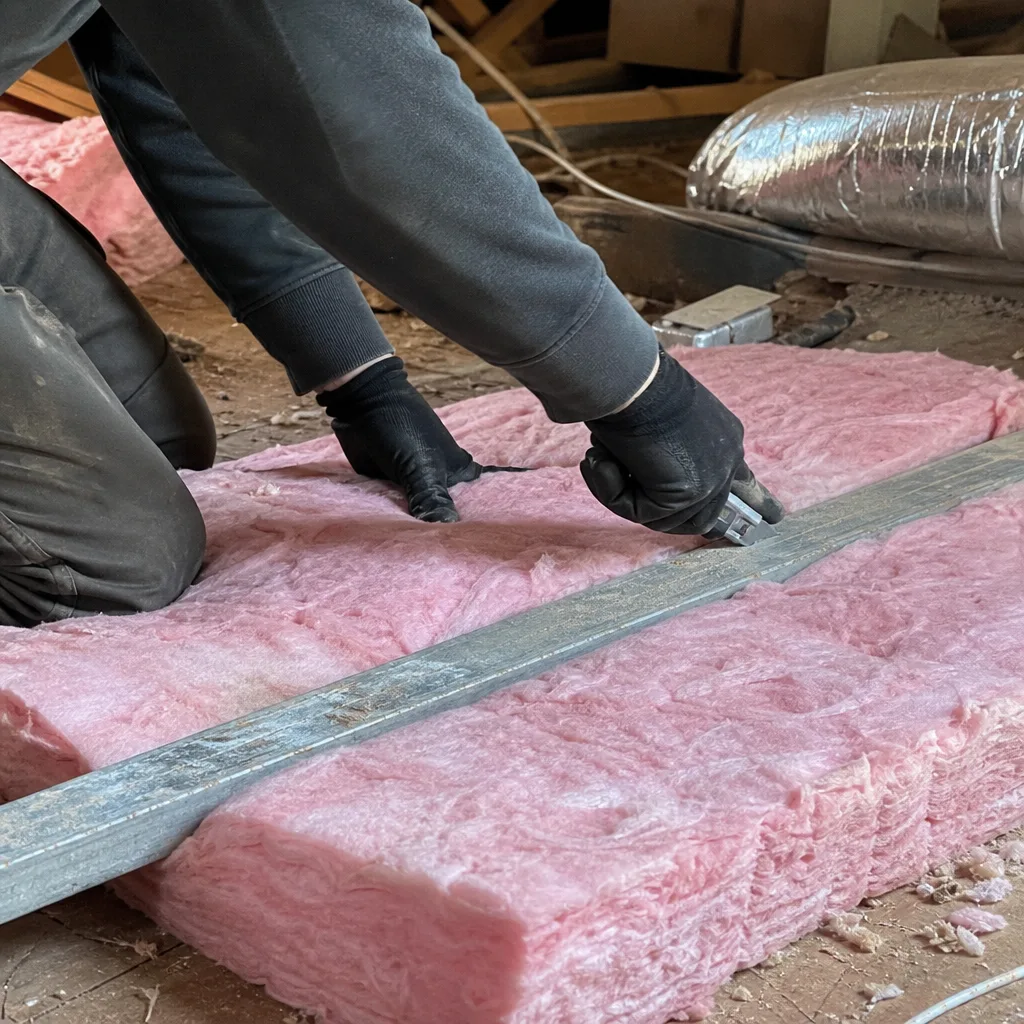
- Dust streaks on ceiling drywall below attic hatches or can lights. This means conditioned air is being pulled through gaps in the sealing layer and carrying cellulose fines with it. The sealant bead or gasket has failed at a pressure boundary, and your blower-door number is likely 30-50% higher than when the work was first done.
- Hot ceiling spots in summer, measured 10-15°F above ambient wall temperature. In Morgan Hill’s July and August heat, unsealed top plates let attic air migrate across the drywall. We see this most in the newer builds off East Main where truss uplift has pulled caulk beads away from plate edges.
- Cellulose settling away from eave edges, exposing bare drywall. Wind washing through soffit vents pushes GreenFiber back from the perimeter when baffle seals fail. The insulation hasn’t disappeared; it’s been redistributed by air moving through gaps that should have been sealed at installation.
- Ice damming or heavy frost on north-facing roof sheathing during cold snaps. Warm, moist interior air reaching the sheathing means your vapor retarder and air-seal layer are both compromised. Morgan Hill’s freeze-thaw cycles are milder than Chicago’s, but the mechanism is identical: exfiltration, condensation, damage.
- Blower-door test reads within 10% of pre-improvement numbers after 5-8 years. This is the objective failure. We recently logged a job near Madrone High School: 3,800 CFM50 at original installation, 3,400 CFM50 at year six. The GreenFiber cellulose was fine. The latex sealant had embrittled and cracked at every top plate.
Replacement Cost & What’s Included
| Scope | Price Range (Morgan Hill) |
|---|---|
| Spot repair: 2-4 can-light boots, hatch perimeter, minor top-plate touch-up | $340-$520 |
| Partial re-seal: 800-1,200 sq ft attic, all top plates, boots, penetrations | $580-$780 |
| Full re-seal after failed prior install: remove cellulose, seal, replace insulation | $1,400-$2,200 (includes insulation) |
What drives the range: attic accessibility (truss height, existing decking), quantity of penetrations, and whether we need to vacuum and reinstall cellulose to access the seal layer. Every job includes a written price before work starts, documented photo record, and on applicable jobs, before-and-after blower-door readings. Under our 365-Day Done Right Promise, if the blower-door number doesn’t improve, we re-work at no charge.
DIY or Call Us?
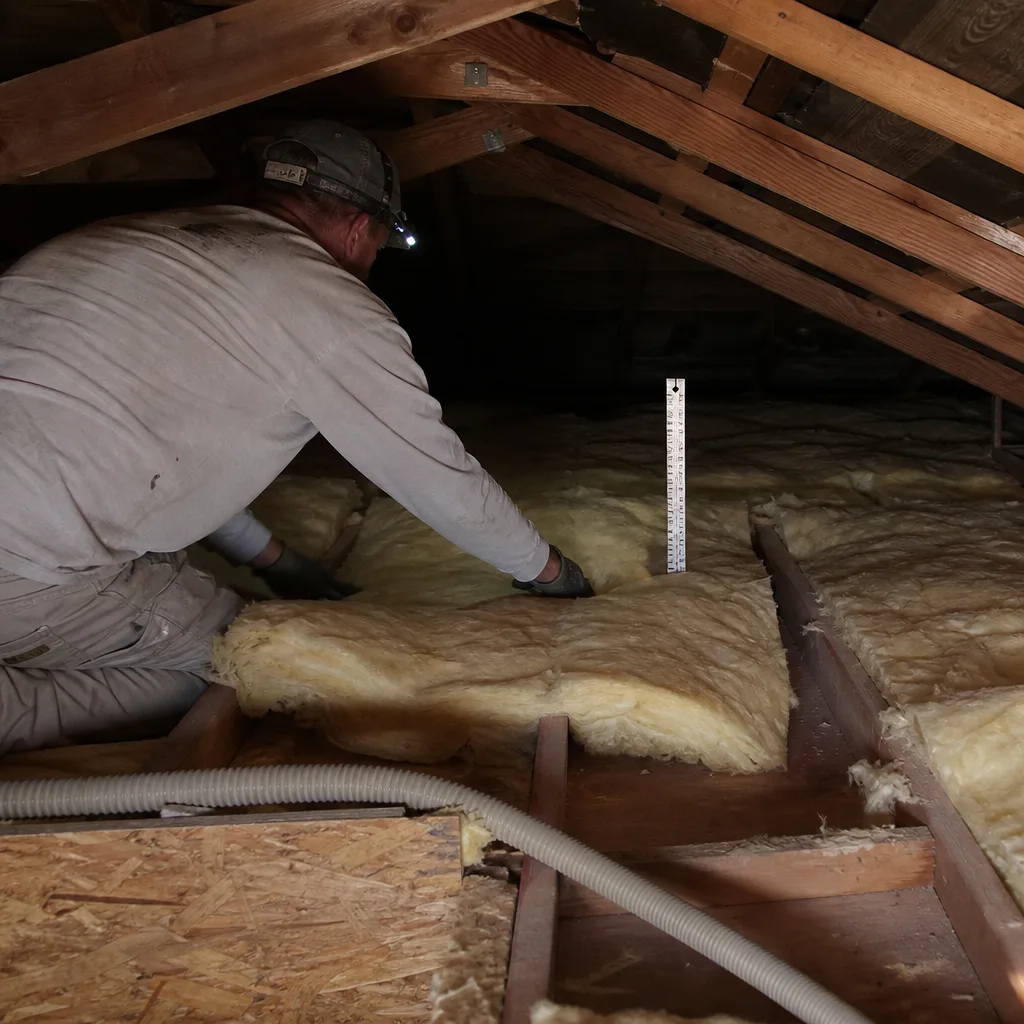
Here’s what you can safely check: lift your attic hatch and photograph any visible gaps around the perimeter, light-colored dust streaks on the drywall below, or settled cellulose exposing the ceiling surface. Note your can-light model numbers if accessible. That’s the limit of safe homeowner inspection.
Where DIY goes wrong: attic air sealing requires working at height on joists or decking of unknown load capacity, often near live electrical in cramped quarters. More critically, you cannot verify your own work without a blower-door test - a pressurization reading that shows, in one number, whether the seal layer is actually performing. We’ve re-done enough homeowner attempts in Morgan Hill to know the pattern: caulk applied to dusty surfaces that never bonds, boots sealed with the wrong foam that off-gasses and shrinks, top plates missed entirely because they’re buried under cellulose. Seal the leaks first. The insulation just holds what you’ve already captured. Call (669) 280-8103 and we’ll read your situation with you - estimates are free, and we publish the blower-door numbers so you know what you paid for.
FAQs
Latex sealants typically hold 8-12 years in our climate; EPDM gaskets and foam collars often reach 15-20. The bigger variable is attic traffic - every step on joists flexes the seal layer, and South Valley heat accelerates latex embrittlement. We warranty our re-seal work for 365 days and document the blower-door baseline so you have an objective benchmark for future comparison. Call (669) 280-8103 for a free assessment of your current seal condition.
Spot repair is viable when failure is isolated to 2-3 penetrations and the surrounding seal layer tests intact. When blower-door numbers have degraded more than 20% from original, partial or full re-seal is the honest recommendation - patching over widespread embrittlement leaves you with inconsistent performance and no documented result. We provide both options in writing with the expected CFM50 outcome for each. Call (669) 280-8103 to review your specific case.
Most spot repairs are done in 2-3 hours; partial re-seals on a 1,000-square-foot attic run 4-6 hours. Full removal, re-seal, and insulation replacement spreads across two days to allow proper cleanup and drying time. We schedule Morgan Hill jobs with a named technician and text when they’re en route - Haven Standard: Arrive on schedule. Call (669) 280-8103 to book.
Yes - latex sealant, EPDM gasket stock, can-light boots (IC and non-IC), fire-rated foam, collar dam material, and blower-door testing equipment. We’re not waiting on a parts run. For the discontinued boot sizes common in early 2010s Morgan Hill installs, we fabricate compliant replacements in our shop and carry the raw stock on every truck. Call (669) 280-8103; most jobs start same-day.
Written by Wes Okafor, Owner & Lead Insulation Technician, Topside Attic Insulation Morgan Hill at Topside Attic Insulation Morgan Hill, serving Morgan Hill and nearby areas.