
Icynene Vapor Barrier Installation: The Morgan Hill Owner’s Guide
Icynene vapor barrier installation in Morgan Hill typically runs $1,800-$3,400 for a standard crawl space or attic application, and we stock Icynene-compatible membrane on every truck for same-day starts. Most homeowners realize something’s wrong when their crawl space starts smelling musty in February or their hardwood floors cup along the edges facing the foundation. That vapor barrier - the polyethylene or reinforced membrane that blocks ground moisture from entering your conditioned envelope - has either torn at the seams, pulled away from the piers, or was never lapped and sealed correctly in the first place. In Morgan Hill’s clay-heavy soils around the Madrone district and the lower-lying parcels near Llagas Creek, we see accelerated failure from seasonal water tables and the temperature swing between 90-degree summer days and 40-degree winter nights.
Which Icynene Models This Applies To
Icynene doesn’t sell a standalone “vapor barrier” under its own brand name, but its open-cell and closed-cell spray foam systems - LC-50, MD-R-200, and the newer Icynene ProSeal LE series - are frequently paired with supplemental vapor retarders or air barriers in hybrid assemblies. The critical match is between the foam’s perm rating - a measure of how much water vapor passes through - and the Class I or Class II retarder your assembly requires under Title 24. In Morgan Hill, which sits in California Climate Zone 4, the prescriptive path often demands a Class I vapor retarder (0.1 perm or less) on the interior side of above-grade walls when you’re using open-cell foam on the exterior.
We identify the right membrane by reading the existing foam’s density and thickness, then cross-referencing with the original building permit if the foam was installed under permit. Icynene LC-50 at 3.5 inches in a 2×6 wall hits roughly R-13 and needs a smart retarder like CertainTeed MemBrain or a polyethylene sheet depending on the assembly. We also carry reinforced polyethylene in 6-mil, 10-mil, and 15-mil for crawl space ground covers that pair with Icynene rim-joist applications. Topside Attic Insulation Morgan Hill is an independent service provider - not affiliated with Icynene - so we source membranes from multiple mills and match to your assembly rather than pushing a proprietary product.
Signs Your Icynene Vapor Barrier Installation Is Failing
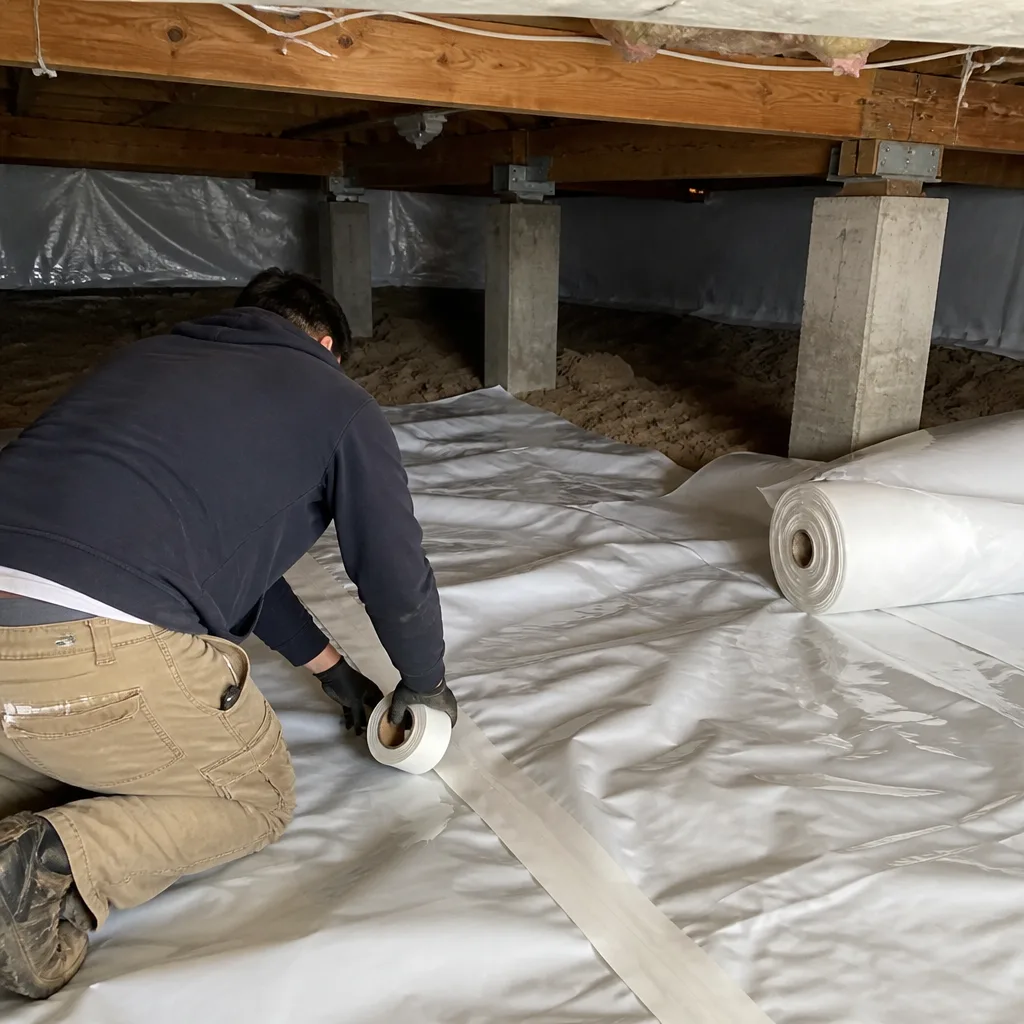
- Musty odors rising from floor registers or crawl space hatches. When the ground vapor barrier tears or the wall membrane gaps at electrical boxes, soil moisture and organic vapor enter the conditioned air. In Morgan Hill’s older neighborhoods near downtown, we’ve found original 6-mil poly degraded to brittle flakes after 8-12 years of UV exposure through foundation vents.
- Hardwood cupping or laminate swelling along exterior walls. Moisture migrating through a compromised retarder hits the underside of floor decking first. The boards swell on their bottom face, creating a concave “cup” visible from above. We measured 18% moisture content in oak flooring on a job near West Main Street where the polyethylene had pulled back 4 inches from the sill plate.
- Condensation on ductwork or insulation in summer. A vapor barrier installed on the wrong side of the assembly - the cold side in cooling-dominant climates - traps moisture inside the cavity. Morgan Hill sees 30+ days above 90°F; when attic ducts sweat, the first suspect is a misplaced or missing retarder letting humid attic air reach cold metal.
- Mold spotting on drywall corners or baseboards. Chronic damp at the bottom of exterior walls indicates the vapor retarder is discontinuous at the plate line or around penetrations. We find this most often where Icynene was sprayed as a retrofit without full removal of existing kraft-faced batts, creating a double-vapor-barrier trap.
- Blower-door numbers that worsen after “improvements.” If you added insulation but skipped air sealing, the stack effect pulls more moisture through any gap in your vapor control layer. Our crew documented a home off East Main that went from 3,800 CFM50 to 4,100 after a DIY vapor barrier install because the new sheet was taped to dirty concrete and peeled within a month.
Replacement Cost & What’s Included
Most Icynene vapor barrier installations in Morgan Hill fall between $1,800 and $3,400, with smaller crawl spaces (800-1,200 square feet) at the lower end and full attic-wall hybrid assemblies above $3,000. The range reflects three variables: square footage of membrane, whether we need to remove degraded existing material, and how much air sealing of top plates and penetrations precedes the new install.
| Component | Typical Range (Morgan Hill) |
|---|---|
| 6-mil reinforced polyethylene, crawl space ground cover | $1.80-$2.40/sq ft installed |
| 10-mil woven reinforced, high-traffic crawl spaces | $2.50-$3.20/sq ft installed |
| Smart vapor retarder (MemBrain or equivalent), wall/ceiling | $2.20-$2.90/sq ft installed |
| Existing degraded barrier removal and disposal | $350-$650 flat |
| Air sealing of top plates, boxes, penetrations (prerequisite) | $450-$900 |
Every job gets a Written Price Before Any Work Starts - Haven Standard Clause 1 - and the documented scope includes membrane manufacturer, mil rating, and seam-taping method. We also provide a Documented Photo Record showing before condition, sealed penetrations, and installed membrane with lap details. The 365-Day Done Right Promise covers delamination, seam failure, or any moisture recurrence traceable to our work.
DIY or Call Us?
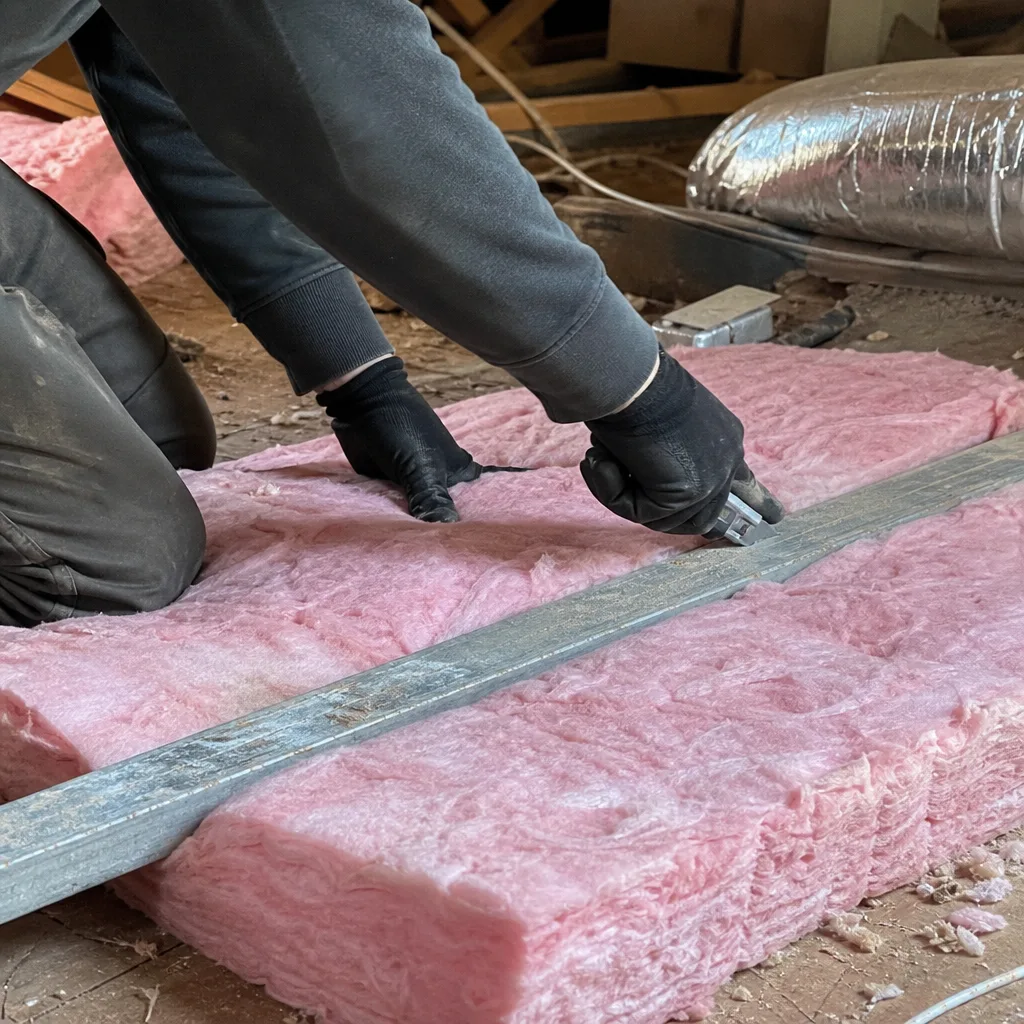
You can safely check three things: whether your crawl space vents are open or blocked per season, whether the existing poly is visibly torn or pulled from walls, and whether your hygrometer reads above 60% relative humidity downstairs. What you should not do is crawl under with a roll of hardware-store polyethylene and a stapler. Vapor barriers fail from improper lap (minimum 6 inches, sealed, not just overlapped), wrong placement in the assembly (cold-side vs. warm-side matters), and missed penetrations that become moisture funnels. In Morgan Hill’s adobe and clay soils, ground-level barriers need mechanical fastening to piers and termite inspection gaps maintained per local code. The safety issue isn’t dramatic - no high-tension springs here - but a misinstalled barrier hides moisture problems for years while mold establishes in your joist bays. If your hygrometer’s climbing or your nose tells you something’s off, call (669) 280-8103. We’ll read your existing assembly, give you a written price, and show you the blower-door number that proves the envelope is tight before we lay down a single sheet.
FAQs
In Morgan Hill’s climate, a properly installed 10-mil reinforced polyethylene ground cover lasts 15-20 years; 6-mil un-reinforced closer to 8-12 before UV and soil chemistry degrade it. Wall-mounted smart retarders like MemBrain have indefinite lifespan if undisturbed. Call (669) 280-8103 and we’ll inspect what you have - estimates are free.
Small punctures or tears under 6 inches can be patched with compatible tape and an overlaid scrap, but seam failures, widespread embrittlement, or backward installation require full replacement. We don’t patch over systemic failure - it costs more in callbacks than doing it once correctly. Call (669) 280-8103 for an exact quote - estimates are free.
A standard Morgan Hill crawl space (1,000 square feet) takes one day with a two-person crew: morning for removal and air sealing, afternoon for membrane layout, mechanical fastening, and seam sealing. Attic-wall hybrid assemblies run 1-2 days depending on access. We stock Icynene-compatible membrane on every truck, so scheduling is the only wait.
We stock reinforced polyethylene in 6-mil, 10-mil, and 15-mil, smart vapor retarders including MemBrain, and the acrylic tapes and termination bars for proper sealing. For Icynene-specific foam applications, we coordinate membrane selection to the foam’s perm rating and your assembly’s drying potential. Same-day starts are standard in Morgan Hill when you call (669) 280-8103.
Seal the leaks first. The insulation just holds what you’ve already captured. That’s the approach Wes Okafor learned at Olive-Harvey College on Chicago’s Far Southeast Side, running blower-door equipment before he ever touched a bag of blown-in cellulose, and it’s the same approach his crew applies from the houses near Oakwood Avenue up to the newer builds off East Main.
Ready to stop the moisture and see the numbers? Call (669) 280-8103 today. A live person answers 24/7, and you’ll get a written price before any work starts - always.
Written by Wes Okafor, Owner & Lead Insulation Technician, Topside Attic Insulation Morgan Hill at Topside Attic Insulation Morgan Hill, serving Morgan Hill and nearby areas.