
Knauf Crawl Space Encapsulation: The Morgan Hill Owner’s Guide
Knauf crawl space encapsulation systems in Morgan Hill typically run $3,200-$6,800 installed for a standard 1,200-1,800 square foot footprint, and we stock Knauf-compatible vapor barriers, seam tapes, and drainage matting for same-day starts on most jobs. Most Morgan Hill homeowners discover their encapsulation has failed when they notice musty odors returning after rain, find new efflorescence on foundation walls, or spot condensation beading on the underside of their vapor barrier - usually 8-14 years after the original install, sooner if the 2007-2012 era Knauf Ecoroll barrier was used in a high-water-table area like the neighborhoods west of Monterey Road.
Which Knauf Models This Applies To
Knauf doesn’t brand its crawl space line the way it labels batts; you’re looking for the Ecoroll (discontinued 2012, still common in Morgan Hill homes built 2008-2013), Insulation Shield (2012-2019), and current Earthwool Crawl Space System barriers. The critical identifier is the mil thickness stamped on the barrier edge: Ecoroll ran 6-mil polyethylene, Insulation Shield jumped to 8-mil reinforced, and Earthwool uses 12-mil woven scrim. The 6-mil Ecoroll degrades fastest in Morgan Hill’s clay-heavy soils, where groundwater wicks upward and abrades the underside.
We carry Knauf-spec 12-mil woven replacement barrier, but also stock Reflectix double-reflective insulation for homeowners who want radiant barrier performance in the same footprint. OEM Knauf seam tape (the white-roll, acrylic-adhesive version) bonds to our aftermarket barrier without compatibility issues; the gray-roll butyl tape from some big-box kits does not, and we’ve peeled those failures off foundation walls in the Paradise Valley area. If your original install used Knauf’s gray drainage matting (the dimpled HDPE layer), measure the dimple height: 0.25-inch for Ecoroll-era, 0.375-inch for Insulation Shield and Earthwool. Mixing matting heights creates air gaps that collect condensation against the barrier.
Signs Your Knauf Crawl Space Encapsulation Is Failing
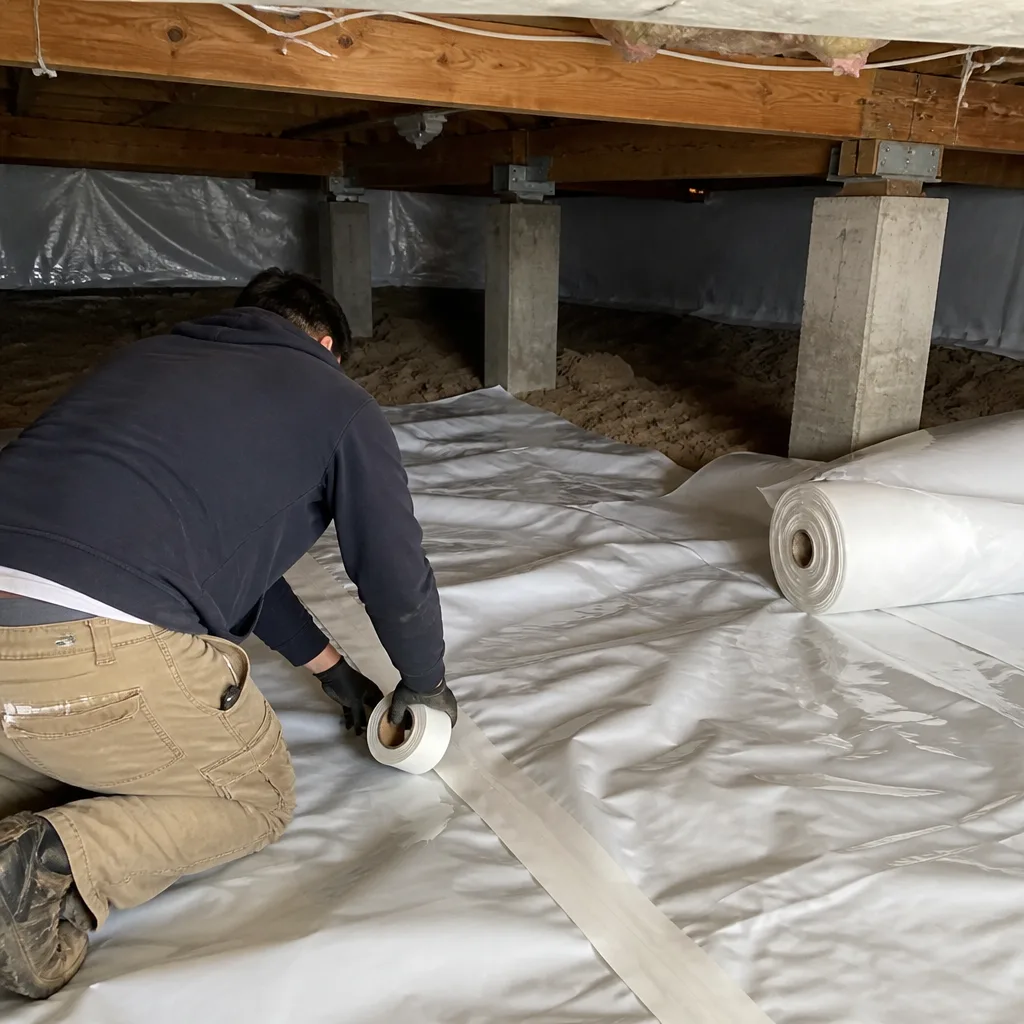
- Musty odor returning after dry spells. A healthy encapsulation should smell like nothing, or faintly like clean plastic. If your crawl space smells like wet cardboard 48 hours after rain stops, the vapor barrier’s seam tape has likely delaminated or the barrier itself has pinholed. In Morgan Hill’s Madrone district, we see this when summer heat drives moisture through compromised 6-mil barriers faster than winter does.
- Efflorescence blooming on block walls above the barrier line. White, chalky mineral deposits mean water vapor is migrating through the foundation and condensing on the interior surface. The Knauf barrier should extend 6-12 inches up the wall and seal to a termination strip; if that seal has pulled away, you’re looking at active vapor intrusion, not old residue.
- Condensation beading on the underside of the barrier. This is the telltale sign of a reversed vapor retarder - the barrier’s permeable side is facing down, trapping soil moisture against the plastic. Knauf’s 6-mil Ecoroll had a slightly textured “soil” side and smooth “room” side; installers rushing jobs in 2009-2011 frequently laid it smooth-side-down. We’ve found this exact error in four Morgan Hill homes off East Main.
- Sagging or ponding on the barrier surface. Water pooling on top of the vapor barrier means either the drainage matting beneath has collapsed (common with the thinner 0.25-inch Ecoroll matting under heavy clay) or the perimeter drainage is overwhelmed. In the lower-lying areas near Chesbro Reservoir, seasonal groundwater rise can saturate matting that was adequate in drier years.
- Increased humidity readings in living spaces above. If your first-floor relative humidity has climbed 8-12% with no HVAC changes, your crawl space is no longer isolated from the ground. We verify this with a simple psychrometer reading at the crawl space access before we quote; homeowners in the newer builds off Butterfield Boulevard have called us when their smart thermostats flagged the humidity spike before they ever went below grade.
Replacement Cost & What’s Included
Most full Knauf encapsulation replacements in Morgan Hill fall between $3,200 and $6,800 installed, with the spread driven by three factors: crawl space square footage, whether the original drainage matting can be salvaged, and how far up the foundation walls the barrier must run to hit grade. A 1,200-square-foot crawl with intact 0.375-inch matting and standard 8-inch wall height runs toward the lower end; a 2,000-square-foot space needing full matting replacement and 24-inch wall coverage (common in hillside homes near Oakwood Avenue) pushes the upper bound.
Our price includes removal and responsible disposal of the failed barrier, installation of new 12-mil woven scrim barrier with Knauf-compatible acrylic seam tape, re-sealing to wall termination strips, and a post-install moisture reading. We also publish before-and-after blower-door numbers when the crawl space connects to conditioned space through floor penetrations - a pressurization reading that shows, in one figure, whether your encapsulation is actually isolating the ground or just covering it. Every job closes with a Documented Photo Record and our Written Price Before Any Work Starts, always. The 365-Day Done Right Promise applies to all encapsulation work; if seam tape lifts or barrier shifts, we return and correct it.
DIY or Call Us?
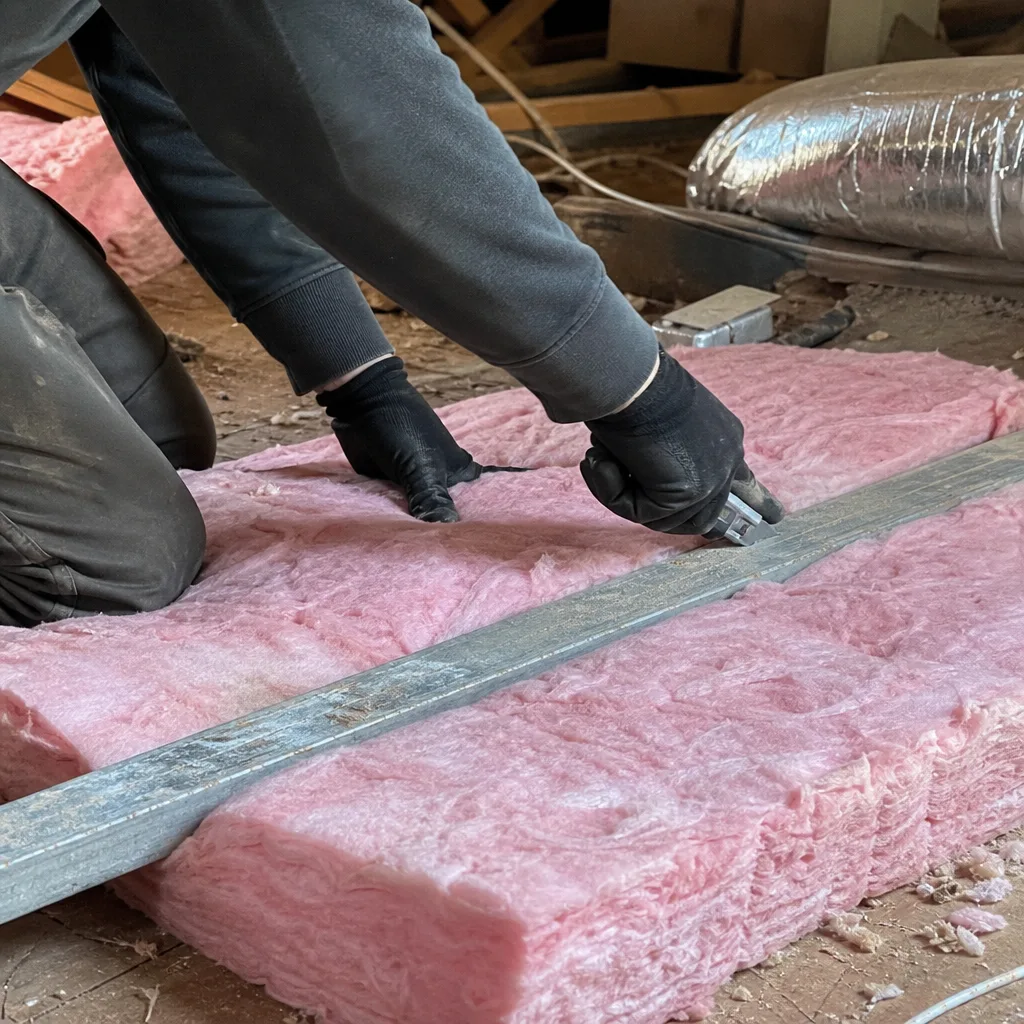
There’s no high-tension danger in crawl space encapsulation, but there is a health risk we flag plainly: disturbed rodent droppings, mold spores, and fiberglass particulate from degraded old barrier are genuine respiratory hazards. An N95 is minimum; a P100 with organic vapor cartridge is better. If your crawl space has active water entry or visible mold on joists, don’t enter without professional-grade ventilation.
What a homeowner can safely check: measure your barrier’s mil thickness with a caliper, photograph the seam tape color, and verify whether wall seals are intact by visual inspection from the access point. What goes wrong in DIY: inadequate overlap at seams (12-inch minimum for Knauf-compatible systems), wrong tape chemistry, and - the most common error we correct - failure to seal around plumbing penetrations and piers. A barrier with 2% unsealed area loses 30% of its vapor-stopping effectiveness; we find those leaks with a smoke pencil during our pre-install survey.
If you’re unsure whether your Knauf system is salvageable or needs full replacement, call us at (669) 280-8103 for a free second opinion on any written estimate you’ve already received. We’ll read it with you, line by line.
FAQs
Properly installed 12-mil woven scrim barriers last 15-20 years in Morgan Hill’s climate; the older 6-mil Ecoroll typically fails in 8-14 years, especially in areas with clay-heavy soils or seasonal groundwater fluctuation. The 2007-2012 installs we encounter in Morgan Hill are overwhelmingly in replacement territory now. Call (669) 280-8103 for a free moisture assessment - estimates are free.
Patching works for isolated punctures smaller than a quarter using Knauf-compatible acrylic tape, but widespread seam failure, delamination, or reversed vapor retarder installation requires full replacement - patch jobs on compromised 6-mil barrier fail within 18 months in our experience. Call (669) 280-8103 for a free estimate on replacement versus repair.
Most residential crawl spaces in Morgan Hill take one to two days: half a day for removal and surface prep, half a day to a full day for barrier installation, seam taping, and wall sealing. Larger homes or those requiring drainage matting replacement may extend to a third day. We stock Knauf-compatible 12-mil barrier and seam tape on our trucks for same-day starts when the job is approved.
We stock Knauf-compatible 12-mil woven scrim vapor barrier, acrylic seam tape, 0.375-inch drainage matting, and wall termination strips on our Morgan Hill service trucks. We are an independent service provider, not affiliated with Knauf, and we also carry Reflectix radiant barrier products for homeowners who want combined vapor and thermal performance. Call (669) 280-8103 to confirm current stock for your specific model year.
Written by Wes Okafor, Owner & Lead Insulation Technician, Topside Attic Insulation Morgan Hill at Topside Attic Insulation Morgan Hill, serving Morgan Hill and nearby areas.