
Rockwool Attic Insulation: The Morgan Hill Owner’s Guide
Most Rockwool attic insulation retrofits in Morgan Hill run between $2.40 and $3.80 per square foot installed, with typical whole-attic jobs landing between $4,800 and $9,200 depending on depth, existing removal needs, and air-sealing scope. We stock Rockwool Comfortbatt and AFB evo unfaced batts on our Morgan Hill trucks, and we can measure, cut, and install same-day in most cases. Homeowners usually notice the problem first through their PG&E bill - a 30-40% summer cooling spike in a home that was comfortable three years ago - or they find compressed, moisture-stained batts during a storage trip to the attic, especially in the older ranch-style homes near Oakwood Avenue where original R-19 has settled to something closer to R-13.
Which Rockwool Models This Applies To
Rockwool’s residential attic line breaks into two families, and the part you need depends on what you’re looking at. Comfortbatt is the rigid batts you see in big-box stores, color-coded by R-value (yellow for R-15, green for R-23, black for R-30), and sized to standard joist spacing - 15.25 inches for 16-inch on-center framing, 23 inches for 24-inch on-center. AFB evo is the softer, more dimensionally stable batt used in attics where you’ll be walking storage aisles or where HVAC ducts run low; it recovers better from compression.
Here’s the compatibility gotcha: Rockwool batts are manufactured in metric thicknesses - 3.5-inch, 5.5-inch, 7.25-inch - that don’t always marry cleanly to nominal U.S. framing depths. A 2×10 joist bay is actually 9.25 inches deep, so an R-30 Comfortbatt at 7.25 inches leaves a gap unless you’re layering. We see this mismatch constantly in the 1980s-era homes off East Main, where builders stuffed R-30 into 2×8 bays and called it done. The batts compressed, thermal performance dropped, and the homeowner got an expensive lesson in installed vs. labeled R-value.
OEM Rockwool vs. aftermarket: for attic work, we use Rockwool factory product because the density and binder chemistry matter. Aftermarket mineral wool exists, but batch density varies, and loose binder means the batt sags off overhead applications within five years. We don’t stock aftermarket mineral wool on our trucks for that reason.
To identify your existing product, look for the foil-stamped density rating on the batt edge - 0.5 PCF for standard Comfortbatt, 0.8 PCF for AFB evo - and the manufacturing date code, which tells us if you’re looking at pre-2018 product that may have used a different hydrophobic treatment.
Signs Your Rockwool Attic Insulation Is Failing
- Uneven room temperatures despite the HVAC running constantly. Rockwool doesn’t degrade chemically, but it does settle and shift. In Morgan Hill’s climate, where attic temperatures hit 140°F in July, the binder softens slightly each summer and the batt creeps toward the eaves. After six to eight years, you have bare spots over the master bedroom and a pile of useless density over the garage.
- Moisture staining on the batt face or ceiling drywall below. Rockwool is hydrophobic - it repels liquid water - but that property fails if the vapor retarder was installed backward or omitted entirely. We find this in homes where a handyman added insulation without understanding that a vapor retarder installed backward is just an expensive trash bag. The warm, moist interior air hits the cold roof deck and condenses on the wrong side of the barrier.
- Visible compression below walking paths or storage boards. Rockwool recovers better than fiberglass, but 2.5 pounds per square foot sustained load crushes even AFB evo to about 60% of original thickness. Once compressed, the R-value doesn’t bounce back. We see this in nearly every attic where the homeowner laid plywood for holiday storage without raising the platform above the insulation.
- Rodent nesting material mixed with batt fragments. Rockwool is mineral fiber - mice don’t eat it - but they’ll tunnel through it for bedding, breaking the thermal barrier into Swiss cheese. The telltale is dark, compacted trails through otherwise intact batts, usually near roof penetrations or gable vents in the older Morgan Hill neighborhoods where mature trees give roof access.
- Your blower-door number hasn’t improved after “adding more insulation.” This is the one that brings us the most calls. A homeowner pays for additional Rockwool, the attic looks full, but the house still drafts. The problem: insulation doesn’t stop air movement. If the top plates, recessed-can boots, and attic hatch perimeter weren’t sealed first, you’ve buried the leaks under $6,000 of expensive decoration. Seal the leaks first. The insulation just holds what you’ve already captured.
Replacement Cost & What’s Included
Rockwool attic insulation in Morgan Hill breaks down like this:
| Scope | Price Range |
|---|---|
| Comfortbatt R-30, open attic, no removal | $2.40-$2.90/sq ft |
| Comfortbatt R-30 with existing insulation removal | $3.20-$3.80/sq ft |
| AFB evo, storage-accessible attic with platforms | $3.00-$3.60/sq ft |
| Air sealing package (top plates, penetrations, hatch) | $850-$1,400 flat |
| Full attic with blower-door verification | $4,800-$9,200 typical |
What drives the range: attic square footage is obvious, but access difficulty matters more than most homeowners expect. A 1,200-square-foot attic with a pull-down stair and 6-foot clearance at the ridge is straightforward. The same square footage with a scuttle hole in a closet and a 4-foot ridge height adds labor hours for every batt we have to cut and hand-pass. Existing removal adds $0.80-$0.90 per square foot, plus disposal. We don’t quote removal sight unseen - we photograph the existing condition and give you a written price before any work starts, Haven Standard Clause 1.
Every Rockwool installation includes: measured and cut batts (no stuffed, compressed gaps), vapor retarder placement per California Title 24 requirements, and a Documented Photo Record of the completed work. On jobs where we’re doing air sealing, you get before-and-after blower-door numbers - the pressurization reading that shows, in one figure, how much conditioned air your building envelope was losing before and after. The 365-Day Done Right Promise covers all work; if it’s not done right, we make it right.
DIY or Call Us?
Here’s where honesty costs us some jobs and earns us others.
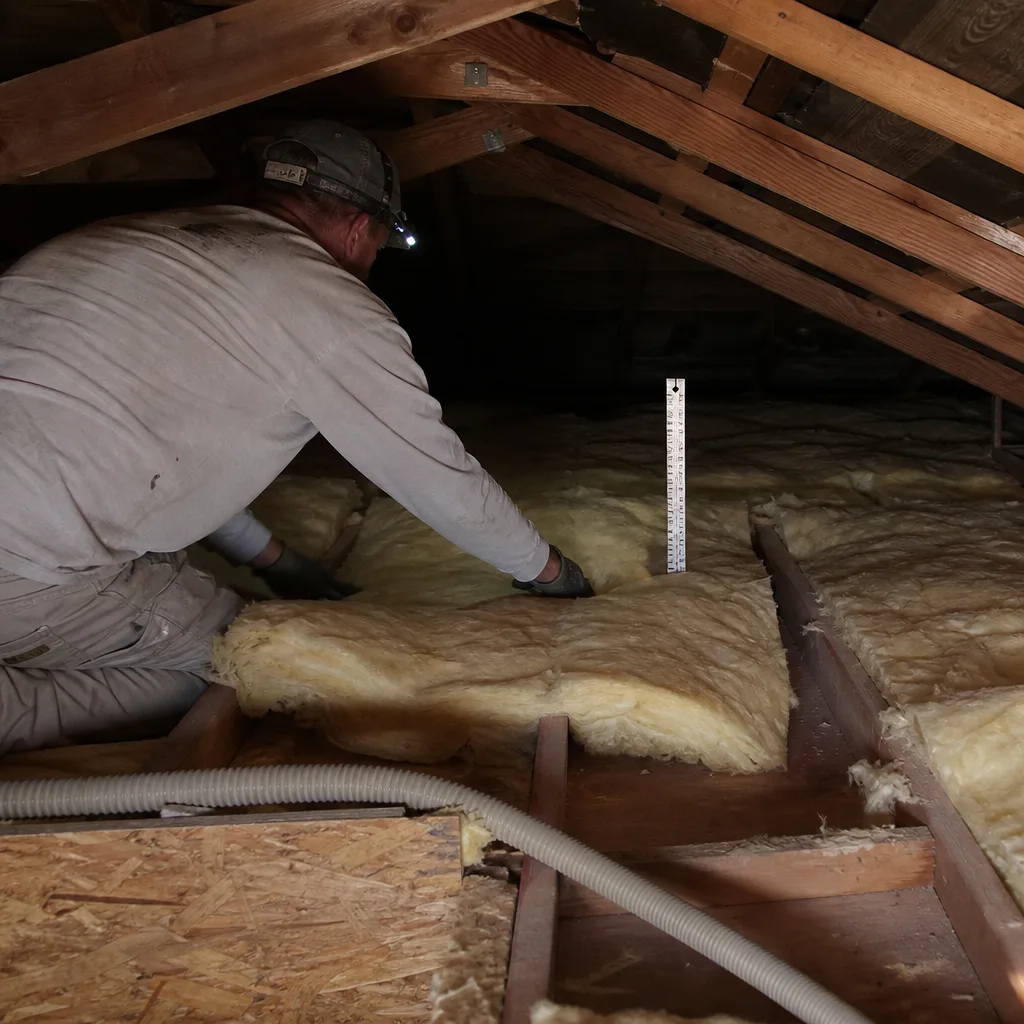
What you can safely check yourself: measure your existing batt thickness against the joist depth, look for the Rockwool density stamp, and photograph any moisture staining or compression patterns. Check your attic hatch perimeter with a smoke pencil on a windy day - if you see horizontal drift, you’ve got a leak that insulation won’t fix. These checks tell you whether you’re looking at a simple top-off or a full envelope job.
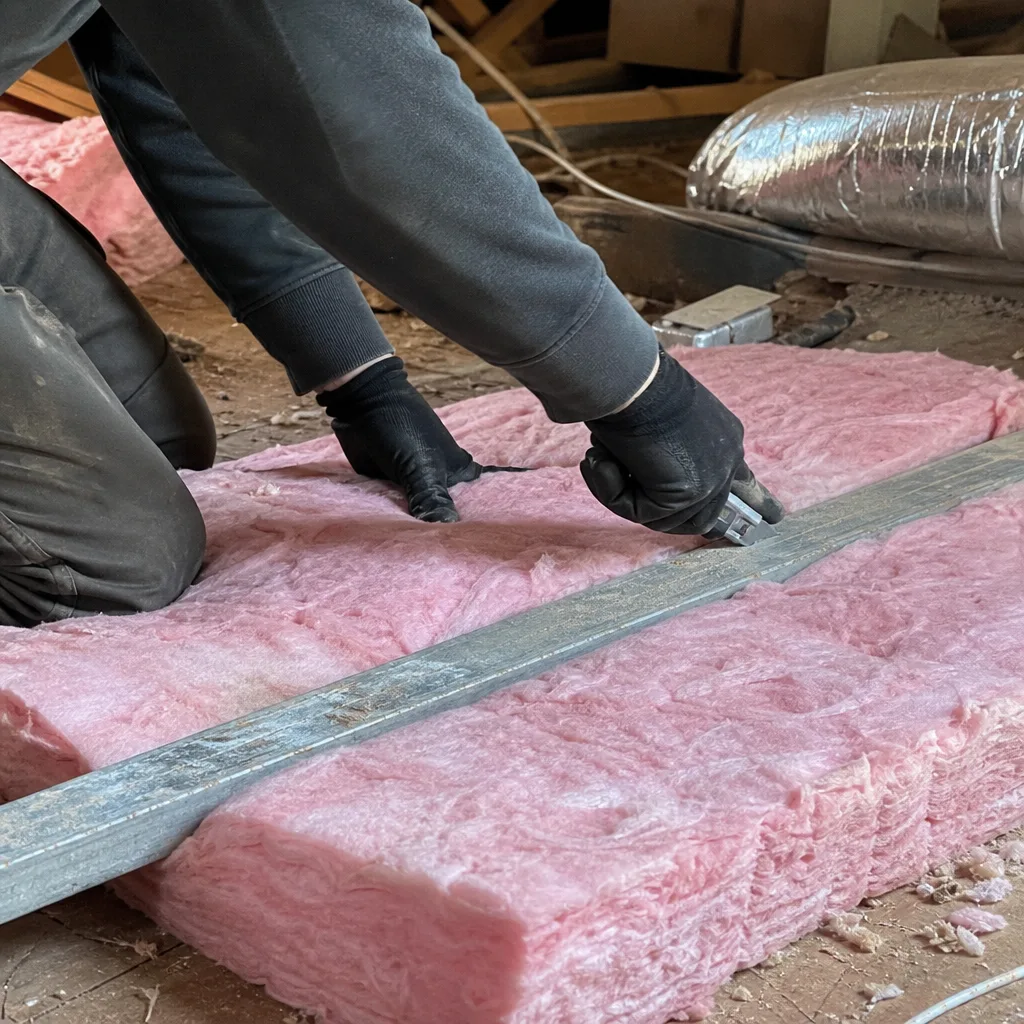
Where DIY goes wrong: Rockwool batts are dense - roughly three times the weight of fiberglass per R-value - and cutting them cleanly requires a serrated bread knife or dedicated insulation saw, not a utility blade that shreds the edge. More importantly, California Title 24 requires vapor retarder placement based on climate zone and home age; Morgan Hill sits in CZ12, where the rules differ from San Jose’s CZ4. Install the retarder on the wrong side and you trap moisture. Finally, working overhead in 130°F attic air with mineral fiber falling on your neck and arms is miserable work, and most homeowners quit before they’ve sealed the penetrations that actually matter.
We’re not affiliated with Rockwool - we’re an independent service provider - but we install enough of it that we stock the full Comfortbatt and AFB evo range. If you want a free second opinion on a written estimate you’ve already received, bring it in. We’ll read it with you and tell you where the scope looks thin. Call (669) 280-8103.
FAQs
Properly installed Rockwool mineral wool maintains its labeled R-value for 50+ years; the material doesn’t off-gas, rot, or support mold. In practice, we see performance degradation start around year 8 to 12 in Morgan Hill attics due to settling, compression from storage traffic, or failed air sealing that lets moist air migrate through the batt. The material itself is fine - it’s the installation condition that changes. Call (669) 280-8103 and we’ll assess whether you need new product or just correction of the original install.
Spot repair works if the surrounding batt is still at full thickness, dry, and properly supported. We cut matching Rockwool to fill voids, using factory edges where possible - hand-torn edges create thermal bridges. The catch: if the void exists because of an air leak (a missed top plate, a can light without a cover), stuffing new batt in the hole just gives you a wet spot in two years. We always pressure-test or at least smoke-test the area before patching. Free estimates: (669) 280-8103.
Most Morgan Hill homes in the 1,200-2,000 square foot range take one full day for removal and replacement, or two days if we’re doing comprehensive air sealing with blower-door verification. The newer builds off East Main with open-truss attics and good access sometimes finish in six hours. Homes with multiple attic zones, low headroom, or extensive storage removal take longer. We give you a written schedule with the written price - no surprises.
Yes - Comfortbatt R-15 through R-30 and AFB evo in standard widths, plus the serrated knives, vapor retarder tape, and fire-rated covers for recessed cans that a proper install requires. We don’t stock every thickness combination (the 7.25-inch R-30 for 2×8 bays is a special order), but we can have it next business day. For same-day starts, we measure during the morning visit and cut to fit on site.
Written by Wes Okafor, Owner & Lead Insulation Technician, Topside Attic Insulation Morgan Hill at Topside Attic Insulation Morgan Hill, serving Morgan Hill and nearby areas.