
Rockwool Radiant Barrier Installation: The Morgan Hill Owner’s Guide
Rockwool radiant barrier installation in Morgan Hill typically runs $2,800-$4,600 for a 1,500-square-foot attic space, depending on whether your existing insulation stays or gets pulled first. We stock Rockwool Comfortboard 80 and Comfortboard 110 rigid boards, plus the aluminized facing assemblies that make up the radiant barrier system, on our Morgan Hill trucks. Most jobs we price in the morning are underway by afternoon.
Homeowners usually figure out something’s wrong when the upstairs bedrooms won’t cool below 78°F even after sundown, or when their PG&E summer bills spike $80-$120 above the prior year with no rate change. The radiant barrier facing has either delaminated from the board, been installed backward (shiny side down, which turns it into a heat trap), or was never paired with proper air sealing in the first place.
Which Rockwool Models This Applies To
Rockwool’s radiant barrier assemblies center on two rigid board lines: Comfortboard 80 (8 pounds per cubic foot, 2-inch and 3-inch thicknesses) and Comfortboard 110 (11 pounds per cubic foot, more common in commercial jobs but specified in some Morgan Hill custom builds from 2019 onward). The barrier itself isn’t built into the board; it’s a factory-laminated aluminized polypropylene facing, or in retrofit jobs, a standalone perforated radiant barrier foil that’s fastened over the Rockwool layer with cap nails.
Check your attic for the black-on-silver label: “ROCKWOOL Comfortboard” plus a density number. If the facing is peeling, you’ll see white mineral wool fibers where silver should be. The OEM facing from Rockwool is .005-inch aluminized polypropylene with an emissivity rating of 0.03 to 0.05. Aftermarket equivalents from Reflectix use a similar spec but with a woven polyethylene core that’s slightly thicker (.007 inch) and more forgiving during windy attic installs. We’ve used both in Morgan Hill; the Rockwool OEM facing lays flatter on irregular framing, but Reflectix holds up better if your attic sees rodent traffic near the Oakwood Avenue corridor, where roof rats are persistent.
One compatibility gotcha: Comfortboard 80 in the 1.5-inch thickness was a special-order item in 2017-2019, and some Morgan Hill builders subbed in generic mineral wool without the proper facing attachment strips. If your boards are 1.5-inch and the label just says “mineral wool” with no Rockwool branding, the standard cap-nail pattern won’t seat right, and the barrier will sag within two seasons.
Signs Your Rockwool Radiant Barrier Installation Is Failing
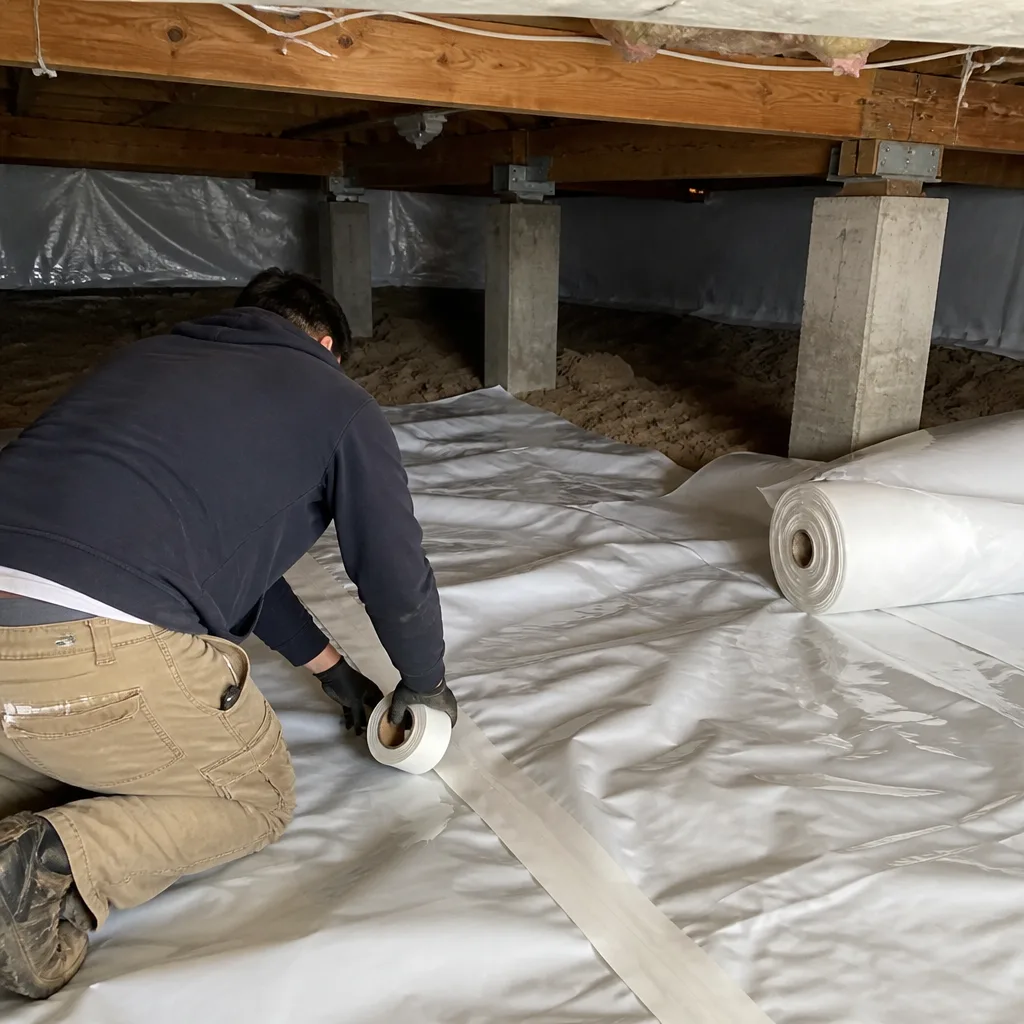
- Upstairs rooms heat up faster than downstairs by mid-morning. The radiant barrier’s shiny surface reflects solar gain back toward the roof deck; when that facing delaminates or was installed with the emissive side up, attic temperatures climb 20-35°F higher than they should. We measure this with an infrared thermometer on every Morgan Hill callback.
- Your AC runs continuously from 2 PM to 8 PM without cycling. The barrier isn’t reducing radiant heat transfer into the conditioned space, so your cooling load stays elevated past sundown. In Morgan Hill’s climate, a properly installed Rockwool radiant barrier should drop peak attic temperature from 140°F to roughly 110°F.
- Visible dusting of white fibers on attic floor or stored items. This means the facing has separated from the Comfortboard and the mineral wool is exposed. Once the facing peels, the board’s still insulating, but you’ve lost the reflective performance you paid for. The fibers themselves are non-irritating to most people (unlike fiberglass), but they’re a sign of assembly failure.
- Water stains on the facing surface after winter rains. Rockwool is hydrophobic and won’t mold, but trapped condensation between a non-perforated barrier and the roof deck will delaminate the facing over time. Morgan Hill’s winter temperature swings, especially in the hills off East Main where nighttime lows drop into the 30s while daytime attic temps hit 60°F, create the perfect condensation cycle.
- The facing is silver on both sides, or you can’t tell which side faces up. A proper radiant barrier has one shiny side and one matte or branded side. If your installer used a double-sided product or lost track during install, the barrier may be reflecting heat into the living space instead of back toward the roof. We’ve found this in four Morgan Hill homes built during the 2021 construction rush.
Replacement Cost & What’s Included
| Scope | Price Range |
|---|---|
| Barrier refacing only (existing Rockwool board stays) | $2,800-$3,400 |
| Board + barrier replacement, no air sealing | $3,600-$4,200 |
| Full assembly replacement with attic air sealing | $4,200-$4,600 |
What drives the range: attic square footage, whether we need to remove existing material first, and how many penetrations need sealing before the new barrier goes down. The $2,800 end assumes accessible attic, intact board, and straight refacing. The $4,600 end covers a full pull-and-replace with top-plate sealing, can-light boots, and a blower-door test to verify we didn’t miss anything.
Every Rockwool radiant barrier job we quote in Morgan Hill includes the written scope, the written warranty, and the Documented Photo Record. On jobs where we’re also sealing, you get before-and-after blower-door numbers. We source Rockwool materials through our regular supply chain, same as Owens Corning, Johns Manville, and Knauf. No proprietary lock-in, no markup games. The 365-Day Done Right Promise covers labor and workmanship; manufacturer defects on the Rockwool product go through their standard warranty channel.
DIY or Call Us?
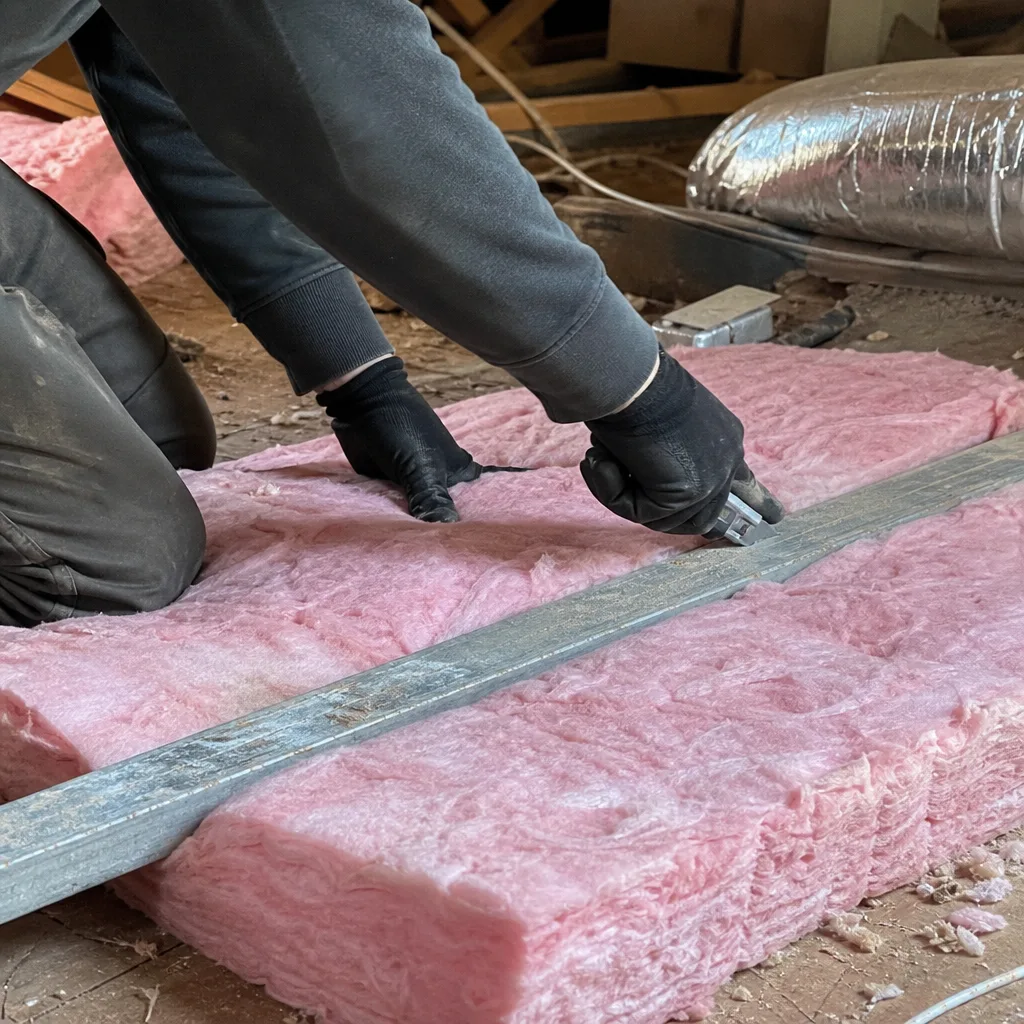
Here’s what you can safely check yourself: confirm the facing is still attached, verify which side is up (shiny side toward the roof deck, always), and look for obvious gaps where the barrier doesn’t extend to the eaves. Use a flashlight, not your hands, and stay on the joists. Attic falls through drywall are the most common DIY injury we see.
Where DIY goes wrong: Rockwool Comfortboard 80 weighs 2.7 pounds per square foot in the 3-inch thickness. That’s manageable for a sheet or two, but a whole attic means dozens of trips up a ladder with material that sheds fibers and doesn’t compress for easy carrying. More critically, radiant barrier performance depends on an unbroken air gap of at least ¾ inch between the shiny surface and the roof deck. Compress it against the sheathing, and you’ve built an expensive conductor instead of a reflector. The fastening pattern matters too: cap nails every 6 inches on seams, 12 inches in the field, or the facing billows and tears in Santa Clara County’s afternoon venting cycles.
We don’t recommend homeowners install or replace Rockwool radiant barrier assemblies themselves. The material isn’t dangerous like high-tension springs or electrical work, but the performance failure mode is invisible: it’ll look fine and work poorly for years before you realize the energy bills tell the real story. Call (669) 280-8103 and we’ll walk your attic with you, written price in hand before any work starts.
FAQs
Properly installed, the facing lasts 15-20 years; the Comfortboard itself is essentially indefinite. In Morgan Hill specifically, the temperature cycling between hot attic summers and cool winter mornings stresses the adhesive bond more than in milder coastal zones. We’ve replaced barriers at year 12 in homes near the hills, and seen OEM facings hold past 20 years in flatter, more stable attic environments near downtown. Call (669) 280-8103 for an exact assessment of your assembly’s condition.
Small tears (under 6 inches) can be patched with foil tape rated for high-temperature exposure, but delamination across a whole sheet means replacement. The adhesive failure is usually progressive; patch one spot, and three more peel within a season. We don’t sell patch jobs as permanent fixes. If your facing is failing in multiple locations, we’ll quote the full replacement with a written scope so you know exactly what you’re getting.
Most Morgan Hill residential attics run one day for refacing, two days if we’re pulling old board and replacing with new Comfortboard plus air sealing. The blower-door test adds 45 minutes. We arrive with material on the truck, so there’s no supply-run delay. Same-day starts are typical for jobs priced before 10 AM.
Yes. We carry Comfortboard 80 in 2-inch and 3-inch thicknesses, the OEM aluminized facing rolls, and Reflectix equivalent facing as backup. Our Morgan Hill trucks also stock cap nails, strapping, and the penetration-sealing materials we won’t skip. Seal the leaks first. The insulation just holds what you’ve already captured. If we don’t have your exact spec, we source it next-morning from our San Jose supplier; no homeowner waits on a special order.
Written by Wes Okafor, Owner & Lead Insulation Technician, Topside Attic Insulation Morgan Hill at Topside Attic Insulation Morgan Hill, serving Morgan Hill and nearby areas.