
Rockwool Vapor Barrier Installation: The Morgan Hill Owner’s Guide
Rockwool vapor barrier installation in Morgan Hill typically runs $1,800-$3,400 for a full crawl space or attic application, and we stock Rockwool-compatible vapor retarders and sealing membranes for same-day starts on most jobs. Most Morgan Hill homeowners discover their existing vapor barrier has failed when they notice musty odors after winter rains, see condensation on insulation surfaces, or find their energy bills climbing despite unchanged thermostat settings. The combination of Rockwool’s hydrophobic stone wool and a properly detailed vapor retarder is what keeps moisture from migrating through the assembly; when that retarder is compromised, the insulation performs like it’s not there.
Which Rockwool Models This Applies To
Rockwool does not manufacture standalone vapor barrier products. Instead, they produce insulation batts and boards, primarily Comfortbatt, Comfortboard, and AFB evo, that require compatible vapor retarders installed on the warm-in-winter side of the assembly per California Title 24. The critical match is between the insulation thickness and the retarder’s perm rating: Comfortbatt R-30 in a Morgan Hill attic needs a Class II retarder (1.0 perm or less) such as certain kraft-faced batts or poly sheeting, while Comfortboard 80 on exterior walls pairs with fluid-applied membranes or smart retarders that adapt to seasonal humidity.
Identification starts with the yellow-and-black Rockwool label on the batt edge, which lists the product name, R-value, and dimensions. For existing installations where the label is buried, measure the batt thickness: Comfortbatt R-23 is 5.5 inches, R-30 is 7.25 inches, and R-38 is 10.25 inches. The vapor retarder must be continuous across all seams and sealed to the top plates; gaps at electrical penetrations or unseamed overlaps are where Morgan Hill’s winter moisture drive finds its path. We source compatible retarders from Owens Corning, Johns Manville, and Knauf alongside Rockwool, with no proprietary lock-in forcing a mismatch.
Topside Attic Insulation Morgan Hill is an independent service provider, not affiliated with Rockwool. We select the retarder based on the assembly’s drying potential and the homeowner’s documentation needs, not a brand mandate.
Signs Your Rockwool Vapor Barrier Installation Is Failing
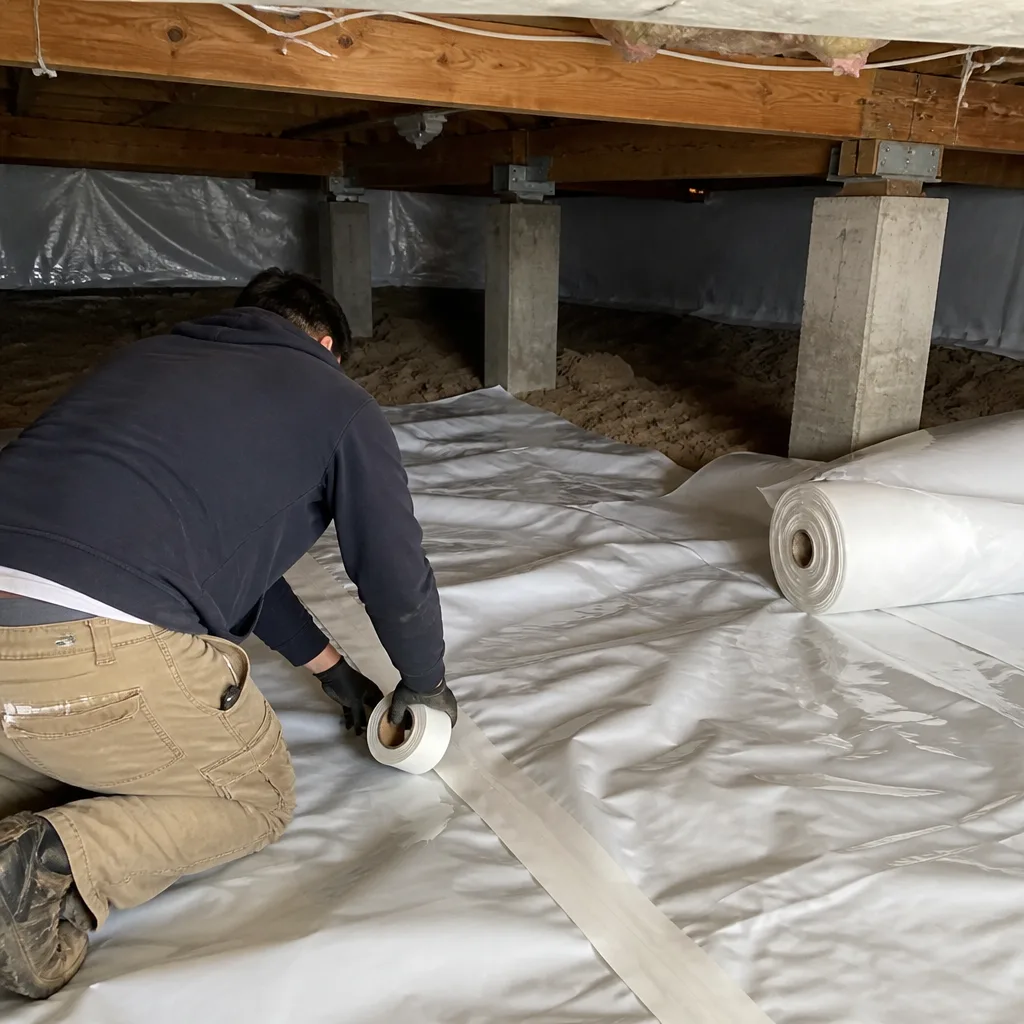
- Musty or earthy odors rising from crawl space or attic hatches. When the vapor retarder’s seams separate or the poly sheeting tears at penetrations, moisture condenses on the cool side of the Rockwool. In Morgan Hill’s clay-heavy soils, that moisture carries mineral content that supports microbial growth on wood framing.
- Visible water staining on the retarder’s interior face. This indicates the retarder is trapping moisture rather than managing it, often because it was installed on the wrong side of the assembly. A vapor retarder belongs on the warm-in-winter side; installing it backward in a cooling-dominated climate creates a condensation plane.
- Rockwool batts sagging or separating from framing. Saturated stone wool loses its binder integrity and drops away from the joists. Unlike fiberglass, Rockwool does not degrade from moisture, but it cannot perform when it’s not in contact with the surface it’s meant to insulate.
- Increased energy bills with no equipment changes. A compromised vapor barrier allows latent heat transfer through moisture migration. The HVAC system works harder to remove humidity that should never have entered the conditioned envelope. We’ve measured blower-door readings that jumped 400 CFM50 after vapor barrier failure in a home near Oakwood Avenue.
- Corrosion on metal ductwork or fasteners in the attic or crawl space. Moisture that bypasses the retarder condenses on cooler metal surfaces. In Morgan Hill’s variable spring weather, temperature swings accelerate this. The rust is a lagging indicator; the retarder failed months earlier.
Replacement Cost & What’s Included
In Morgan Hill, a full Rockwool vapor barrier installation, including removal of failed material, air sealing of all penetrations, and installation of new Class II retarder with seam tape and acoustical sealant, runs $1,800-$3,400 for a typical 1,200-2,000 square foot crawl space or attic. The range reflects accessibility (crawl height, joist spacing), the condition of existing insulation that may need repositioning, and whether we find unsealed top plates or can light boots that must be addressed first.
Every job includes a Written Price Before Any Work Starts under Haven Standard Clause 1, a Documented Photo Record of the existing condition and completed work, and before-and-after blower-door readings where the assembly allows. The 365-Day Done Right Promise covers material and labor. We do not charge for the estimate, and we offer a Free Second Opinion on any written estimate you’ve already received.
DIY or Call Us?
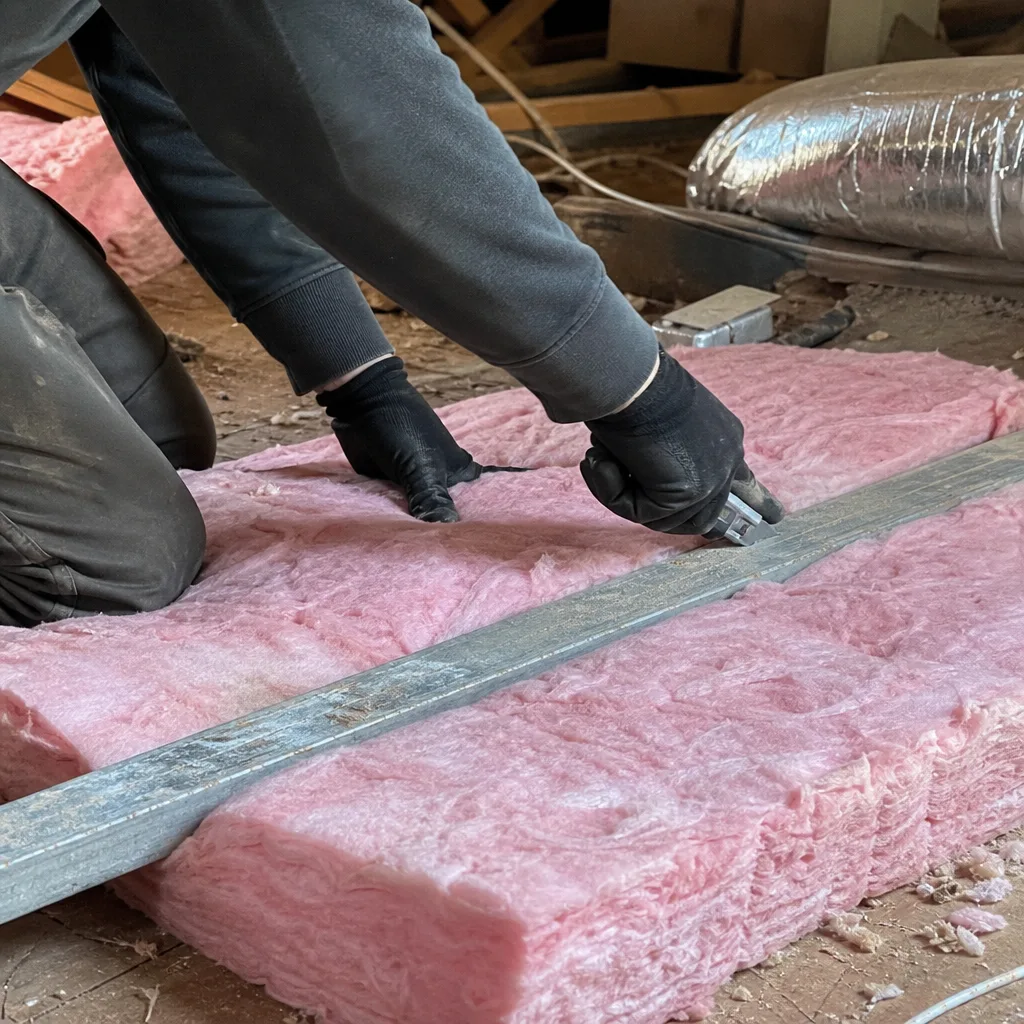
A homeowner can safely inspect their own vapor barrier with a flashlight and a moisture meter from the hardware store. Look for tears at plumbing penetrations, gaps where the poly meets the foundation wall, and any section that feels damp to the touch. Document what you find with photos.
Where DIY goes wrong is in the sequencing. A vapor retarder installed before air sealing is a vapor retarder that will fail, because the air moving through unsealed penetrations carries moisture the retarder was never designed to stop. Sealing top plates, recessed-can boots, and attic hatch perimeters requires working in confined spaces with extension tools and proper respiratory protection. Rockwool fibers are non-irritating compared to fiberglass, but crawl spaces in Morgan Hill often harbor rodent droppings, mold, or asbestos in older homes. We bring HEPA filtration, protective gear, and the blower-door equipment to verify the seal before we leave.
Seal the leaks first. The insulation just holds what you’ve already captured. If you’re unsure what you’re looking at, call (669) 280-8103 and we’ll walk through it with you.
FAQs
A properly installed Class II vapor retarder with sealed seams and intact air sealing typically lasts 15-25 years in Morgan Hill’s climate. The limiting factor is usually mechanical damage during plumbing or electrical work, not material degradation. Call (669) 280-8103 if you’ve had trades in your crawl space or attic recently and want us to inspect for tears.
Small punctures and seam separations under six inches can be patched with compatible tape and sealant if the surrounding material is still pliable and the air sealing behind it is intact. Widespead embrittlement, staining, or multiple failure points mean replacement is more cost-effective than chasing leaks. We assess this during our free estimate and tell you which path makes sense.
Most Rockwool vapor barrier replacements in Morgan Hill take one to two days: half a day for removal and air sealing, half a day for retarder installation and verification. Larger crawl spaces or attics with complex penetrations may extend to a third day. We provide a written schedule with the price before work starts.
Yes. We carry poly sheeting in 6-mil and 10-mil thicknesses, reinforced kraft-faced retarders, and smart vapor retarders that adjust perm rating with humidity. For Rockwool assemblies specifically, we stock the seam tapes and sealants that bond to stone wool’s higher-density surface without delamination. Same-day starts are available for most Morgan Hill locations when the job scope is confirmed by morning.
Written by Wes Okafor, Owner & Lead Insulation Technician, Topside Attic Insulation Morgan Hill at Topside Attic Insulation Morgan Hill, serving Morgan Hill and nearby areas.