
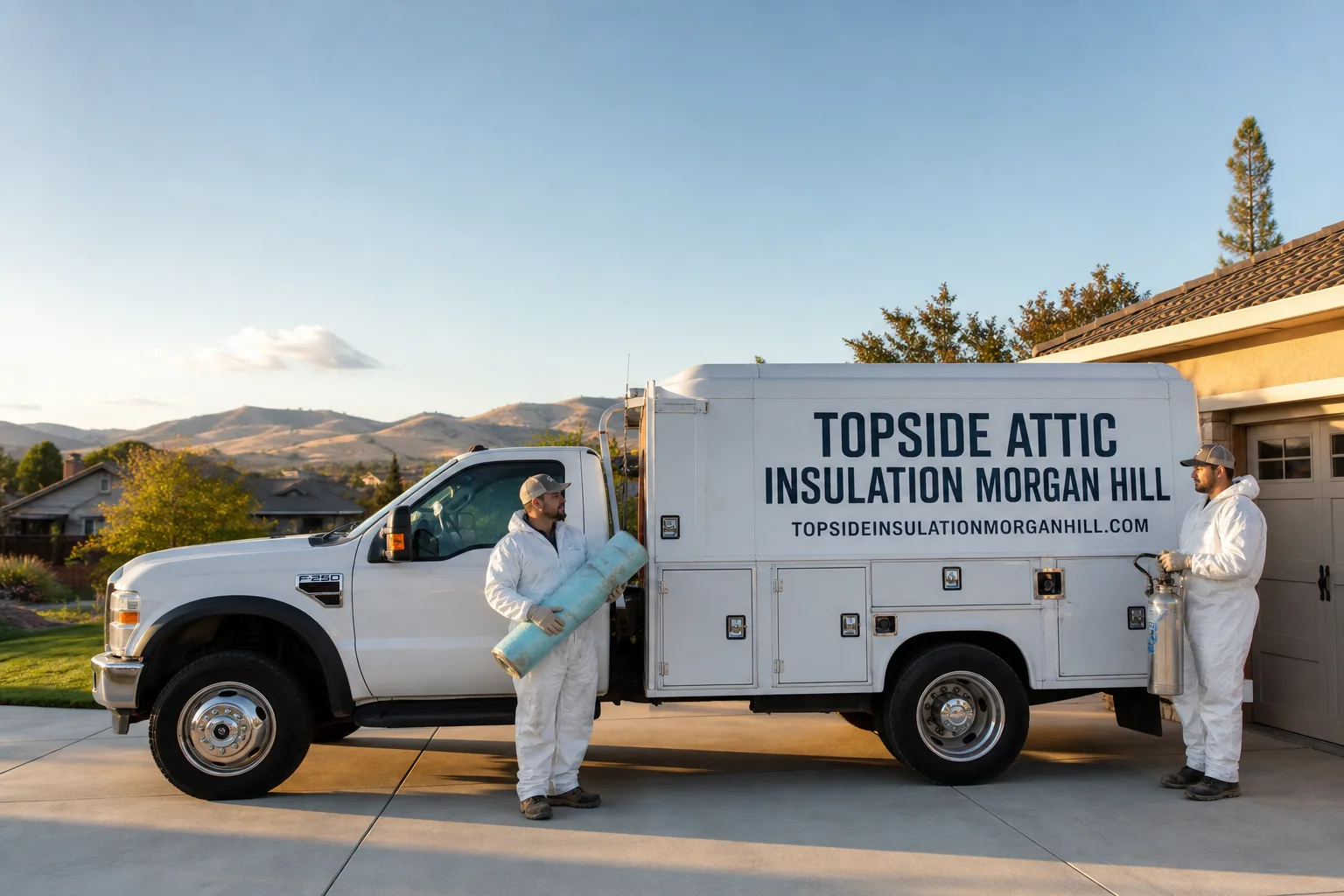
How Much Does Radiant Barrier Installation Cost in Morgan Hill?
Radiant Barrier Installation services in Morgan Hill, CA typically run between $1,400 and $3,200 for a standard single-story home, with most jobs landing around $1,800 to $2,400 when the attic is accessible and reasonably clear. That range covers labor, materials, and a documented photo record when the crew leaves – no hidden line items after the fact.
Morgan Hill’s climate is the reason this service comes up so often here. The Diablo Range sits to the east, and on summer afternoons the Santa Clara Valley floor heats up fast. Attic temperatures in homes along Monterey Road or out toward East Main Avenue regularly hit 150-160°F in July and August, and that radiant heat load pushes air conditioning systems hard. A properly installed radiant barrier cuts that attic temperature by 20-30°F and reduces the heat gain passing through your ceiling into conditioned space.
Below is a full breakdown of what drives that price range, what you can do to keep costs toward the lower end, and what to watch for when you’re comparing quotes.
Radiant Barrier Installation Cost Breakdown (2026)
Radiant barrier installation in Morgan Hill, CA costs between $1,400 and $3,200 for most residential attics. Here is where that money actually goes:
| Line Item | Typical Cost Range | Notes |
|---|---|---|
| Foil radiant barrier material (OSB-backed or perforated foil) | $0.15 – $0.45 per sq ft | Perforated foil allows moisture vapor to pass through; critical in Morgan Hill’s climate swing |
| Labor – staple-up method (foil stapled to rafters) | $0.75 – $1.20 per sq ft | Most common method for existing homes; does not disturb existing insulation below |
| Labor – drape-over method (foil laid over existing insulation) | $0.50 – $0.90 per sq ft | Faster to install, but accumulates dust over time which reduces reflectivity |
| Attic prep and debris removal (if needed) | $150 – $400 | Tight crawl spaces, low-pitch rooflines common in Cochrane Road-area tract homes add time |
| Ventilation inspection and minor corrections | $0 – $250 | Radiant barriers require adequate attic ventilation to function – we check before we install |
| Combination with attic air sealing (recommended) | +$400 – $900 | Air sealing top plates and penetrations before radiant barrier goes in is our standard approach |
| Full job – 1,200 sq ft attic (typical Morgan Hill ranch) | $1,400 – $2,000 | Straightforward access, good headroom, minimal obstacles |
| Full job – 2,000 sq ft attic (two-story home) | $2,200 – $3,200 | Multiple attic sections, hip roof geometry, or limited access points |
The single biggest variable in Morgan Hill is roof geometry. Spanish-tile hip roofs are common in the Dunne Avenue corridor and in newer developments off East Main Avenue – those roof lines create low-pitch sections that slow installation considerably, and some corners require hand-cutting foil panels rather than rolling them in continuous runs. A straightforward gable-roof home in South Morgan Hill with good attic access is almost always at the lower end of the range. A two-story home with a complex roofline and a partially finished attic knee wall is at the high end, sometimes above it.
One note on materials: perforated foil is the correct product for Morgan Hill attics, not solid foil. The temperature swing between a hot Central Valley summer day and a cool coastal-influenced night creates condensation risk in any attic. Solid foil traps moisture. Perforated foil reflects radiant heat while still allowing vapor to move. Any quote specifying solid foil in a California climate zone 7 attic deserves a second look.
What Affects Radiant Barrier Installation Pricing in Morgan Hill
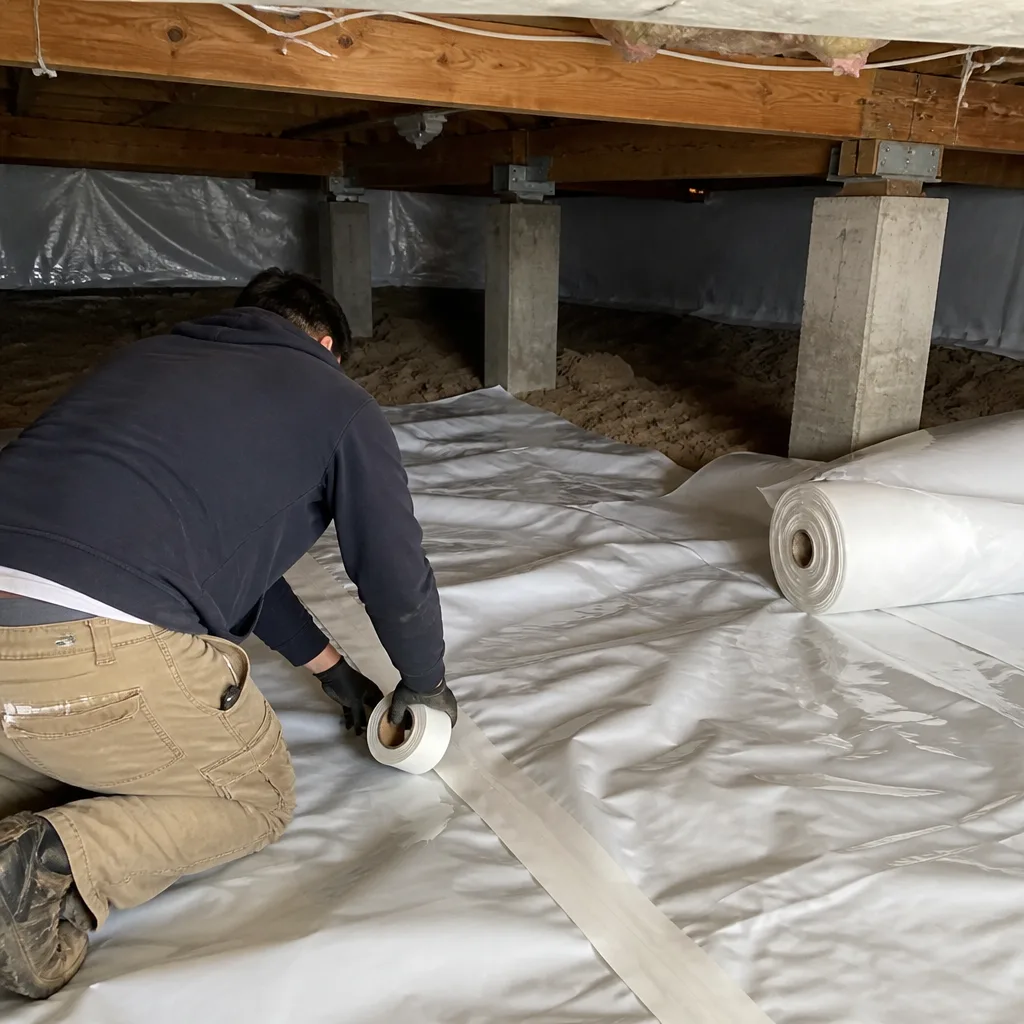
- Attic square footage and access: Pricing is largely per-square-foot, so a larger attic costs more in raw material and labor. But access matters as much as size. Attics with a single 22×30-inch hatch and 4 feet of headroom at peak cost more to work in than an attic with a full walk-in access door. Homes built in Morgan Hill between 1988 and 2005 – a large portion of the Oakwood Shores and Paradise Canyon neighborhoods – tend to have better access than older 1960s-1970s construction near downtown.
- Roof pitch and geometry: Low-slope sections below a 4:12 pitch significantly slow the staple-up method. Hip roofs and intersecting ridgelines require more cuts and more waste than a clean gable. This shows up directly in labor hours and, consequently, in the final price.
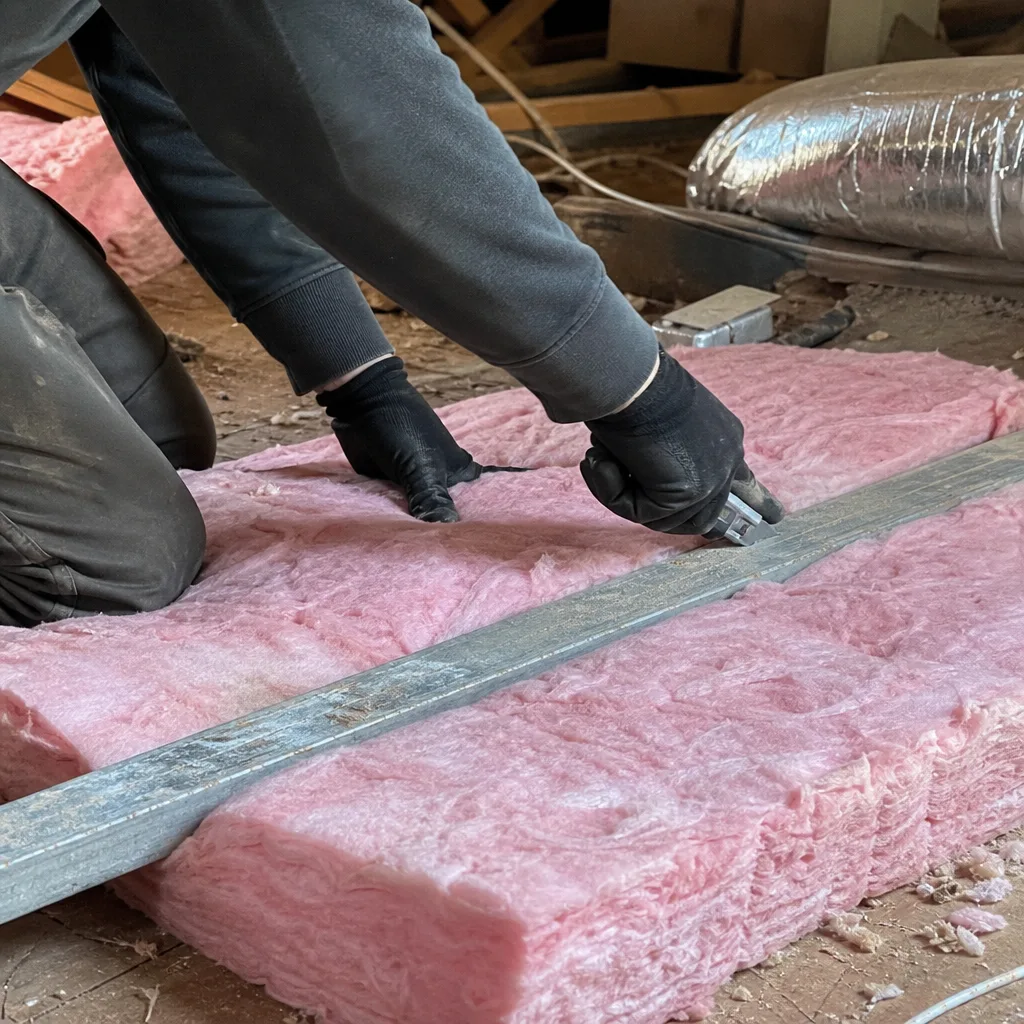
- Existing insulation condition: Installing a radiant barrier over existing insulation that is compressed, wet, or contaminated is not something we do. If the insulation beneath is degraded, that has to be addressed first. In Morgan Hill attics we’ve inspected near the Murphy Avenue area, rodent activity has occasionally left insulation that cannot be worked around – removal and replacement becomes part of the scope before the barrier goes in.
- Ventilation adequacy: A radiant barrier reduces heat in the attic air space only if the attic is properly ventilated – ridge vents, soffit vents, or gable vents moving air out. If ventilation is undersized, the barrier’s effectiveness drops and moisture risk increases. Correcting ventilation before installation adds cost but is not optional if the numbers don’t work. California Title 24 provides minimum ventilation ratios, and Morgan Hill homes built before 1990 often fall short by modern standards.
- Combination with air sealing: At Envelope Insulation Co., air sealing is treated as a prerequisite, not an add-on. We seal top plates, can light penetrations, and plumbing and electrical chases before any barrier material goes in. That sequence adds to the initial invoice – typically $400 to $900 for a standard Morgan Hill attic – but it means the barrier is doing what it’s supposed to do in an attic that is no longer a direct conduit for conditioned air loss. Skipping air sealing to lower the quote is a common way to get a number that doesn’t hold up in the real world.
- Permit requirements: Santa Clara County does not typically require a building permit for radiant barrier installation alone. If the work is bundled with structural ventilation modifications or electrical work near junction boxes, that changes. We verify permit requirements on every job before the written scope is finalized – that is part of Haven Standard Clause 1.
Radiant Barrier vs. Additional Attic Insulation: Which Should Come First in Morgan Hill?
This question comes up regularly in Morgan Hill because many homes here are cooling-load dominated – the bigger energy problem is heat coming in during summer, not heat escaping during winter. The Santa Clara Valley’s inland position means July and August temperatures in Morgan Hill regularly exceed 95°F, which is a different thermal profile than a comparable home in San Jose’s Willow Glen neighborhood 20 miles north.
A radiant barrier reduces radiant heat gain through the roof deck. It does not slow conductive heat transfer the way insulation does. The two products work on different physics. In most Morgan Hill attics built after 1990, existing insulation is at or near code minimum (R-38 is the California requirement for Climate Zone 7). Adding a radiant barrier in that situation typically produces a meaningful reduction in cooling load. In a home where insulation is severely degraded or below R-19, bringing insulation up first delivers more impact per dollar.
The honest answer: a good building-envelope assessment tells you which investment returns more on this particular house. Our Radiant Barrier Installation in Morgan Hill service page explains how we evaluate which intervention makes sense for a given attic, and our home energy audit process quantifies the current performance baseline before any money changes hands.
How to Save on Radiant Barrier Installation
There are genuine ways to reduce what you pay, and there are false economies that cost more in the long run. Here is the distinction.
Real cost reduction strategies
- Bundle with other attic work: If you are already planning attic insulation removal and replacement, or adding blown-in insulation to an under-insulated attic, scheduling radiant barrier installation in the same mobilization eliminates a separate trip charge and reduces total labor hours. In Morgan Hill, the bundled price for radiant barrier plus blown-in insulation topping typically runs 12-18% less than scheduling each service separately.
- Clear attic access before the crew arrives: A cluttered attic hatch or boxes stacked directly below the access point adds billable time. Moving stored items before the appointment keeps the crew working on installation, not on clearing a path to the attic.
- Get a second opinion on a written estimate you already have: Under Haven Standard, we offer a free second opinion on any written estimate. Bring us what another contractor gave you and we will read it with you line by line. This is useful specifically because radiant barrier quotes vary significantly in what they actually include – some quotes omit ventilation inspection, air sealing, or attic prep entirely.
- Check for utility incentives: PG&E and Silicon Valley Clean Energy both run energy efficiency incentive programs that periodically include attic improvements. Program availability and amounts change quarterly, so check current offerings at the time you’re scheduling. We can tell you what documentation is typically required.
- Ask specifically about California Energy Code compliance: Title 24 compliance documentation can be relevant if you are planning to sell the home or pull permits for other work in the same period. Getting insulation and radiant barrier work done to documented Title 24 standards in one visit avoids a future inspection complication.
False economies to avoid
The drape-over installation method is cheaper upfront, but dust accumulation on top of the foil surface reduces reflectivity over time – sometimes dramatically within five to seven years in a dusty attic environment. The staple-up method keeps the reflective surface facing the radiant heat source (the roof deck) with air space between, which is the configuration that actually performs as advertised. If a quote specifies drape-over as the only option without explaining the tradeoff, that is worth questioning.
Skipping air sealing to reduce the initial price is the other common one. A radiant barrier reduces radiant load. An unsealed attic floor lets conditioned air pour out through top plates and can lights. Both problems exist simultaneously in most Morgan Hill attics we’ve worked in. Fixing one without the other leaves half the problem untouched.
Get a written price before any work starts – not a verbal range, not a ballpark. A written scope tells you what is included and what is not, so you can compare quotes on equal terms. That written price, before anyone lifts a tool, is non-negotiable at Envelope Insulation Co. – it is the first clause of the Haven Standard.
For a free estimate with a written price before we schedule, call (669) 280-8103. Calls are answered by a live person – no voicemail loops, no callback windows.
What the Installation Process Looks Like
Understanding what actually happens on the day of installation helps you evaluate quotes more accurately and know what to expect when the crew arrives.
Before we touch the attic
Wes Okafor’s standard pre-installation checklist includes a visual inspection of existing insulation condition, measurement of actual attic square footage (not taken from MLS records, which are frequently wrong), documentation of ventilation type and estimated airflow adequacy, and identification of any penetrations – can lights, exhaust fans, plumbing vents, attic knee walls – that need to be sealed before barrier material goes in. This inspection is what the written scope is built from.
Air sealing first
In line with the Envelope Insulation Co. approach, air sealing of top plates, recessed light fixtures, and attic floor penetrations is completed before any radiant barrier material is installed. This is non-negotiable. We do not staple foil over an attic floor that is still leaking conditioned air through its penetrations. The sequence matters: sealed first, then insulated and/or barrier installed. This is one of the clearest differentiators between a building-science-based installation and a product-focused one.
Installation
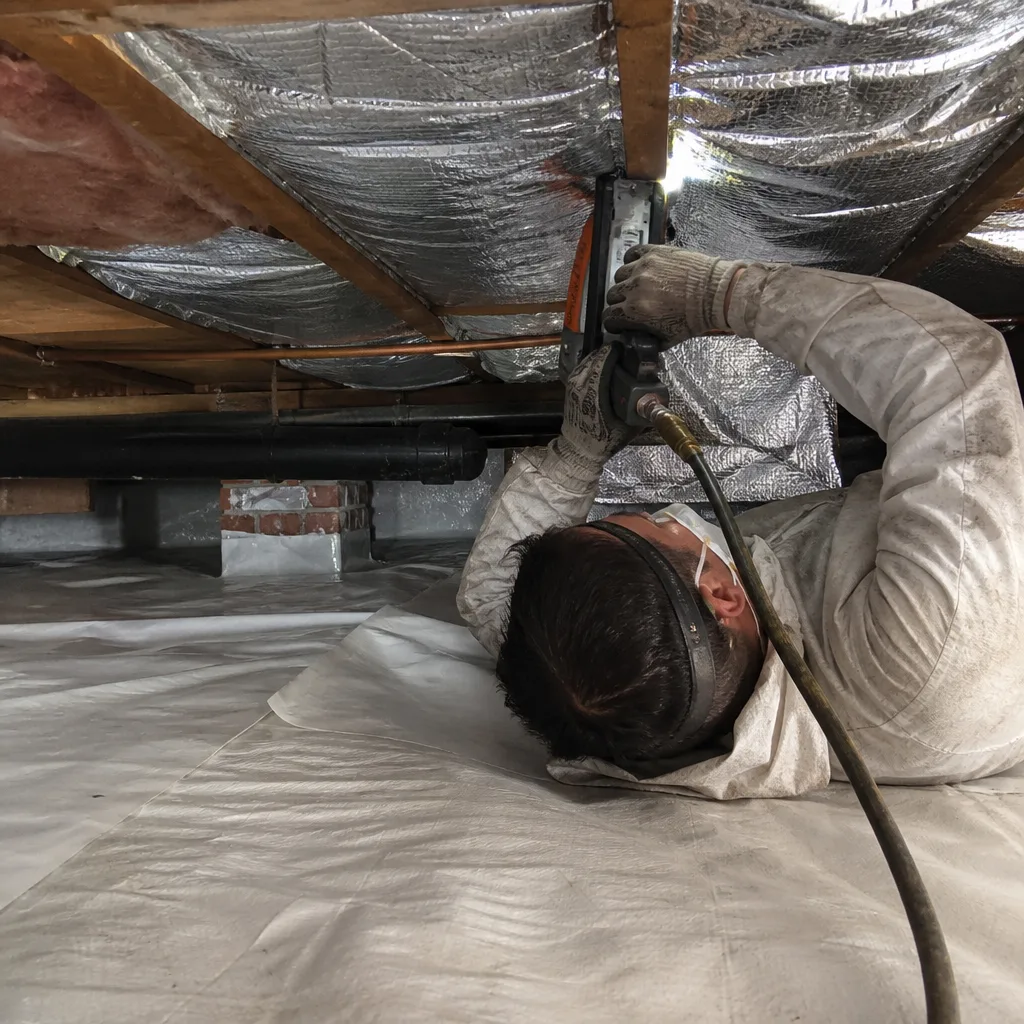
Perforated foil is stapled to the underside of the rafters, reflective side facing down toward the attic floor. Panels are overlapped and secured so there are no significant gaps at seams. Around obstructions – HVAC equipment, junction boxes, vent stacks – foil is hand-cut and re-secured. In low-pitch sections, this takes considerably longer per square foot than the main field area. The crew works from the ridge toward the eaves, maintaining the air gap between the foil and the roof deck that makes the barrier function.
Documented photo record
Before the crew leaves, a documented photo record is created – attic access point, installation coverage across main field areas, seam overlaps, treatment around penetrations, and ventilation pathways. On any job where attic air sealing was performed, before-and-after blower-door readings – a pressurization test that shows, in one number, how much conditioned air the home’s building envelope was losing – are provided so the result can be verified, not just described. That record is included in the job, not available on request for an extra fee.
Key Takeaways
- Radiant barrier installation in Morgan Hill typically costs $1,400 to $3,200, with most standard attics landing between $1,800 and $2,400.
- Roof geometry (hip roofs, low-pitch sections) and attic access quality are the two biggest variables in final price.
- Perforated foil, staple-up method is the correct specification for Morgan Hill’s climate – not solid foil, not drape-over as a primary method.
- Air sealing should come before radiant barrier installation. The two address different physics; skipping sealing undercuts the barrier’s effectiveness.
- A written price before work starts is non-negotiable – it is the only way to compare quotes on equal terms.
- Bundling radiant barrier with blown-in insulation or other attic work in a single mobilization typically saves 12-18% versus scheduling separately.
- A documented photo record and, where applicable, before-and-after blower-door numbers are delivered on every completed job.
FAQs – Radiant Barrier Installation Cost in Morgan Hill
How much does radiant barrier installation cost in Morgan Hill, CA in 2026?
Most radiant barrier installation jobs in Morgan Hill run between $1,400 and $3,200, depending on attic size, roof geometry, and whether air sealing is included in the scope. A 1,200-square-foot attic with good access in a standard ranch-style home – common in the South Morgan Hill and Tennant Avenue areas – typically lands between $1,400 and $2,000. A larger two-story home with a hip roof or multiple attic sections runs $2,200 to $3,200. Call (669) 280-8103 for a written price specific to your home – free, and before any work is scheduled.
Is a radiant barrier worth it in Morgan Hill’s climate?
Yes, specifically because Morgan Hill sits inland enough that summer afternoon temperatures regularly exceed 95°F, driving attic temperatures well above 150°F. A properly installed radiant barrier – perforated foil, staple-up, with adequate ventilation – typically reduces attic air temperature by 20-30°F and lowers the heat gain reaching the conditioned space below. Homes with air conditioning systems that run continuously from June through September tend to see the clearest impact. Homes that are primarily heating-load dominated (rare in Morgan Hill but not impossible at higher elevations near Dunne Avenue) see less benefit from a barrier alone. A thermal performance assessment before you commit gives you an actual number to work with rather than a general rule.
Does radiant barrier installation require a permit in Morgan Hill?
Radiant barrier installation alone does not typically require a permit in Santa Clara County or the City of Morgan Hill. If the installation is bundled with structural ventilation modifications or involves work near electrical panels or junction boxes, that can change. We verify permit requirements before finalizing the written scope on every job – that verification is part of the standard pre-installation process, not something we leave to the homeowner to figure out after the fact.
How long does radiant barrier installation take?
Most single-story Morgan Hill homes take four to six hours for a complete radiant barrier installation, including air sealing of attic penetrations. A larger two-story home or one with a complex roofline can take a full day. Access quality is the biggest time variable: an attic with a full walk-in door installs faster than one with a single 22-inch hatch. We give you a time estimate in the written scope before scheduling so you know what the day looks like.
Can I install a radiant barrier myself in Morgan Hill?
The material itself is sold at supply houses and some big-box stores, and the staple-up method is physically straightforward in an attic with good headroom and no obstacles. The things that go wrong in DIY radiant barrier installs are: using solid foil instead of perforated (moisture risk), inadequate overlap at seams (performance gaps), installing without first air-sealing penetrations (the single biggest missed opportunity), and incorrect placement relative to the roof deck – no air gap means no reflective benefit. If you are comfortable working in a hot attic, have measured the space accurately, and understand the ventilation requirements, it is a project some homeowners complete successfully. If the attic has low headroom, complex geometry, or existing insulation that needs to be evaluated first, professional installation is the lower-risk path. Either way, call (669) 280-8103 and we can walk through what your specific attic looks like before you decide.
What is the difference between a radiant barrier and attic insulation?
Insulation – whether blown-in fiberglass, cellulose, or batts – slows conductive heat transfer, the kind where heat moves through a solid material. Radiant barriers block radiant heat transfer, the kind where heat radiates from a hot surface (your roof deck, heated by direct sun) to a cooler surface (the attic floor and everything above your ceiling). In Morgan Hill’s summer climate, both problems exist simultaneously. A home with R-38 insulation and no radiant barrier still absorbs significant radiant load from a 160°F roof deck. A home with a radiant barrier and degraded insulation still loses heat conductively in winter. The highest-performing Morgan Hill attics we’ve documented have both: air sealed, properly insulated, and radiant barrier installed in that sequence. Our home page outlines the full building-envelope service line if you want to see how these services work together.
Written by Wes Okafor, Owner at Envelope Insulation Co. (operating as Topside Attic Insulation Morgan Hill), serving Morgan Hill since 2016.
Pricing reflects the Morgan Hill market as of 2026. Topside Attic Insulation Morgan Hill offers free estimates – call (669) 280-8103.
What Our Customers Say
"Crawl space encapsulation done properly. Photographs of the vapour barrier at every seam, and the damp smell in the hallway is gone."
- Ainsley P."They air-sealed the attic floor before insulating and showed me the blower-door number before and after. The upstairs is finally the same temperature as downstairs."
- Marisol D."They photographed rodent damage in the old insulation that we had no idea about, and priced the exclusion work separately so we could decide."
- Harriet N.