
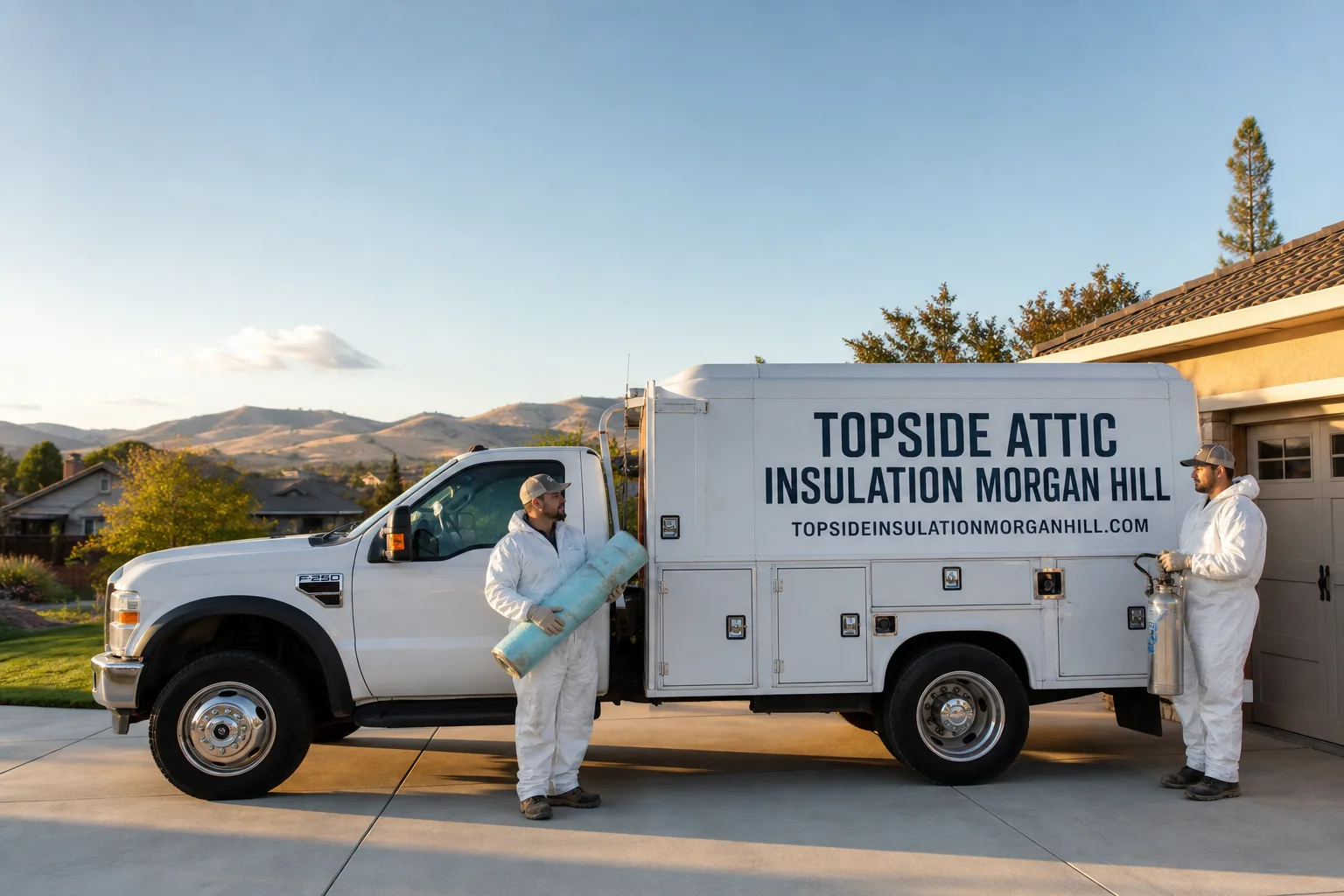
How Much Does Spray Foam Insulation Cost in Morgan Hill?
Our Spray Foam Insulation services in Morgan Hill, CA typically cost between $1,800 and $6,500 for a standard residential job, depending on the type of foam, the area being treated, and how much air sealing prep is required before the foam goes in. Open-cell foam runs closer to $0.44-$0.65 per board foot installed; closed-cell runs $1.00-$1.50 per board foot. Most homeowners in Morgan Hill spend somewhere between $2,800 and $4,200 for a crawl space or attic application when the scope is written out clearly before work starts.
If you’ve already got a written estimate from another contractor, we’ll read it with you at no charge – that’s our Free Second Opinion offer, and it costs you nothing to find out whether the numbers make sense for your home.
Spray Foam Insulation Cost Breakdown (2026)
Spray foam costs in Morgan Hill don’t move much with the seasons, but they do shift based on which part of the building envelope is being addressed and which foam type the application actually calls for. Below are the typical installed-cost ranges we see in this market heading into 2026. These are complete-job numbers – material, labor, equipment, and cleanup – not just material costs listed to look cheap on the page.
| Application / Area | Foam Type | Typical Installed Cost (Morgan Hill, 2026) |
|---|---|---|
| Crawl space rim joists (per linear foot) | Closed-cell | $4.50 – $7.00 / linear ft |
| Crawl space walls and floor (full encapsulation prep) | Closed-cell | $2,200 – $4,800 |
| Attic hatch, top plates, penetrations (air sealing) | 2-part closed-cell, 2lb | $350 – $900 |
| Attic floor deck (open-cell, new construction) | Open-cell | $1,200 – $2,800 |
| Cathedral ceiling / roof deck underside | Closed-cell | $3,500 – $7,200 |
| Garage ceiling / bonus room above garage | Open- or closed-cell | $1,400 – $3,200 |
| Exterior wall cavities (gut-rehab or new construction) | Open-cell | $1.80 – $3.20 / sq ft of wall |
| Band joist (per linear foot) | Closed-cell | $3.50 – $5.50 / linear ft |
| Whole attic conversion (spray foam at roof deck) | Closed-cell, 2-3 inch lift | $4,200 – $8,500 |
A few things explain the ranges above. Closed-cell foam requires a two-part chemical system – isocyanate and polyol resin – that is temperature-sensitive during application. Morgan Hill sits at roughly 340 feet of elevation in the Santa Clara Valley, and late-fall mornings in the Dunne Avenue corridor can drop cold enough that the installer has to account for substrate temperature before spraying or the foam won’t cure to rated density. That adds time. Open-cell foam is more forgiving on temperature and significantly cheaper per board foot, but it absorbs moisture and isn’t the right call everywhere – a vented attic with any moisture history typically gets closed-cell at the rim joist regardless of what’s happening on the attic floor.
Jobs where old insulation has to be removed first add $400-$1,200 to the total depending on the depth and type being pulled. If the existing material is contaminated – rodent debris is common in older Morgan Hill homes on properties backing up to Coyote Creek open space – attic cleaning and remediation happen before any new product goes in, and that work is scoped and priced separately in writing before it starts.
We source foam materials from Icynene and Demilec depending on the application. Neither brand locks you into a proprietary maintenance program, and both carry clear published R-value documentation you can put next to the competitor’s quote.
What Affects Spray Foam Insulation Pricing in Morgan Hill
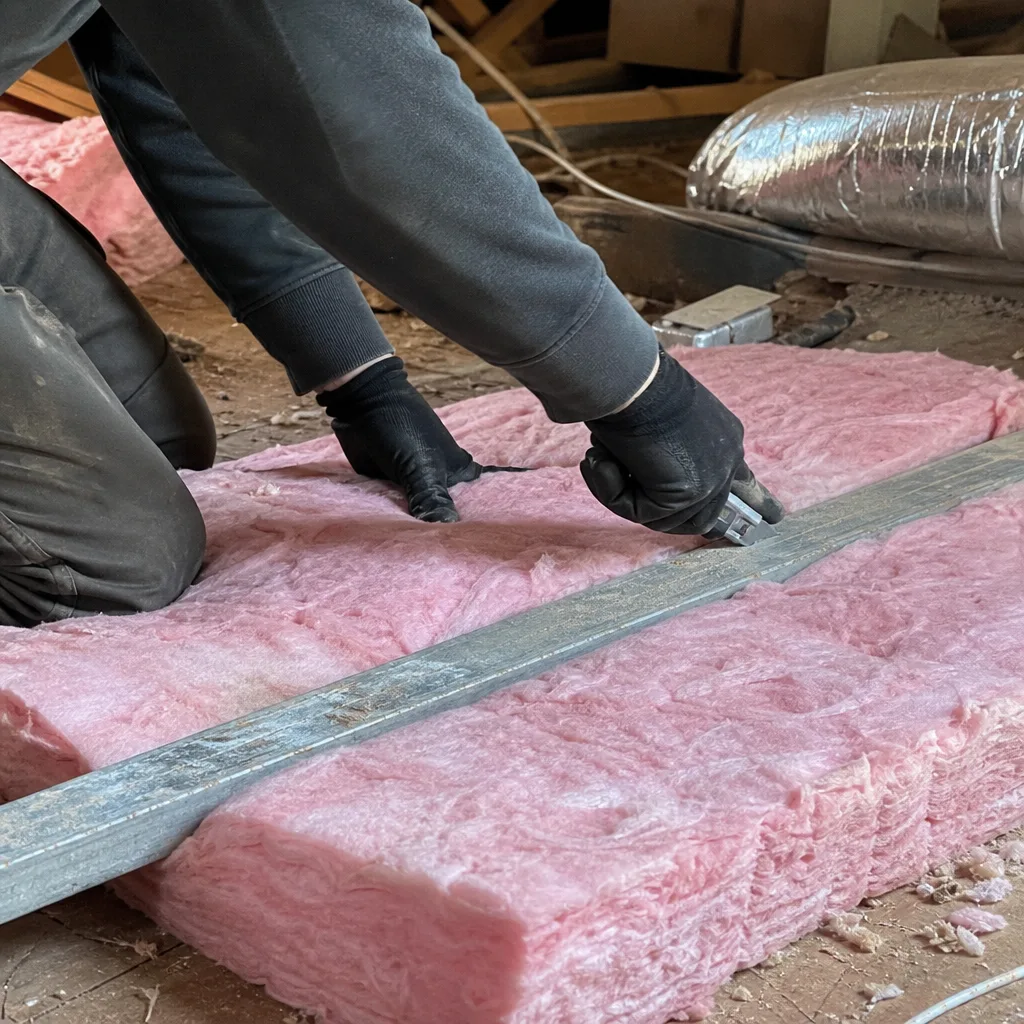
- Foam type – open-cell vs. closed-cell: Open-cell (0.5 lb density) costs roughly half as much per board foot as 2 lb closed-cell. Closed-cell achieves R-6 to R-7 per inch and adds structural rigidity; open-cell achieves R-3.5 to R-3.8 per inch. The right choice depends on moisture exposure, the application, and what the building code requires for your specific situation – not which one sounds more impressive in a sales pitch.
- Total square footage and lift thickness: Spray foam is priced by the board foot (1 square foot at 1 inch thick). A cathedral ceiling that calls for 3 inches of closed-cell to reach code-minimum thermal performance in Santa Clara County costs three times the per-square-foot material of a 1-inch rim joist application. Bigger jobs do see some volume efficiency, but not as dramatically as some contractors imply on the phone.
- Air sealing prep required before foam goes in: At Envelope Insulation Co., air sealing isn’t an upsell – it’s a prerequisite. We won’t apply attic insulation over an unsealed attic floor. Top plates, can light penetrations, and plumbing chases get sealed first. That work takes time and shows up in the scope. Some contractors skip it and quote a lower number; your blower-door reading before and after tells you whether the skip cost you more than it saved.
- Substrate access and job complexity: A Morgan Hill home built in the 1970s in the Country Club area may have an attic with irregular joist spacing, pull-down stairs instead of a proper hatch, or ductwork running where the crew needs to spray. That slows the job and the price reflects it. New construction in East Main Avenue developments typically runs faster because there’s nothing in the way yet.
- Existing material removal: Spray foam bonds to substrate. If there’s existing blown-in fiberglass, old batt, or contaminated material in the cavity, it comes out first. Removal is scoped separately, priced separately, and documented – photos before, during, and after. In Morgan Hill homes near Burnett Avenue and the older West Main corridors, we regularly find cellulose that’s compacted to R-5 or less where R-19 was originally installed. That material has to go before the foam does any useful work.
- Local permit requirements: Santa Clara County requires permits for certain spray foam applications – particularly any foam applied to the underside of roof sheathing (a “hot roof” or unvented attic assembly). The permit fee itself is modest, but it adds design documentation time and an inspection. We handle the permit process when required; it’s included in the written scope, not added as a surprise line item at the end.
Open-Cell vs. Closed-Cell Spray Foam in Morgan Hill: Which One Is Right?
This is the question we get most often on estimates, and the short answer is that Morgan Hill’s climate tilts toward closed-cell in moisture-exposed areas and open-cell where cost efficiency matters more than vapor control.
The Santa Clara Valley heats up significantly in July and August – Morgan Hill regularly sees summer highs in the upper 90s – and the overnight temperature swings in the hills east of town, toward the Coyote Valley, can be dramatic. That diurnal swing means roof decks expand and contract more than they would in a coastal climate. Closed-cell foam is dimensionally stable and holds its R-value through those swings. Open-cell foam, being about 95% air, moves slightly with the substrate and is more permeable to moisture vapor.
For a crawl space, we almost always specify closed-cell, particularly in homes near the creek corridors where seasonal ground moisture is predictable. For an attic floor in a vented attic assembly, open-cell is often the better value – you’re not fighting vapor, and the lower cost lets you hit your target R-value at a price that makes the project pencil out.
Cathedral ceilings are the application where the choice matters most structurally. Closed-cell foam applied to the underside of roof sheathing at 3 inches provides R-21 and prevents moisture accumulation inside the sheathing – a relevant concern in any Morgan Hill home where the roof sees both direct summer sun and cool fall condensation cycles. We’ve used Icynene closed-cell on several cathedral ceiling jobs in the Paradise Valley area with before-and-after blower-door readings that showed 40-55% reductions in air change rates.
For a more complete picture of how spray foam fits into a full building-envelope strategy, our Spray Foam Insulation in Morgan Hill service page covers the application types, performance expectations, and what the job looks like from estimate to documented completion.
What the Blower-Door Numbers Actually Tell You
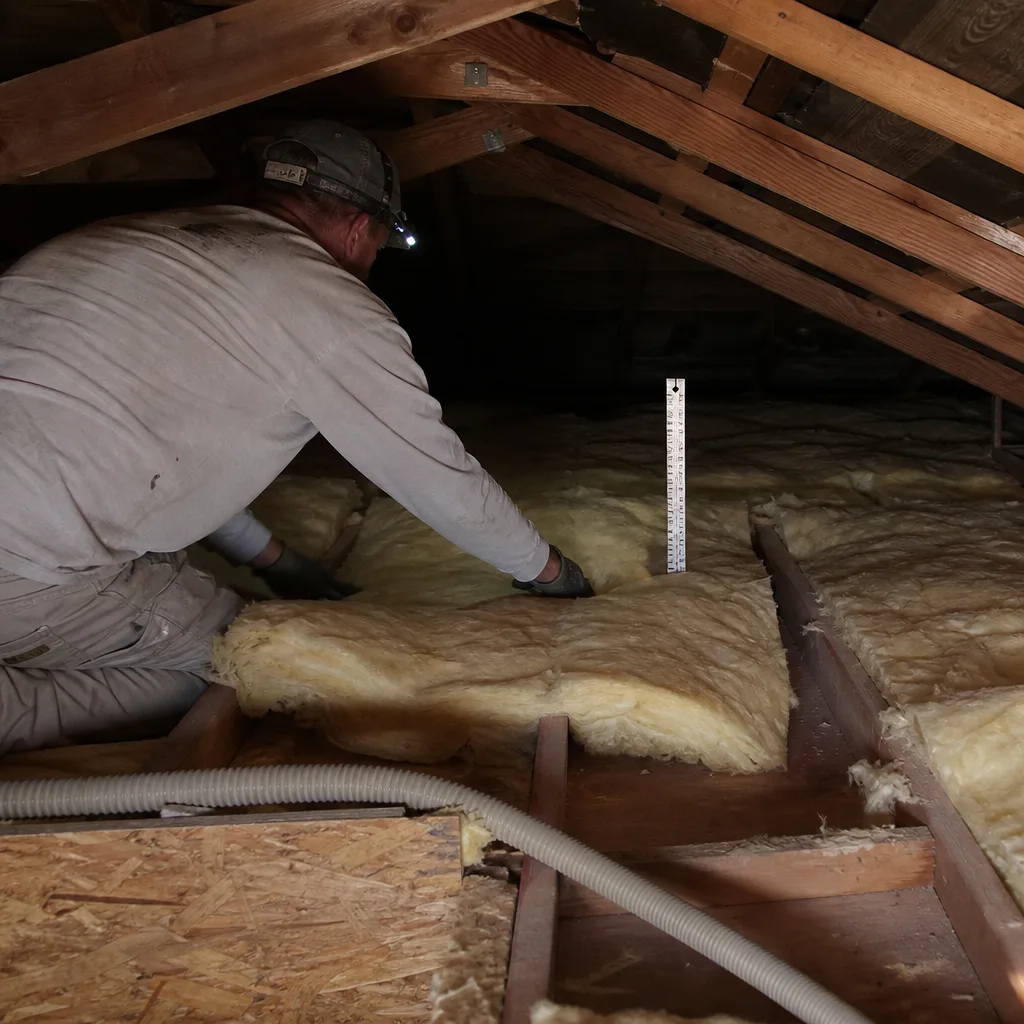
A blower-door test – a pressurization measurement that shows, in a single number, how much conditioned air your building envelope is losing – is the only objective measure of whether an air sealing job did what it was supposed to do. The number is expressed in CFM50: cubic feet per minute of airflow at 50 Pascals of pressure difference.
On applicable jobs, we publish before and after readings with the documented photo record. A recent job in the Tennant Station area of Morgan Hill – a 1,980 sq ft home built in 1988 – read 3,840 CFM50 before we sealed the attic floor penetrations and rim joists with closed-cell foam. After sealing and before any additional insulation was added, the reading dropped to 2,210 CFM50. That’s a 42% reduction in air leakage. The homeowner could see exactly what the air sealing portion of the job accomplished, separate from the insulation layer that followed.
We publish these numbers because they’re verifiable and because “we significantly improved your home’s efficiency” isn’t evidence – it’s a sentence. The CFM50 reading is evidence.
Most homes in Morgan Hill built before 2000 test between 3,500 and 6,000 CFM50 before any envelope work. California Title 24 targets for new construction are well below 1,500 CFM50 for homes this size. There’s a lot of room between where most existing homes are and where they could be, and spray foam combined with targeted air sealing is the fastest way to close that gap.
How to Save on Spray Foam Insulation in Morgan Hill
Spray foam is not a product where chasing the lowest bid reliably produces a good outcome – the cost of a failed application (delamination, off-ratio foam, inadequate thickness) runs well above the cost of doing it right the first time. That said, there are legitimate ways to control what you spend.
- Get the scope in writing before you compare quotes. Two estimates for “spray foam insulation” may be describing completely different scopes. One contractor may be quoting open-cell at 2 inches where closed-cell at 3 inches is the correct specification. A written scope with foam type, density, installed thickness, and area treated is the only document that lets you compare prices honestly. Under Haven Standard Clause 1, we deliver a written scope before anyone starts – that’s not something we offer selectively.
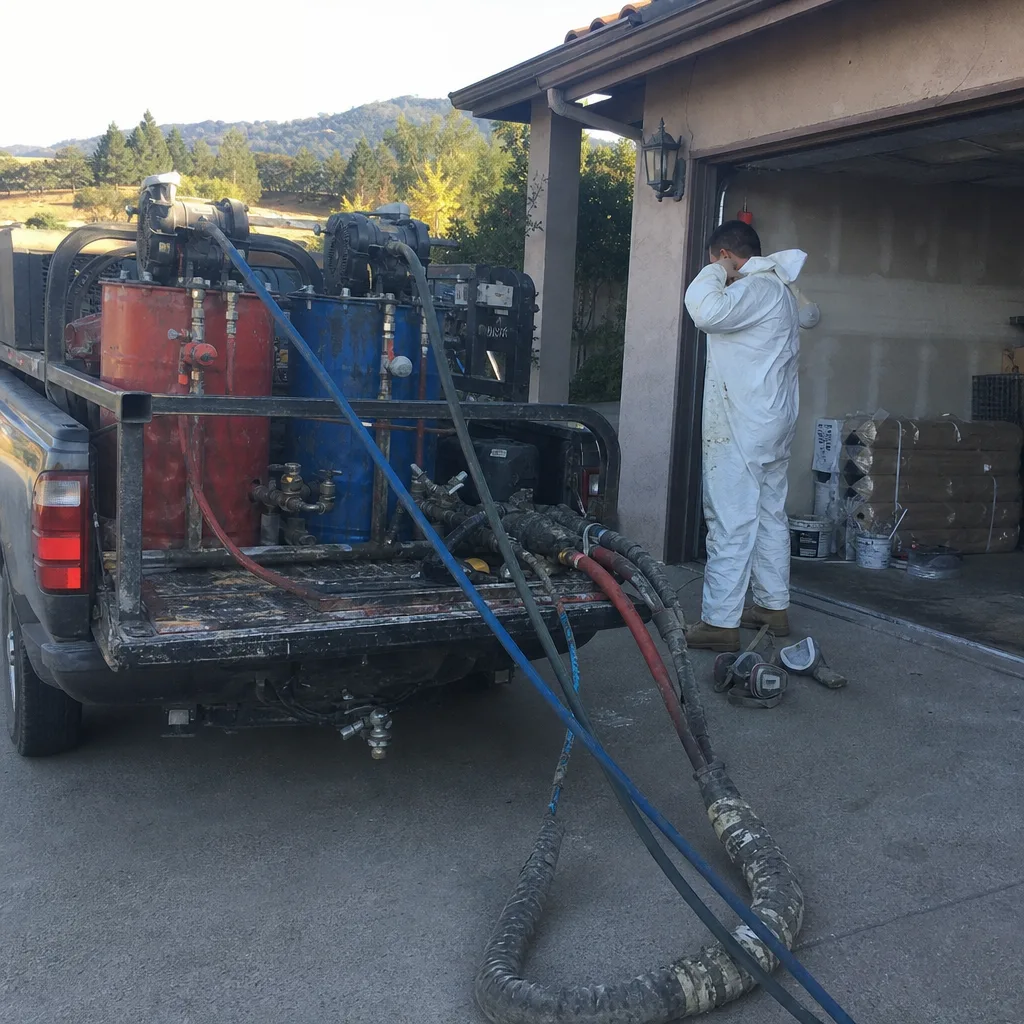
- Bundle air sealing and insulation into one mobilization. Spray foam equipment requires a truck-mounted rig, and mobilization is a real cost. If you need rim joist sealing, attic penetration sealing, and crawl space insulation, doing them on one visit costs less than three separate calls. We scope the full building envelope on the initial visit and show you what the complete project costs versus phases.
- Check for PG&E rebates before scheduling. Pacific Gas and Electric serves Morgan Hill and periodically offers rebates for qualifying insulation and air sealing projects, particularly when work is paired with a home energy audit that documents baseline conditions. These programs change; we’ll tell you what’s current at the time of your estimate and help you identify whether your project qualifies.
- Use a Free Second Opinion on any written estimate you already have. Bring us a competing quote and we’ll read it with you. We’ll point out if the foam type is misspecified for the application, if the thickness is below what the installation requires, or if the scope is missing air sealing prep that will limit performance regardless of how much foam goes over the top.
- Address air leaks before adding any insulation – it’s cheaper in the long run. Insulation slows heat transfer. Air sealing stops air movement. Both matter, but foam over unsealed penetrations still lets conditioned air escape. A properly air-sealed attic with R-38 blown-in fiberglass will outperform an unsealed attic with R-60 spray foam on the floor – and costs less. The right sequence is seal first, then insulate. That’s not our preference; it’s building science.
To get a written price for your specific home, call us at (669) 280-8103. A live person answers – no voicemail, no callback window. We’ll schedule a site visit, measure the areas, and deliver a flat written price before any work is discussed further.
Is Spray Foam Worth It in Morgan Hill? A Direct Answer
For the right application, yes – and the right applications in Morgan Hill are specific. Crawl space rim joists in homes near the Coyote Creek corridor benefit measurably from closed-cell foam because seasonal moisture makes vapor-open materials a poor long-term choice. Cathedral ceilings and unvented attic assemblies in homes in the hills east of Monterey Road – particularly post-2000 construction that moved away from vented rafter bays – require closed-cell at the roof deck because there’s no other way to manage the vapor drive through the sheathing.
For a vented attic with a flat floor and no moisture history, blown-in fiberglass or cellulose at the attic floor will typically deliver comparable thermal performance at 30-50% lower cost. Spray foam isn’t the answer to every insulation problem, and we’ll tell you that on the estimate if it’s true for your home. The written scope we deliver will specify what we recommend and why, not just what we happen to be equipped to sell.
Since 2016, we’ve completed insulation and air sealing work on more than 9,000 homes across the region. Every one of those jobs started with a written price. That record exists because homeowners who know exactly what they’re paying for before work starts are the ones who refer us to their neighbors when it’s done.
You can read more about the full range of building-envelope services we offer by visiting our home page, which covers everything from attic insulation to crawl space encapsulation and energy audits.
FAQs: Spray Foam Insulation Cost in Morgan Hill
How much does spray foam insulation cost per square foot in Morgan Hill?
Installed spray foam in Morgan Hill costs roughly $0.44-$0.65 per board foot for open-cell and $1.00-$1.50 per board foot for closed-cell as of 2026. A board foot is one square foot at one inch of thickness. A crawl space application calling for 2 inches of closed-cell across 1,200 square feet would land between $2,400 and $3,600 in materials and labor before any prep work is added. Call (669) 280-8103 for a written price specific to your home’s measurements – estimates are free and a live person answers every call.
Is open-cell or closed-cell foam better for a Morgan Hill home?
Closed-cell is the better choice for moisture-exposed areas – crawl spaces, rim joists, cathedral ceilings – because it achieves R-6 to R-7 per inch and blocks vapor. Open-cell is appropriate for vented attic floors and interior wall cavities where vapor permeability isn’t a liability and cost efficiency matters. Morgan Hill’s summer heat and creek-adjacent moisture make closed-cell the default recommendation for anything below the living space or at the roof deck. The written scope we deliver will name the foam type and density for each area so you’re not guessing after the fact.
Do I need a permit for spray foam insulation in Morgan Hill?
Yes, in some cases. Santa Clara County requires a permit for unvented attic assemblies – also called “hot roof” assemblies – where closed-cell foam is applied directly to the underside of roof sheathing. Rim joist and crawl space applications typically don’t require a permit, but wall cavity applications in conjunction with a remodel may. We handle permit documentation when it’s required; the permit process is included in the written scope, not added as a surprise line at closing. Call (669) 280-8103 and we’ll confirm what applies to your specific project.
How long does spray foam insulation last?
Closed-cell spray foam, properly applied and not disturbed, has a service life that exceeds 80 years in most residential applications. It doesn’t settle, doesn’t absorb moisture when rated, and doesn’t support mold growth. Open-cell foam is similarly durable in interior applications but can absorb moisture if exposed – which is why application location matters more than the product’s theoretical longevity. The Icynene and Demilec materials we use carry published third-party durability documentation; we’ll include that with your job file. Under the 365-Day Done Right Promise, if anything about the application isn’t performing as scoped within the first year, we make it right – in writing.
Can I save money by insulating only part of my home?
Partial insulation projects can make sense when the scope is chosen based on where the building envelope is losing the most energy. A blower-door test identifies those locations by pressure rather than by guessing. In Morgan Hill homes built before 1990, the attic floor and crawl space together typically account for 50-70% of the total air and thermal loss. Addressing those two areas first often delivers the largest performance gain per dollar spent. A targeted approach based on measured data beats a room-by-room approach based on what’s most accessible. We’ll show you the blower-door reading before any work starts so the scope is built around evidence, not convenience.
Key Takeaways
- Spray foam insulation in Morgan Hill runs $1,800-$6,500 for most residential jobs in 2026; most homeowners spend $2,800-$4,200 for a crawl space or attic application.
- Open-cell foam costs $0.44-$0.65 per board foot installed; closed-cell costs $1.00-$1.50 per board foot installed.
- Morgan Hill’s seasonal moisture near creek corridors and summer heat load favor closed-cell for crawl spaces and cathedral ceilings.
- Santa Clara County requires permits for unvented (hot roof) attic assemblies; we handle that documentation when it applies.
- Air sealing before insulation is not optional – it’s the sequence that determines whether the insulation performs as rated.
- Before-and-after blower-door readings are provided on applicable jobs so you can verify the air-sealing result in a single measurable number.
- A written price, written scope, and written warranty are delivered before any work starts – Haven Standard Clause 1, no exceptions.
- The 365-Day Done Right Promise applies to every completed job.
- Free Second Opinion on any written estimate you already hold – bring the quote and we’ll read it with you.
Get a Written Price for Your Morgan Hill Home
If you’re comparing spray foam quotes or starting from scratch on an insulation project, the next step is a site visit that produces a written price – not a ballpark, not a range that shifts when the crew shows up. Call (669) 280-8103 to schedule. A live person answers every call; no voicemail, no callback window measured in business days. We’ll measure the areas, document what we find with photos, and hand you a flat written price before any conversation about scheduling work begins.
Wes Okafor leads the team at Envelope Insulation Co., operating under The Haven Standard since 2016. Every job begins with a written scope and ends with a documented record. That’s not a marketing promise – it’s the operational standard every technician on our crew is trained to maintain.
Written by Wes Okafor, Owner at Topside Attic Insulation Morgan Hill, serving Morgan Hill since 2016.
Pricing reflects the Morgan Hill market as of 2026. Topside Attic Insulation Morgan Hill offers free estimates – call (669) 280-8103.
What Our Customers Say
"Two other companies quoted to blow more insulation on top of what was there. These were the only ones who said the existing material had to come out first, and explained why."
- Clifford E."Crawl space encapsulation done properly. Photographs of the vapour barrier at every seam, and the damp smell in the hallway is gone."
- Ainsley P."They air-sealed the attic floor before insulating and showed me the blower-door number before and after. The upstairs is finally the same temperature as downstairs."
- Marisol D.