
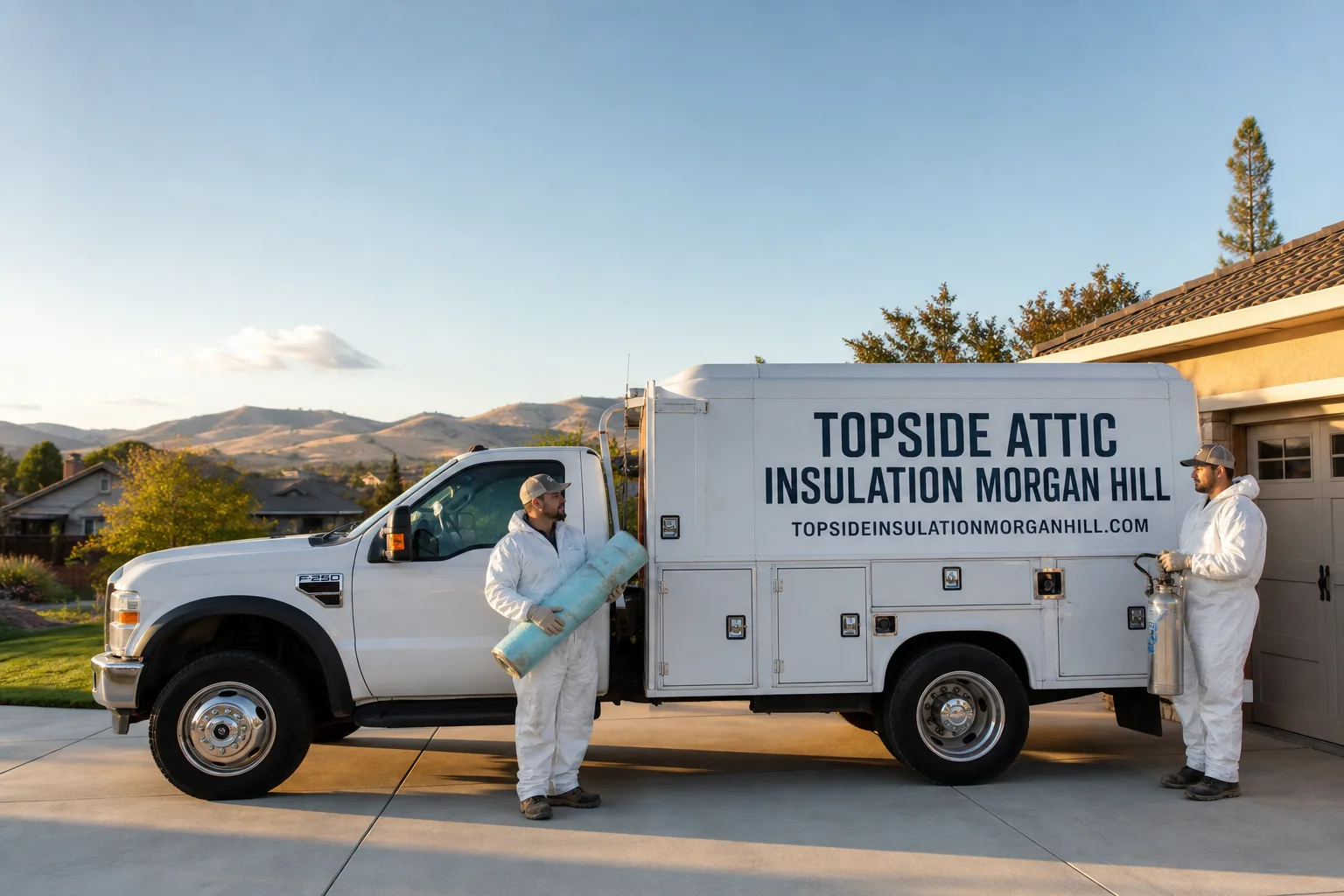
How Much Does Wall Insulation Cost in Morgan Hill?
Our Wall Insulation services in Morgan Hill, CA typically cost between $1.50 and $4.25 per square foot of wall space, which works out to roughly $1,800 to $6,500 for a typical single-story home depending on method, material, and whether air sealing is done first. Most Morgan Hill homeowners we work with land somewhere between $2,400 and $4,800 for a complete wall insulation project. The wide range exists because blown-in retrofit jobs, open-cell spray foam, and new-construction batts are priced very differently – and because skipping air sealing before insulation is a shortcut that costs more to fix later.
Wall Insulation Cost Breakdown (2026)
Blown-in wall insulation for a retrofit job in Morgan Hill runs around $2.00 to $3.50 per square foot of wall cavity treated. Spray foam costs more per square foot but does the air sealing and insulating in one step. Fiberglass batts in open walls (new construction or gut remodel) are the least expensive per square foot but require the wall to already be open.
| Method | Material | Cost per Sq Ft (Wall Space) | Typical Job Range (1,500-2,200 sq ft home) |
|---|---|---|---|
| Dense-pack blown-in (retrofit) | Cellulose (GreenFiber) | $2.00 - $2.80 | $2,200 - $4,100 |
| Dense-pack blown-in (retrofit) | Fiberglass (Johns Manville / Knauf) | $2.20 - $3.10 | $2,400 - $4,500 |
| Open-cell spray foam | Icynene / Demilec | $2.80 - $4.25 | $3,100 - $6,500 |
| Closed-cell spray foam | Demilec / Icynene | $3.50 - $5.50 | $3,800 - $8,000+ |
| Fiberglass batts (open wall) | Owens Corning / CertainTeed | $1.50 - $2.20 | $1,800 - $3,200 |
| Mineral wool batts (open wall) | Rockwool | $1.90 - $2.75 | $2,100 - $4,000 |
| Air sealing (top plates, penetrations) added to any job | Spray foam / caulk | $0.35 - $0.80 | $400 - $1,200 |
A few things worth spelling out. The square footage in the table refers to the wall area being insulated, not the home’s floor plan square footage. A 1,800 sq ft ranch in East Morgan Hill might have 900 linear feet of exterior wall at 8-foot ceilings – that’s 7,200 sq ft of wall surface before you subtract windows and doors. Dense-pack jobs are priced by the actual cavity area treated, so the final invoice reflects what was done, not a round number. Every job at Envelope Insulation Co. – operating as Topside Attic Insulation Morgan Hill – starts with a written price before any work starts, which is Haven Standard Clause 1. You’ll know the flat number before a drill touches your drywall.
Closed-cell spray foam sits at the high end of the table, and for some applications in Morgan Hill it’s the right answer. Homes on the west side of the 101 corridor near Cochrane Road and Madrone Parkway tend to have older wall assemblies with no vapor management – closed-cell foam addresses both insulation and moisture control at the same time. But for the majority of 1990s and early 2000s tract homes in Madrone Ranch, Holiday Lake Estates, and the East Main Avenue neighborhoods, dense-pack cellulose or fiberglass retrofit is the most cost-effective path to meaningful performance improvement.
What Affects Wall Insulation Pricing in Morgan Hill
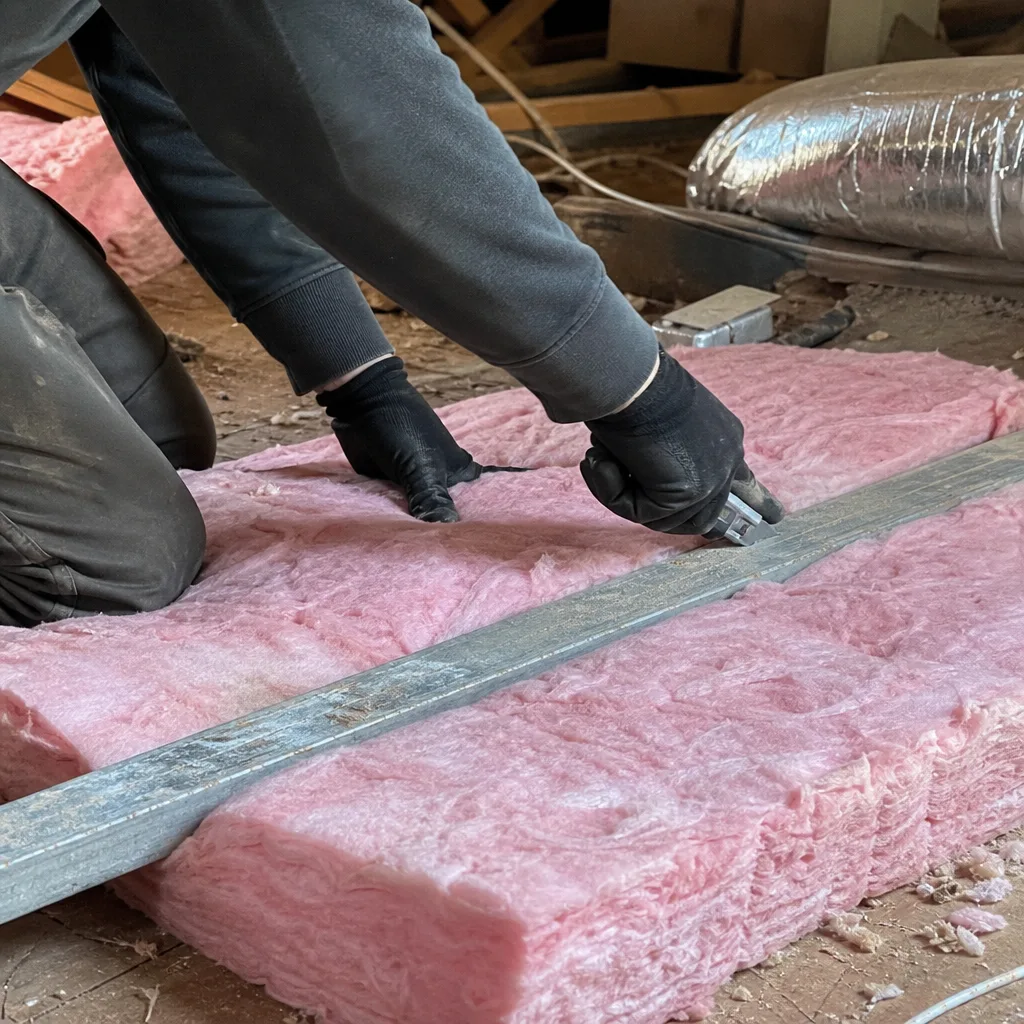
- Retrofit vs. open wall. The single biggest cost driver. Dense-pack retrofit means drilling small holes through the exterior or interior wall surface, blowing insulation into each stud bay, and patching. That labor adds $0.50 to $1.20 per square foot compared to installing batts in an open wall during construction or a remodel. If your walls are already exposed for another reason – a kitchen renovation, a siding replacement – that’s the time to insulate, and the per-square-foot cost drops significantly.
- Wall construction type and age. Standard 2×4 stud walls in homes built before 1995 in Morgan Hill typically have 3.5 inches of cavity depth, which limits the R-value achievable. Newer 2×6 construction (common in subdivisions built after 2000 near East Main and Tennant Avenue) allows R-19 to R-21, and the deeper cavity is faster to fill per square foot. Homes with stucco exteriors – very common in Morgan Hill’s climate – require drilling from the interior to avoid disturbing the stucco system, which adds labor.
- Existing insulation or obstructions. Some homes in the Coyote Valley and Spring Grove neighborhoods were built with partial insulation – kraft-faced batts that have compressed or shifted over 20 to 30 years. If existing material is still in the cavity, we assess whether dense-packing over it makes sense or whether removal is the right call. Removal adds cost; leaving degraded material in place and blowing over it is not something we do.
- Access and wall configuration. Two-story homes, cathedral wall sections, and walls adjacent to finished garage spaces all take more setup time. In Morgan Hill, split-level floor plans are not uncommon in the older neighborhoods near downtown and Tennant, and angled wall sections above stairwells can double the labor time per cavity compared to a straight exterior wall.
- Air sealing scope. We treat air sealing as a prerequisite – not an optional line item. Before any insulation goes into a wall system, top plates, bottom plates, electrical penetrations, and can-light housings are sealed. In Morgan Hill homes built between 1985 and 2005, we regularly find top-plate gaps running the full length of an exterior wall that are contributing as much to energy loss as the missing insulation itself. The air sealing cost is real and it shows up in the quote – but so does the result on the blower-door reading at the end of the job.
- Material choice and supply chain. Cellulose prices track recycled newsprint commodity pricing; fiberglass and mineral wool track raw material and energy costs. In the South Bay and South County market – Morgan Hill, Gilroy, San Martin – material costs are slightly higher than Central Valley markets due to transport. As of 2026, dense-pack cellulose from GreenFiber remains the most economical option per R-value achieved, while Rockwool’s sound attenuation and fire resistance make it the right call for shared walls and party walls in Morgan Hill’s newer attached townhome developments near Cochrane Road.
Morgan Hill Climate and Why Wall Insulation Matters Here Specifically
Morgan Hill sits in a thermal transition zone that surprises homeowners who moved here from coastal cities. Summer afternoons in the Coyote Valley regularly reach 95-100°F, while overnight lows can drop into the 50s even in July. That 40-plus-degree diurnal swing means your walls are doing significant thermal work every single day of the year – not just in winter, which is the mental model most people bring from the Bay Area proper.
The Diablo Range to the east funnels dry, hot air into the valley floor through the summer months, and the gap between the Santa Cruz Mountains and the Diablo Range pushes marine influence through in the evening. The result is a home envelope that needs to perform in both directions: blocking heat gain through west- and south-facing walls during the afternoon, then holding interior warmth as temperatures fall after sunset. Under-insulated walls in Morgan Hill homes are a year-round performance problem, not a seasonal one.
We’ve done blower-door testing – a pressurization reading that shows, in one number, how much air your building envelope is losing – on homes in Madrone Ranch that were sitting at 8 to 10 air changes per hour (ACH50) before wall air sealing and insulation work. Post-job readings on those same homes have come in at 4 to 5 ACH50. That’s a documented reduction in infiltration, and those numbers go in the job record the homeowner receives when we close out.
New Construction vs. Retrofit Wall Insulation in Morgan Hill
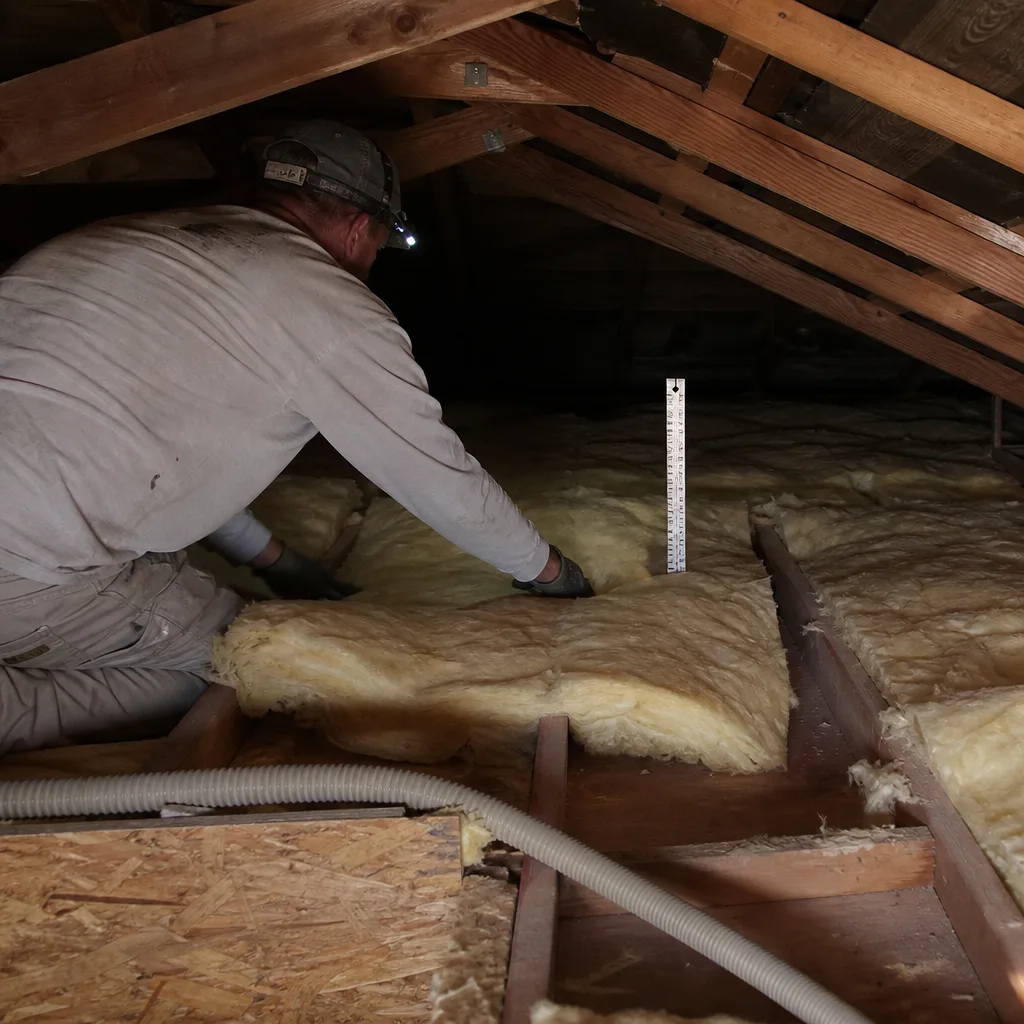
If you’re building in Morgan Hill – or doing a permitted remodel that opens walls – the economics look different from a retrofit. California Title 24 energy code sets minimum wall insulation requirements, and compliance is verified at inspection. For new construction in Santa Clara County, the current prescriptive path for wood-framed exterior walls requires a minimum R-13 in 2×4 framing and R-20 in 2×6 framing. Many builders meet the minimum and stop there; we don’t recommend stopping there.
Installing R-21 mineral wool (Rockwool) or R-23 fiberglass in a 2×6 wall during construction adds a small amount to the upfront material cost compared to the minimum code batt, but it’s a fraction of what a retrofit costs after the drywall is up. In our experience with Morgan Hill new construction – particularly in the newer phases of the East Main Street corridor and near the Dunne Avenue / Monterey Road intersection – the upgrade from R-13 to R-21 during framing adds roughly $0.30 to $0.55 per square foot to the installed cost. That same upgrade as a retrofit after the house is closed in runs $2.00 to $2.80 per square foot. The math is not subtle.
If you’re weighing options on a new build or major remodel and want to talk through what specification makes sense for the wall assembly, that falls under the same upfront pricing structure as any other job. You can review our Wall Insulation in Morgan Hill service page for a fuller breakdown of what that scoping process looks like from our side.
How to Save on Wall Insulation in Morgan Hill
The most practical ways to reduce the total cost of a wall insulation project in Morgan Hill don’t involve cutting corners on materials or skipping steps. They involve sequencing work intelligently.
- Insulate during a siding or stucco replacement. If your home needs new siding – and many Morgan Hill homes built in the 1980s and 1990s are in that window – the exterior sheathing is already off. That’s the moment to insulate or upgrade what’s behind it. The labor to install batts in an exposed wall cavity is a fraction of what dense-pack retrofit costs. If you’re already paying a siding contractor, coordinate the timing so insulation goes in before the new cladding does.
- Combine wall insulation with attic air sealing on the same job. When a crew is already on-site to seal attic top plates, the incremental cost of sealing wall top plates at the same time is lower than scheduling a separate mobilization. We see this come up often in Morgan Hill homes where the attic insulation is the obvious priority, but the wall cavities have nothing in them at all. Combining the scope in a single written quote reduces total project cost versus two separate jobs.
- Get a second opinion on any written quote you’ve already received. Under our Haven Standard, we’ll read any written competing estimate with you – free. That’s not a sales tactic; it’s a genuine review of scope, specs, and whether the proposed method actually fits your home’s wall assembly. We regularly find quotes that price dense-pack at a low per-square-foot rate but use a lower density specification than what’s needed to achieve the R-value and air tightness the homeowner expects.
- Check for utility and state rebates before signing anything. PG&E and the California Energy Commission periodically offer rebates on qualified wall insulation work. The programs change, and not all insulation jobs qualify – the requirements involve minimum R-value improvements and sometimes a pre- and post-inspection. We can tell you at the estimate stage whether your project is likely to qualify, so you’re not chasing a rebate for a job that won’t meet the criteria.
- Ask what happens if only part of the house is done. Partial wall insulation – treating only the north-facing walls, for example, because those are the coldest – can be a legitimate starting point if budget is constrained. It’s not the same performance gain as a full envelope treatment, and we’ll tell you that plainly. But a partial job with a written scope and a documented before/after record is more useful than waiting and doing nothing. Call (669) 280-8103 to start with a free estimate and a written price – there’s no obligation to proceed until you see the number.
What the Job Looks Like from Start to Finish
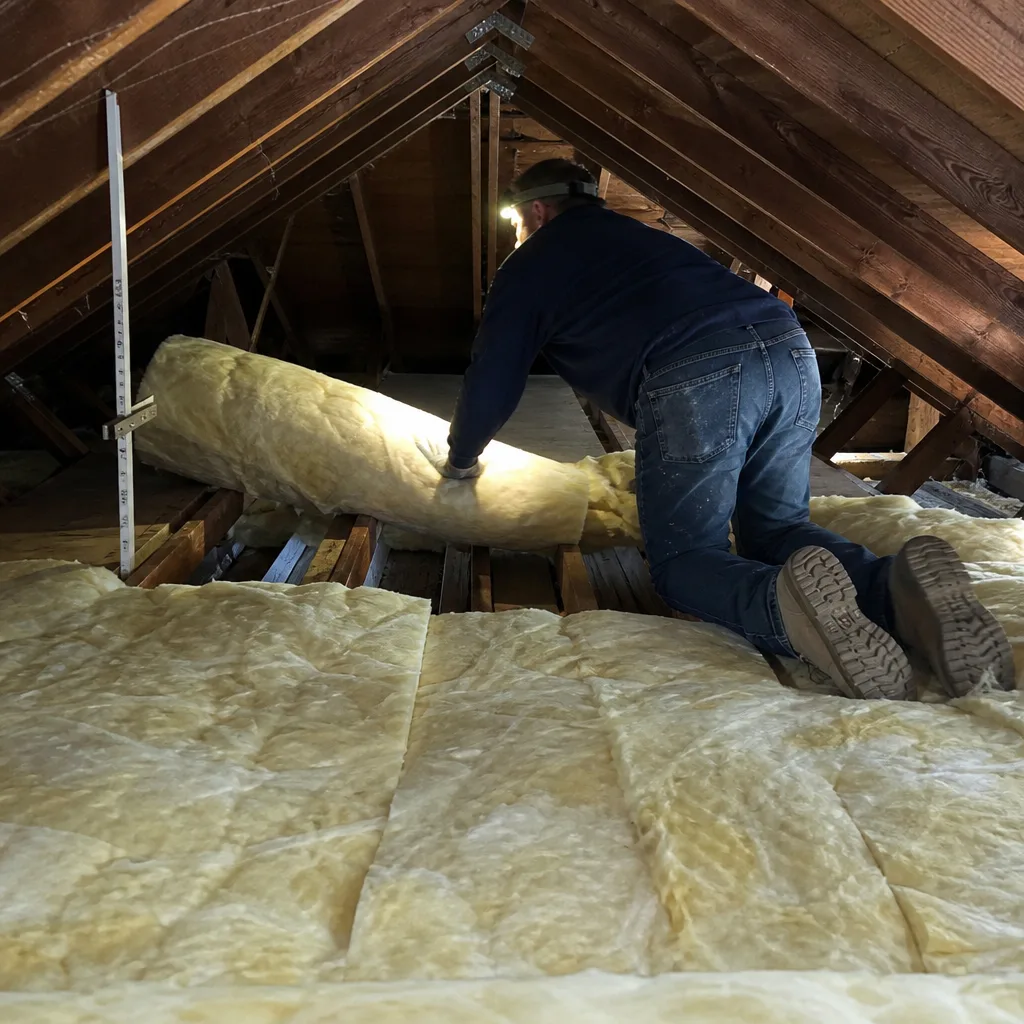
For anyone who’s never had wall insulation installed in a Morgan Hill home, here’s what the process actually looks like under our approach.
We start with a site visit and a blower-door baseline – that pressurization test that measures how much air is moving through your envelope right now. That number matters because it tells us how much of your energy loss is air infiltration versus conductive heat transfer through the wall assembly. In Morgan Hill homes from the 1990s, we frequently find that infiltration accounts for more than half the total envelope loss. Blowing insulation over an unsealed wall assembly reduces conductive transfer but doesn’t touch the air leakage – which is why we seal first, then insulate. That sequence is non-negotiable for us; it’s the core of what Wes Okafor and the team at Envelope Insulation Co. have built this company around since 2016.
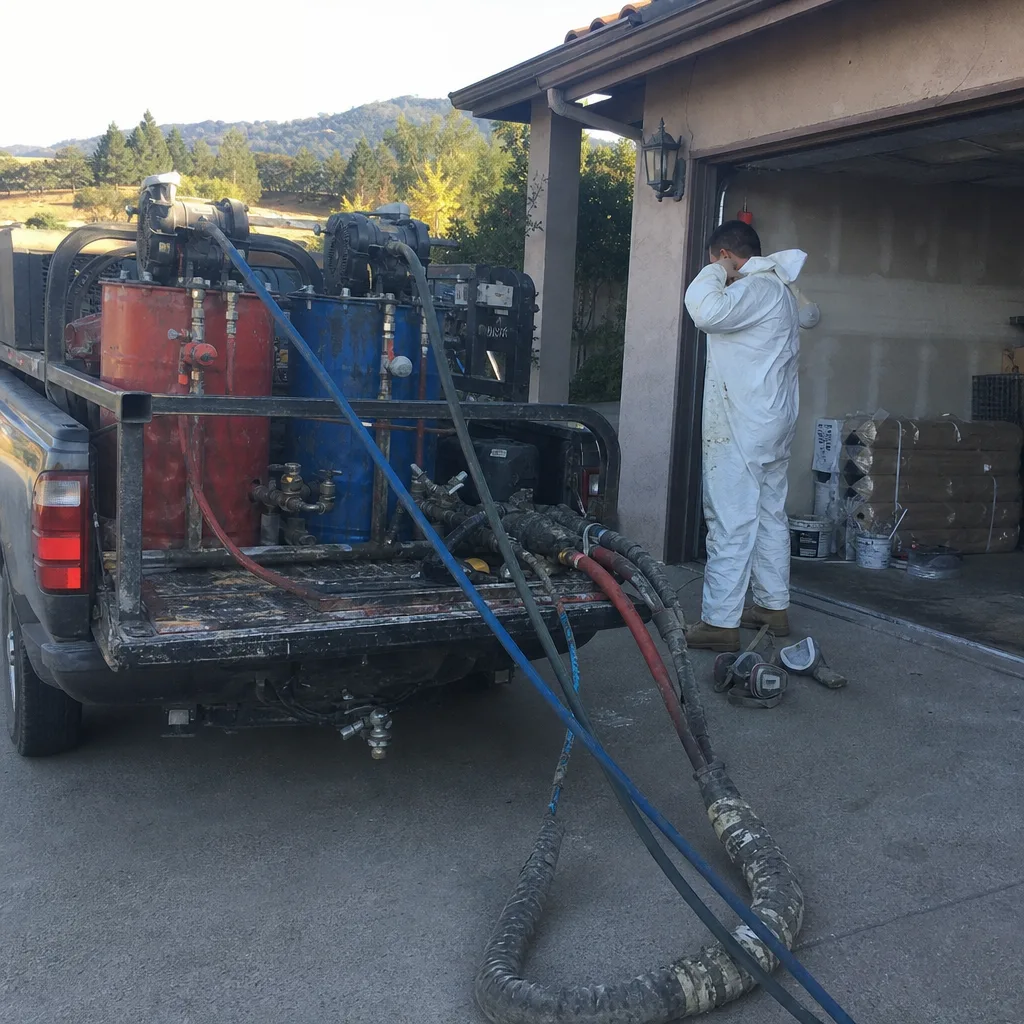
Air sealing in the wall system means caulking and spray-foaming top plates, bottom plates, electrical boxes, and any penetrations through the stud bays before insulation is installed. On a retrofit dense-pack job, small holes are drilled through the wall surface (exterior sheathing or interior drywall, depending on access and finish material), and a fill hose is inserted to each stud bay. Cellulose or fiberglass is blown in at a density specification that meets California’s requirements and our own documented standards. Holes are plugged and patched. On a spray foam job, the application goes directly onto the cavity surface through the open wall.
When the crew leaves, you receive a Documented Photo Record of the work – pre-installation conditions, air sealing completed, insulation installed – plus a post-job blower-door reading on applicable jobs, and the written warranty. You’ll know what the envelope read before we started and what it reads after. That record is yours; it’s part of the job, not an add-on.
For more background on our full service approach, the home page covers the complete envelope service line, including attic insulation, crawl space encapsulation, and energy audits that often accompany wall insulation projects in Morgan Hill homes.
Permit Requirements for Wall Insulation in Morgan Hill
In the City of Morgan Hill, wall insulation installed as a standalone retrofit in an existing home does not typically require a building permit – but there are exceptions. If the work involves removing and replacing drywall as part of the scope, that work may trigger a permit depending on the extent of the wall opening. New construction insulation is inspected as part of the framing and energy compliance inspection under Title 24, so that’s never a question.
If your project is part of a larger permitted remodel – a kitchen addition, an ADU conversion in a garage, or any work that opens walls for other permitted work – insulation needs to meet the current Santa Clara County / Morgan Hill building department energy code requirements for that assembly at that time of inspection. We’re familiar with the local requirements and will tell you at the estimate stage if your project triggers any permit or inspection that affects scope or timing.
FAQs – Wall Insulation Cost in Morgan Hill
How much does wall insulation cost in Morgan Hill per square foot?
Wall insulation in Morgan Hill runs $1.50 to $5.50 per square foot of wall area depending on method and material. Dense-pack blown-in cellulose sits at the lower end, around $2.00 to $2.80 per square foot installed with air sealing included. Closed-cell spray foam runs $3.50 to $5.50 per square foot but provides both insulation and a vapor barrier in one application. Fiberglass batts in an open wall during construction or remodel are the least expensive option at $1.50 to $2.20 per square foot. For a free written estimate specific to your home in Morgan Hill, call (669) 280-8103.
How much does it cost to insulate a whole house in Morgan Hill?
A full wall insulation project for a typical 1,500 to 2,200 square foot single-story home in Morgan Hill costs $2,200 to $6,500 using dense-pack or batt methods. Spray foam projects for the same home size can run $3,100 to $8,000 or more. Two-story homes, homes with complex wall configurations, or homes requiring attic air sealing in the same mobilization will be at the higher end of those ranges. The written estimate you receive before any work starts will give you the flat number, not a per-square-foot estimate to calculate yourself. Call (669) 280-8103 for that number.
Is it worth insulating existing walls in a Morgan Hill home?
Yes, for most Morgan Hill homes built before 2000 that have empty or degraded wall cavities, wall insulation pays back meaningfully given the local climate. Morgan Hill’s 40-plus-degree diurnal temperature swings in summer mean walls work hard year-round, and an uninsulated wall assembly can account for 15 to 25 percent of total envelope heat loss in a typical ranch or two-story home here. Whether the payback period makes sense for your specific home depends on your current wall assembly, your heating and cooling costs, and which method is appropriate – which is what the estimate visit is for.
What’s the difference between dense-pack and spray foam for walls?
Dense-pack blown-in insulation – cellulose or fiberglass – fills the existing wall cavity at high density through small drilled holes, seals reasonably well against air movement, and is the most cost-effective retrofit method for most Morgan Hill homes. It’s appropriate when the wall framing and sheathing are in good condition and you want a high R-value per dollar spent. Open-cell spray foam expands to fill the cavity and performs as both an air barrier and insulation in one step, but it costs more and requires the wall to be open or accessible in a way that dense-pack doesn’t. Closed-cell foam adds a class-II vapor retarder, which matters for specific wall assemblies where moisture drive is a concern – typically south- and west-facing walls with direct sun exposure in Morgan Hill’s climate. We’ll tell you in plain language which method fits your wall assembly and why.
Can wall insulation be added without removing drywall?
Yes. Dense-pack retrofit insulation is specifically designed for this: small holes (typically 2 inches in diameter) are drilled through the exterior sheathing or interior drywall into each stud bay, the insulation is blown in, and the holes are plugged and patched. In Morgan Hill homes with stucco exteriors – which is the majority of homes we work on here – drilling from the interior is common to avoid disturbing the stucco system. The patches are visible until painted but are flush and match the surrounding wall surface. The drywall does not need to be removed. A Documented Photo Record from Envelope Insulation Co. will show you the condition before, during, and after the drill-and-fill process.
Does wall insulation require a permit in Morgan Hill?
A standalone wall insulation retrofit in an existing Morgan Hill home typically does not require a building permit when no drywall is removed as part of the scope. New construction insulation is inspected under Title 24 as part of the framing inspection. If your wall insulation is part of a larger permitted remodel – an ADU conversion, room addition, or any work that opens walls for other permitted trades – then insulation must meet current code requirements and will be subject to inspection. We’ll confirm the permit status for your specific project during the estimate visit so there are no surprises on inspection day.
Key Takeaways
- Wall insulation in Morgan Hill costs $1,800 to $6,500 for most homes, with dense-pack retrofit at $2.00 to $2.80 per square foot being the most common scope.
- Retrofit jobs cost more per square foot than open-wall installation during construction or remodel – coordinate insulation with other projects when walls are already exposed.
- Morgan Hill’s large daily temperature swings make wall insulation a year-round performance investment, not just a winter heating upgrade.
- Air sealing top plates and penetrations before insulating is required – not optional – for the performance to match the R-value on paper.
- Every job from Envelope Insulation Co. / Topside Attic Insulation Morgan Hill starts with a flat written price and ends with a Documented Photo Record and, on applicable jobs, before-and-after blower-door readings.
- The 365-Day Done Right Promise covers all completed work: if it’s not right, we make it right.
Get a Written Price Before Any Work Starts
Wes Okafor and the team at Envelope Insulation Co. – operating locally as Topside Attic Insulation Morgan Hill – have been delivering written prices and documented results on wall insulation projects across Morgan Hill, San Martin, and Gilroy since 2016. More than 9,000 homes have had a written price before work started and a documented record when the crew left. That’s not a marketing line; it’s how every single job runs, under Haven Standard Clause 1.
If you have a competing written estimate, bring it. We’ll read it with you at no charge and give you a plain-language assessment of the scope, the specs, and whether the proposed method fits your home’s wall assembly. No pressure, no theatre about limited availability.
Call (669) 280-8103 to schedule a free estimate. A live person answers – no voicemail loops, no callback windows measured in business days. You’ll get a named technician and a text when they’re on the way, and you’ll have a written price before anyone touches your home.
Written by Wes Okafor, Owner at Envelope Insulation Co. (Topside Attic Insulation Morgan Hill), serving Morgan Hill since 2016.
Pricing reflects the Morgan Hill market as of 2026. Topside Attic Insulation Morgan Hill offers free estimates – call (669) 280-8103.
What Our Customers Say
"Two other companies quoted to blow more insulation on top of what was there. These were the only ones who said the existing material had to come out first, and explained why."
- Clifford E."Crawl space encapsulation done properly. Photographs of the vapour barrier at every seam, and the damp smell in the hallway is gone."
- Ainsley P."They air-sealed the attic floor before insulating and showed me the blower-door number before and after. The upstairs is finally the same temperature as downstairs."
- Marisol D.