
Attic Baffles & Ventilation Prep in Morgan Hill, CA
Attic baffles are ventilation channels – typically rigid foam or cardboard chutes – installed between roof rafters to keep soffit airflow open after insulation is blown or batted in. Without them, insulation packs the eaves shut, soffit vents stop working, and moisture accumulates in the attic cavity. In Morgan Hill, where summer attic temperatures routinely exceed 140°F and winter fog off the Diablo Range keeps rooflines damp for weeks at a time, a blocked soffit vent isn’t a minor inefficiency. It’s a direct path to premature deck rot and mold.
Ventilation prep goes one step further: before any new Attic Insulation services go down, we verify that your ridge vent, gable vents, and soffit vents are actually drawing air the way they’re supposed to. We measure net free area – the square footage of unobstructed vent opening – and check that the attic has sufficient air intake at the eaves to balance exhaust at the ridge. If something is undersized or blocked, we document it and fix it before the insulation crew touches a hose.
This is part of what Envelope Insulation Co. built into the home performance model from the beginning: ventilation work is a prerequisite, not an optional line item. If you’re planning new attic insulation and haven’t had someone verify your vent channels first, call us at (669) 280-8103 – we’ll walk you through what we’d look at before quoting anything. For the full picture of what’s included in attic work here, visit our Attic Insulation in Morgan Hill page.
When You Need Attic Baffles & Ventilation Prep
Not every Morgan Hill home presents the same symptoms, but any of the following should prompt a ventilation inspection before insulation is added or replaced.
- Ice dams or heavy condensation on the underside of the roof deck. Morgan Hill doesn’t get the hard freeze cycles of the Sierra, but cold overnight temps from November through February – combined with warm air escaping through a poorly ventilated attic – create enough of a temperature differential to cause condensation and edge moisture. If you’re seeing wet insulation near the eaves, ventilation is usually the first place to look.
- Energy bills that haven’t responded to previous insulation work. If a prior insulation job didn’t move the needle on your cooling costs during July and August, there’s a reasonable chance the soffit vents were packed shut during installation and the attic is running hotter than it should. A blocked soffit vent can raise attic temperatures by 20°F or more relative to a properly vented space.
- Existing insulation that’s brown or discolored near the eaves. Insulation picks up dirt through air filtration – if you see a dirty band near the soffit line, that’s insulation that was doing the work your baffles should be doing, slowing airflow while collecting particulates. It won’t be performing at rated R-value.
- A home built before 1990 with original insulation still in place. Many older Morgan Hill homes in neighborhoods like Paradise Valley Estates and the Edmundson Ave corridor were insulated when baffle installation wasn’t standard practice. The soffit vents may never have been properly protected, which means decades of insulation drift toward the eaves.
- You’ve had new attic insulation quoted and the contractor didn’t mention baffles. This is the single clearest signal that the quote needs a second look. Blowing insulation into an attic without checking soffit vent clearance first is a documented failure mode. If no one mentioned it, bring us the written estimate and we’ll read it with you at no charge – that’s the Free Second Opinion offer that comes with every Haven Standard engagement.
- Visible animal damage or debris blocking soffit vents. Morgan Hill backs up against the Coyote Valley wildlife corridor, and squirrel intrusions at the soffit line are common, particularly in homes with older aluminum soffit panels. A baffle won’t solve a pest entry point, but once the pest exclusion is done, baffles protect the newly cleared vents from being blocked again by fresh insulation.
Our Attic Baffles & Ventilation Prep Process
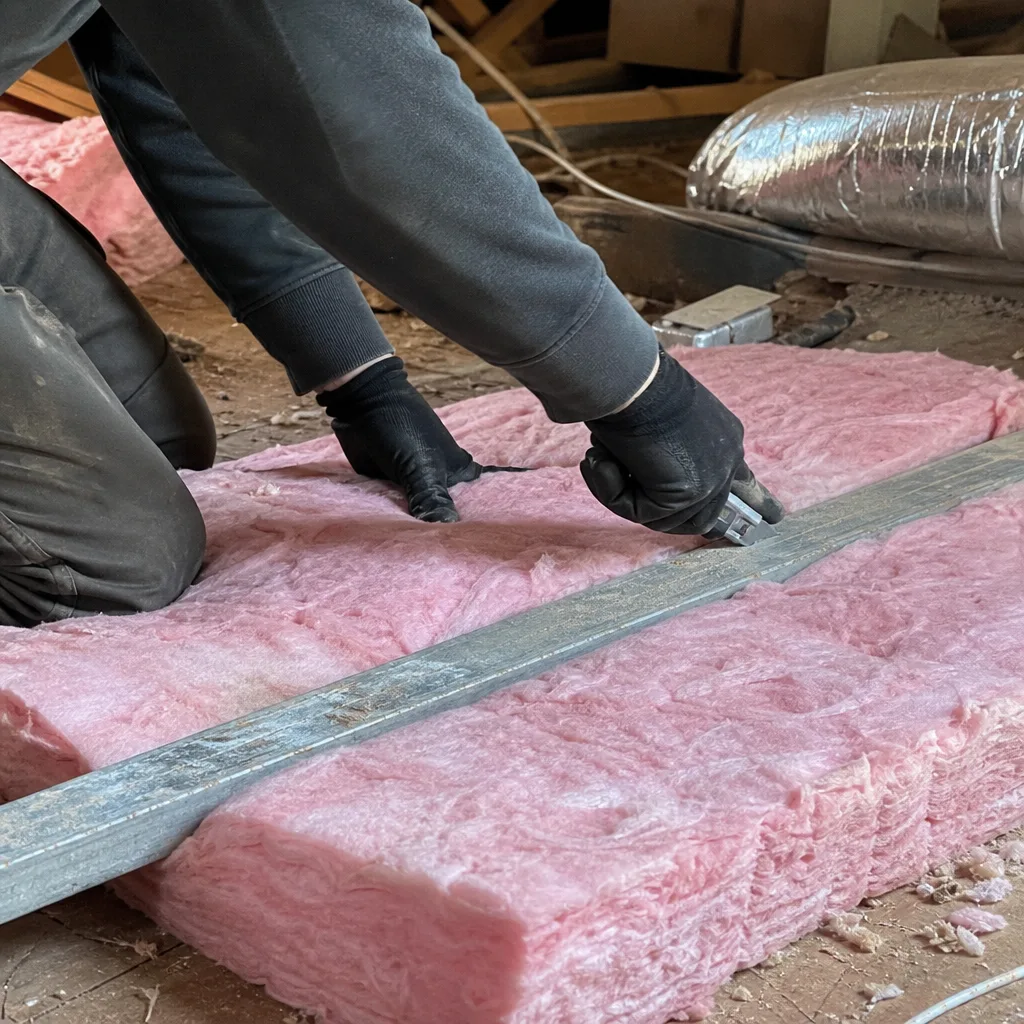
Here’s exactly what happens when you schedule a ventilation prep visit with us in Morgan Hill. Nothing starts without a written price in hand.
- Written scope and price before any work starts. Under Haven Standard Clause 1, you receive a flat written price and a written scope of work before anyone goes into your attic. There’s no estimate that turns into a higher number on completion day. If the scope changes – say, we discover damaged decking that affects baffle installation – we stop, document it, and get your sign-off before continuing.
- Full attic inspection with documentation. We enter the attic and photograph the existing conditions: insulation depth at the center, insulation depth at the eaves, existing baffles (if any), vent type and condition, and any anomalies like moisture staining, pest damage, or prior repair work. You receive those photos as part of the Documented Photo Record included on every visit – not available on request, just part of how the job closes.
- Net free area calculation and vent balance check. We calculate the usable vent area for both intake (soffit) and exhaust (ridge or gable). Building code in California generally calls for 1 square foot of net free ventilation area per 150 square feet of attic floor, or 1 per 300 if a vapor barrier is present. We check whether your home meets that ratio and flag any shortfall in writing.
- Baffle installation at each rafter bay. We install individual baffles – rigid polystyrene or cardboard chutes, depending on what’s appropriate for your rafter bay geometry – stapled to the roof deck at each bay where a soffit vent exists. Each baffle creates a clear 1-inch airway from the soffit to the open attic space above, preventing new insulation from blocking the channel. On older Morgan Hill homes where rafter bays are narrower (common in 1970s ranch-style construction in the Tennant Ave belt), we cut baffles to fit rather than leaving gaps.
- Air sealing before insulation goes in. This step is non-negotiable at Envelope. Top plates, recessed can lights, plumbing and electrical penetrations, and attic hatch perimeters are all sealed with foam or caulk before any insulation is added. We don’t blow Owens Corning or GreenFiber blown-in insulation over unsealed bypasses. The blower-door test – a pressurization reading that shows, in one number, how much air the building envelope is losing – is performed before and after air sealing on applicable jobs, so you can see the actual reduction in CFM50, not just take our word for it.
- Final walk and documentation package. Before we leave, you get the before-and-after blower-door readings (on applicable jobs), the full photo record, the written warranty, and a plain-language summary of what was done and why. The 365-Day Done Right Promise applies from the day the job closes: if something isn’t right, we come back and make it right.
Attic Baffles & Ventilation Prep Pricing in Morgan Hill
Baffle and ventilation prep pricing in Morgan Hill depends on three things: attic square footage, the number of rafter bays that need baffles, and whether any supplemental vent work is needed. For a full breakdown, see How Much Does Attic Insulation Cost? (2026 Price Guide) - Morgan Hill, CA. The ranges below reflect what we actually see on jobs in this market – not national averages.
| Scope | Typical Range (Morgan Hill) |
|---|---|
| Baffle installation only, 1,000-1,500 sq ft attic | $280 – $480 |
| Baffle installation only, 1,500-2,500 sq ft attic | $430 – $720 |
| Ventilation prep package (baffles + air sealing prep + vent inspection) | $620 – $1,100 |
| Ventilation prep bundled with full attic insulation project | $180 – $400 added to insulation scope (reduced rate when combined) |
| Supplemental vent installation (e.g., adding soffit vents to deficit areas) | $90 – $180 per vent, materials included |
A few things push cost upward: difficult attic access (low pitch, no pull-down stair), significant debris removal needed before baffles can be set, and attics where the existing insulation has to be pulled back from the eaves before baffles can be installed. We note all of those in the written scope so the price you sign reflects the actual job, not an idealized version of it.
Ventilation prep is most cost-effective when it’s bundled with a full Attic Batt Insulation project – the crew is already in the attic, the setup time is shared, and the baffle work can be completed as part of the same visit. If you’re only doing ventilation prep now and insulation later, both get written prices separately and you pay for each scope as contracted. No guessing.
To get a written price for your specific Morgan Hill home from Attic Insulation Near Me in Morgan Hill, CA, call (669) 280-8103. We’ll schedule a visit, measure the attic, and hand you a flat number before any work is discussed further.
FAQs – Attic Baffles & Ventilation Prep
What exactly does an attic baffle do, and do I really need one?
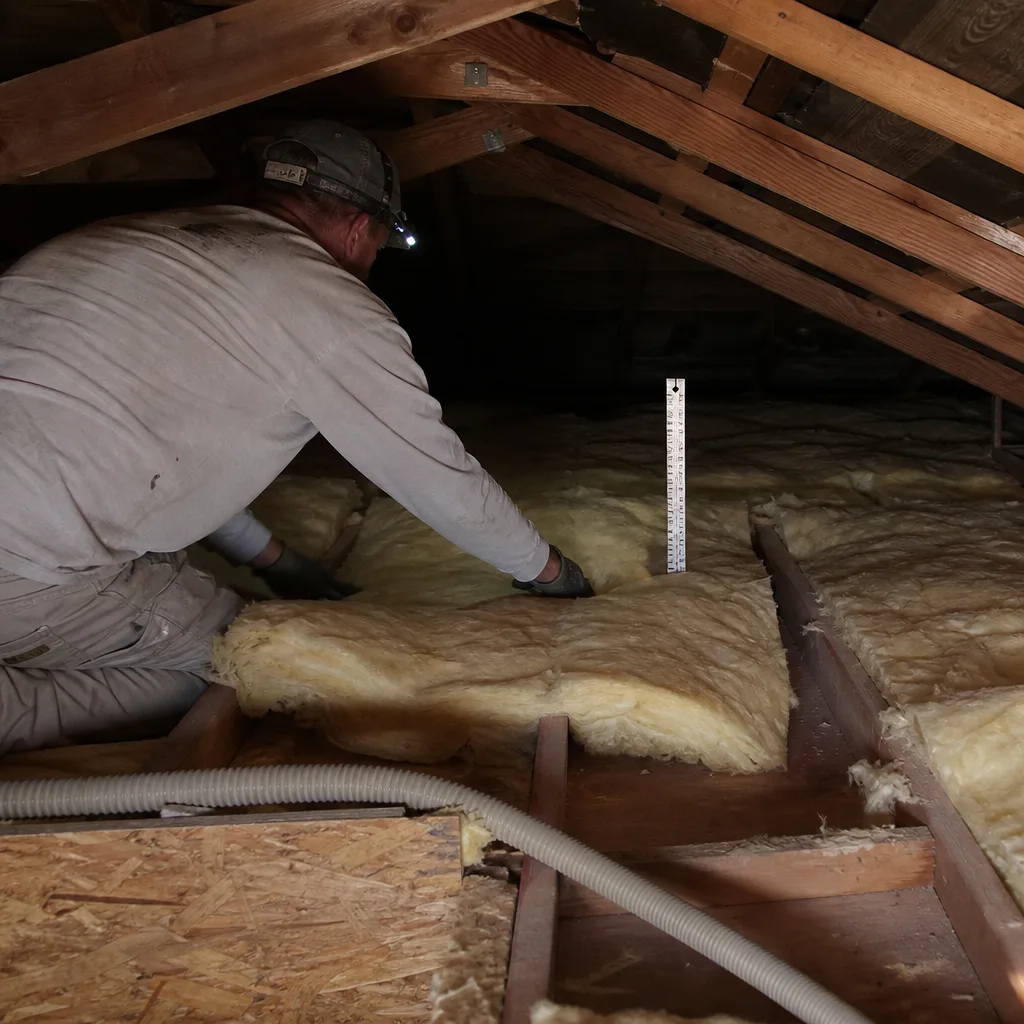
An attic baffle is a rigid channel – usually foam or cardboard – that runs from the soffit vent up into the open attic space along the roof rafter, holding a clear airway so insulation can’t pack the eave shut. You need one at every rafter bay that sits above a functioning soffit vent. Without it, blown-in insulation – whether that’s Johns Manville, GreenFiber, or any other product – migrates toward the eaves during installation and blocks the intake vent, which stops cross-ventilation and allows heat and moisture to build up in the attic cavity. In Morgan Hill’s climate, that’s a fast path to elevated attic temps in summer and moisture damage in winter. If your attic doesn’t have baffles, or the existing ones are crushed or missing, they need to go in before new insulation is added. Call us at (669) 280-8103 and we’ll confirm what you have before quoting anything.
How much does attic baffle installation cost in Morgan Hill?
Attic baffle installation in Morgan Hill typically runs between $280 and $720 depending on attic size, with most single-family homes in the 1,200-2,000 sq ft range landing between $350 and $580 for baffles alone. When baffle work is bundled with a full ventilation prep package – which includes a vent balance check and air sealing prep – the combined scope usually runs $620 to $1,100. Bundling with a full insulation project brings the per-job cost down because setup is shared. Every job gets a flat written price before any work starts, so the number you see is the number you pay. Call (669) 280-8103 for an appointment and a written quote.
Can I add insulation without installing baffles first?
You can, but you’ll likely block your soffit vents in the process, which defeats a significant part of what new insulation is supposed to accomplish. A properly ventilated attic runs cooler in summer because outside air enters at the soffit, travels up the rafter bays, and exhausts at the ridge – that airflow carries heat out before it radiates down through your ceiling. Block the intake and the system stops working. At Envelope, we won’t blow insulation into an attic without confirming baffle coverage first. It’s not a policy we negotiated – it’s the only sequence that produces a result we’d be willing to put our name on and document with photos.
How do I know if my Morgan Hill home already has baffles installed?
The honest answer is that most homeowners can’t tell without going into the attic and checking each rafter bay near the soffit line. Signs that baffles may be missing or compromised include: insulation that’s visibly thinner or compressed at the eaves compared to the center of the attic, no visible plastic or cardboard channel between the insulation and the roof deck near the eaves, or soffit vents that appear intact from the outside but show no airflow into the attic space when you hold a tissue near them from inside. We check all of this as part of the initial inspection, photograph what we find, and note it in the written scope. There’s no charge for the inspection when it’s part of a quoted project.
Why Morgan Hill Homes Specifically Benefit from Ventilation Prep
Morgan Hill sits at roughly 350 feet elevation in the Santa Clara Valley, with the Diablo Range running along the eastern edge and the Santa Cruz Mountains visible to the west. That geography produces a microclimate that’s warmer and drier than San Jose in summer – attic temperatures in neighborhoods like East Main Ave and Butterfield Boulevard regularly hit the mid-130s to low 140s on August afternoons. In winter, marine layer pushes in from the coast and morning fog is common from December through March, keeping roof surfaces and attic framing damp for hours at a time.
That combination – extreme heat load in summer, persistent ambient moisture in winter – is exactly why attic ventilation isn’t optional here. A stagnant attic in August radiates heat into the living space and forces your HVAC to work against temperatures that proper cross-ventilation would have removed. A damp attic in January, especially one where insulation has blocked the soffit vents, creates conditions for mold on roof sheathing and framing members within a single rainy season.
Since 2016, the Envelope crew has worked through more than 9,000 homes across this part of California. In Morgan Hill specifically, the homes we see most often with ventilation problems fall into two categories: 1970s and 1980s ranch-style construction where original insulation was blown without baffles and has migrated to the eaves over 40-plus years, and 1990s-2000s tract homes where builder-grade baffles were installed but have since been crushed by pest damage or foot traffic. Both are fixable – the process above applies equally to both – but the inspection has to happen first.
Key Takeaways
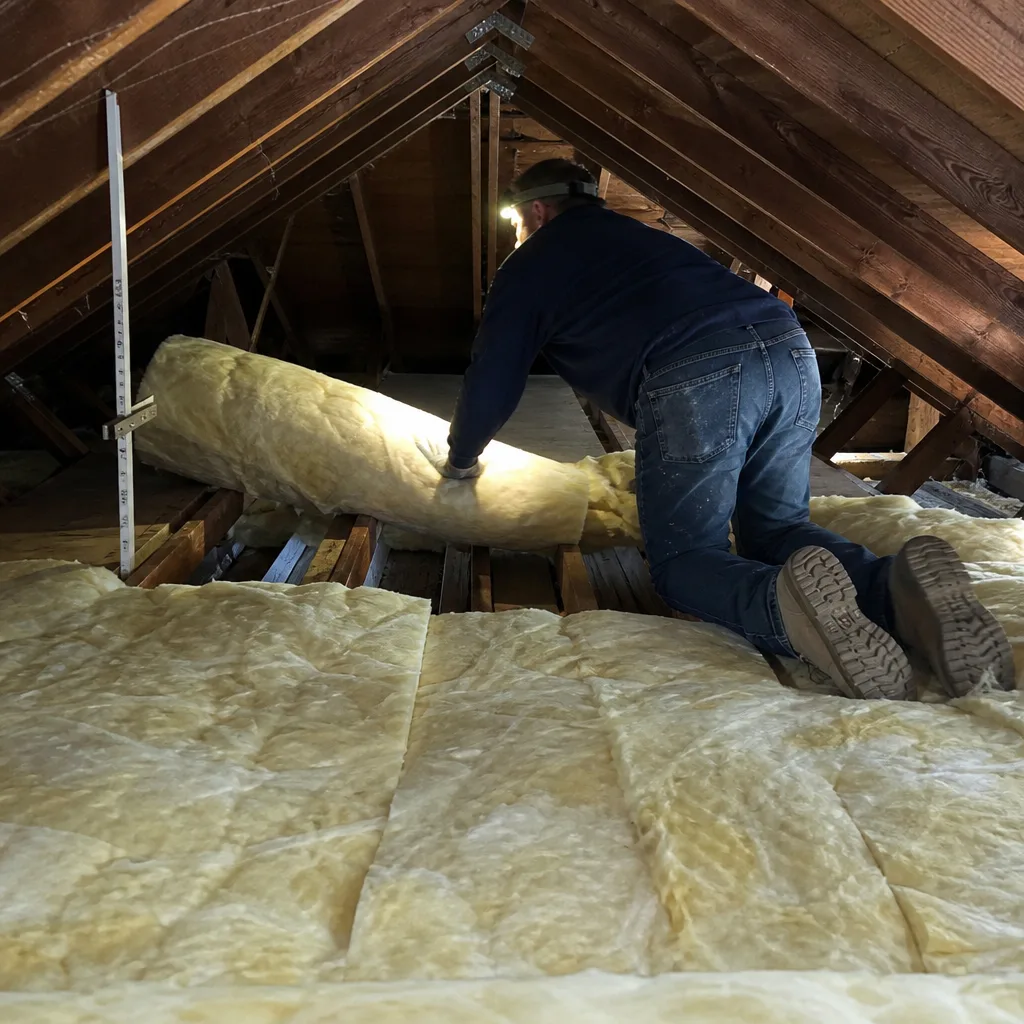
- Attic baffles protect soffit vent clearance so new insulation doesn’t block eave airflow.
- Ventilation prep – including a vent balance check and air sealing – happens before any insulation goes in. That sequence is non-negotiable here.
- In Morgan Hill, both summer heat and winter moisture make proper attic ventilation a structural concern, not just an efficiency concern.
- Baffle-only installation runs $280-$720 for most Morgan Hill homes; bundled ventilation prep runs $620-$1,100; bundled with a full insulation project, the added cost drops to $180-$400.
- Every job gets a written price before work starts, a Documented Photo Record when it closes, and the 365-Day Done Right Promise.
- If you’ve already received a written insulation estimate that doesn’t mention baffles or ventilation prep, bring it to us – Free Second Opinion, no obligation.
Ready to get a written price for your Morgan Hill home? Call Wes Okafor and the Envelope team at (669) 280-8103. We’ll schedule a time, inspect the attic, and hand you a flat written number before any discussion of next steps. No voicemail loops, no callback windows – a live person answers.
Written by Wes Okafor, Owner at Topside Attic Insulation Morgan Hill, serving Morgan Hill.