
Last updated September 24, 2026
Insulation Cost Breakdown: The Morgan Hill Homeowner’s Reference for 2026
The $1.20-per-square-foot blown-in attic quote and the $2.10-per-square-foot blown-in attic quote are often not competitors. One prices insulation material and labor. The other prices insulation material, air sealing at 23 penetration points, and a post-installation blower-door test. Comparing them as if they’re equivalent is how Morgan Hill homeowners end up with attics that perform like the cheaper job regardless of which contractor they chose. This reference breaks down every cost component for a Morgan Hill home, names the line items to look for on a written quote, and explains which ones signal that a contractor is pricing the complete job rather than the lowest number that wins the bid. For related reading, see our Insulation Warning Signs: A Morgan Hill Homeowner’s Reference Guide.
Quick Answer
A complete attic insulation job in Morgan Hill in 2026 runs between $2.80 and $4.50 per square foot when all six cost components are included: material, removal if needed, air sealing labor, equipment, blower-door testing, and documentation. A partial quote that omits air sealing or skips the blower-door test can appear as low as $1.20 per square foot but will not deliver the performance or rebate eligibility that the full job provides. BayREN rebates of $1.00 to $2.80 per square foot and PG&E incentives can offset 30% to 60% of the total for qualifying work.
Table of Contents
- The Six Cost Components of a Complete Attic Insulation Job
- 2026 Morgan Hill Pricing: Line Item by Line Item
- BayREN and PG&E Rebates: What Qualifies and How to Claim
- Title 24 Compliance: Prescriptive Path vs. Performance Path
- 10-Year Payback Calculation for a Typical Morgan Hill Home
- How to Read a Written Quote: Red Flags and Green Lights
- Common Mistakes to Avoid
- When to Call a Professional
- Frequently Asked Questions
The Six Cost Components of a Complete Attic Insulation Job
Every attic insulation job that delivers measurable results contains six distinct cost components. Contractors who quote only one or two are not offering the same service at a lower price. They are offering a different service entirely.
1. Existing Material Assessment and Removal
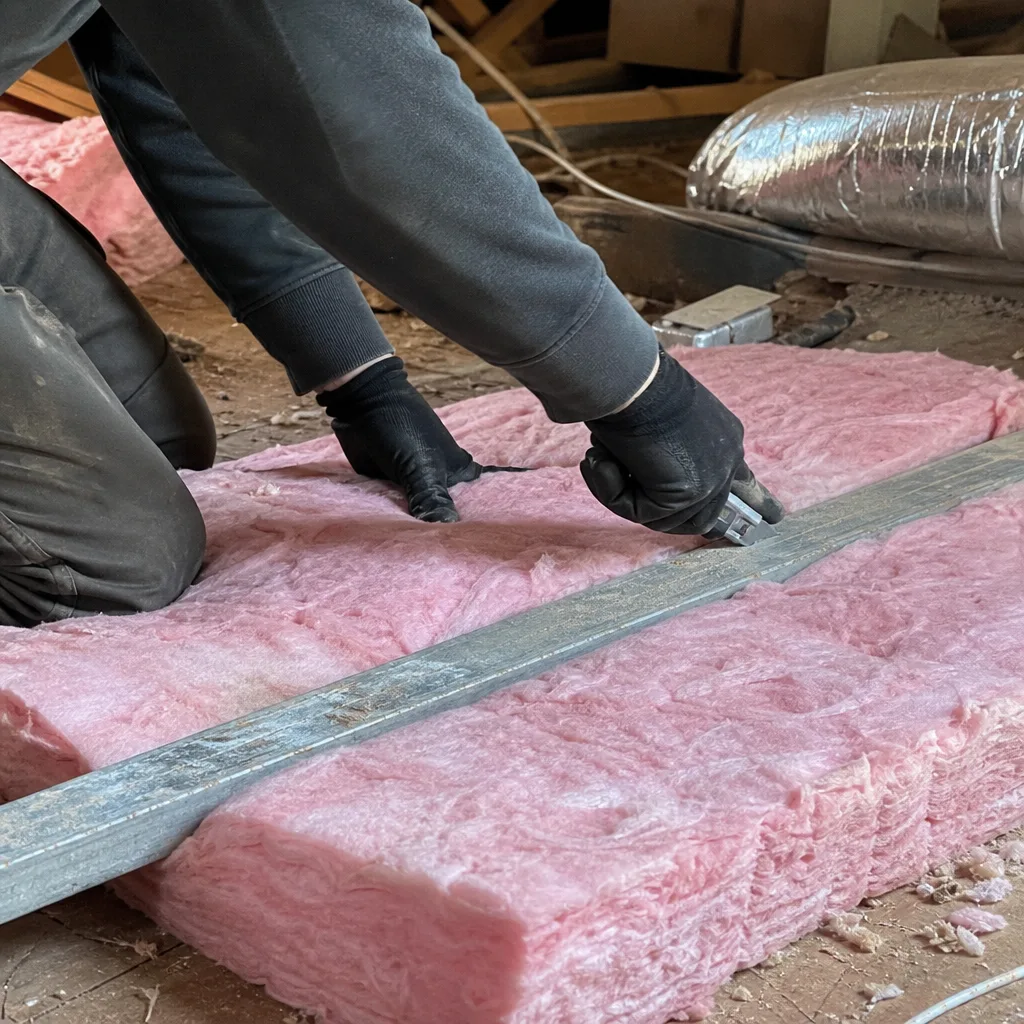
Before any new material goes in, the existing insulation must be evaluated for contamination, compression, or moisture damage. In Morgan Hill, we regularly find rodent-affected insulation in attics over 20 years old, particularly in neighborhoods like Paradise Valley and the older sections of downtown where mature trees provide access routes. Removal runs $1.50 to $3.00 per square foot depending on depth, contamination level, and whether the attic has plywood flooring that must be lifted. Skip this step and new insulation simply covers the problem.
2. Air Sealing Labor by Penetration Type
This is the component most often omitted from low quotes. Air sealing addresses the leaks that allow conditioned air to escape into the attic: top plates where walls meet the ceiling, recessed can lights, plumbing and electrical penetrations, chimney chases, and the attic access hatch itself. A typical Morgan Hill ranch home built between 1970 and 1995 has 15 to 30 significant penetrations. Each requires specific treatment: fire-rated caulk for chimney gaps, airtight boxes or LED swaps for can lights, spray foam or rigid foam with caulk for top plates. Labor for thorough air sealing adds $0.80 to $1.50 per square foot of attic floor area, not per penetration.
3. Blown-In or Batt Material
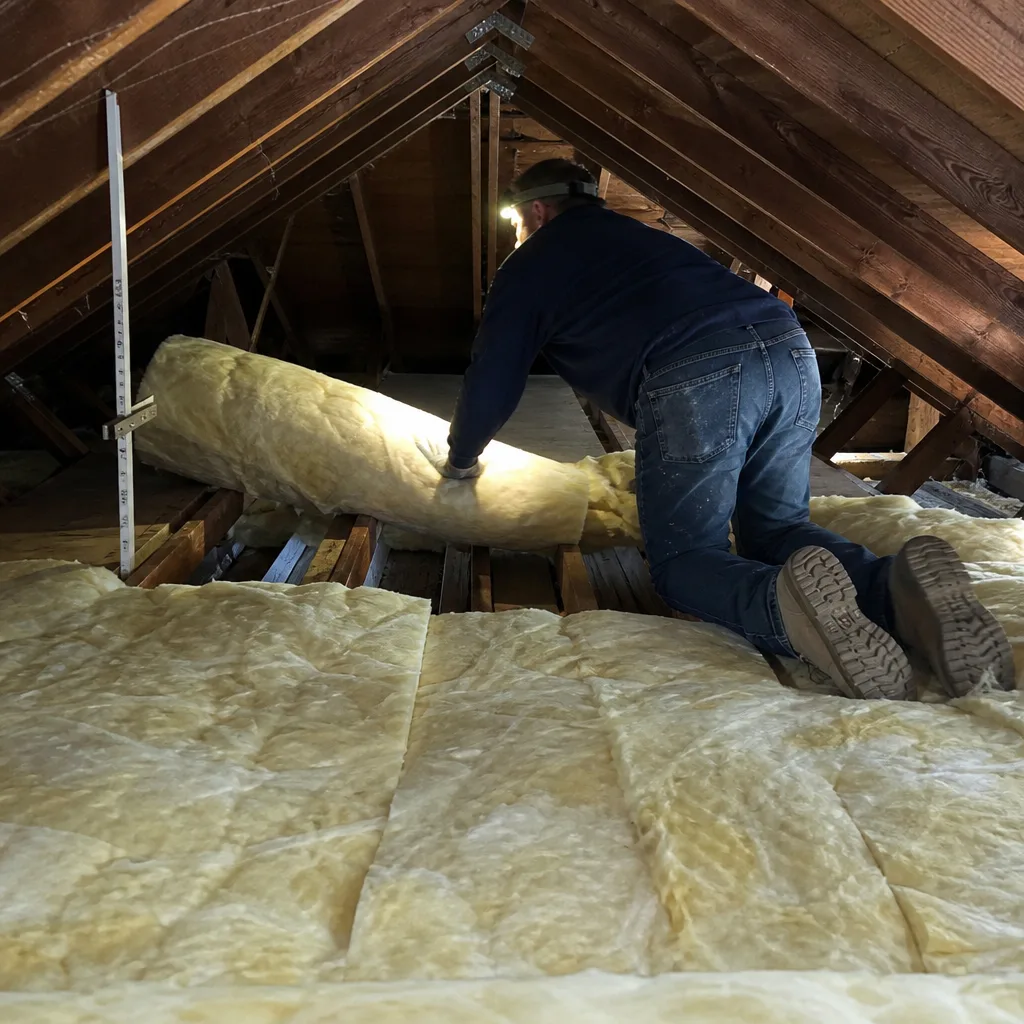
Cellulose, fiberglass, or mineral wool installed to achieve target R-value. In Morgan Hill’s climate zone - CEC Climate Zone 4, mixed marine - Title 24 requires R-38 to R-49 in attics for new construction and major alterations. Retrofit work typically targets R-38 as the practical minimum for rebate qualification. Material cost varies with type: cellulose runs $0.40 to $0.60 per square foot at R-38 depth, fiberglass batts $0.50 to $0.75, and mineral wool like Rockwool or Knauf insulation $0.70 to $1.00. Blown fiberglass from Johns Manville or CertainTeed falls in the middle at $0.55 to $0.80 per square foot.
4. Equipment Mobilization
Blowers, hoses, negative-air machines for removal, and HEPA filtration. Most Morgan Hill contractors charge a flat $300 to $600 for equipment, though some bury it in per-square-foot pricing. Ask to see it listed separately; it indicates the contractor is tracking actual costs rather than guessing.
5. Blower-Door Test Fee
A blower-door test - a pressurization reading that shows, in one number, how much air your building envelope is losing - is the only way to verify that air sealing worked. The test costs $250 to $450 as a standalone service, or $150 to $250 when bundled with insulation work. Any contractor claiming to air seal without testing is asking you to trust, not verify.
6. Documentation and CF1R Certificate Preparation
For rebate and code compliance, the job must be documented in a California Home Energy Rating System (HERS) certificate of completion, specifically the CF1R form. Preparation and submission adds $100 to $200. Without this documentation, rebates are unavailable and resale disclosure becomes complicated.
2026 Morgan Hill Pricing: Line Item by Line Item
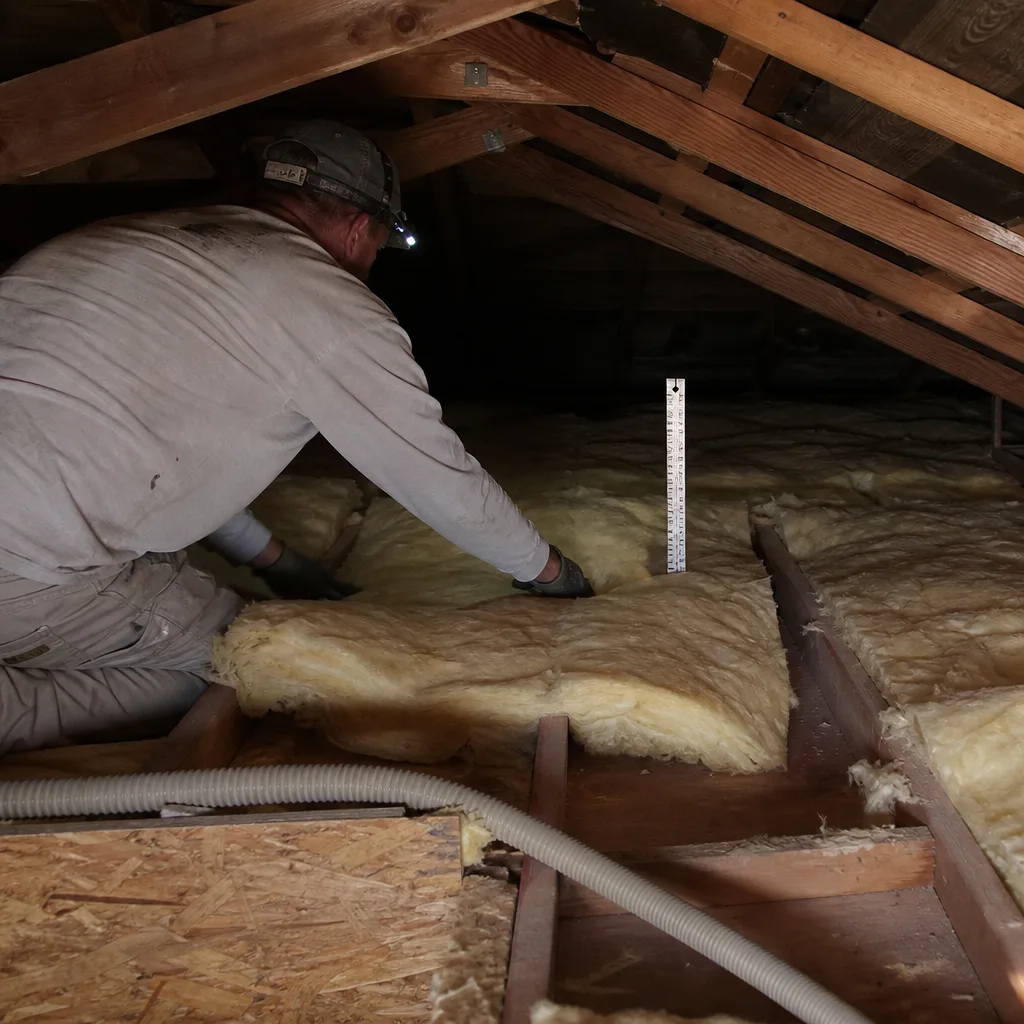
South Bay labor rates in 2026 reflect the ongoing demand for skilled envelope work and the cost of living in Santa Clara County. The ranges below are drawn from our current written quotes for Morgan Hill homes and represent what we see from reputable competitors who also provide complete documentation.
| Component | Price Range (2026) | Variable or Fixed |
|---|---|---|
| Insulation removal (contaminated) | $2.00 - $3.00/sq ft | Variable by depth/condition |
| Insulation removal (clean, compressed) | $1.50 - $2.25/sq ft | Variable by depth |
| Air sealing labor | $0.80 - $1.50/sq ft | Variable by penetration count |
| Cellulose blown-in (R-38) | $0.40 - $0.60/sq ft | Variable by material pricing |
| Fiberglass blown-in (R-38) | $0.55 - $0.80/sq ft | Variable by material pricing |
| Fiberglass batt (R-38) | $0.50 - $0.75/sq ft | Variable by material pricing |
| Mineral wool (R-38) | $0.70 - $1.00/sq ft | Variable by material pricing |
| Equipment mobilization | $300 - $600 flat | Fixed per job |
| Blower-door test | $150 - $250 bundled | Fixed per test |
| CF1R/HERS documentation | $100 - $200 flat | Fixed per job |
For a 1,500-square-foot attic in Morgan Hill - typical of the 1,800 to 2,400 square foot homes built in the 1980s and 1990s in the Tennant Station and San Martin areas - a complete job breaks down as follows:
- No removal needed, moderate air sealing: $4,200 to $6,000 total ($2.80 to $4.00/sq ft)
- Removal required, extensive air sealing: $6,750 to $9,000 total ($4.50 to $6.00/sq ft)
- High-efficiency upgrade (R-49, premium mineral wool, full sealing): $7,500 to $10,500 total
Material pricing fluctuates with petroleum costs (fiberglass, spray foam) and paper commodity markets (cellulose). Labor for air sealing is fixed by local wage rates and does not vary with material costs. This is why air sealing represents a stable, predictable investment even when insulation material prices spike.
In our experience across more than 9,000 homes sealed and insulated since 2016, the homes that perform best 10 years later are those where air sealing received adequate labor allocation upfront. The blower-door test provides the documentation that proves it.
BayREN and PG&E Rebates: What Qualifies and How to Claim
Morgan Hill homeowners have access to two primary rebate streams that can reduce net project cost by 30% to 60%. Both require specific performance thresholds and proper documentation. Neither is automatic.
BayREN Home+ Rebates
The Bay Area Regional Energy Network (BayREN) offers rebates for attic insulation and air sealing through its Home+ program. As of 2026, the structure is:
- Attic insulation: $1.00 per square foot for R-38 minimum, $1.50 per square foot for R-49
- Air sealing: 50% of air sealing cost up to $1,000, with pre- and post-blower-door test required
- Combined attic package cap: $2,800 per home
To qualify, the work must be performed by a BayREN-participating contractor, the pre-installation blower-door test must establish a baseline, and the post-installation test must demonstrate a 15% or greater reduction in air leakage. The CF1R certificate must be submitted within 90 days of completion. We handle this documentation on every qualifying job; the homeowner receives a copy for their records.
PG&E Energy Efficiency Rebates
PG&E maintains parallel rebates for electric and gas customers, with rates that adjust seasonally. In 2026, typical attic insulation rebates range from $0.50 to $1.30 per square foot depending on existing conditions and upgrade level. Air sealing rebates run $200 to $600 when bundled with insulation and meeting the same 15% leakage reduction threshold.
Net Cost Calculation
A 1,500-square-foot attic job at $4.50 per square foot ($6,750 total) with R-49 insulation and qualifying air sealing:
- Gross cost: $6,750
- BayREN insulation rebate: $2,250 (1,500 sq ft × $1.50)
- BayREN air sealing rebate: $800 (capped portion)
- PG&E bundled rebate: $450 (typical mid-range)
- Net cost: $3,250
- Net per square foot: $2.17
The rebates are claimed by the contractor on the homeowner’s behalf in most cases, with credit applied at invoicing or rebate check mailed within 8 to 12 weeks. Verify on your written quote whether rebates are deducted upfront or reimbursed later. Under Haven Standard: Have it in writing, we specify the rebate treatment in every written price before any work starts.
Title 24 Compliance: Prescriptive Path vs. Performance Path
California’s Title 24 Building Energy Efficiency Standards govern all alterations that involve insulation replacement or addition in conditioned space; our Insulation Permits, Codes & Inspections in CA: What You Need to Know covers this in more detail. Morgan Hill falls under the 2022 Title 24 standards, with 2025 updates effective for permits pulled after January 1, 2026. Homeowners have two compliance paths, and the choice affects both cost and documentation requirements.
Prescriptive Path
The simpler route. Install insulation to the R-value specified in the climate zone table, seal according to checklist requirements, and have the work inspected by the local building department. No energy modeling required. For attic insulation in Climate Zone 4, the prescriptive requirement is R-38 minimum for retrofits, R-49 for new construction and major alterations.
Cost impact: Building permit $200 to $400 in Morgan Hill, plus inspector visit. No HERS rater fee. Total compliance cost: $300 to $600.
Performance Path
The flexible route. An approved HERS rater models the home’s energy use, proposes a package of measures that meets the energy budget, and verifies performance after installation. This path allows trade-offs: higher R-value in the attic might offset less efficient windows, or superior air sealing might reduce the required insulation depth.
Cost impact: HERS rater fee $400 to $800 for modeling and verification, building permit $200 to $400, plus the blower-door test that is already included in a complete job. Total compliance cost: $700 to $1,200.
The performance path adds cost but often unlocks deeper rebates, particularly from BayREN, which gives preference to performance-path projects in its scoring. For homes with complex envelope conditions - multiple additions, mixed construction eras, or significant air leakage - the performance path can actually reduce total project cost by right-sizing the insulation investment.
We recommend the performance path for Morgan Hill homes built before 1990 with original windows, or any home where the attic has been modified with dormers, skylights, or HVAC duct relocation. The modeling reveals whether the attic is the priority or whether wall insulation and window replacement would deliver better return.
10-Year Payback Calculation for a Typical Morgan Hill Home
The financial case for attic insulation depends on PG&E’s tiered rate structure, which penalizes high usage with steeply increasing rates. In 2026, PG&E’s baseline electricity rate for Morgan Hill (Baseline Region T, inland Santa Clara County) runs approximately $0.32 per kWh for Tier 1, $0.41 for Tier 2, and $0.58 to $0.67 for Tier 3 and above depending on season. Gas rates fluctuate more dramatically but averaged $1.80 to $2.40 per therm in 2025.
Consider a 1,500-square-foot attic in a 2,000-square-foot home on East Main Street, built in 1985 with R-11 original insulation and minimal air sealing. Pre-upgrade blower-door test: 3,800 CFM50 - loose by any standard, typical for the era.
Scenario A: Insulation Only (No Air Sealing)
- Upgrade to R-38 blown cellulose
- Cost: $3,600 ($2.40/sq ft, no removal needed)
- Estimated annual savings: $280 electricity, $120 gas = $400 total
- Simple payback: 9.0 years
- 10-year net: $400 savings
Scenario B: Insulation Plus Air Sealing (Complete Job)
- Upgrade to R-38 blown cellulose plus comprehensive air sealing
- Post-sealing blower-door: 2,200 CFM50 (42% reduction)
- Cost: $5,400 ($3.60/sq ft)
- Rebates: $2,100 (BayREN + PG&E)
- Net cost: $3,300
- Estimated annual savings: $520 electricity, $240 gas = $760 total
- Simple payback: 4.3 years
- 10-year net: $4,300 savings
The air sealing component alone - costing approximately $1,200 after its proportional rebate share - delivers $320 in annual savings for a 3.75-year payback on that component specifically. This is the ROI that disappears when contractors omit air sealing from their quotes. The homeowner who chose Scenario A based on sticker price ends up with $3,900 less in their pocket after 10 years.
These savings assume current PG&E rates. Rate increases of 5% to 8% annually, which PG&E has sought in recent filings, would shorten payback periods proportionally. The air sealing investment becomes more valuable, not less, as energy prices rise.
How to Read a Written Quote: Red Flags and Green Lights
A written quote under Haven Standard Clause 1 contains a flat price, written scope, and written warranty before anyone lifts a tool. When comparing insulation quotes in Morgan Hill, look for these specific line items and their absence.
Green Lights: What Complete Quotes Include
- Pre-installation blower-door test with CFM50 reading. This establishes the baseline. Without it, there is no way to verify improvement.
- Itemized air sealing with penetration count. “Air seal attic floor” is not a scope. “Seal 23 penetrations: 14 top plate joints, 6 can lights, 2 plumbing chases, 1 chimney chase” is a scope.
- Insulation type, brand, and installed R-value. “Blown insulation” is insufficient. “Knauf Ecobatt R-38, 12 inches settled depth” is specific.
- Post-installation blower-door test with target CFM50 reduction. Typically 15% to 25% reduction for retrofit air sealing, 30%+ for comprehensive envelope work.
- CF1R certificate and rebate documentation included. Not “rebates available” - “rebates of $X applied to invoice, CF1R submitted within 90 days.”
- Cleanup, disposal, and photo documentation. The Documented Photo Record we provide on every job shows before, during, and after conditions.
Red Flags: What Omitted Quotes Hide
- Per-square-foot pricing with no R-value specified. Could be R-19, could be R-38 - you won’t know until it’s too late.
- “Air sealing as needed” without penetration count or labor hours. This is code for “we’ll caulk the obvious spots and call it done.”
- No blower-door test mentioned. The contractor does not intend to verify their work.
- “Permits if required” with no clarity on who pulls and pays. In Morgan Hill, permits are required for insulation replacement in most cases. The quote should specify.
- Material described only as “premium” or “energy efficient” with no brand or product name. This allows substitution to lowest-bid material at install time.
- Rebate language that puts all responsibility on the homeowner. “Homeowner to apply for all rebates” means the contractor won’t stand behind the qualification.
We provide a Free Second Opinion on any written estimate. Bring us a competing quote and we will read it with you, line by line, to identify what’s included and what’s omitted. No obligation.
Common Mistakes to Avoid
- Comparing per-square-foot prices without verifying R-value and air sealing scope. The $1.20 quote and $2.10 quote are different services. Treating them as competitors guarantees disappointment.
- Skipping the pre-installation blower-door test to save $250. You cannot manage what you do not measure. The baseline reading guides air sealing priority and proves rebate qualification.
- Assuming all blown-in cellulose is equivalent. Density matters. Under-blown cellulose at 0.5 pounds per cubic foot settles and loses R-value. Proper density is 1.2 to 1.5 pounds per cubic foot, verified by depth measurement at multiple points.
- Ignoring Morgan Hill’s summer heat gain. Our inland valley location sees 90°F+ days from June through September. Attic ventilation and radiant barrier considerations, particularly in unshaded homes in the Madrone and Jackson Oaks neighborhoods, affect insulation performance and should be discussed before material selection.
- Neglecting to verify BayREN contractor participation before signing. Only BayREN-participating contractors can process rebates. Verify participation on the BayREN website; do not take the contractor’s word alone.
- Accepting verbal promises about rebate amounts. Rebate programs change. The written quote should specify the rebate source, amount, and whether it is deducted from invoice or reimbursed later.
- Installing insulation over unsealed can lights. This is a fire hazard and an efficiency disaster. IC-rated airtight enclosures or LED retrofits are required before insulation contact.
When to Call a Professional
Call when your attic insulation is below R-30, when you feel temperature variation between rooms on the same floor, when your summer cooling bills spike in July and August, or when you find rodent droppings or moisture staining in the attic. Our Seasonal Insulation Care for Morgan Hill: Year-Round Homeowner’s Guide explains what to watch for each season. These symptoms indicate envelope failure that DIY patching will not resolve.
Topside Attic Insulation Morgan Hill offers free estimates in Morgan Hill. Every estimate includes a written price before any work starts, a scope of work with line-item detail, and documentation of what we find. Call (669) 280-8103. A live person answers 24/7 - no voicemail loops, no callback windows measured in business days.
We also provide Attic Insulation in Morgan Hill, Crawl Space Encapsulation & Vapor Barrier in Morgan Hill, and Spray Foam Insulation in Morgan Hill for homeowners needing full envelope solutions.
Frequently Asked Questions
A complete attic insulation job in Morgan Hill runs $2.80 to $4.50 per square foot including air sealing, testing, and documentation, or $4,200 to $6,750 for a typical 1,500-square-foot attic. Partial quotes without air sealing can appear as low as $1.20 per square foot but will not deliver equivalent performance or rebate eligibility. Call (669) 280-8103 for a written price on your specific home - estimates are free.
Repair is rarely cost-effective for insulation below R-19 or insulation with contamination. Topping off compressed or uneven insulation creates thermal bridges and does not address air leakage. Removal and replacement with proper air sealing typically delivers better ROI despite higher upfront cost. For clean insulation at R-30 or above, targeted air sealing plus additional blown-in material may suffice. We assess this during our free estimate and document our recommendation with photos.
BayREN Home+ offers $1.00 to $1.50 per square foot for attic insulation plus up to $1,000 for air sealing, capped at $2,800 per home. PG&E provides $0.50 to $1.30 per square foot for insulation and $200 to $600 for bundled air sealing. Both require pre- and post-installation blower-door tests showing 15% minimum leakage reduction. Net project cost after rebates typically drops 30% to 60%.
A typical 1,500-square-foot attic with no removal needed takes one day for air sealing and one day for insulation installation and testing. Removal adds one day. Weather delays are rare in Morgan Hill’s climate but can occur during December and January rain periods. We provide a specific schedule in our written scope, with arrival windows and technician names confirmed by text.
Yes, for most insulation replacement and addition work. The City of Morgan Hill Building Division requires permits for alterations affecting thermal envelope components. Permit cost is $200 to $400. We pull permits as part of our standard process and include the cost in our written price. Unpermitted work can complicate home sales and void insurance coverage.
A blower-door test is a pressurization reading that shows, in one number, how much air your building envelope is losing. A powerful fan depressurizes the house while sensors measure airflow required to maintain the pressure difference. The result, in CFM50 (cubic feet per minute at 50 Pascals), quantifies total leakage. Pre- and post-installation tests prove air sealing worked and are required for rebate qualification. We publish before-and-after numbers on every applicable job so homeowners can verify their results.
Yes. Bring us any written estimate and we will review it with you, identifying included and omitted components, comparing material specifications, and explaining rebate eligibility. There is no charge and no obligation. Under Haven Standard: Have it in writing, we believe informed homeowners make better decisions.
The Bottom Line
Insulation cost in Morgan Hill is not a single number. It is the sum of six components that separate a complete job from a superficial one. The contractor who prices all six - removal if needed, air sealing, material, equipment, testing, and documentation - delivers measurable performance that rebates recognize and resale values reflect. The contractor who prices one or two delivers a number that wins the bid and a result that disappoints. Request written quotes with line-item detail, verify blower-door testing is included, and net your rebates before signing. The 10-year financial difference between complete and partial work exceeds $4,000 for a typical home.
Written by Wes Okafor, Owner at Topside Attic Insulation Morgan Hill, serving Morgan Hill since 2016.