
Last updated September 24, 2026
DIY vs Professional Insulation: The Morgan Hill Homeowner’s Decision Guide
Most Morgan Hill homeowners who tackle their own insulation project spend between $600 and $1,200 on materials and equipment rental, install the product correctly by manufacturer spec, and still leave 30 to 50 percent of their energy savings on the table. The problem isn’t the insulation. It’s what happens underneath it. In the dry, windy Santa Clara Valley climate, warm air escapes through gaps in top plates, recessed can lights, and plumbing chases faster than most homeowners can locate them without a blower-door test. This guide draws a hard line between the insulation tasks a capable Morgan Hill homeowner can execute with real results and the tasks where DIY produces an undocumented outcome that cannot be verified, warranted, or rebated.
Quick Answer
DIY insulation in Morgan Hill makes sense for three specific tasks: adding blown-in depth over an already-sealed attic floor, installing fiberglass batts in an accessible crawlspace with an intact vapor barrier, and weatherstripping attic access hatches. For everything else - spray foam at rim joists, duct sealing behind HVAC equipment, any work requiring a CF1R certificate, and blower-door-verified air sealing - professional installation is required to produce documented results that satisfy permit, rebate, and resale requirements.
Table of Contents
- Three Insulation Tasks a Morgan Hill Homeowner Can Handle
- Four Tasks Where DIY Produces an Unverifiable Result
- The CF1R Certificate: What It Is and Why DIY Cannot Generate One
- The Real Cost Comparison: DIY Materials vs. Professional Quote
- The Documentation Gap: What Paperwork Is Worth at Resale
- How Morgan Hill’s Climate and Code Shape the Decision
- Common Mistakes to Avoid
- When to Call a Professional
- Frequently Asked Questions
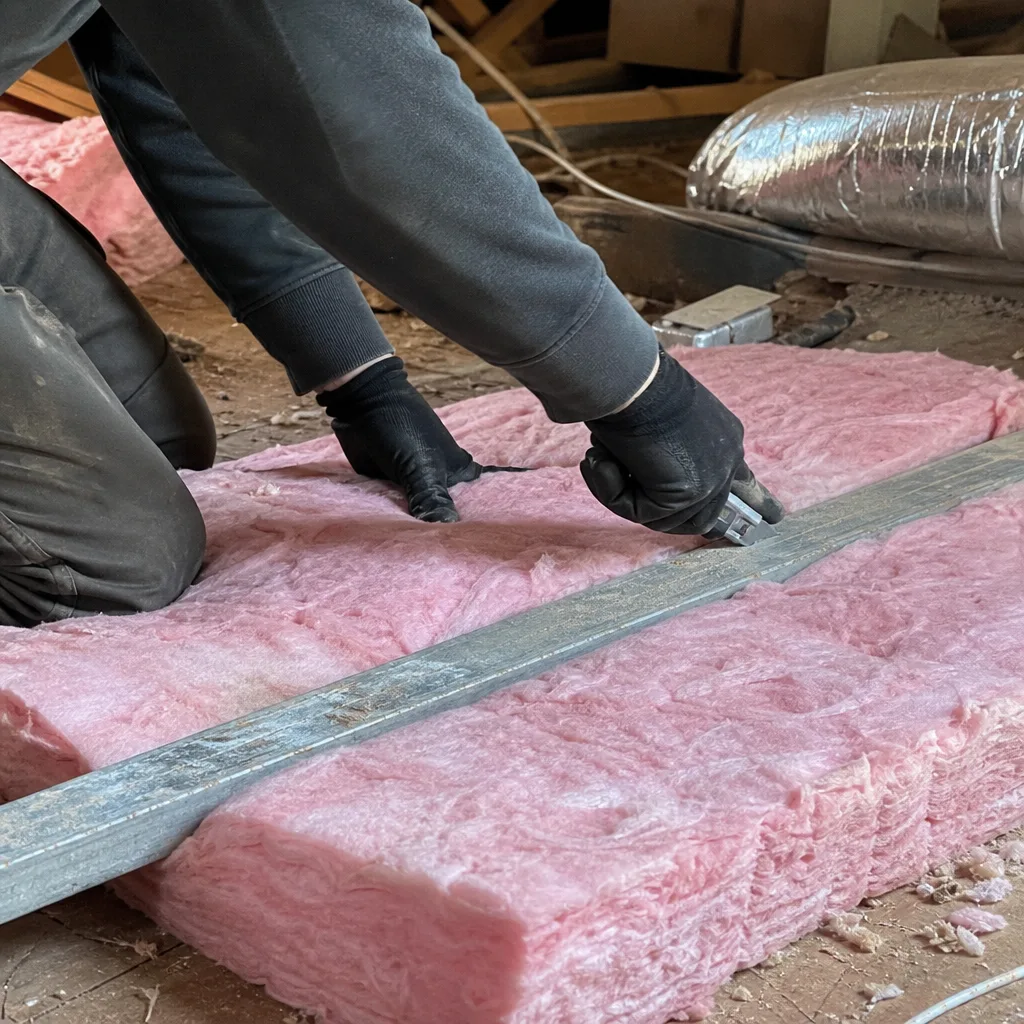
Three Insulation Tasks a Morgan Hill Homeowner Can Handle
Not every insulation job requires a contractor. After 9,000 homes sealed and insulated since 2016, we’ve identified three tasks where a competent homeowner with basic tools can achieve a measurable, verifiable result without professional equipment or certification.
Task 1: Adding Blown-In Depth Over an Already-Sealed Attic Floor
This is the most common DIY insulation project in Morgan Hill, and it works when two conditions are already met: the attic floor has been professionally air-sealed within the past few years, and the existing insulation is dry, undisturbed, and free of rodent contamination.
The performance spec to hit: R-38 minimum for attics in Santa Clara County, which translates to roughly 10 to 12 inches of cellulose or 11 to 14 inches of fiberglass depending on product density. A rental blow-in machine from Home Depot or Lowe’s runs about $75 to $100 per day. Knauf Jet Stream Ultra or GreenFiber cellulose are the products most readily available to homeowners in the Morgan Hill market.
What to verify before starting:
- Confirm the attic floor was sealed at top plates, electrical penetrations, and can lights - look for visible caulk or foam at these junctions.
- Check that soffit vents are not blocked by existing insulation; install baffles if needed to maintain airflow.
- Measure existing depth with a ruler at five scattered points; subtract that depth from your target to calculate bags needed.
- Wear a P100 respirator, not a dust mask - cellulose dust is an irritant at volume.
- Document the before depth with photos dated and saved; this is your only record if a rebate or resale question arises later.
The critical limitation: if you blow new insulation over an unsealed attic floor, you’ve buried the air leaks where they cannot be found later without removing everything. In the dry Santa Clara Valley, that trapped warm air still escapes - it just travels more slowly through the insulation, carrying moisture that can condense on cold sheathing in winter months.
Task 2: Installing Fiberglass Batts in an Accessible Crawlspace with Existing Vapor Barrier
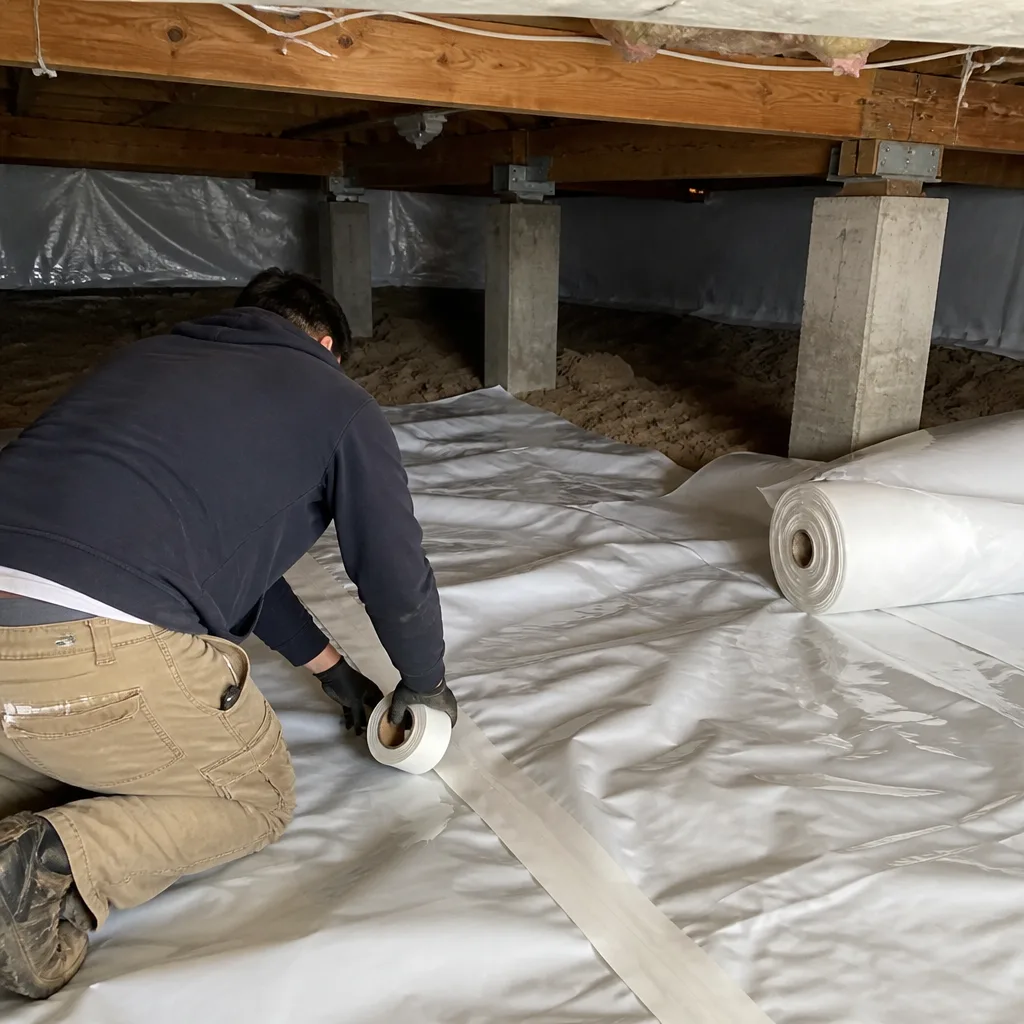
Crawlspaces in the Madrone and Paradise Valley neighborhoods often have adequate headroom for a homeowner to work. If a 6-mil polyethylene vapor barrier is already in place and intact, adding R-19 fiberglass batts between joists is mechanically straightforward.
The performance spec: batts must fill the joist cavity without compression, with the facing (if any) oriented toward the conditioned space above. In Morgan Hill’s mild climate, unfaced batts are generally preferred to avoid creating a second vapor barrier that can trap moisture.
What makes this viable: no cavity sealing is required at the band joist or rim - you’re adding thermal resistance, not establishing the air barrier. The existing vapor barrier does the moisture management. Rockwool Comfortbatt is worth the slight premium over standard fiberglass for its rigidity and moisture tolerance, available at most Morgan Hill-area building supply yards.
Task 3: Weatherstripping Attic Access Hatches
The attic hatch is the largest single hole in most residential ceilings, and it’s rarely sealed by builders. A homeowner can install compressible foam gasket material and adjustable latch hardware for under $30 in materials, achieving a measurable reduction in stack-effect airflow.
The performance spec: the hatch should require slight pressure to close against the gasket, with no visible gap when viewed from below with the attic lights on. An infrared thermometer reading on the hatch surface in winter - compared to the surrounding ceiling - will show if warm air is still escaping.
Four Tasks Where DIY Produces an Unverifiable Result
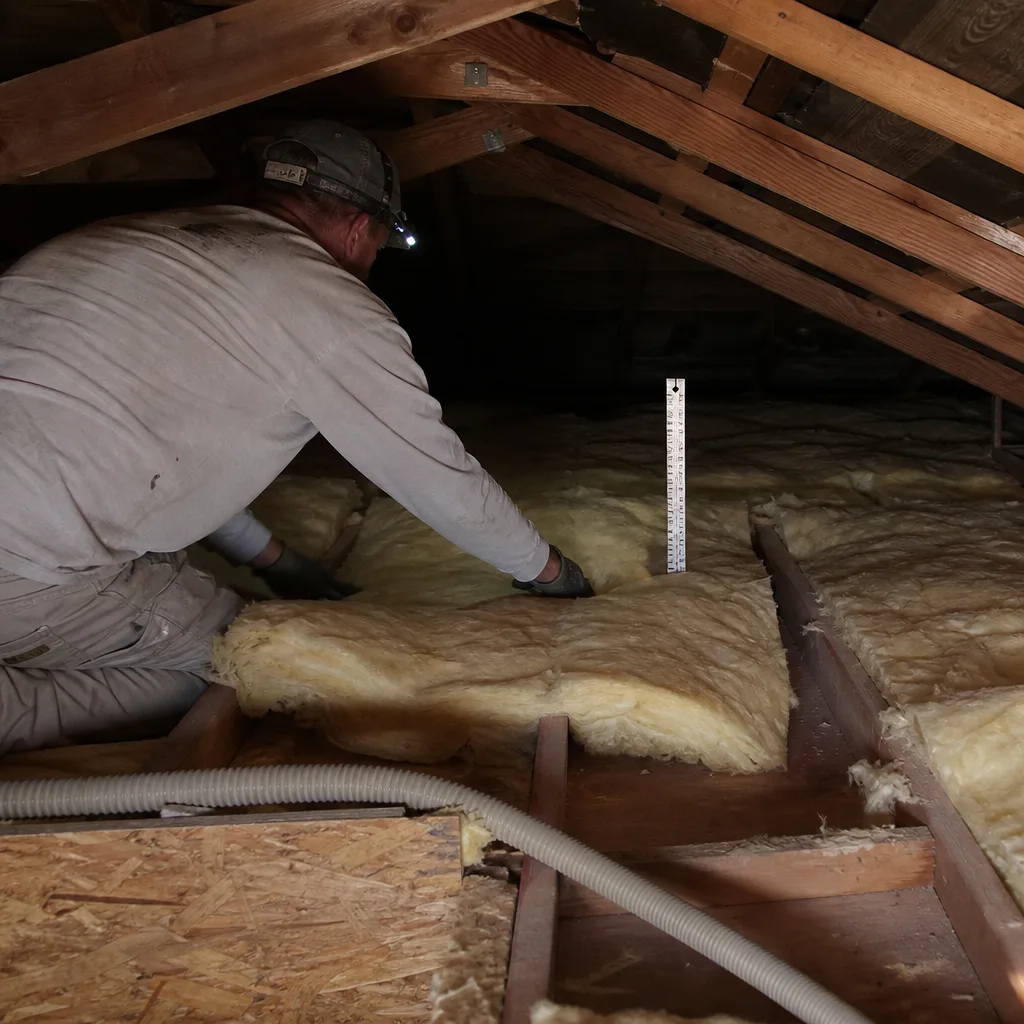
These four tasks share a common problem: the homeowner cannot generate the documentation that California energy code, PG&E rebate programs, or Santa Clara County real estate disclosure requirements demand. Without that documentation, the work exists but cannot be proven.
Task 1: Two-Component Spray Foam at Rim Joists and Top Plates
Open-cell or closed-cell spray foam at rim joists - the horizontal framing member where the foundation meets the first floor - requires precise mixing temperature, substrate moisture content below 19 percent, and application thickness verified by a probe. Icynene and Demilec products, commonly used in Morgan Hill retrofits, require certified installer training for warranty validity.
More critically, spray foam installation alters the vapor profile of the assembly. In California’s Title 24 energy code, this triggers a HERS verification requirement for new construction and substantial alterations. A homeowner cannot self-certify this work.
Task 2: Duct Sealing Behind HVAC Equipment
Morgan Hill homes built between 1985 and 2005 often have duct runs buried in attic insulation, with connections at the air handler accessible only by dismantling platform structures. Mastic-sealing these joints requires working in confined, hot spaces with proper ventilation - but the larger issue is verification. Duct blaster testing, a pressurized measurement that quantifies duct leakage in CFM25, requires equipment that costs more than most full attic jobs.
A homeowner can feel a leak with a smoke pencil. They cannot produce a duct leakage report that satisfies Title 24 compliance or PG&E Energy Upgrade California rebate documentation.
Task 3: Any Work Requiring a CF1R Certificate for Permit or Rebate Compliance
The CF1R - Certificate of Field Inspection and Diagnostic Testing - is the document that connects the insulation installation to the California Energy Commission’s compliance database. We’ll cover this in depth in the next section, but the essential point: it can only be signed by a licensed contractor with a HERS rater relationship. DIY installation cannot generate this certificate, full stop.
Task 4: Blower-Door-Verified Air Sealing
This is the task that separates documented performance from assumed performance. A blower-door test - a pressurization reading that shows, in one number, how much air your building envelope is losing - costs roughly $350 to $500 as a standalone service in Morgan Hill. The test requires a calibrated fan, manometer, and software that calculates ACH50 (air changes per hour at 50 Pascals of pressure).
A homeowner can caulk visible gaps. They cannot produce a before-and-after ACH50 comparison that demonstrates code compliance, validates a rebate, or adds line-item value at resale. At Topside Attic Insulation Morgan Hill home, we publish these numbers on every applicable job so the homeowner can verify the air-sealing result they paid for.
The CF1R Certificate: What It Is and Why DIY Cannot Generate One
The CF1R is California’s mechanism for ensuring that installed insulation matches the energy model used to permit the work. It is not a recommendation. It is a compliance document.
Here’s how the chain works: when a home undergoes a significant energy retrofit in Morgan Hill - typically triggered by insulation replacement combined with air sealing, or any spray foam application - the contractor must submit a CF1R to the local building department. The CF1R specifies the insulation type, R-value, installation location, and air-sealing measures. After installation, a HERS rater - an independent third party certified by the California Energy Commission - field-verifies that the installed product matches the CF1R. The rater signs. The contractor signs. The document enters the state database.
Only a C-2 (Warm-Air Heating, Ventilating and Air-Conditioning) or B (General Building) licensed contractor can originate a CF1R. A homeowner cannot. A handyman cannot. A generalist without the specific license classification cannot.
What this means for rebates: PG&E’s Energy Upgrade California program and BayREN’s home upgrade incentives both require CF1R documentation for insulation-related rebates. The rebate is not tied to the insulation product itself. It is tied to the verified installation documented on the CF1R. A homeowner who installs Owens Corning AttiCat in their attic has purchased a qualifying product. Without the CF1R, they have not completed a qualifying installation.
What this means for permits: Morgan Hill building department, operating under Santa Clara County’s consolidated permit system, will not issue a final inspection sign-off on energy-alteration work without a completed CF1R in the file. Unpermitted work must be disclosed on the Transfer Disclosure Statement (TDS) in California real estate transactions. A documented CF1R eliminates that disclosure flag.
The Real Cost Comparison: DIY Materials vs. Professional Quote
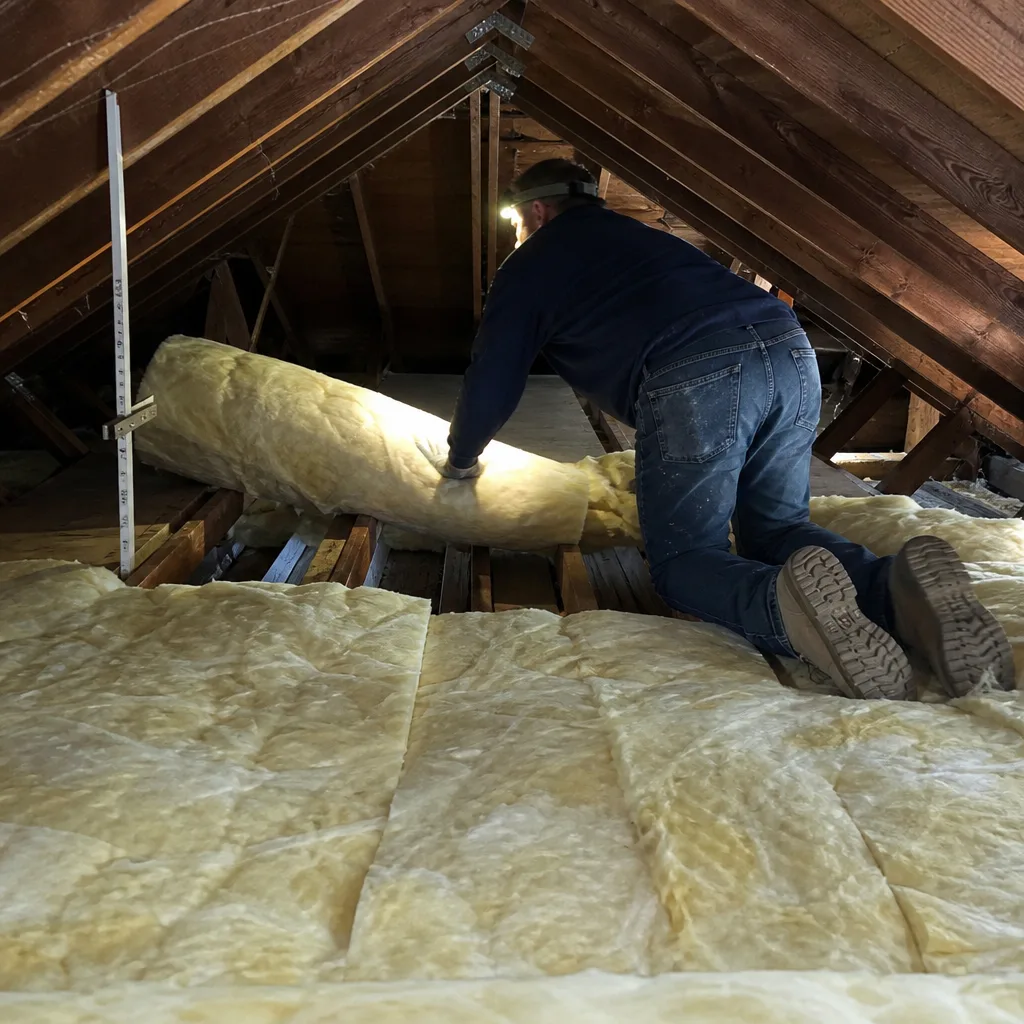
The gap between DIY and professional insulation cost is real in some scenarios and illusory in others. For a detailed Insulation Cost Breakdown: The Morgan Hill Homeowner’s Reference for 2026, here’s the actual math for a standard Morgan Hill attic on a 1,600-square-foot home, the most common size we see in the Tennant Station and San Martin areas.
DIY Scenario: Blown-In Cellulose Over Existing Insulation
| Item | Cost |
|---|---|
| Cellulose (40 bags at ~$12/bag) | $480 |
| Blow-in machine rental (2 days) | $150 |
| Respirator, gloves, lighting | $75 |
| Attic baffles (20 pieces) | $60 |
| Weatherstripping for hatch | $25 |
| DIY Total | $790 |
This assumes the attic floor is already sealed, the homeowner owns basic tools, and no rodent remediation or insulation removal is needed. It also assumes the homeowner correctly calculates bag count - overbuying by 20 percent is common, and unused opened bags are rarely returnable.
Professional Scenario: Air Sealing + Blown-In Insulation + Blower-Door Verification
| Item | Cost |
|---|---|
| Attic air sealing (top plates, penetrations, can lights, plumbing chases) | $850-$1,200 |
| Blown-in cellulose to R-38 | $1,100-$1,500 |
| Blower-door test (before and after) | Included |
| CF1R documentation | Included |
| Documented Photo Record | Included |
| 365-Day Done Right Promise | Included |
| Professional Total | $1,950-$2,700 |
The nominal gap: $1,160 to $1,910. Where that gap disappears:
- The DIY total does not include the $350-$500 standalone blower-door test that a rebate-seeking homeowner would need to commission separately - and which most HERS raters will not perform without a contractor-originated CF1R to test against.
- The DIY total assumes perfect execution. Misinstalled baffles blocking soffit vents, overfilled eaves contacting roof sheathing, or compressed insulation at the hatch perimeter all reduce effective R-value and can create moisture problems.
- The professional total includes the air sealing that the DIY total omits entirely. In our experience across Morgan Hill, a blower-door test on a home with new insulation but unsealed top plates typically shows ACH50 improvement of 15 to 25 percent. The same home with insulation plus air sealing shows 40 to 60 percent improvement. The homeowner who skips sealing pays for insulation that performs at roughly half its potential.
- Rebate eligibility: BayREN’s Home+ program offers up to $3,000 for comprehensive energy upgrades including insulation and air sealing with CF1R documentation. DIY installation is ineligible. The professional job, net of rebate, can fall below the DIY out-of-pocket cost.
For Attic Insulation in Morgan Hill, most jobs in a home this size run between $2,200 and $2,800 when air sealing and blower-door verification are included. We provide a written price before any work starts - Haven Standard Clause 1 - so the gap is known before anyone lifts a tool.
The Documentation Gap: What Paperwork Is Worth at Resale
Santa Clara County’s real estate market operates with unusual disclosure density. Buyers in the $1.2 million to $2.5 million Morgan Hill range - the bulk of current transactions - routinely request energy audit records, permit history, and contractor documentation during due diligence. A seller with documented insulation work holds a measurable advantage.
The professional job produces four documents that DIY cannot:
- Signed CF1R with HERS rater verification. This enters the California Energy Commission database and appears in permit searches. It demonstrates code compliance without the seller’s word.
- Before-and-after blower-door readings in ACH50. A single figure that quantifies performance change. “We improved from 8.2 ACH50 to 3.9 ACH50” is verifiable; “we added insulation” is not.
- Manufacturer installation certificate with lot numbers. Required for product warranty claims. If CertainTeed or Knauf insulation develops a density failure or moisture issue within the warranty period, the certificate triggers replacement. DIY installation without lot-number documentation voids most manufacturer warranties.
- Documented Photo Record of installation. Date-stamped images of cavity condition before, air-sealing work during, and finished insulation depth after. In a disclosure dispute, this is evidence.
In 2024, a Redfin analysis of Santa Clara County transactions found that homes with documented energy improvements - permits, HERS ratings, or contractor invoices with scope descriptions - sold 4 to 7 days faster and at 0.3 to 0.8 percent closer to asking price than comparable homes with owner-reported improvements but no documentation. On a $1.5 million Morgan Hill home, 0.5 percent is $7,500. The documentation gap has real value.
Under Haven Standard: Every job we complete includes the Documented Photo Record, the written scope, and the written warranty delivered before work starts. On applicable jobs, the before-and-after blower-door numbers are published so the homeowner can verify the result. This is not a courtesy. It is the record of what was done, available at resale without the homeowner’s memory.
How Morgan Hill’s Climate and Code Shape the Decision
Morgan Hill sits at the southern end of the Santa Clara Valley, with a climate that straddles marine influence and inland heat. Summer days regularly reach 90°F, with afternoon winds from the northwest pulling conditioned air through any envelope gap. Winter nights dip to the mid-30s, and the temperature differential between indoor and outdoor air drives stack effect - warm air rising and escaping through the attic, replaced by cold air entering at the foundation.
This specific climate pattern makes air sealing disproportionately valuable. In a colder climate like Tahoe, insulation depth dominates because the temperature differential is extreme and sustained. In a milder coastal climate like Santa Cruz, air leakage matters less because the differential is smaller. Morgan Hill’s wide daily and seasonal swings mean that both insulation and air sealing matter, but sealing delivers more per dollar because it addresses the variable load.
Local code context: Santa Clara County adopted the 2022 California Energy Code with local amendments effective January 2023. For attic insulation retrofits, the code requires R-38 minimum for unconditioned attics in climate zone 4, which includes Morgan Hill. But the code also requires that insulation be installed in contact with an air barrier - the attic floor or the drywall ceiling below. Loose-fill insulation in an unsealed attic is technically out of compliance because it is not in continuous contact with a verified air barrier.
This is not theoretical. In 2023, a homeowner in the El Toro neighborhood completed a DIY blown-in project, sold the home in 2024, and faced a buyer’s request for permit verification. The work was unpermitted, no CF1R existed, and the seller had to credit $3,200 toward buyer-selected insulation remediation at closing. The $800 DIY savings became a $3,200 liability.
For Crawl Space Encapsulation & Vapor Barrier in Morgan Hill, the same documentation requirements apply. Vapor barrier installation in a vented crawlspace without proper sealing and mechanical fastening does not satisfy code or rebate criteria, and the moisture management failure mode - mold amplification in the Llagas Creek watershed’s clay soils - is more severe than attic failures.
Common Mistakes to Avoid
- Installing insulation over unsealed can lights. Pre-2016 IC-rated can lights leak enormous volumes of conditioned air. Burying them in cellulose without sealing the housing first creates a fire hazard and wastes energy. In Morgan Hill’s Madrone area, we’ve removed insulation from dozens of homes where this was done.
- Blocking soffit vents with blown-in material. Attic ventilation is code-required in Santa Clara County. A homeowner working without baffles or visual reference points often fills the eave entirely, trapping moisture and voiding shingle manufacturer warranties that require airflow.
- Compressing fiberglass batts to fit. A batt compressed from 6 inches to 4 inches loses roughly 40 percent of its R-value. Homeowners often force batts into cavities narrower than the product width, thinking tight packing is better. It is not.
- Ignoring the attic hatch. The hatch is the largest unsealed penetration in most ceilings. Homeowners who insulate the floor comprehensively and skip the hatch leave a square hole that can leak as much air as a 4-inch duct penetration.
- Assuming all insulation is equal. R-value measures thermal resistance under laboratory conditions. Real-world performance depends on installation quality, air movement through the material, and moisture content. A DIY R-38 installation with air leakage often performs like a professional R-30 installation with sealing.
- Skipping the vapor barrier in crawlspaces. Morgan Hill’s clay soils hold moisture through the dry season. Without a 6-mil polyethylene barrier, crawlspace insulation becomes a moisture sponge. We’ve replaced mold-saturated batts in Paradise Valley homes where this was ignored.
When to Call a Professional
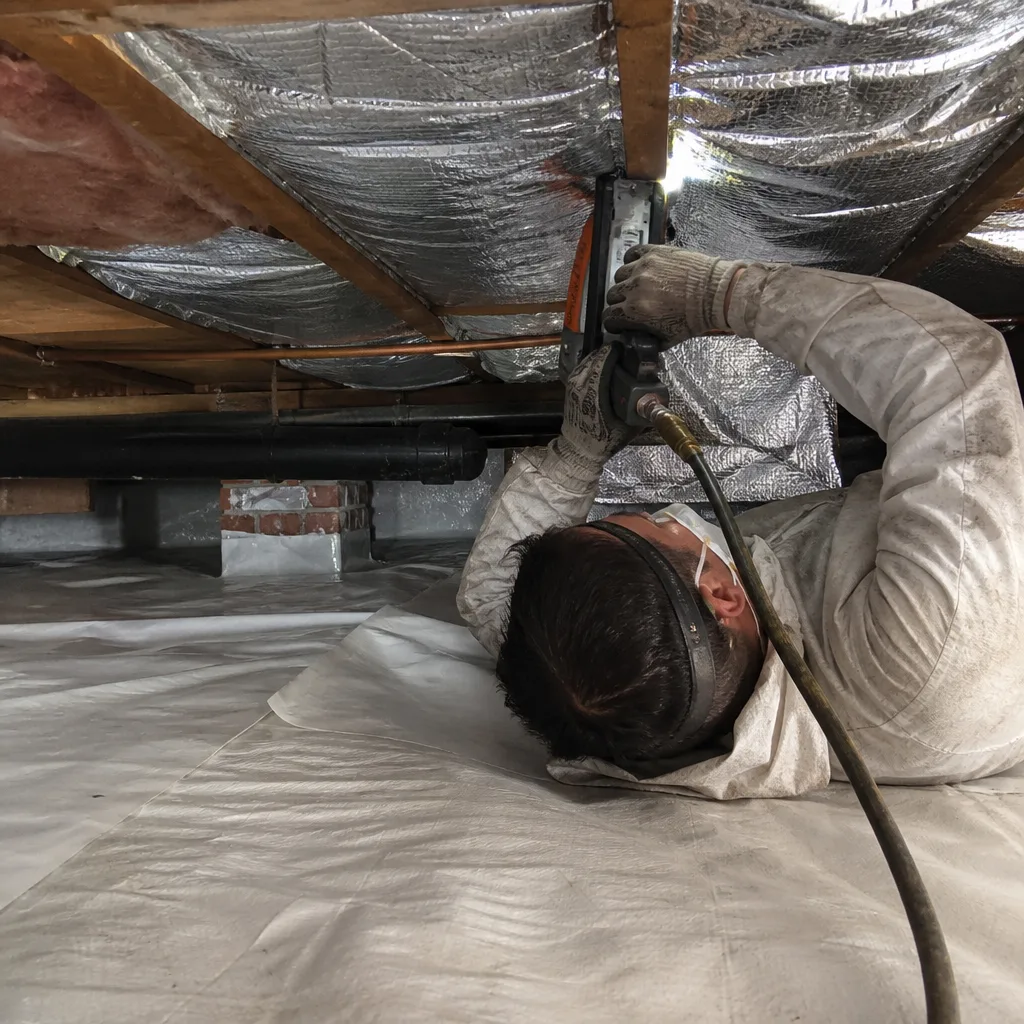
Call a professional when the work requires documentation you cannot generate, equipment you cannot access, or certification you cannot hold. Specifically: when spray foam is involved, when duct sealing is required, when a CF1R is necessary for rebate or permit compliance, or when a blower-door test is needed to verify results. See our guide on How to Hire a Insulation Contractor in Morgan Hill: A Step-by-Step Guide for what to look for.
Topside Attic Insulation Morgan Hill offers free estimates in Morgan Hill. We’ll review your existing conditions, identify what can be safely DIY’d and what requires professional execution, and provide a written price before any work starts. Explore our more guides & resources for additional homeowner information. Call (669) 280-8103. If you have a competing quote, bring it - we offer a Free Second Opinion on any written estimate, and we’ll read it with you line by line.
Frequently Asked Questions
Most attic insulation jobs in a 1,600-square-foot Morgan Hill home run between $2,200 and $2,800 when air sealing and blower-door verification are included, compared to roughly $800 to $1,200 for DIY materials and equipment rental. The gap narrows or reverses when BayREN rebates up to $3,000 are available for documented professional work. Call (669) 280-8103 for a written price on your specific home - estimates are free.
No. PG&E’s Energy Upgrade California and BayREN programs require CF1R documentation signed by a licensed contractor and verified by a HERS rater. DIY installation cannot generate this certificate, regardless of product quality or installation precision.
A blower-door test is a pressurization reading that shows, in one number, how much air your building envelope is losing. It is required for rebate compliance, valuable for verifying contractor performance, and useful at resale - but not legally required for simple insulation retrofits that do not alter the vapor profile or involve spray foam. For most Morgan Hill homeowners, the test is worth including because it documents results that would otherwise be assumed.
Repair - adding depth over intact, sealed, uncontaminated insulation - is cheaper when the existing material is dry and the attic floor is already air-sealed. Replacement is required when insulation is water-damaged, rodent-contaminated, or installed over an unsealed floor where air sealing can no longer be accessed. In Morgan Hill’s dry climate, rodent contamination is the most common trigger for full removal. Call (669) 280-8103 and we’ll assess whether repair or replacement is appropriate for your situation.
A homeowner can caulk visible gaps at accessible penetrations and weatherstrip the hatch. Top-plate sealing at interior walls, can-light enclosure, and chase sealing around plumbing stacks require cavity access and specialized materials that most homeowners do not have. More importantly, DIY air sealing cannot be blower-door verified, so the homeowner cannot know whether the effort produced meaningful results. Professional air sealing in Morgan Hill typically costs $850 to $1,200 for a standard attic and includes before-and-after verification.
Most attic jobs - air sealing plus blown-in insulation - are completed in one day for homes under 2,500 square feet. Jobs requiring insulation removal, rodent remediation, or spray foam application may extend to two days. We provide a written schedule with the written price before work starts, and you’ll get a text when your technician is on the way.
Yes. In Santa Clara County’s disclosure-heavy market, documented energy improvements - permits, HERS ratings, contractor invoices with scope descriptions - reduce buyer uncertainty and support asking price. The 2024 Redfin analysis found documented homes sold 4 to 7 days faster and 0.3 to 0.8 percent closer to ask. The CF1R, blower-door readings, and photo record we provide are designed for this purpose.
The Bottom Line
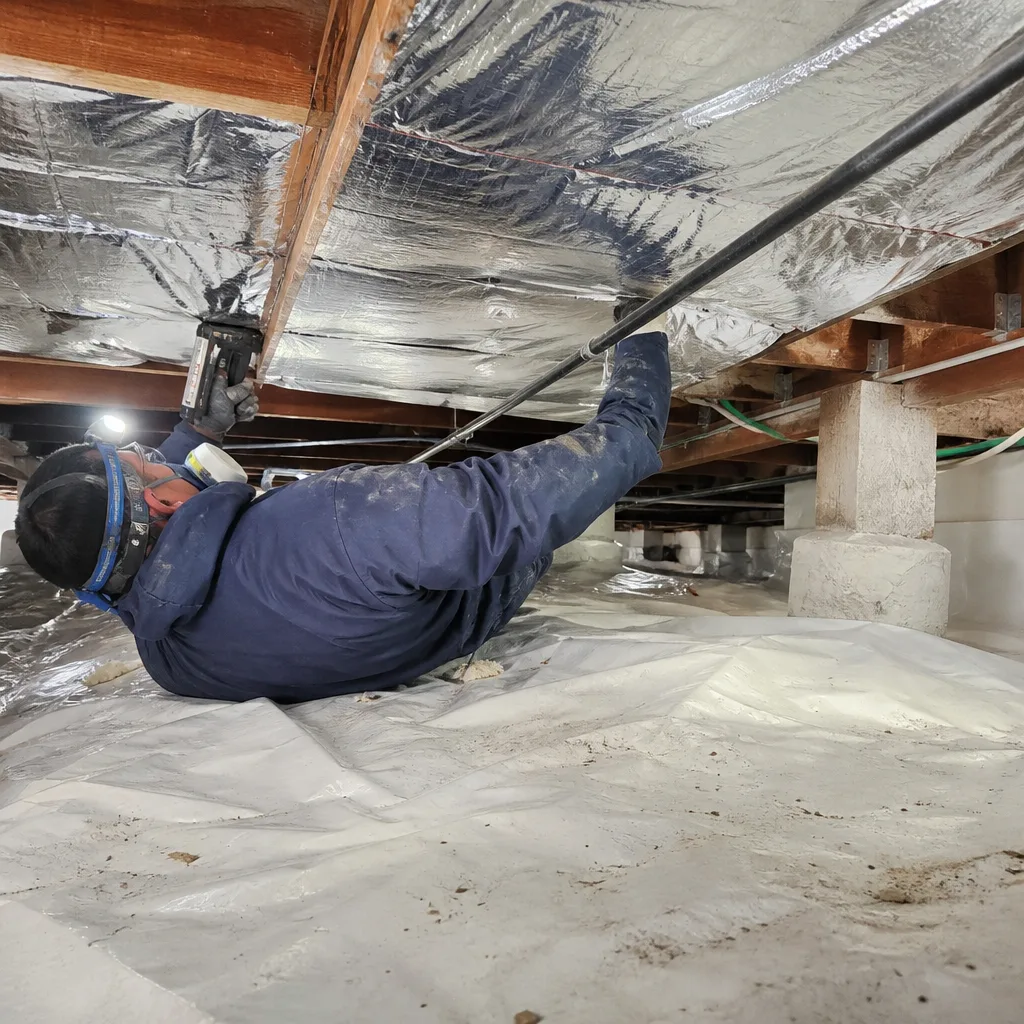
DIY insulation in Morgan Hill is viable for three tasks: adding blown-in depth over a sealed attic floor, installing batts in an accessible crawlspace with existing vapor barrier, and weatherstripping attic access hatches. For spray foam, duct sealing, CF1R-compliant work, and blower-door-verified air sealing, professional installation is required to produce documented, verifiable, transferable results. The cost gap between DIY and professional work is real but often smaller than it appears when rebates, warranty protection, and resale documentation are included. The homeowner who understands which tasks require documentation - and which do not - makes the decision from information, not assumption.
Written by Wes Okafor, Owner at Topside Attic Insulation Morgan Hill, serving Morgan Hill since 2016.